From over 100,000 films, discover the handful you'll love.
Free or premium access to the world's largest documentary library.
22463 films(Page 52 of 468)
In a Dorset garden, Time Team excavates to reveal artifacts that trace human habitation back to the Neolithic period.
Festive food traditions, from ancient wassail to Victorian mince pies, are explored by Dan Snow and food historian Annie Gray, revealing the evolution of Christmas feasts.
In Hartlepool, Time Team investigates the location of a lost Anglo-Saxon monastery founded by Saint Hilda, a key figure in the Christianisation of England.
Kyrgyz nomads in the Afghan Pamir navigate famine, war, and persecution while preserving their traditional way of life in a harsh and isolated environment.
Queen Elizabeth the Queen Mother first stepped onto the balcony of Buckingham Palace in 1923, marking nearly a century of her presence in British royal life.
Events during the Obama presidency highlighted the deep divisions in the U.S., setting the stage for the polarized political landscape under Donald Trump.
About 1,000 cone-shaped houses carved from volcanic rock make up the village of Kandovan, which has been inhabited for nearly 1,500 years.
William the Conqueror was born in Falaise, Normandy, between September 10, 1027, and September 9, 1028, and became the first Norman King of England after his victory in 1066.
Easter Island, measuring 20 kilometers long and 10 kilometers wide, is home to around 25,000 archaeological sites, only a fifth of which have been excavated.
Pistol duelling in the 18th century, exemplified by the infamous Hamilton vs. Burr encounter, reveals the lethal evolution of combat from swords to firearms.
Richmond Palace, a significant Tudor monument and residence of Queen Elizabeth I, was extensively searched for remains after its demolition in the 18th century.
A man buried on a layer of dead animals in Somerset raises questions about ancient Roman burial practices, alongside the mystery of 97 murdered infants.
The program features a countdown of the ten most innovative helicopters, including the Erickson Aircrane and Bell UH-1 Huey, highlighting their unique capabilities.
Michelle Obama enlists Thomas to help combat veteran homelessness, culminating in a poignant visit to the White House with a newly-homed veteran.
In 1603, James VI of Scotland became James I of England, leading to the first time both crowns were united under one ruler.
In Boynton Beach, Florida, the investigation into the brutal stabbing murder of swimming instructor Mae Wentz stalls despite evidence pointing to a neighbor.
On February 18, 2004, a woman and her son in New Jersey reported an encounter with a huge winged creature that left them frozen in terror.
Shoshenq I, a Libyan ruler, unified Egypt during the 22nd Dynasty, known for his military campaigns in Canaan and the subsequent civil war that fragmented the nation.
North Carolina's coastline features rich agricultural regions and historic sites, including the first English colony established nearly three centuries ago.
Historic castles across the United Kingdom are explored in a series that highlights their fascinating architecture and rich royal histories.
General Patton's campaign to capture the fortified city of Metz during World War II highlights the strategic significance and intense combat of the Lorraine region.
Over the last 200 years, the Florida Keys have seen dramatic changes, from shipwrecks and piracy to the establishment of thriving communities.
Capt. Eric "Winkle" Brown, a legendary test pilot, shares his thrilling experiences flying perilous aircraft and achieving remarkable aviation milestones.
The 26th Dynasty of Egypt, known as the Saite Period, represents a final renaissance marked by cultural revival and military ambition amid external pressures.
The Tennessee Valley covers an area of 40,000 square miles, nearly as large as England, and faced severe economic challenges before the TVA's intervention.
Battlefield surgery in the 16th and 17th centuries evolved dramatically to address the severe injuries caused by the introduction of gunpowder weaponry.
The ruins of the Grey family's home, inhabited for nearly 800 years, reveal the history of a 12th-century castle beneath an English hill.
The Snowtown murders, one of Australia's most notorious serial killing cases, involved horrific acts including torture, decapitation, and cannibalism.
Over 130 pyramids have been discovered in Egypt, with teams of archaeologists investigating the origins and secrets of these ancient structures.
Chinggis Khan, originally named Temujin, navigated the challenges of the Mongolian Steppe, including family struggles and tribal rivalries, to establish the Mongol Empire.
Byblos, an ancient Canaanite-Phoenician city, played a crucial role in trade and culture before its annexation into the Roman Empire.
2 million lives were lost during the Pacific Theater of World War II, including 1.74 million military personnel from Japan and nearly half a million Americans.
In Britain's historic homes, the American Viscountess explores haunted estates like Athelhampton and Berkeley Castle, revealing eerie legends and ghostly encounters.
600,000 children were evacuated from London in just three days as the city braced for the bombings of World War II.
Edward IV was born on April 28, 1442, in Rouen, Normandy, as the third of twelve children in the House of York.
Piston-engined fighters of World War Two are celebrated through stunning aerial sequences and interviews with pilots and aircrew from the British and American forces.
26 statues of the god Osiris stand as guardians at Hatshepsut's temple, a site of ongoing archaeological excavations in Luxor, Egypt.
New archaeological findings provide insights into the lives and practices of Druids, the enigmatic figures of Celtic history.
Amarna Letters, a collection of 14th century BCE correspondence, reveals the intricate international relations between Egyptian pharaohs and Levantine kings.
Scarborough's 1976 May bank holiday showcases a vibrant tapestry of seaside life, from early morning preparations to evening police patrols, capturing the essence of a classic British holiday.
John Capes, the sole survivor of the HMS Perseus submarine disaster during World War II, shares his harrowing experience amidst a deep-sea investigation.
On February 8, 1945, Canadian forces engaged in a fierce battle at Hochwald Gap, aiming to push the German army back over the Rhine during World War II.
Franklin Delano Roosevelt's life from his privileged upbringing and early political career to his battle with polio and transformative presidency is examined in detail.
JFK's assassination is examined through the perspectives of the Secret Service agents tasked with his protection on that fateful day in Dallas, Texas.
J.P. Morgan's establishment of a revolutionary bank in New York City significantly influenced the competitive dynamics among America's industrial giants during the late 19th century.
One and a half thousand feet above sea level, a team of archaeologists investigates the remnants of Tudor copper mines in the Lake District.
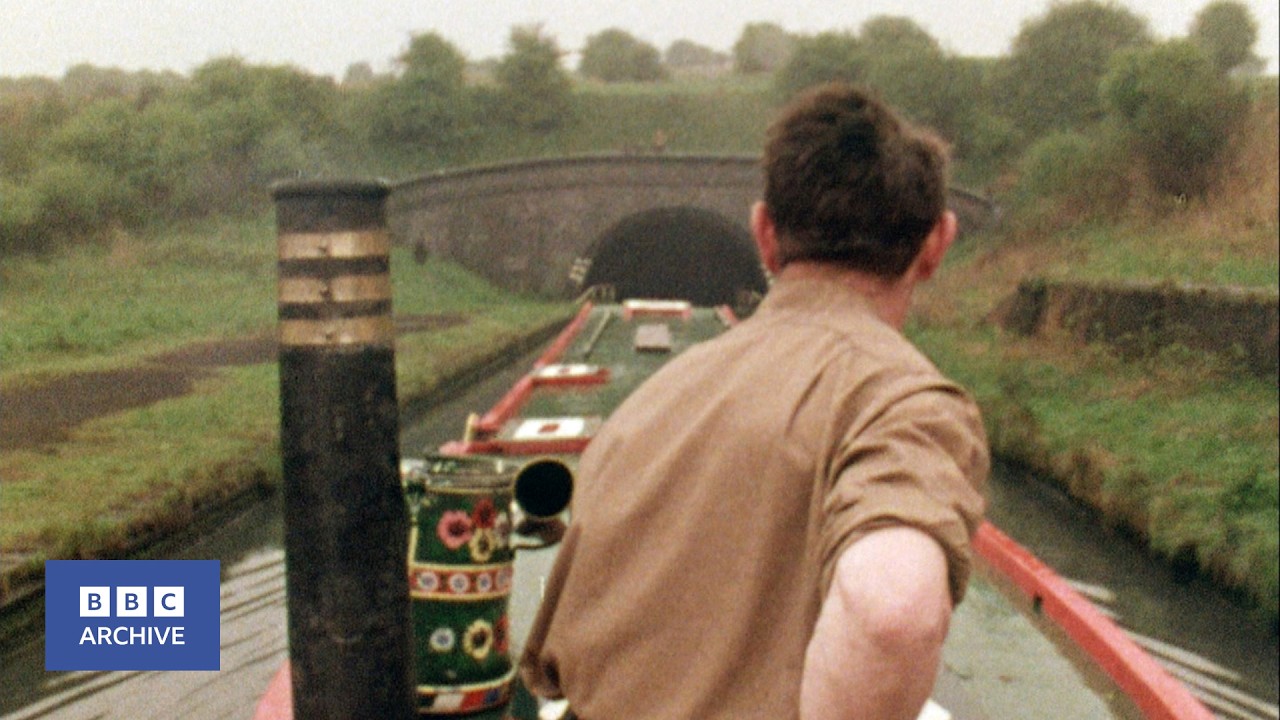
Narrow boats navigate Birmingham's historic Canal Navigations, highlighting the potential revival of its once-thriving waterways as vibrant inland ports.
Europe's largest shunting station, the longest suspension bridge in Reutte, and the world's biggest intersection showcase remarkable engineering feats.