From over 100,000 films, discover the handful you'll love.
Free or premium access to the world's largest documentary library.
22469 films(Page 33 of 469)
Seventy-five percent of enslaved Africans arrive in America through Beaufort, South Carolina, shaping Gullah culture.
410 marks the year when Roman troops left Britain, leading to a period often mischaracterized as a descent into barbarism.
Sixty thousand emails from John Podesta's account were hacked as part of a Russian campaign to disrupt the 2016 U.S. presidential election.
John Bolton discusses his experiences as national security advisor and the implications of the Khashoggi murder on U.S.-Saudi relations during his tenure.
The Galloway Hoard, a remarkable collection of Viking-era treasures including a unique silver vessel from Iran, reveals insights into trade and culture in 9th-century Scotland.
In Newhaven, Connecticut, police investigate the 1973 murder of a young woman, turning to a psychic for assistance amid a trail of forensic evidence.
Over 13 billion years ago, the universe was so small that it could fit inside the palm of a hand before expanding to create everything we see today.
100-inch Hooker Telescope on Mt. Wilson revealed in the 1920s that distant nebulae were actually galaxies moving away from Earth, supporting the Big Bang theory.
Thailand's Marine Recon training course challenges recruits with intense physical and mental tests over 13 weeks, culminating in the prestigious Marine Recon badge.
Adolf Hitler's rise to power in Nazi Germany during the 1930s is examined, detailing his life from childhood to his final days in Berlin.
A wooden ship measuring 30 feet long was discovered 22 feet beneath Ground Zero during construction of a parking garage in Manhattan.
Ancient Greece is explored through the most searched questions, revealing insights about its culture, democracy, cuisine, and contributions like the Olympics.
King Thibaw, the last king of Burma, was exiled to India in 1885, marking the end of a monarchy that lasted for over a thousand years.
Roman Britain, marked by conquest and cultural exchange, raises questions about its history, including the significance of Hadrian's Wall and local uprisings.
Mass imprisonment of an estimated two million Uyghurs and other Muslims in China's Xinjiang region is exposed through undercover footage and investigative journalism.
This award-winning factual series shares untold stories of World War One veterans and their families.
Sakamoto Ryoma, a pivotal figure in Japan's history, plays a central role in a thrilling historical fiction game set during the final years of the Tokugawa Shogunate.
William Bury, a convicted murderer with striking similarities to the Jack the Ripper case, is re-examined through modern forensic evidence and a staged trial.
Roy DeMeo may have murdered as many as 200 people during a violent spree in the 1970s, evading law enforcement despite numerous missed opportunities to capture him.
Spartan warriors, often portrayed as invincible super soldiers, are examined for their historical accuracy in relation to ancient sources and their true societal structure.
Jessica and Diana Mitford, sisters divided by ideology, embody the clash between communism and fascism in early 20th-century Europe, fracturing their familial bonds.
Life aboard Britain's Royal Navy in the early 19th Century involved rigorous duties, unique food, and advanced weaponry, shaping a formidable maritime force.
In remembrance of the 30th anniversary of the Space Shuttle Challenger disaster, presents rarely seen images and news reports from the tragic event.
On July 7, 2005, four British citizens carried out suicide bombings in London, killing 52 people and marking a new phase in terrorism.
Oskar Schindler saved hundreds of Jews from death camps during World War II by insisting they were essential to operate his factory in Brunnlitz.
There are about 110 guilds in London today, but during the medieval period, the focus was on the 12 most powerful guilds that shaped urban life.
More than 60 tribes once inhabited Oregon, speaking at least 18 languages across hundreds of villages before significant disruption in the 19th century.
William the Conqueror's brutal military campaigns in northern England during 1069-70, known as the Harrying of the North, devastated villages and solidified his rule.
Luke Tomes participates in a live reenactment of the 1265 Battle of Evesham, gaining insights from historian Matt Lewis about the historical conflict.
Jesus Christ's life is explored through key events such as his years in the wilderness and his ministry, providing insight into his humanity.
In medieval Europe, serfs comprised about 70% of the peasant population, as explored by Dr Eleanor Janega at Denny Abbey in Cambridge.
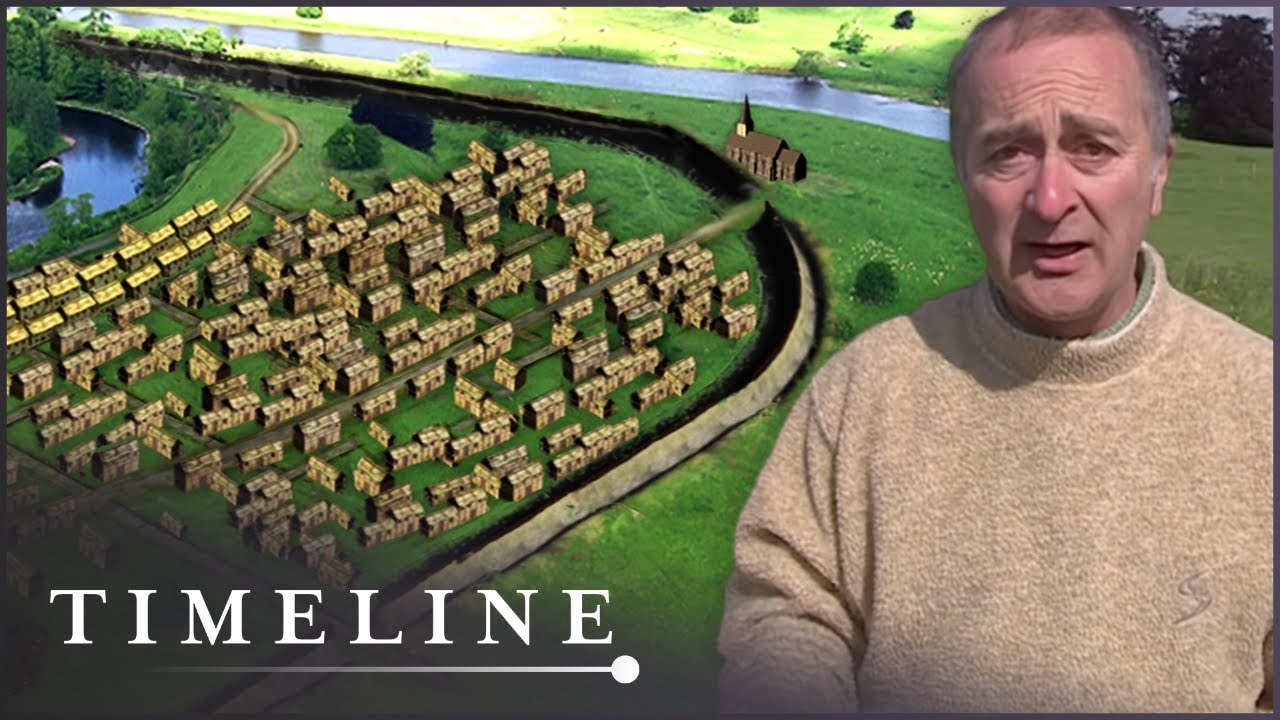
A mile long and half a mile wide, the site of Roxburgh was once one of Scotland's wealthiest cities before it vanished without a trace.
Two FBI agents died and five others were injured during a shootout with armed robbers in Miami on April 11, 1986, marking a significant event in law enforcement history.
Military historian Dan Snow evaluates classic World War Two films, analyzing their historical accuracy and the real events that inspired them.
Three million German soldiers launched Operation Barbarossa on June 22, 1941, marking the largest invasion in history.
Minamoto no Yoritomo navigates political challenges and consolidates power to establish the Kamakura Shogunate following the conclusion of the Genpei War.
In 16th century Istanbul, the harem of Suleiman the Magnificent became a powerful center where women influenced the governance of the Ottoman Empire.
Tokugawa Iesato's alternate historical path in a modified campaign of Hearts of Iron IV explores the complexities of a non-aligned Japan.
In February 1950, a U.S. Air Force bomber carrying a Mark IV nuclear weapon crashes off the west coast of Canada, leading to a massive search operation.
Battlefield surgery in the medieval period involved brutal procedures like amputation and trepanning, often resulting in grim outcomes for injured soldiers.
500 degrees Celsius is the temperature reached by the pyroclastic flow that killed many residents of Pompeii during the eruption of Mount Vesuvius in 79 AD.
A naval officer with a talent for crosswords played a crucial role in countering the Japanese Navy's advances after the Pearl Harbor attack.
Twenty-three stab wounds were inflicted on Julius Caesar during his assassination on the Ides of March, marking a turning point in Roman history.
Daniel Boone's struggle to protect his settlement during the Revolutionary War highlights the challenges faced by frontiersmen in a nation at conflict.
In 1950, North Korea's invasion of South Korea prompted American tankers to engage in intense battles across the Korean Peninsula.
Diana, Princess of Wales, began a controversial relationship with Dodi Al-Fayed in 1997, raising questions about her feelings and intentions following her divorce from Prince Charles.
On August 8, 1588, Queen Elizabeth I delivered a speech to her troops at Tilbury, declaring her resolve against the Spanish Armada.
Minamoto no Yoritomo confronts the remaining Taira forces and his own cousin, marking a pivotal moment in the rise of samurai rule in Japan.