From over 100,000 films, discover the handful you'll love.
Free or premium access to the world's largest documentary library.
22463 films(Page 53 of 468)
10,000 politicians, diplomats, and spies arrived in Paris for the peace conference following World War I, where the Treaty of Versailles was negotiated.
More than 130 crashes occurred during the US Navy's training of 15,000 carrier pilots on Lake Michigan's makeshift aircraft carriers during World War II.
Two million fatalities from World War I left Germany in shock, creating a fertile ground for Adolf Hitler's rise to power through political manipulation.
The southern border between the United States and Mexico is the most traveled migration route on Earth, with thousands from Guatemala seeking a better life.
In 2009, workers in Anyang, Henan, discovered an ancient tomb that may belong to Cao Cao, a key figure from China's Three Kingdoms period.
Simon Fraser, the 11th Lord Lovat, navigated a tumultuous life of political intrigue and betrayal, culminating in his execution and the mystery of his burial.
The Roums, a Greek-speaking Orthodox Christian community in Turkey with roots in the Byzantine Empire, now face cultural extinction with fewer than 2,000 members remaining.
On April 23, 2018, Louis Arthur Charles was born at St Mary's Hospital, becoming fourth in line to the British throne amid evolving royal traditions.
In Scotland's Glasgow, archaeologist Anna Richie investigates a Dark Age graveyard featuring ancient gravestones and Viking hogback tombstones, exploring its historical significance.
The Falklands War, ignited by Argentina's invasion in April 1982, marked Britain's last solo military conflict over its imperial territories, featuring firsthand accounts from veterans.
Economic hardships, political injustices, and cultural shifts converged in 1789 France, igniting a revolution that transformed the nation and influenced modern democracies.
Tova Friedman, a Holocaust survivor from Tomaszów Mazowiecki, shares her harrowing experiences in Auschwitz and her life as a storyteller in postwar America.
In October 1977, two teenage girls were murdered in Edinburgh, Scotland, leading to the trial of Angus Sinclair, a convicted sexual murderer, who was ultimately acquitted.
Research suggests that the Anasazi of the American Southwest, once viewed as peaceful farmers, may have engaged in cannibalism, raising questions about their societal practices.
On May 18, 1980, Mount St. Helens erupted in Washington State, resulting in 57 fatalities and raising questions about volcanic monitoring and disaster preparedness.
In the Hürtgen Forest, US troops engaged in one of their longest battles on German soil from September 1944 to February 1945, facing severe casualties.
Mary Ann Cotton, a notorious serial killer in nineteenth-century northeast England, murdered men for life insurance payouts, revealing the dark side of financial greed.
In Lincolnshire, a metal detectorist has found over 300 artifacts from the Roman, Iron Age, and Anglo-Saxon periods, prompting an investigation into the site's historical significance.
The 1905 Battle of Tsushima showcased Japan's naval superiority as Admiral Heihachiro Togo's advanced fleet decisively defeated the Imperial Russian Navy.
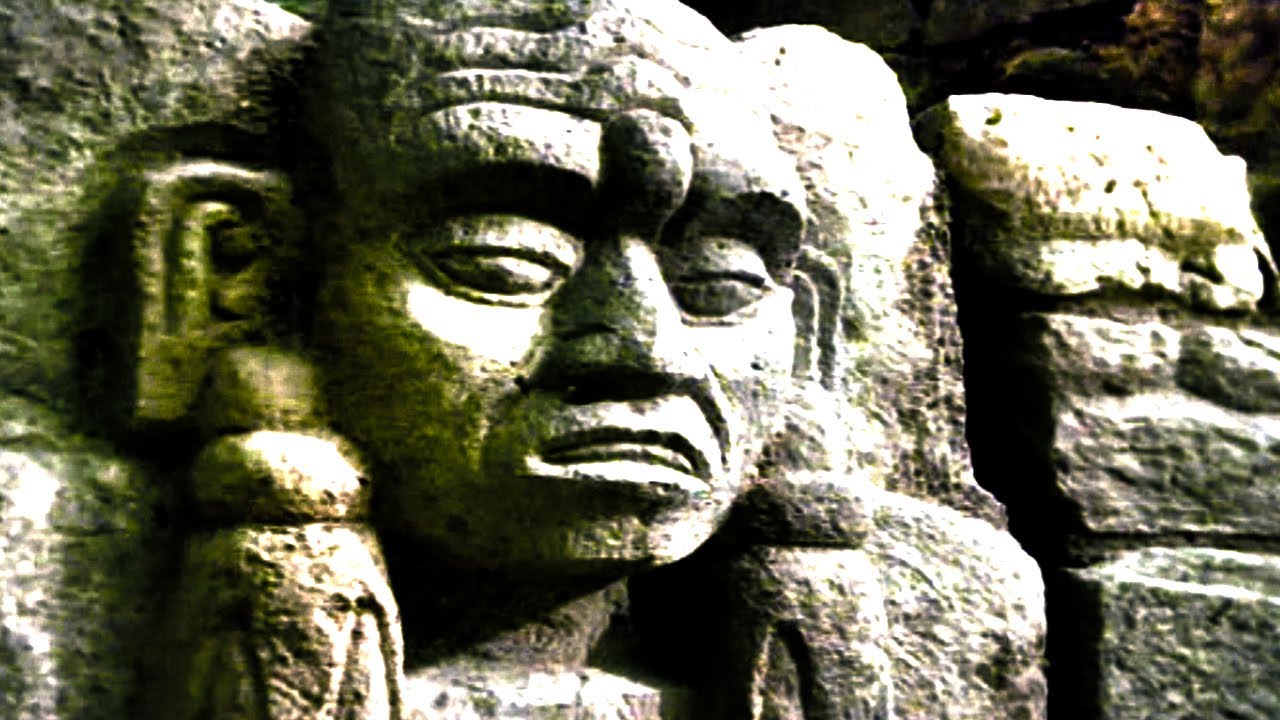
Ancient Mayan cities, long obscured by dense vegetation, are examined by scientists and archaeologists revealing their true scale and complexity.
On July 2, 1863, Union and Confederate troops engaged in intense combat on Little Round Top, a crucial hill that would influence the outcome of the Civil War.
Supervolcanoes, such as Yellowstone and Toba, have caused catastrophic eruptions that reshaped Earth's climate and contributed to mass extinction events.
A butler set fire to a Tudor mansion in Suffolk in 1773, leading to the loss of a historic estate that had stood for over 500 years.
In 1930, unemployment in Germany reached 3,076,000, contributing to the rise of the National Socialist Party and its eventual takeover of the government.
Thomas Jefferson, the 3rd President of the United States, is examined for his pivotal role in shaping American history and governance.
The Peasants' Revolt of 1381 marked the first recorded public rebellion in England, igniting revolutionary change and highlighting the struggles of ordinary people.
King Richard III was born on October 2, 1452, in Fotheringay Castle, Northamptonshire, and became one of England's most infamous rulers.
Angkor Wat, the largest religious structure in the world, is examined through advanced technology to reveal insights about its construction and the lost city nearby.
Homo sapiens appeared on Earth 195,000 years ago, influenced by a master race from the stars known as the Anunnaki, who created humans to work as slaves.
Theodor Morell, born on July 22, 1886, became Adolf Hitler's personal physician and was known for his unconventional medical treatments during World War II.
Hirohito's reign as Emperor of Japan from 1926 marked the aggressive expansion of Japan's empire, culminating in significant conflicts during World War II.
A young PhD student excavated a field in South Oxfordshire in the 1960s, uncovering stone walls of a Roman building but lacking evidence to identify it.
Americans consume 3 billion pizzas each year, spending over $46 billion on the dish that has become a staple of American cuisine.
The POW/MIA movement, initiated by families of soldiers missing in action during the Vietnam War, continues to raise questions about the fate of those left behind.
The abduction and murder of two young girls in South Carolina in 1985 led the FBI to employ behavioral profiling and forensic evidence to identify the killer.
In 1951 Florida, a poor, illiterate migrant farmer wrongfully imprisoned for fraud struggles to regain custody of her three children after her release.
In September 2008, Lehman Brothers filed for bankruptcy, marking the largest bankruptcy in U.S. history and triggering a global financial crisis.
Genghis Khan's military campaigns in China resulted in 40 million deaths, paving the way for the catastrophic spread of the Plague, one of history's worst biological disasters.
Viking mercenaries known as the Varangian Guard served the Byzantine Empire under Emperor Basil II, renowned for their loyalty and military brutality.
In Normandy, historian James Holland and ex-US Army Ranger Dr Mike Simpson examine the logistics and preparations behind the D-Day invasion, challenging established myths.
Pigs rooting in a Dorset field uncovered Roman mosaic floor tiles, leading to an excavation that revealed a heated villa and burial sites.
Tristan Hughes explores prehistoric Scotland, examining ancient Stone Age remains, intricate carvings, and towering brochs across the stunning landscape.
More than 200,000 births resulted from relationships between French women and German soldiers during the occupation from 1940 to 1944.
A massive cataclysm is said to have destroyed Atlantis, an advanced civilization, approximately 11,000 years ago, leaving its fate a mystery.
Nostradamus predicted the emergence of three antichrists, and experts analyze the connections between his prophecies and contemporary events in this episode.
Pompeii, a prosperous Roman town, was preserved in time by the catastrophic eruption of Vesuvius in 79 AD, revealing the lives of its everyday inhabitants.
Nazi Germany's ambitious plan to create a long-range bomber capable of attacking the United States is examined through engineering and espionage efforts.
In the Peruvian Amazon, Holly Morris navigates a 250-mile cargo boat trip to Iquitos, exploring its rubber boom history and meeting an indigenous tribe.