From over 100,000 films, discover the handful you'll love.
Free or premium access to the world's largest documentary library.
22469 films(Page 41 of 469)
Ancient Greek and Roman armies are compared by historians Roel Konijnendijk and Tristan Hughes, evaluating their weapons, tactics, and leadership.
4,300-year-old hunting tools are melting out of ice patches in the Yukon, revealing insights into the lives of ancient human inhabitants.
Fossil fuel companies have historically cast doubt on climate change science, delaying critical action and contributing to the escalating environmental crisis.
Rollo, a Viking warrior known for his raids in France and England, became the first King of Normandy after negotiating the Treaty of Saint-Clair-sur-Epte in 911.
In 1968, journalism professor Joe Saltzman captured the voices and experiences of black America during a tumultuous period marked by civil rights struggles.
On May 19, 1536, Anne Boleyn wrote a final letter to her husband, King Henry VIII, before her execution at the Tower of London.
300 Russian T-34 tanks were destroyed during the German defense of the city of Kharkov as the Soviet Union launched a massive offensive in 1943.
Ancient Athens stands out as a pivotal city-state in antiquity, renowned for its prosperity and influential figures that shaped its rich history.
Serge and Beate Klarsfeld, dedicated Nazi hunters, confront Kurt Lischka, a former Gestapo Chief, to seek justice for his wartime atrocities in France.
Samurai statues across Japan showcase the rich history and cultural significance of these legendary warriors, highlighting great leaders and unique artistic expressions.
Red Sands Forts, built in 1943 as anti-aircraft defenses in the Thames Estuary, shot down 22 German aircraft during WWII and are set for restoration as a museum.
Of the 125,000 aircrew who served in Bomber Command during World War II, 73,000 became casualties, with 55,573 killed in action.
In Peru, Doctor Joann Fletcher investigates an enigmatic mummy to reveal insights about the individual's identity and lifestyle in ancient times.
William Shakespeare's early life and upbringing are explored through historic sites in Stratford-upon-Avon, revealing insights into his family and 16th-century Warwickshire.
Gettysburg National Park serves as the backdrop for interviews and reenactments that explore the haunting stories and legends from the Civil War era.
In 1931, Chicago lost an estimated $2 million in wages each day, contributing to the conditions that allowed fascist regimes to rise in Europe.
Adolf Hitler's rise to power led to the deaths of millions and the destruction of cities like Berlin and Dresden during World War II.
Between 1971 and 1979, Idi Amin's regime was responsible for the deaths of hundreds of thousands of Ugandans and the displacement of many more.
More than 40 species of small cats, including servals and jungle cats, demonstrate impressive hunting skills and unique adaptations in various environments.
A 1,860-kilometer railway line built in the 1970s connects Tanzania's port city of Dar es Salaam to Zambia, serving around half a million passengers annually.
Richard Ramirez instilled fear in Los Angeles during the mid-1980s with a series of brutal home invasions and murders that shocked the nation.
On the 80th anniversary of World War II's end, journal entries from eight individuals reveal personal experiences under Adolf Hitler's regime in Nazi Germany.
A hidden Elizabethan blast furnace in Staffordshire reveals insights into medieval England's industrial past during a three-day excavation.
Charlie Parker was born on August 29, 1920, in a two-bedroom apartment above a grocery store in Kansas City, Kansas.
In Lincolnshire, archaeologists from Time Team investigate the Roman town of Ancaster, revealing what may be their most significant find to date.
Lake Tanganyika serves as the setting for Zay's exploration of Tanzania's maritime history aboard the historic 'Liemba' ferry, culminating in a traditional dhow crossing to Zanzibar.
Experts from various fields, including archaeology and astrophysics, provide new insights into the historical significance and mysteries of the Bayeux Tapestry.
King George III was born on June 4, 1738, in Norfolk House, London, and became the first Hanoverian king born in England.
On May 1, 1945, Magda Goebbels killed her six children, aged between 4 and 12, before taking her own life alongside her husband, Joseph Goebbels.
Marc Dutroux, a Belgian pedophile and serial killer, was convicted in 2004 for the kidnapping, torture, and murder of several young girls, leading to widespread public outrage and reforms in the country's justice system.
Feathered dinosaurs, once thought to be rare, are now revealed to be more numerous than previously believed, thanks to advancements in various scientific fields.
The F-35 Lightning II, with a maximum speed of over 1,900 kilometers per hour, is the most expensive defense project in history, costing about 94 million dollars per unit.
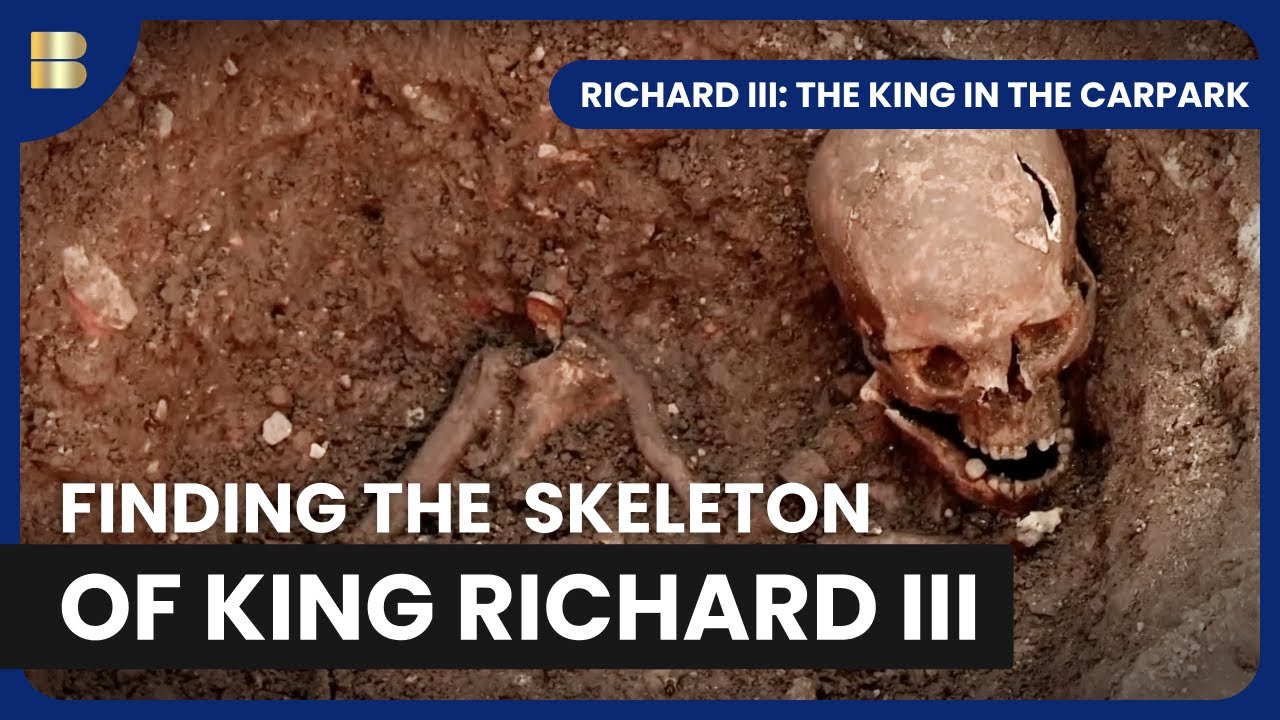
A team of archaeologists unearthed a skeleton in a Leicester car park, believed to be the remains of Richard III, missing for over 500 years.
Partisanship during Barack Obama’s presidency created deep divisions in the U.S., setting the stage for Donald Trump’s political rise.
Grand Canyon National Park is explored through interviews and reenactments that highlight its legends and mysteries in this documentary series.
After more than a decade of restoration, a De Havilland Mosquito aircraft takes flight for the first time in over 50 years.
Aleppo, a key city during the Bronze Age, served as the capital of the powerful kingdom of Yamhad before falling to the Hittite Empire and later reviving.
7,000 personnel participate in a four-week military exercise aboard the USS Harry S. Truman, focusing on high-pressure drills and combat readiness.
15% of Great Britain's international wealth was lost during World War I, setting the stage for political and social unrest in post-war Europe.
Oliver Cromwell's head, a grisly relic of English history, has a complex narrative involving kings, radicals, and forensic scientists that highlights its cultural significance.
Sir Isaac Newton predicts a new date for the Apocalypse in Season 1, Episode 5 of The Apocalypse Code.
The final two days of the rural railway line between King's Lynn and Dereham in Norfolk are documented, highlighting the impact of the Beeching Plan on local communities.
On May 7, 2007, archaeologists discovered the long-lost tomb of King Herod the Great after 35 years of searching in Israel's Herodium.
Bicycles have transformed transportation for 200 years, promoting climate-friendly travel, inspiring equality movements, and shaping societal change.
England's history, from the Stone Age to the Nuclear Age, is explored through significant sites like Stonehenge, Dover Castle, and Kenilworth Castle.
Las Vegas was incorporated on March 16, 1911, and transformed from a frontier town into a major gambling hub influenced by organized crime.
The Mori clan, a powerful family during the Sengoku Jidai, played a crucial role in shaping the history of western Honshu.
The 1936 Berlin Olympics showcased Nazi propaganda, as Hitler and the International Olympic Committee manipulated the event to promote German nationalism.