From over 100,000 films, discover the handful you'll love.
Free or premium access to the world's largest documentary library.
7227 films(Page 16 of 151)
Earth's 4.6 billion-year history reveals the formation of the planet, the emergence of ancient life, and significant geological transformations across eons.
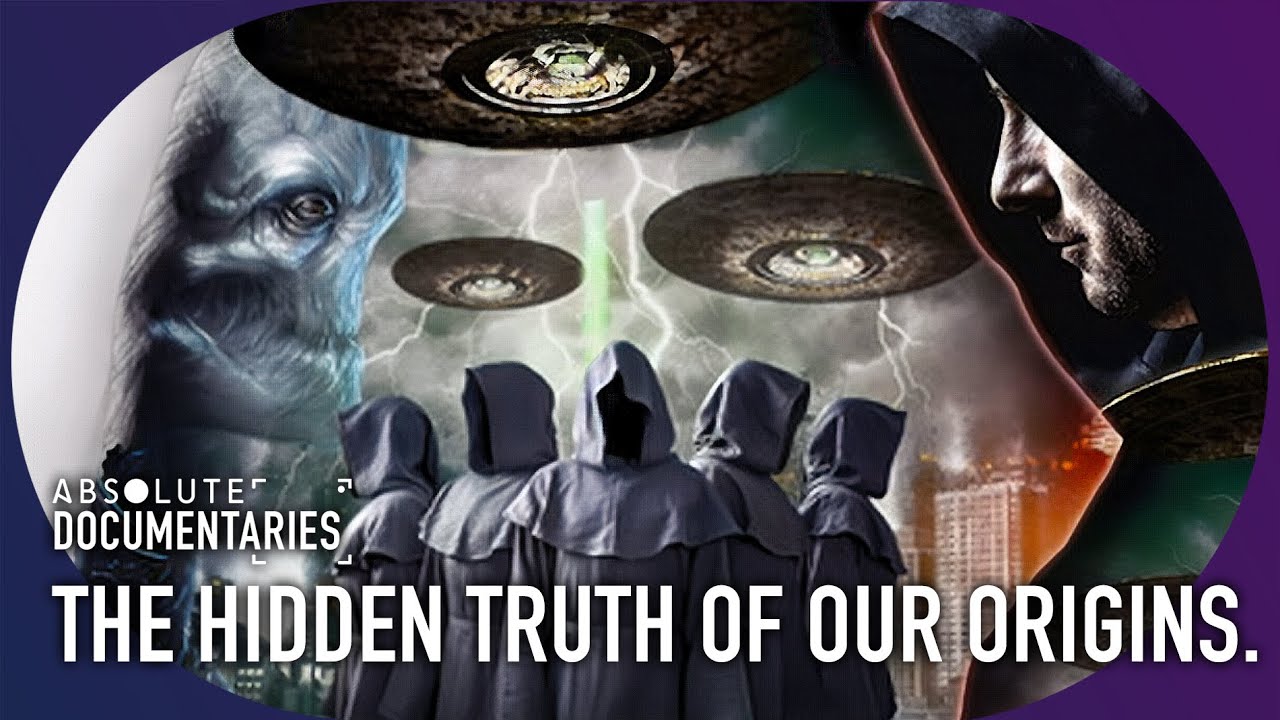
Ancient extraterrestrial intervention may have influenced human origins and shaped our history, as explored by Jim Marrs in this thought-provoking examination.
Emma Agnew, a 20-year-old woman, was reported missing after her car was found burning in Bromley Park, raising urgent concerns for her safety.
Howard Carter's groundbreaking discovery of Tutankhamun's tomb in 1922 is explored through key locations and archival records, revealing the story behind this monumental find.
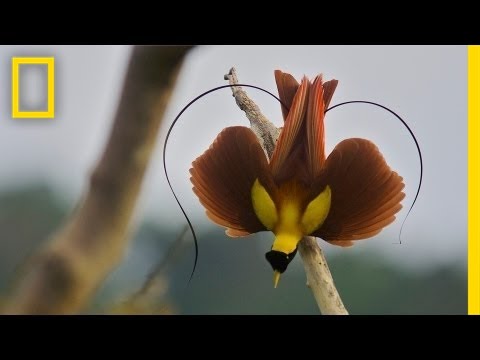
Tim Laman and Ed Scholes collaborate with the Cornell Lab of Ornithology to document the unique courtship behaviors of birds of paradise in Papua New Guinea.
Dinosaurs, the iconic rulers of the Mesozoic Era, evolved through complex processes that shaped their dominance on Earth millions of years ago.
China is a country that has been rapidly changing to lead in modern science and technology.
The Nazis' Lebensborn program breeds children for the Master Race during World War II.
Over 10 billion herring gather in the Norwegian fjords each winter, attracting orcas and humpback whales that hunt them in coordinated groups.
Physicist Jim Al-Khalili connects quantum mechanics to biological mysteries in nature.
Albert Einstein's cosmological constant, initially dismissed, gained renewed significance after astronomers confirmed the accelerating expansion of the universe.
The Giant Irish Elk, known for its massive 12-foot antlers, roamed Ireland until its extinction nearly 11,000 years ago, raising questions about its demise.
The moon's surface is covered with tens of thousands of impact craters, many of which exhibit a uniform depth that defies conventional geological explanations.
Astrophysicists, including Canadian pioneers Gordon Walker and Bruce Campbell, are at the forefront of identifying exoplanets that could resemble Earth.
Vaquita marinas, the world's most endangered porpoises, face extinction due to bycatch in illegal totoaba fishing nets, prompting urgent conservation efforts.
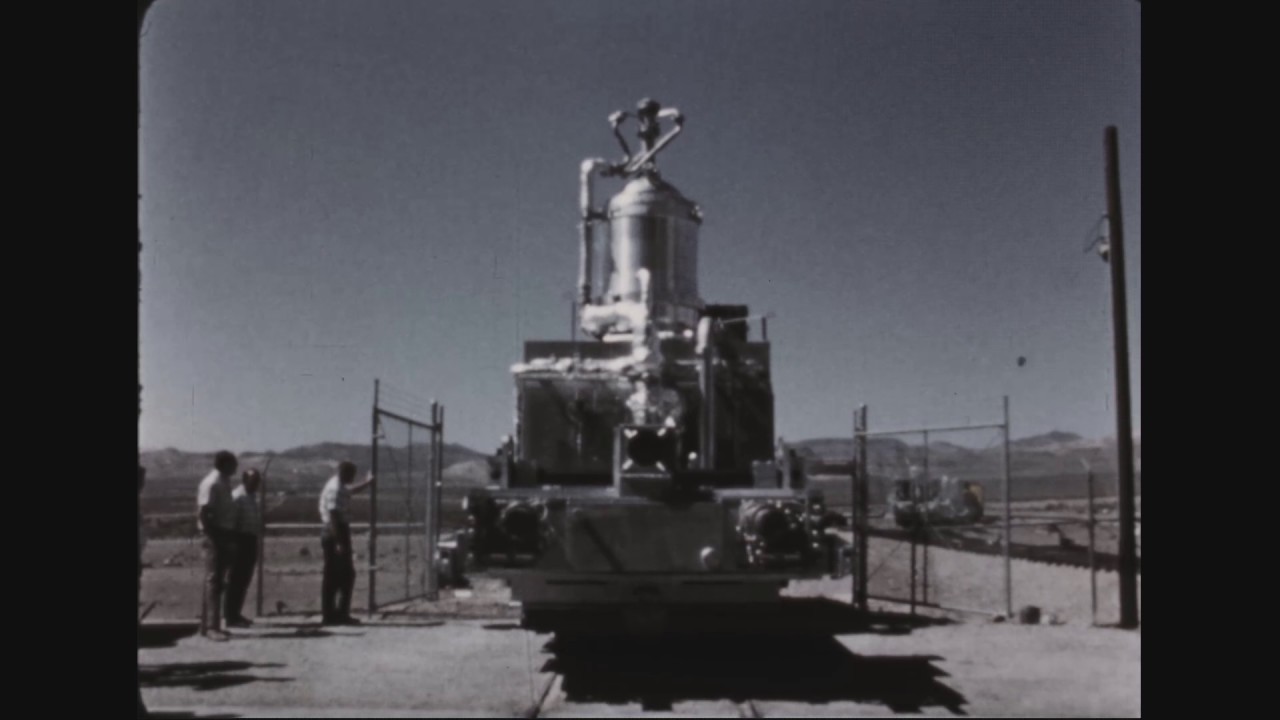
A Saturn 5 rocket, weighing about 6 million pounds, was designed to place the Apollo spacecraft in the vicinity of the Moon during the 1960s.
An investigation into tornadoes examines their scientific characteristics, recent events, and a hypothetical mega tornado with unprecedented impact.
Baseball legends and scientists analyze the 396 milliseconds of a fastball's journey to home plate, exploring the sport's speed and history.
More than half of the over 500 shark species are less than one meter long, with many being timid and harmless to humans.
Major natural disasters, including the 2015 Nepal earthquake, Portugal's largest wildfire, and the 2011 US tornado outbreak, reshape communities and lives globally.
In the wild, animals like the inland taipan, blue-ringed octopus, and stonefish utilize potent toxins as lethal weapons, influencing both survival and medical advancements.
Alaska Native villages face existential threats from climate change, prompting relocation efforts and urgent discussions on preserving their cultural traditions.
Life inside five UK primary schools reveals the significant challenges teachers face with disruptive behavior, as they implement innovative strategies to support students.
A delta 4 heavy rocket, with a thrust equivalent to around 50 million horsepower, successfully launched the Orion spacecraft into Earth orbit.
Bill Nye's iconic educational show remains a beloved staple, celebrated for its engaging approach to science and its lasting impact on popular culture.
New research challenges carbon dating of the Turin Shroud, suggesting it may bear Christ's image.
In a detailed exploration of bee behavior, Bertie Gregory follows a single bee's life as her colony prepares for the challenges of winter.
Advanced communication technology in 1968 is explored through insights from experts like Arthur C. Clarke, highlighting its potential impact on society and privacy.
A Ukrainian city, isolated from the outside world, harbors a hidden cancer epidemic linked to radioactivity, posing a grave threat to its residents.
Wind causes large scale air movement, reshaping landscapes and causing billions in damage.
Earth's oceans may hold clues to extraterrestrial activity as researchers investigate deep-sea mysteries and unexplained phenomena related to intelligent life.
Kenya Wildlife Service, known for its strict anti-poaching measures, faces scrutiny over its 'shoot to kill' policy and allegations of human rights abuses.
In Costa Rica's rainforest, the Almendro Tree serves as a vital ecosystem provider, supporting numerous species, including the endangered Great Green Macaw.
Twelve astronauts walked on the moon between 1969 and 1972, leaving behind footprints and equipment that will last for millennia.
Over 70% of the planet is covered with water, yet plastic pollution has created massive debris fields in every major ocean, impacting marine ecosystems.
Caerau Hillfort in Cardiff reveals the remains of an ancient Iron Age settlement, as explored by Tony Robinson and the Time Team.
Eight years after pleading guilty to manslaughter, Alberta Perez was sentenced for the murder of Leslie Wilco, a case that took 13 years to solve.
More than 4.5 billion years ago, Earth formed from stardust, with minerals playing a crucial role in the origin of life and shaping ecosystems.
Lost civilizations and sunken cities, including the legendary Atlantis, are examined by scientists and archaeologists through the lens of underwater exploration.
Artificial intelligence in computers is examined through the lens of problem-solving and strategic gameplay in this insightful edition of The Computer Programme.
Time travel was first proposed by Albert Einstein in 1905, raising questions about the possibility of humans visiting the past or future.
On December 17, 1903, Orville and Wilbur Wright achieved the first controlled, sustained flight in Kitty Hawk, North Carolina, using the Wright Flyer.
Serengeti National Park in Tanzania showcases breathtaking wildlife and the challenges faced by filmmakers like Reinhard Radke using advanced technology.
The Morava River, with its diverse ecosystems and rich biodiversity, serves as a vital ecological link between the Alps and the Carpathians in Central Europe.
In the Atacama Desert, engineers relocate antennas for the Atacama Large Millimeter Array Observatory, facing extreme conditions at 5,000 meters altitude.
In Utah's Uinta Basin, a team conducts a drone experiment to map a mysterious atmospheric anomaly and investigate its elusive boundary.
Yellowstone National Park showcases grizzlies and wolf packs in America's first national park.
Electromagnetic waves emitted by mobile phones have raised public health concerns, with the International Agency for Research on Cancer classifying them as possible carcinogens.