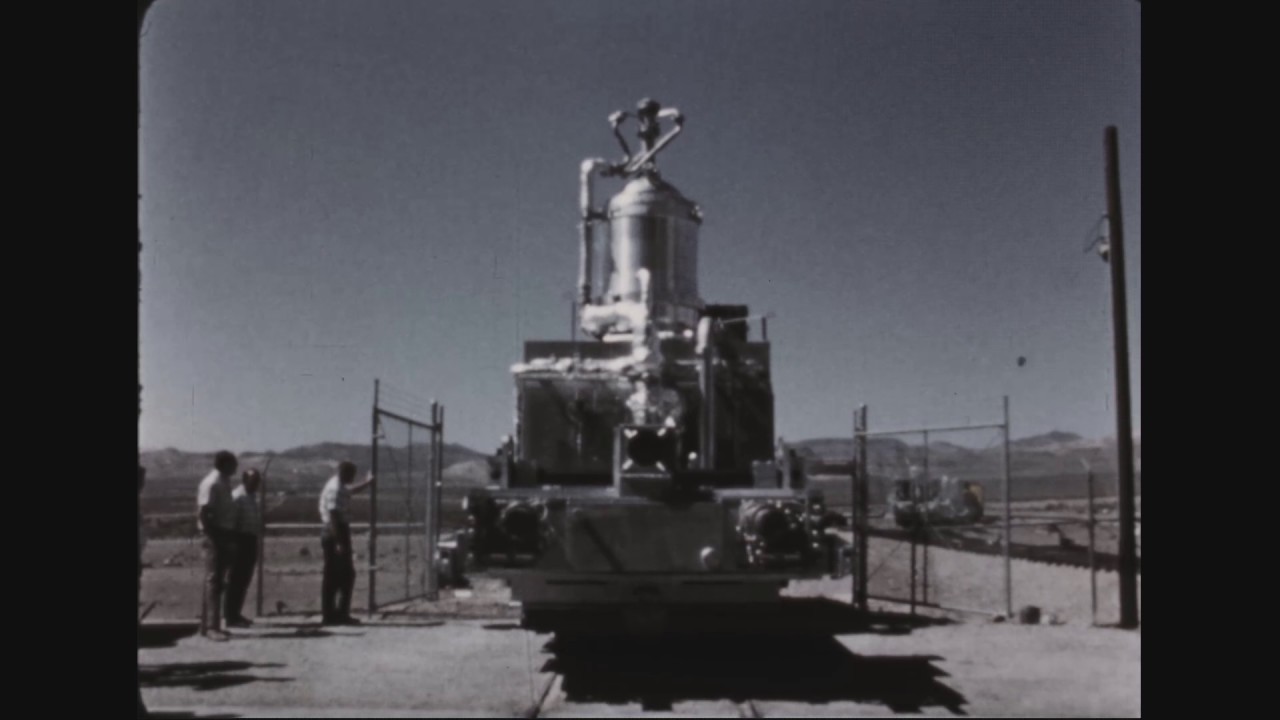
Nuclear Propulsion in Space
Synopsis
A Saturn 5 rocket, weighing about 6 million pounds, was designed to place the Apollo spacecraft in the vicinity of the Moon during the 1960s.
Synopsis
Apollo spacecraft launch from the Kennedy Space Center as Saturn V rockets propel them towards the Moon. The 2017 film discusses the development of nuclear propulsion technology to support future deep space missions, including manned trips to Mars. It outlines the mechanics of nuclear rockets, comparing them to traditional chemical engines. The film presents analysis from NASA experts about the potential for increased payload capacity and shorter travel times for future missions, stating that nuclear propulsion could revolutionize space exploration.
Deep Dive
Why Watch
- See how nuclear rockets could change space travel.
- Find out why Saturn 5 is the most powerful launch vehicle.
- Meet the challenges of future Mars missions.
Did You Know
- The Saturn 5 rocket weighs about 6 million pounds.
- Nuclear rockets could cut travel time for some missions in half.
- Nuclear propulsion allows for larger payloads compared to chemical rockets.
Perfect For
Frequently Asked Questions
What is the total weight of the Saturn 5 rocket?
The total weight of Saturn 5 is about 6 million pounds.
What element does a nuclear rocket heat to generate thrust?
A nuclear rocket heats hydrogen, the lightest element, to expel it at high velocity.
What are the chief advantages of nuclear propulsion?
The chief advantages of nuclear propulsion are lower overall weight, larger payloads, and shorter travel time.
What are people saying?
Play More Like This



Where else to watch







Related Films
Is this your film?
If you made this film or hold the rights to it, we'd like to talk. We can license it and pay you a share of what it earns.
Comments