From over 100,000 films, discover the handful you'll love.
Free or premium access to the world's largest documentary library.
7231 films(Page 35 of 151)
Tiger sharks, notorious for their aggressive nature, account for a significant number of shark attacks in tropical waters globally.
NASA's Parker Solar Probe investigates unpredictable solar storms threatening our power supply.
The UFO phenomenon captivates a diverse group of enthusiasts and researchers who dedicate their lives to investigating extraterrestrial encounters and evidence.
Lady Eliot Island, Kangaroo Island, Lord Howe Island, and Macquarie Island showcase Australia's diverse wildlife, including manta rays, kangaroos, and king penguins.
Whale sharks, the largest fish in the sea, face declining populations due to poaching and tourism pressures, prompting scientists to employ advanced tracking technologies for conservation efforts.
Area 51, ancient artifacts like the Antikythera mechanism, and UFO sightings are examined in a concise timeline of extraterrestrial evidence spanning 3,000 years.
Biologist and survivalist Tom Hunt investigates extraordinary human abilities that challenge scientific understanding, showcasing remarkable feats and their underlying science.
In efforts to breed high-yield egg-laying hens, scientists found that competition among the so-called "superchickens" led to a decrease in overall egg production.
The Hubble Space Telescope reveals discoveries about the Milky Way and Einstein's theories.
Scientists estimate there could be as many as 40 billion Earth-like planets in the Milky Way galaxy alone.
Kambo, a potent secretion from the giant monkey frog, is gaining popularity in UK suburbs as individuals seek its controversial health benefits despite the risks.
NASA's unmanned space probes, including Voyager and Cassini, have explored every planet in our solar system, providing invaluable insights from the depths of space.
Female mosquitoes, which require human blood for egg incubation, are influenced by body odor and genetics, determining why some individuals attract more bites than others.
In Nova Scotia's Bay of Fundy, Dr. Tim Fedak's team excavates dinosaur fossils at Wasson's Bluff while Tyler Shaw investigates ancient footprints in the Minus Basin.
Poker is a true social phenomenon that combines psychology and brain activity in gameplay.
A full-scale replica of the Ark of the Covenant, measuring 45 inches long and 27 inches wide, is built to test theories about its potential as an electrical capacitor.
In Singapore's waterways, otter families, macaques, pythons, and stingrays adapt and thrive amidst the city's complex water networks.
The SLS is designed to advance human space exploration and support the Artemis program.
More than a million DNA samples are stored at the Armed Forces Institute of Pathology, helping to identify soldiers who went missing in action.
Vikings, the notorious sea-faring warriors from Norway, are examined through modern archaeology and science, revealing their extensive history across Europe.
100 billion galaxies may exist in the universe, yet researchers still seek to understand the mysteries of black holes and cosmic phenomena.
Eight million people live in New York City, where thousands of species have adapted to urban life, often unnoticed amid the bustling metropolis.
Odell Adams' wrongful conviction in Portland reveals flaws in forensic science this week.
On July 17, 1975, one billion viewers watched as American astronaut Thomas Stafford and Soviet cosmonaut Alexey Leonov shook hands in space.
A barn-size UFO aggressively approaches a teenager hitchhiking, while a retired French engineer encounters a crashed flying saucer that emits a high-pitched whistle.
Earth's orbit around the Sun significantly influences weather patterns, as explored by Kate Humble and Dr Helen Czerski in this insightful examination.
Freediver Frederic Buyle holds several world records and collaborates with cameraman Christian Pétron and scientist Dr. Johan Mourir to study hammerhead sharks in French Polynesia.
Monkeys, ranging from Pygmy Marmosets in the Amazon Basin to Mandrills in Africa, exhibit unique behaviors such as grooming for peacemaking and using cheek pouches for food storage.
Animal migrations and survival strategies illustrate how wildlife adapts to the challenges of a constantly changing environment.
Dr. Glen Burns studies sea snakes, whose venom is far more potent than that of most terrestrial snakes, with just a few drops enough to kill a human.
Scientific theories explore various potential scenarios for Earth's demise, including black holes, antimatter, solar collisions, and advanced robotics.
Sperm whales, dolphins, sea otters, and sea birds illustrate the intricate relationships and resilience of marine life, while coral reefs and the Komodo dragon highlight vital ecosystems.
Men in South Central Los Angeles dedicate themselves to training Birmingham Roller Pigeons, fostering community and hope through their avian acrobatics.
Speed, stealth, teamwork, and ingenuity characterize the hunting strategies of various animals as narrated by Sir David Attenborough in stunning 4K visuals.
In the turquoise waters of the Grand Bahama Bank, pregnant lemon sharks gather while white-tip reef sharks hunt at night, showcasing their predatory behaviors.
As global temperatures rise, tornadoes are increasingly striking densely populated areas outside Tornado Alley, posing greater risks to communities and industries.
In central Spain, 80 kilometres from Madrid, an ancient forest supports a diverse ecosystem where species like golden eagles and barn owls thrive.
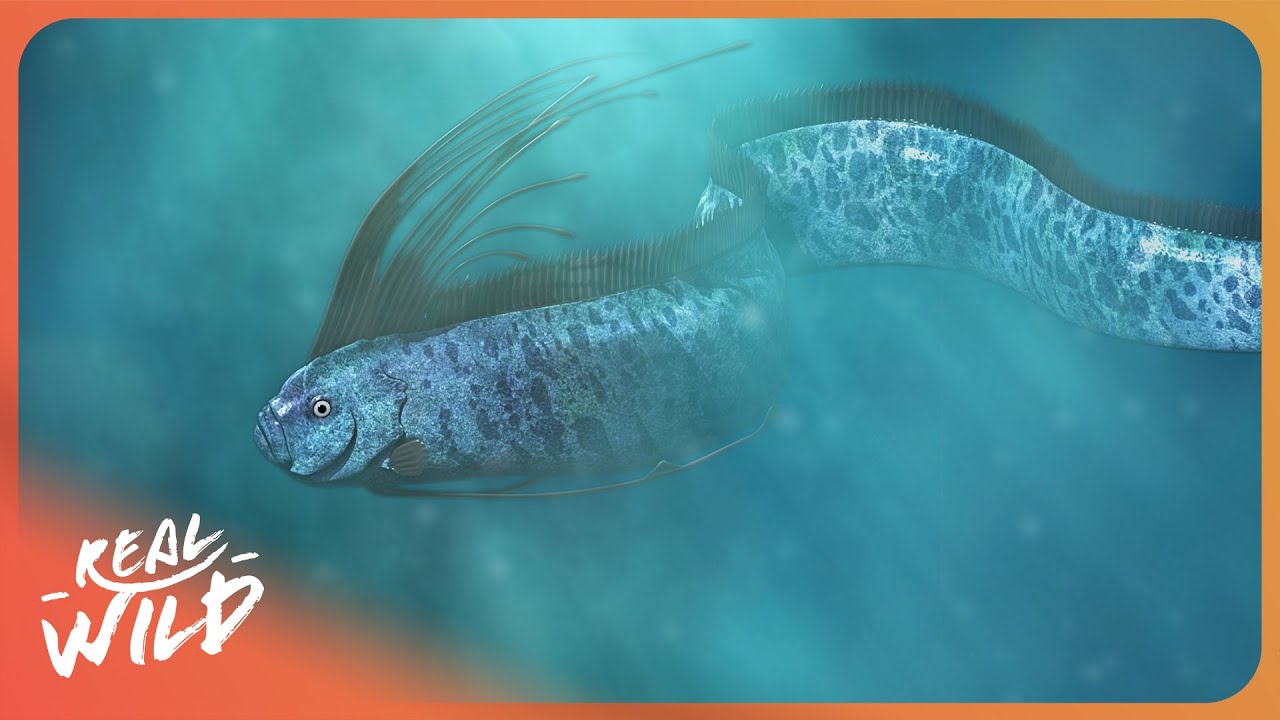
The oarfish, a mysterious deep-sea creature long associated with myths of sea serpents, is studied by scientists in its natural habitat, revealing new insights into its biology and behavior.
Firefighter turnout gear contains toxic PFAS chemicals linked to cancer, revealing a decades-long corporate deception that endangers public health and safety.
A groundbreaking Pentagon UFO report has sparked renewed interest in the 1947 Roswell incident and the mysteries surrounding alien autopsies.
In 2013, 's Pristine Seas team, led by Enric Sala, explored New Caledonia's reefs, contributing to the protection of 28,000 km of marine ecosystems in 2018.
NASA's Spitzer Space Telescope has provided the first weather map of a planet beyond the solar system, revealing conditions that could not support life.
Benoît Bringer investigates the ethical implications of consuming meat from industrial farms, highlighting animal cruelty, health risks, and environmental damage.
Rapidly melting ice sheets in the Arctic and Antarctic reveal critical climate change indicators, prompting scientists to study their ecological impacts and ancient secrets.
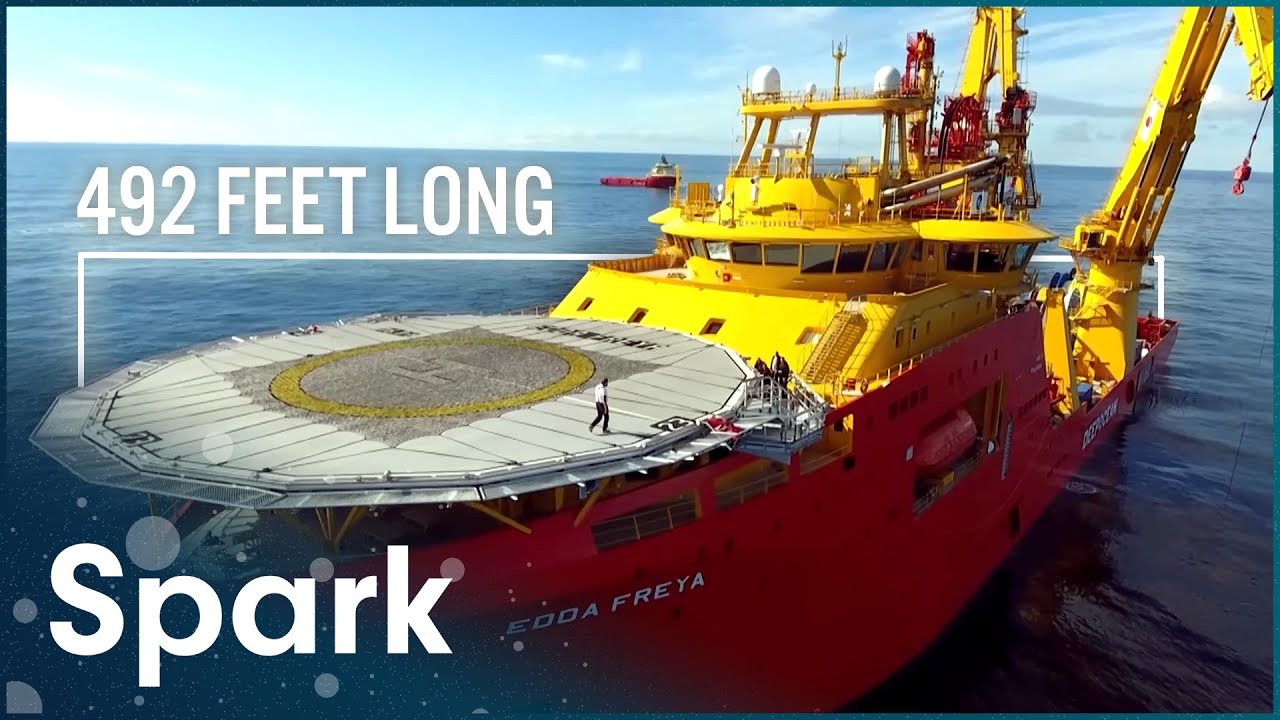
Edda Freya operates in Norway's largest oil and gas field, performing high-stakes repairs on critical gas platform pipelines amid significant risks.
Underwater communication among fish is explored through advanced video and audio technology in the Mediterranean Sea's coral reefs and ancient shipwrecks.
There are an estimated one trillion planets in the Milky Way galaxy, raising questions about the possibility of life beyond Earth.
Vladimir Komarov's tragic death in space is reexamined through newly declassified footage, revealing a scandalous conspiracy within the Soviet space program.