From over 100,000 films, discover the handful you'll love.
Free or premium access to the world's largest documentary library.
7227 films(Page 94 of 151)
Artemis II, NASA's crewed mission to the Moon, raises questions about its objectives and significance in the context of future space exploration.
This episode covers space tourism, NASA's spacesuits, and the Artemis project updates.
SpaceX's Starlink project aims to deploy over 12,000 satellites into orbit, raising concerns about space traffic and environmental impacts.
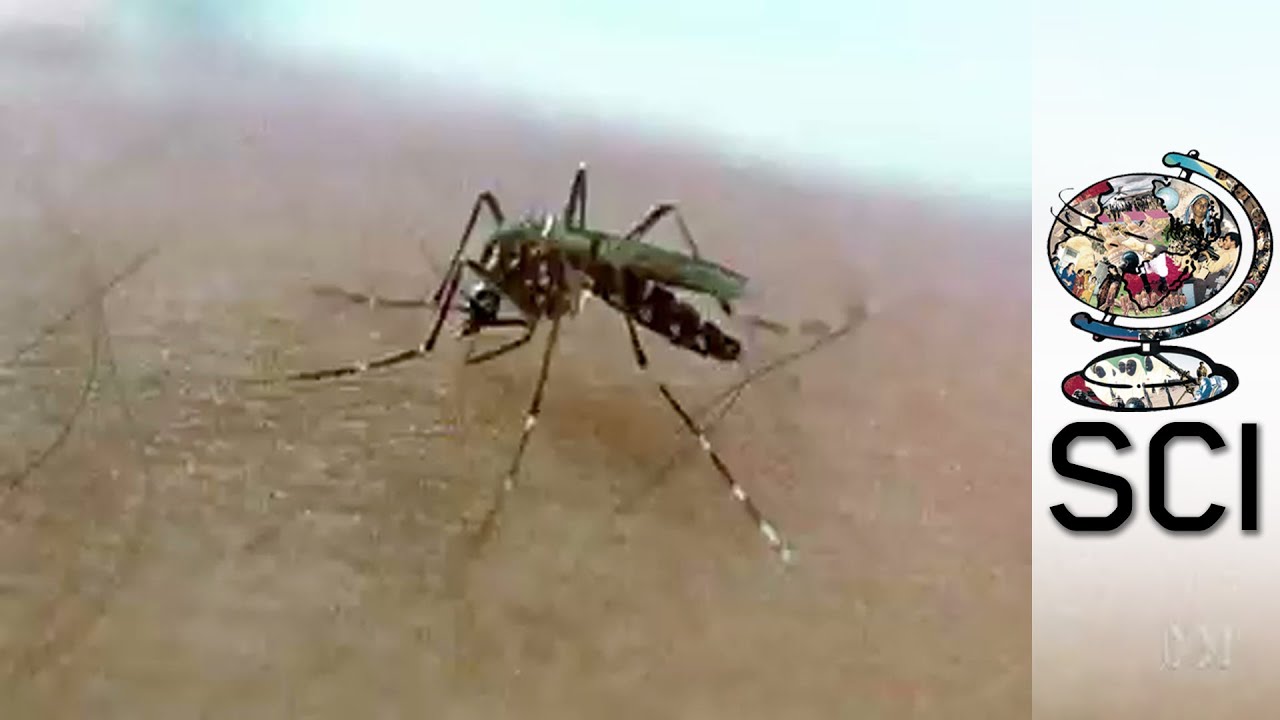
Upwards of 50 to 100 million infections of dengue occur every year, prompting researchers to find ways to reduce transmission rates through innovative methods.
Singapore experiments with treated sewage as a solution to its water crisis.
On October 17, Tristan Roberts injected himself with an experimental gene therapy in an attempt to cure his HIV after stopping conventional medications.
Katie Worth questions the reliability of DNA evidence in criminal cases and its public perception.
El Niño is expected to return by the end of 2026, with NOAA scientist Dr. Michael McPhaden explaining its significant implications for global climate patterns.
The Vatican renews its campaign against Satan, with its Chief Exorcist performing 50 exorcisms weekly.
Seven to nine hundred cages hold various research animals at a Johns Hopkins University facility, where trials for synthetic cornea implants are conducted.
Muna al-Kurd fights for justice as Palestinians face evictions in Sheikh Jarrah, East Jerusalem.
China plans to invest at least $10 billion in quantum technology over the next three years, significantly outpacing U.S. government spending on research.
30 percent of depressed individuals do not respond to current treatments, prompting research into psychedelics as potential therapies for mental health issues.
Human interference with the environment raises ethical questions about the feasibility of geo-engineering as a solution to the climate crisis.
Amber Nicole Miller built a following of about 90,000 on Instagram before her posts shifted to focus on child sex trafficking and human trafficking in 2020.
A Chinese researcher claims to have created genetically edited babies, Lulu and Elana, sparking ethical debates.
Next week, an Ariane 5 rocket will scream skyward with the James Webb Space Telescope on board.
UFO sightings across the U.S. have surged, featuring real footage and a midair incident involving a packed plane at 35,000 feet.
Congress held its first public hearing on UFOs in over 50 years, as the Pentagon investigates unidentified aerial phenomena.
Japan has been accused of vote buying at the International Whaling Commission, using aid to influence small nations like Dominica to support its whaling agenda.
Michael Moynihan investigates Blockchain and its role in the cryptocurrency revolution.
Typhoon Bavi's impact on China's eastern coast highlights the increasing risks of extreme storms in East Asia and the potential influence of El Niño on future weather patterns.
Researchers assess white-nose syndrome's impact on bats and the economy in Michigan.
Jennifer Doudna, a Nobel Prize-winning scientist, discusses the limitations of AI in medicine and the impact of CRISPR on gene editing with Emily Chang.
A team of scientists plans to create a mammoth-like species by replacing 60 or more genes in Asian elephants, with a goal of achieving this by 2027.
James Spann discusses weather education but avoids climate change on air in Alabama.
Artificial intelligence is increasingly integrated into daily life, raising concerns about regulation, job security, and its potential impact on sectors like healthcare and education, as discussed by Connor Leahy and Alan Eyre.
Many experts recognize a significant risk of human extinction from advanced AI systems as developers rush to integrate these technologies into daily life.
Space tourism is being explored by companies like Blue Origin and Virgin Galactic, raising questions about the $500,000 cost for a 90-minute trip into orbit.
Animated shorts revisit the principles of evolution in a humorous style that aligns with Charles Darwin's theories.
Five egg drop designs are tested to determine which can keep an egg intact after a fall, with each method tailored to different competition rules.
Mousetrap cars are explored through mechanical principles and construction techniques, featuring insights from the Science Olympiad to enhance design and performance.
Ten science fair project ideas include testing how many times a deck of cards needs to be shuffled before they are sufficiently mixed.
A 2400-pound female great white shark measuring 16 feet participates in a bite contest to measure the strength of various shark species.
NASA Heliophysics shows the sun from both sides to improve space weather forecasting for Earth.
A 3D model shows the failure of a 460HP pump and the need for a complete rebuild.
Tyson, assisted by Parker, weighs a week's worth of gold to assess his ambitious goal of 450 pounds while navigating the challenges of the gold mining industry.
Mars presents extreme conditions, including lethal temperatures and toxic atmospheres, that pose significant risks to human exploration and survival.
The James Webb Telescope reveals groundbreaking insights into the universe, enhancing understanding of cosmic phenomena and the origins of galaxies.
A 9000-pound car attempts to float in water, prompting discussions about its buoyancy and the need for additional flotation tanks among viewers on Discovery Channel.
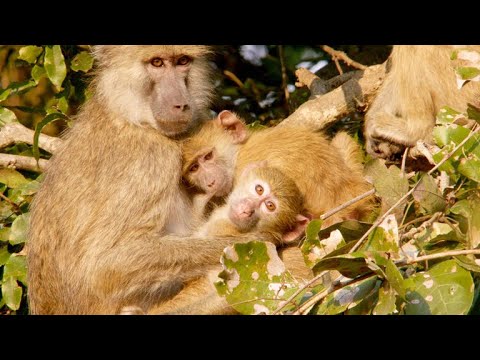
An American biologist studies the Kinda baboon species in their natural habitat in Zambia.
A baby black mamba showcases its deadly hunting skills in the African wilderness.
Psychologist Dr. Robert Hare developed the Psychopathy Checklist in 1980, assessing individuals based on 20 traits like lying and lack of remorse.
Advancements in powerful telescopes and supercomputers have provided a new perspective on the universe's large-scale structure, revealing the limitations of current understanding.
Japan's Hitomi satellite provides detailed measurements of X-ray gas motion in the Perseus cluster of galaxies, located 240 million light-years away.
A vending machine in Japan sells homemade curry over rice grown by its owner nearby.
SLICE, produced by Paris-based ZED, offers weekly short documentaries covering topics from new dinosaur species to future space travel and chocolate-making.
NASA Astrophysics shows a supercomputer simulating the Milky Way's formation from small galaxies.