From over 100,000 films, discover the handful you'll love.
Free or premium access to the world's largest documentary library.
7227 films(Page 51 of 151)
Nottingham's Rutland Arms Hotel, with its centuries of history and tragic past, is investigated by the Ghost Dimension team for paranormal activity.
Bottlenose dolphins use echolocation to locate fish from 200 meters away, relying on sound to coordinate their hunting efforts in murky waters.
The search for extraterrestrial life examines the vast universe, advanced detection methods, and the implications of potential contact with alien civilizations.
Hoofed mammals, including giraffes, zebras, and tapirs, showcase remarkable diversity and adaptability across various ecosystems around the globe.
The recovery of the Costa Concordia, a massive cruise liner that capsized in 2012, involved an unprecedented salvage operation led by Nick Sloan and 800 specialists.
Earth contains 330 million cubic miles of water, yet the origins of this vital resource remain one of science's greatest mysteries.
Green Turtles, once on the brink of extinction in Mayotte, are now thriving under the protection of scientist Ali, who patrols Saziley lagoon against poachers.
NASA launched twin satellites in 2006 to study solar storms and sunspots, which affect Earth's climate and technological systems.
Naked Science examines past mass extinctions and their implications for humanity's future.
Astrophysicists Gordon Walker and Bruce Campbell, pioneers in exoplanet detection, reveal their groundbreaking techniques and the search for Earth-like planets.
Alan Lightman examines modern scientific findings to explore humanity's place in the cosmos, featuring insights from astronomer Dan Snow.
Neil Armstrong's historic moon landing in 1969 marked a pivotal moment in the space race, leading to further lunar missions and future exploration plans.
New Zealand's unique wildlife, including the kiwi, tuatara, and kakapo, illustrates the country's evolutionary history shaped by isolation and natural disasters.
Professor Brian Cox witnesses a total solar eclipse in India and explores the sun's power.
More than a million pictures of weather conditions have been sent back by satellites, aiding in accurate storm predictions and daily forecasts.
In the African savannah, the film highlights the nurturing behaviors of wildlife, showcasing maternal care, playful interactions, and the bonds between animal mates.
UFO abductions are explored through the harrowing first-hand accounts of experiencers who face psychological and physical effects, alongside societal ridicule.
Predatory animals across various regions of the Earth exhibit diverse hunting behaviors, employing tactics ranging from teamwork to ambush strategies and camouflage.
Marine turtles in Mayotte face endangerment due to poaching, but scientist Ali's protective efforts in Saziley are helping their population recover.
Marine venom from creatures like cone snails and jellyfish is being researched for its potential to treat human diseases and improve medical therapies.
In the snowy landscapes of Scandinavia, Norway lemmings and South African rock dassies illustrate remarkable survival strategies against predators in their unique ecosystems.
Planet Earth's formation involved significant geological events, including the Collision Zone in Asia, the American Rift, and tectonic shifts in Europe.
The Great Pyramid, built around 2580-2560 BCE, stands 481 feet tall and consists of 2.3 million blocks, some weighing as much as 50 tons.
A Voyager air tanker can refuel a Typhoon jet in about 10 minutes, playing a key role in Britain's air defense for the next 30 years.
In the animal kingdom, taste and smell play crucial roles in survival, with receptors located in various unexpected places across different species.
In the Maasai Mara, the Rock Pride of lions and a female-led clan of spotted hyenas engage in a fierce struggle for survival and dominance.
Project Gemini's docking challenges, the Curiosity rover's findings on Mars, and satellite swarms investigating Earth's magnetic field are explored in this episode.
Six females from the Gol Kopje pride struggle to survive in a 200 square kilometer territory during the harsh dry season of the Serengeti.
More than 100 scientists deploy a state-of-the-art fleet of over 20 vehicles to study tornadoes during the peak season from March to June.
The 1996 Centennial Olympic Park bombing in Atlanta resulted in two deaths and over 100 injuries, prompting a complex investigation by the FBI and other agencies.
Allan Wilson transformed the understanding of physical anthropology and human evolution through groundbreaking advancements in molecular biology.
Fish play vital roles in ecosystems and human diets, showcasing their remarkable abilities and contributions to life on Earth over the course of a year.
Human impact on biodiversity has led to a significant increase in extinction rates, prompting urgent discussions about the long-term consequences of civilization's expansion.
In the Chiemsee region, recent flooding has prompted changes in the landscape and animal survival strategies, highlighting the resilience of nature compared to human vulnerability.
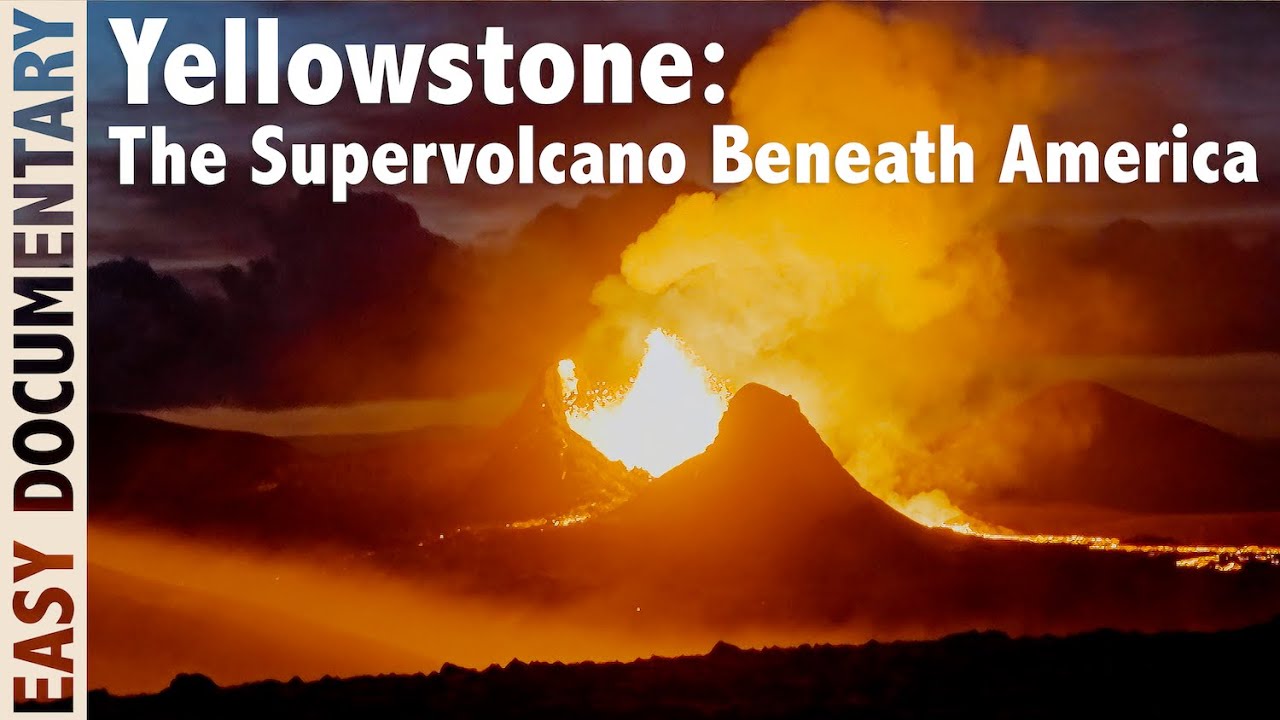
Yellowstone, home to the largest magma reservoir on Earth, poses a significant threat of eruption that could have catastrophic global consequences, as studied by volcanologists and NASA engineers.
The Rosetta mission, launched by the European Space Agency, successfully landed on comet 67P/Churyumov-Gerasimenko to study the origins of the solar system and life.
In the Red Sea, biologist Angela Ziler and dolphin expert Michael Scherman study wild dolphins, revealing their social behaviors and interactions, including the recovery of an injured dolphin named Ferdinand.
Milestones in space exploration are examined, highlighting the Cold War rivalry, the Hubble Space Telescope's servicing, comet missions, and the issue of space debris.
A thigh bone belonging to a dinosaur measuring at least 20 meters from nose to tail was discovered in Queensland, reshaping the understanding of Australia's prehistoric life.
Manny explores the Atlantic Ocean in search of some of the most dangerous shark species, highlighting their behavior and ecological significance.
Death serves as a fundamental aspect of evolution, influencing ecosystems and the cycle of life in various species across the planet.
Nikhil Dhurandhar's controversial discovery of an 'obesity virus' suggests it may contribute to weight gain in 30 percent of severely obese individuals.
Project Apollo's legacy is examined alongside advancements in the Orbiting Carbon Observatory and the significance of zero gravity training in space exploration.
NASA's preparations for the Apollo 11 Moon landing intensified as Apollo 8 successfully orbited the Moon in 1968, pushing the agency to meet JFK's deadline.
Extreme energy extraction, including Arctic drilling and fracking, poses significant risks to the environment and local communities while raising questions about renewable energy's future.
In various ecosystems around the globe, species demonstrate that cooperation can enhance survival, challenging the notion that only the strongest prevail in nature.
The Jet Stream's weakening due to Arctic warming is causing extreme weather events worldwide, including intensified hurricanes, floods, and droughts threatening food security.
Tsunamis, triggered by offshore earthquakes or underwater volcanic eruptions, can unleash devastating waves that cause widespread destruction along coastlines.