From over 100,000 films, discover the handful you'll love.
Free or premium access to the world's largest documentary library.
7235 films(Page 106 of 151)
The Cassini spacecraft captures eerie sounds from Saturn's intense radio emissions.
Thai researchers track the elusive clouded leopard for three years without a sighting.
The history of the universe is humorously condensed into a two-minute video, referencing 'The Hitchhiker's Guide to the Galaxy' and covering 14 billion years.
NASA’s MAVEN spacecraft studies Mars' atmosphere and its history of water flow.
Arabic textbooks, including Avicenna's Canon of Medicine, were compulsory reading for centuries in Europe, influencing medical practices and education.
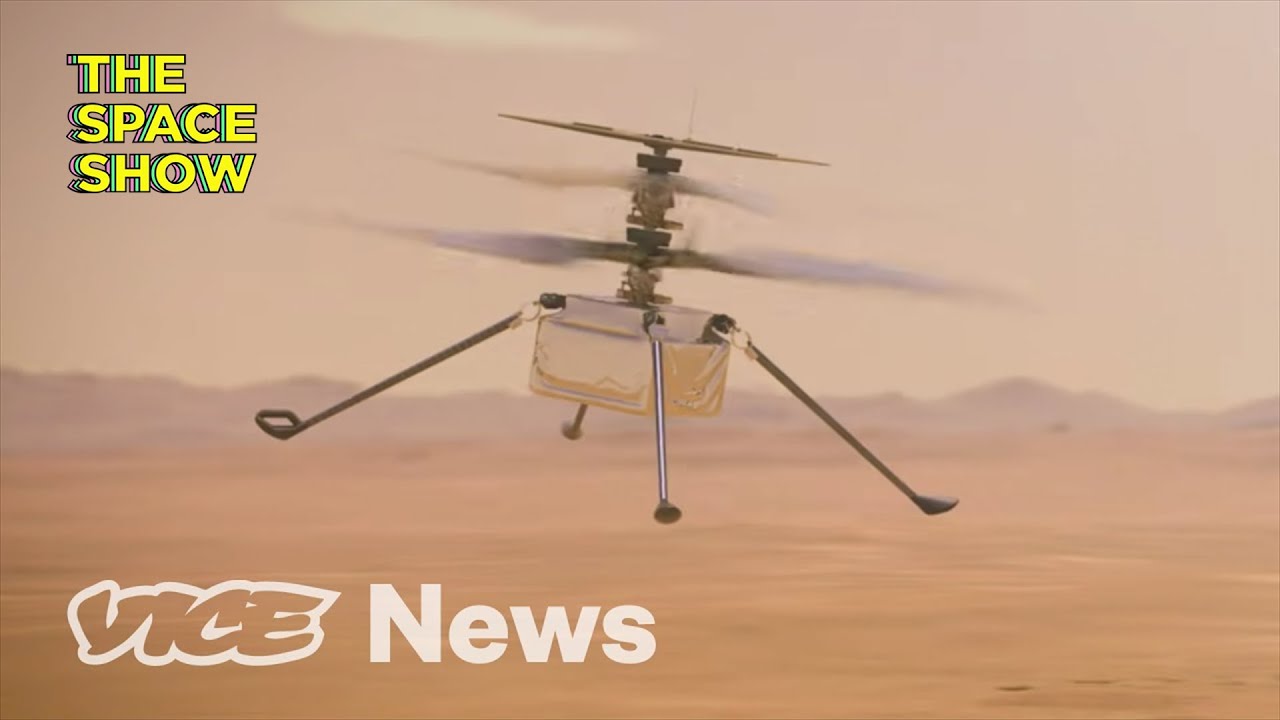
NASA's Ingenuity helicopter, weighing about four pounds with four-foot-long blades, prepares for the first powered flight on Mars, over 160 million miles from Earth.
Sierra Sam, developed in 1949, is the first modern crash test dummy for safety testing.
The South Island giant moa is a massive bird native to New Zealand, towering over its ecosystem.
A 27 km long loop at CERN will accelerate protons to near the speed of light, aiming to recreate conditions from a trillionth of a second after the Big Bang.
NASA Heliophysics details the 11-year sunspot cycle and its effects on solar activity.
Great White sharks engage in fierce competition during mating season, showcasing their unique behaviors and interactions in the underwater ecosystem.
Nitrous oxide levels in the atmosphere have increased by 30% in the past 40 years, making it the largest remaining threat to the ozone layer.
Three weeks into pregnancy, the heart forms and begins to beat, vital for embryo growth.
Geysers on Enceladus shoot ocean water hundreds of kilometers into space, containing organic molecules that could indicate the presence of life.
NASA's rigorous testing protocols and the challenges faced by astronauts were crucial in achieving the historic Apollo 11 moon landing in 1969.
Tim Maltin investigates his theory that a mirage may have obscured an iceberg from the Titanic's crew, challenging established narratives of the disaster.
In the Kalahari Desert, meerkats exhibit complex social behaviors, showcasing their teamwork, communication, and survival strategies against predators.
Wild salmon, once abundant in the Americas, now face extinction in the West due to genetic decline.
Lewis Howard Latimer, born to formerly enslaved parents, played a crucial role in the invention of the telephone and the lightbulb alongside Alexander Graham Bell and Thomas Edison.
The episode presents compelling arguments for Ancient Astronauts in Peru's megalithic structures.
Hubble Space Telescope reveals new details about the complex structure of the Ring Nebula.
Fossil fuels account for 80% of global energy supply, yet significant energy waste presents opportunities for improved efficiency and a faster transition to renewables.
Neil Armstrong manually controls Apollo 11's lunar module to land on the Moon after a misdirection.
The Antonov An-225 Mriya is the largest aircraft, designed to carry oversized cargo efficiently.
Ed White's iconic spacewalk suit exemplifies the essential gear that ensures astronaut safety and comfort during missions, highlighting the challenges of space travel.
The National Air and Space Museum features the Space Shuttle Discovery and Pam Melroy's scrunchie.
NGC 5189, a planetary nebula in our galaxy, showcases a chaotic ribbon-like shape, with insights from the Hubble Space Telescope revealing its formation.
Isaac Newton's feud with Robert Hooke begins after he sends work to the Royal Society.
Scientists believe mental processes can be coded, as shown by USC's memory-restoring microchips.
1,000 times higher radiation levels were detected inside the Fukushima Daiichi reactor compared to the surrounding area after the 2011 disaster.
Oil shortages in the 1970s prompted Americans to reevaluate consumption habits, influencing energy policies that resonate in today's world.
Silkworm cocoons are boiled in water to remove the gum that binds the silk fibers, a technique that has been a closely guarded secret for over 2,000 years.
Pythagoras's lovely Greek Cup teaches moderation in drinking through a clever design.
A 360-meter-high wind turbine can produce 40% more electricity than a standard model, reflecting significant advancements in wind energy technology.
In 1961, a single cow in the U.S. produced nine liters of milk per day, while today's cows average 28 liters due to intensive breeding practices.
The Human Genome Project, launched in 1990 with a $3 billion budget, aimed to map every gene in human DNA over a 15-year timeline.
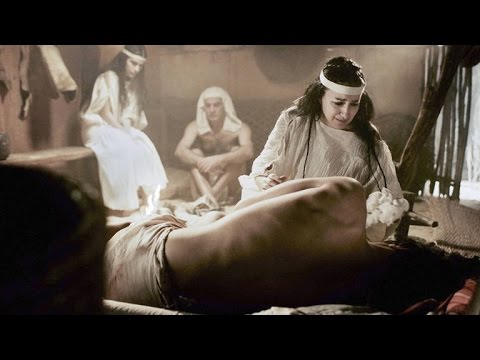
New evidence links the 10th plague of Ancient Egypt to contaminated bread and a fungal infection.
The pilum is a vital weapon in Rome's imperial ambitions, effective against fast attackers.
Neutrons, discovered in 1932, can invade atomic nuclei and produce isotopes for medicine, but they also pose significant hazards to living organisms.
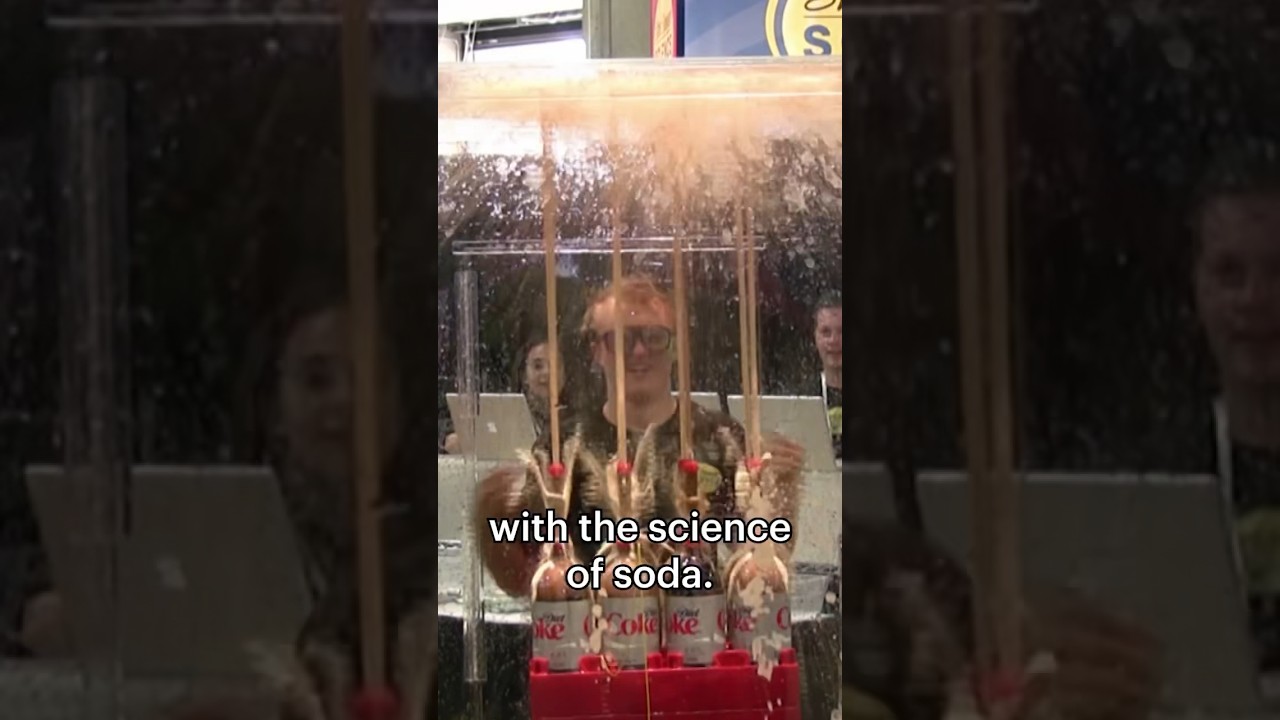
The video demonstrates the science behind carbonation in soda through engaging experiments.
Longevity research shows we can really turn back time with new age-reversal therapies.
Megan Haney Greer reaches a depth of 170 feet while free diving, equivalent to the height of a 13-story building.
This coming episode of Cosmic Journeys questions if Earth is unique in the galaxy.
Advances in telescope technology, particularly the Kepler and TESS spacecraft, have revolutionized the search for exoplanets and the potential for alien life.
The video discusses Pluto's classification and its discovery in 1930, highlighting scientific contributions.
NASA's images show the moon's crust stretching, revealing recent geological activity.
Earth's sixth mass extinction, driven by human activity, threatens biodiversity as up to 58,000 species vanish annually, prompting calls for innovative solutions like De-Extinction.
The Spanish Flu, often misattributed to Spain, actually originated from a natural mutation on a farm in the USA, likely in Kansas or Arkansas.