From over 100,000 films, discover the handful you'll love.
Free or premium access to the world's largest documentary library.
7227 films(Page 19 of 151)
Matthew Dyer, a lawyer mauled by a polar bear in the Arctic, returns to investigate the link between climate change and increasing polar bear attacks on humans.
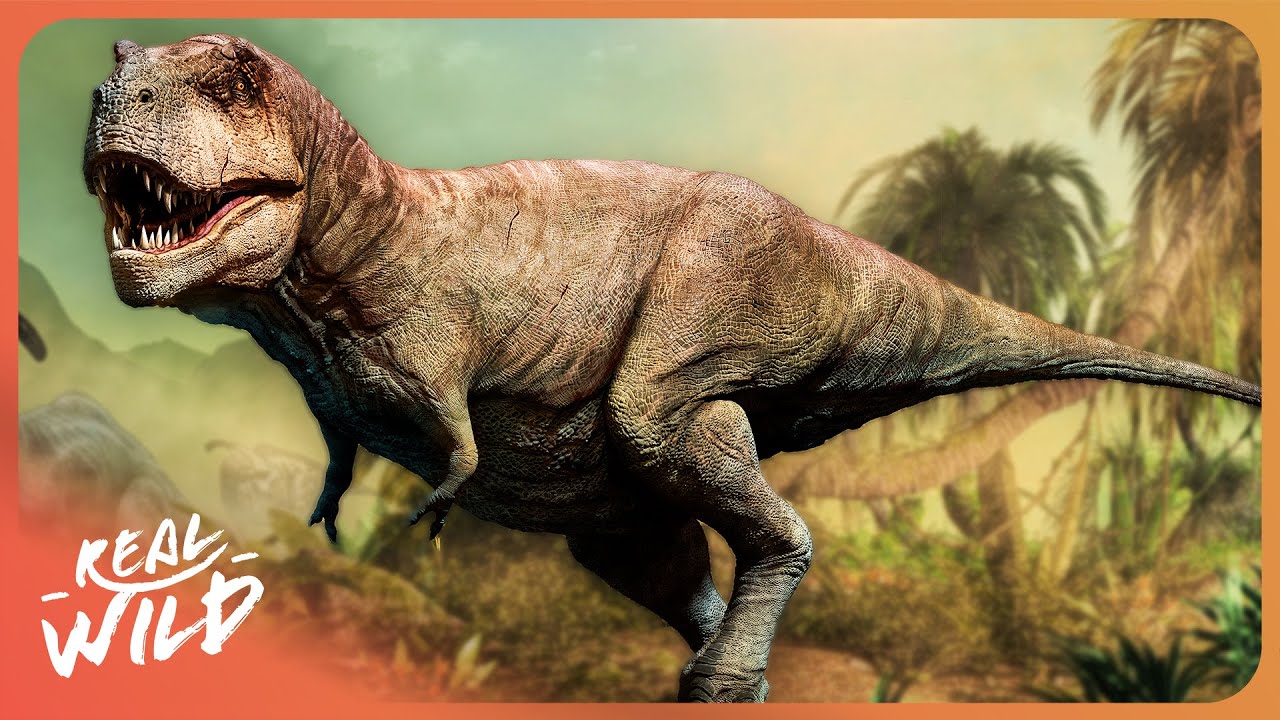
Palaeontologists in the Badlands reveal new insights into the T-Rex's power, speed, social behavior, and the possibility of feathers, challenging long-held beliefs.
Astronomers utilizing the Kepler Space Telescope are investigating the existence of billions of potentially habitable planets beyond our solar system.
The Sun is presented as a dynamic sphere of plasma, highlighting its explosive nature and significant effects on the solar system in this HISTORY® Channel episode.
A nearly 2,500-mile migration of pregnant scalloped hammerhead sharks is linked to the phases of the moon, potentially changing shark conservation efforts.
The Big Bang, the birth of oceans, hurricanes, tornadoes, and theories on Earth's demise highlight the intricate and often mysterious forces shaping our universe.
In a two-part exploration, professor Jim Al-Khalili examines the concepts of everything and nothing, revealing how the universe and mathematics are interconnected.
Bubbles, from their role in ocean dynamics to their impact on technology and medicine, reveal fundamental principles of nature and science.
William Shatner explores the belief in extraterrestrial life, including claims of UFO sightings and theories about alien-human interactions in America.
Scientific thought has evolved from Isaac Newton's laws of gravitational attraction to Einstein's General Relativity, revealing insights into the universe's expansion.
J. Robert Oppenheimer's leadership at Los Alamos Laboratory during the Manhattan Project is examined alongside his later advocacy for nuclear weapons control.
Germany's rivers, streams, and lakes host a vibrant aquatic ecosystem, featuring bizarre moss animals, exotic jellyfish, and the formidable Wels catfish.
Stephen Hawking, a groundbreaking theoretical physicist and cosmologist, advanced our understanding of the universe despite his battle with motor neurone disease.
Dinosaurs are examined through their anatomy, evolution, and fossil discoveries, providing insights into their history and significance in paleontology.
Mysterious UFO sightings near military bases, theories about extraterrestrial life, and humanity's potential contact with alien intelligence are examined in this compilation.
Wolves, reintroduced to Yellowstone in 1995 after a 70-year absence, have restored ecological balance by controlling elk populations and revitalizing vegetation.
In Singapore's rainforests, the Raffles' banded langur, one of the world's least-known primates, coexists with diverse species like ambush hunting scorpions and mouse-deer.
In 2012, British researchers began a clinical trial involving 20 participants suffering from severe depression, testing the effects of psilocybin.
In diverse habitats from Australia to Borneo, species like Bat-eared Foxes and Proboscis Monkeys demonstrate their remarkable auditory abilities.
Great white sharks, often seen as aggressive, may exhibit calmer behavior when disturbances in their environment are minimized, according to zoologist Mauricio Hoyos.
Seventy thousand years ago, Homo sapiens experienced a cognitive revolution that allowed them to dominate other human species, a theme echoed in today's advancements in artificial intelligence.
In Australia, researchers investigate lightning formation in storm clouds, while the International Lightning Center in Florida studies cosmic rays' influence on strikes.
Rock hyraxes, or dassies, thrive along the South African coastline, showcasing their unique behaviors, social structures, and adaptations to their rocky habitat.
Elephants exhibit remarkable intelligence and emotional depth, as highlighted by research from the African Wildlife Foundation on their adaptive behaviors in changing environments.
Paleontologists explore the early discoveries of dinosaurs, examining fossil evidence and the scientific advancements that shaped our understanding of these ancient reptiles.
Human activities are reshaping evolution, as seen in shorter cliff swallow wings in Nebraska and larger female turtles in Chesapeake Bay.
In Somerset, a 10.5-meter Ichthyosaur fossil, the largest ever found in Britain, is excavated alongside a Knights Hospitaller manor and an Anglo-Saxon cemetery.
Fetal stem cell injections have been administered to one in 15,000 people globally, prompting ethical debates about their use in medical treatments.
Boris Belousov's groundbreaking chemical discovery, deemed impossible by the scientific community, challenges long-held beliefs about the universe's predictability.
In Montana, Phil and Tony lead an expedition to search for dinosaur fossils, exploring both scientific research and commercial fossil sales.
A 9.1 magnitude earthquake off the coast of Sumatra triggered a tsunami that killed approximately 250,000 people across 14 countries on December 26, 2004.
Bespoke cameras fitted to wildlife by Gordon Buchanan and conservationists provide new insights into animal behavior and habitats, enhancing scientific understanding.
Forensic photographers capture vital clues at crime scenes for investigations.
More than 1 million people died in earthquakes over the last century, with predictions suggesting that number could increase tenfold in the next century.
In the depths of the ocean, whales adapt their feeding techniques while crabs battle eels and sharks feast on various sea creatures.
Anglo-Saxon skeletons reveal a complex civilization, challenging the perception of the Dark Ages as a time of chaos and violence.
Jupiter, the largest planet in the solar system, features 400mph winds and Earth-sized storms, while Super Diamonds highlight the allure and power of these rare gems.
Myra Hindley and Ian Brady tortured, raped, and killed five children in Manchester during the 1960s, burying their bodies on moorland.
Over 20 tons of space debris enter Earth's atmosphere each day, including meteorites that provide insight into the origins of planets and life.
Salvia divinorum is thought to contain the most powerful natural hallucinogen known to man, yet its effects remain largely unrecorded in scientific literature.
Amateur photographers identified a new celestial phenomenon, challenging established space physics and prompting NASA to investigate this remarkable discovery.
Bikini Atoll, site of the first nuclear tests in 1946, remains a radioactive ship graveyard, impacting the local environment and islanders' livelihoods.
Nick Pope investigates global extraterrestrial mysteries, including falling objects, secret research facilities, and the hidden secrets of Area 51.
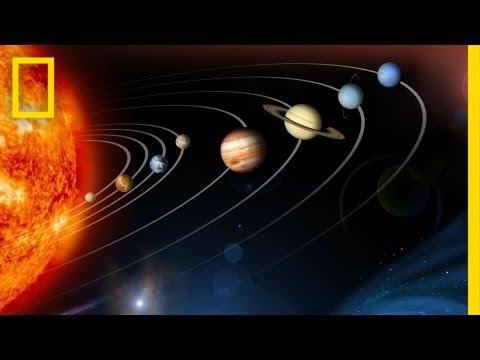
Bill Nye and NASA scientists celebrate 50 years of solar system exploration, highlighting past achievements and future missions in space science.
Many millions of Americans are obsessed with Bigfoot and recent Sasquatch discoveries.
The Tatra Mountains, home to one of Europe's oldest forests, provide a unique habitat that attracts a high population of bears and other large predators.
The flightless Kiwi bird, native to New Zealand, has adapted to its environment by evolving unique traits that challenge traditional bird biology.
Whales, having evolved from land mammals over 50 million years ago, exhibit complex communication and hunting techniques, as explored by oceanographer François Sarano.