From over 100,000 films, discover the handful you'll love.
Free or premium access to the world's largest documentary library.
Topics explored in films with this theme:
14119 films(Page 23 of 295)
In 1665, the Great Plague devastated London, leading the village of Eyam in Derbyshire to quarantine itself in a bid to halt the outbreak's spread.
The origin of life on Earth is examined through the lens of mathematics and natural laws, questioning whether existence arises from chance or a deeper order.
35,000 head of cattle are mustered on a million-acre farm in Queensland, where helicopters assist in managing the vast grazing land.
Chris Horsley investigates a dangerous fracture in Congo after Mount Nyiragongo's eruption.
The solar orbiter has traveled over 2.5 billion kilometers since its launch in 2020, studying the Sun's atmosphere and solar winds.
A janitor in Vancouver discovered a burned body in a dumpster in July 1991, leading to a complex investigation involving DNA evidence.
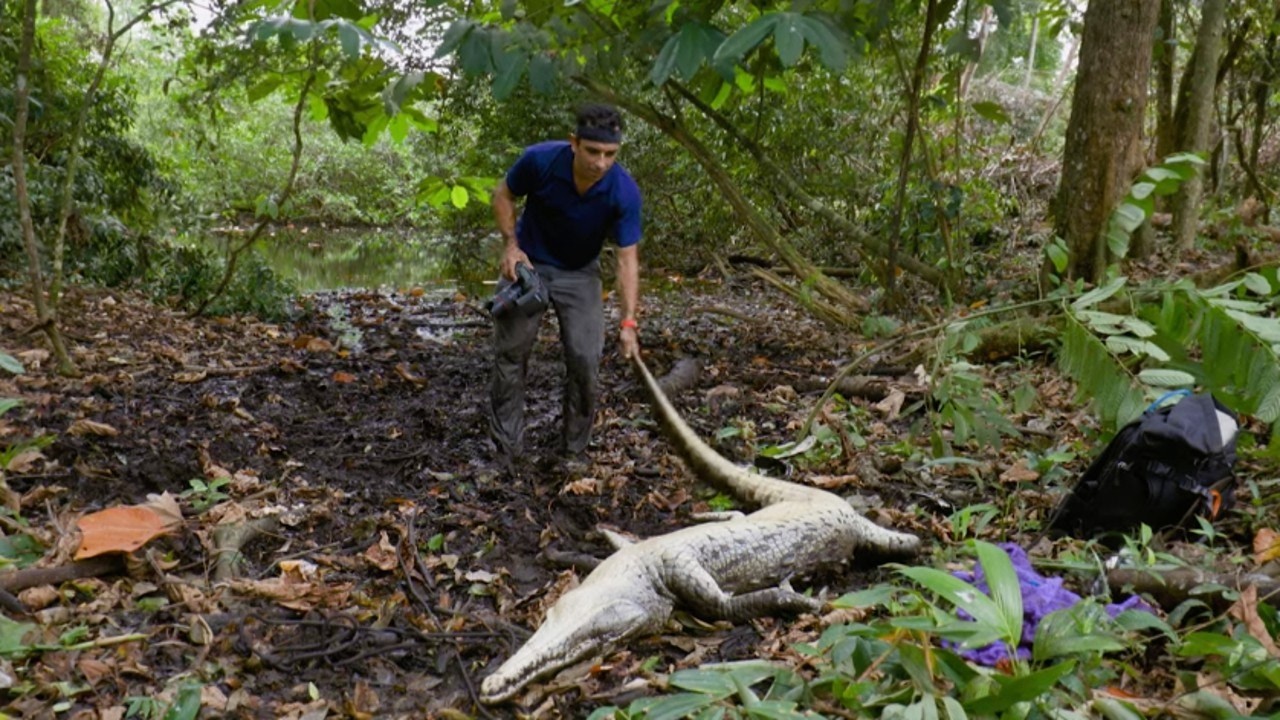
About 80% of Guyana is covered by pristine rainforests, home to diverse wildlife including jaguars, harpy eagles, and black caimans.
Nearly 70,000 tons of lobsters are harvested from the Atlantic Ocean each season, generating an estimated value of more than a billion euros.
Kuala Lumpur has an average inhabitant age of 27.4, reflecting its youthful and multicultural society amid a backdrop of modern skyscrapers and traditional villages.
Junior and Ruth risk their lives in Papua New Guinea to reach school through jungles.
Jacques Cousteau calls this region the 'aquarium of the world' in northwest Mexico.
An Indonesian legend claims monkeys can speak, yet they choose silence over communication.
Asteroids present both a potential resource frontier and a threat to Earth, prompting advancements in detection and diversion technologies by private companies.
Less than 250 millimeters of rain falls annually on the Valdés Peninsula, a vital refuge for marine mammals in Argentina.
Every year, a nomadic community in Mongolia travels over 400 kilometers to reach their spring pastures, facing challenges from climate change and modernization.
Norilsk is the world's most isolated and toxic city, showcasing extreme pollution and harsh living conditions.
Around 150,000 cranes use Germany as a stopover on their migration north to breeding grounds in Scandinavia each year.
On April 27, 2011, Alabama experienced its worst tornado outbreak on record, with 62 tornadoes touching down and 252 fatalities in less than 24 hours.
In the African savannah, male and female animals such as lions, hyenas, and elephants face distinct challenges and advantages that shape their survival and social roles.
Olympus Mons on Mars rises to a height of 24 kilometers from its base, making it the tallest peak in the solar system.
On September 23, 2014, the United Nations hosted a historic climate summit, prompting a global rally that drew hundreds of thousands of participants.
In Chad, ancient elephants roam the striking dunes of Kanem, while the Kapsiki villages and Waza wildlife reserves highlight the region's rich biodiversity and cultural heritage.
Up to half a million Olive Ridley sea turtles arrive at Ostional Beach in Costa Rica during the "arribada," a synchronized nesting event each September.
In the Klamath Basin, Indigenous groups are reviving traditional cultural burning practices to manage wildfires exacerbated by climate change.
Bison in North America, giraffes in Africa, and koalas in Australia illustrate the essential roles wild creatures play in maintaining their ecosystems.
The James Webb Space Telescope, launched by NASA in December 2021, captures images of the Cosmic Dawn, revealing insights into the universe's early history.
China, a 20-year-old gemology student, travels to Ratnapura, the city of gems, to learn about sapphires and rubies from local miners.
Chernobyl and Pripyat's abandoned landscapes reveal the catastrophic aftermath of the 1986 nuclear disaster, alongside other eerie sites like the Terrifying Asylum.
Lo Manthang in Nepal showcases ultra-high altitude life and unique habitats in the clouds.
Dr. Louis Turi claims to have made hundreds of accurate predictions, including major events like 9/11 and the Asian tsunami, based on his astrological insights.
Mercury, Venus, and Mars are examined for their unique characteristics and the insights they provide into the formation of the Solar System and potential off-world colonies.
By the turn of the millennium, poachers had reduced the Tatra chamois population to 200, but strict protection has since increased their numbers to 1,500.
80 to 100 new residents move to Nashville every day, influencing the city's culinary scene and its traditional Southern food culture.
Less than 100 Asiatic cheetahs remain in the wild, prompting wildlife photographer Benny Rebel to advocate for their conservation in Iran.
Filipino Gold Divers risk their lives in Paracale's Deadly Pits to earn a living through illegal mining.
Divers in New Zealand's Foveaux Strait dive up to 75 feet on a single breath to harvest sea urchins, a delicacy worth nearly half a billion dollars annually.
Daniel Opitz films humpback whales in Hawaii, focusing on their complex songs and conservation efforts.
Eighty percent of under-18s held in Madagascar's prisons have never been to court, often waiting years for a trial that may never come.
700 a.m. marks the start of a busy day for families on Inle Lake, where farmers tend to their floating gardens and fishermen head out to work.
Maud Galant prepares to move from North to South Brehat while Jacques Jolibois manages Paimpol Harbour.
Santiago Mayanz hunts invasive Cuban lizards in Tenerife while Juana Cabreira enhances goat milk production and Carlos Guevara creates wine from banana waste.
Andrés Ruzo, a Explorer, investigates the legendary boiling river of the Amazon, inspired by his grandfather's tales from Peru.
Seventy percent of all clothing is made from plastic, primarily polyester, contributing to significant environmental challenges linked to the fashion industry.
Over the past two decades, fragments from missiles and satellites have accumulated in space, threatening vital infrastructure and future missions.
Ten thousand humpback whales migrate to Hawaii each year, with conservation efforts helping to recover their population.
Mutualism in nature is explored through various animal partnerships, such as manta rays and remoras, highlighting their cooperative survival strategies across diverse environments.
Forty percent of a crayfish's brain is devoted to the sense of smell, aiding its survival in the complex ecosystems of the Okefenokee National Wildlife Refuge.
Nathanaël Maury captures seventy-two species of amphibians and reptiles during his expedition in Costa Rica's diverse ecosystems.