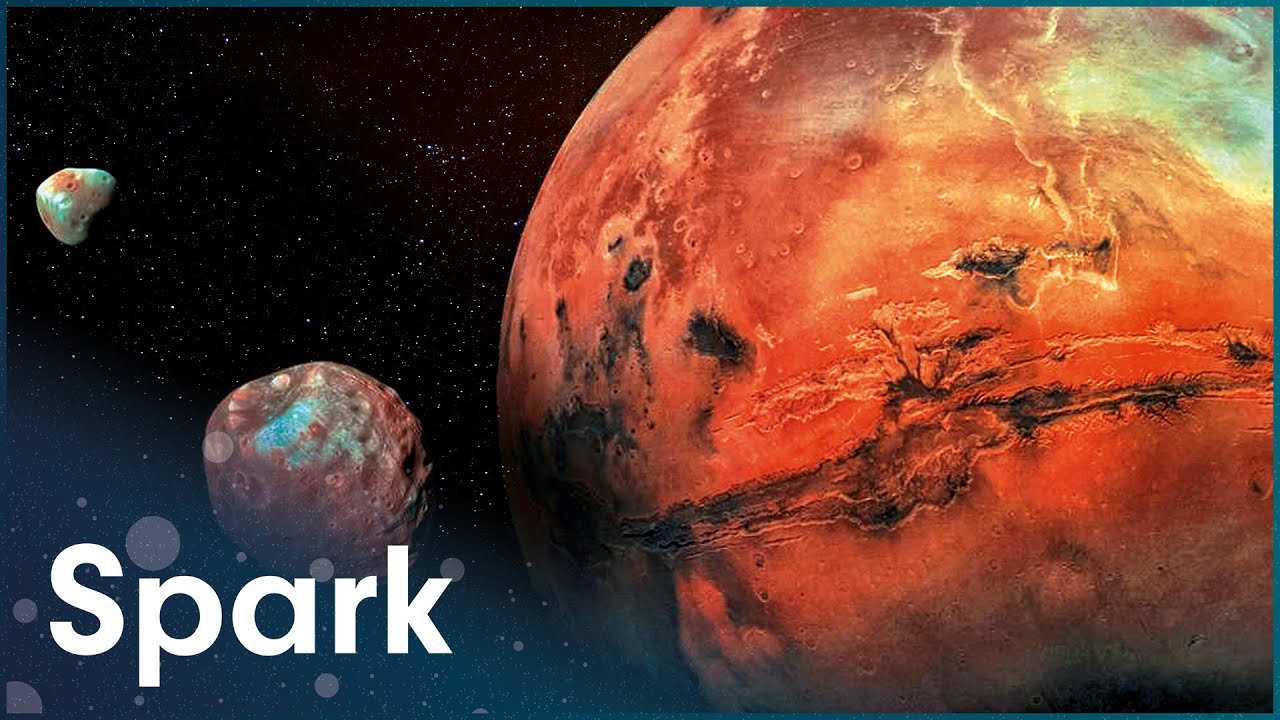
What Exploring Mars Has Taught Us
Synopsis
Olympus Mons on Mars rises to a height of 24 kilometers from its base, making it the tallest peak in the solar system.
Synopsis
Curiosity, NASA's rover, has traveled across the Martian surface since its landing in 2012. It has provided critical data about Mars' geology and atmosphere. The rover discovered key ingredients for life in Gale Crater, suggesting that life may have been possible billions of years ago. As Curiosity continues its mission, it heads toward Mount Sharp, where scientists hope to find more evidence of past life. The film discusses Mars' geological history and the ongoing search for signs of life on the red planet.
Deep Dive
Why Watch
- Find out what Curiosity discovered about Mars' potential for life.
- See the stunning images of Mars captured by advanced cameras.
- Meet the scientists who analyze Mars' complex geological history.
Did You Know
- Mars has giant volcanoes, including Olympus Mons, which is 24 kilometers high.
- The Curiosity rover found key ingredients for life in Gale Crater.
- Astronomers have speculated about life on Mars for over a century.
Perfect For
Frequently Asked Questions
What is the tallest volcano on Mars?
Olympus Mons is the tallest volcano on Mars, rising to a height of 24 kilometers from its base, which is three times higher than Mount Everest.
What did the Curiosity rover discover about the possibility of life on Mars?
Curiosity found key ingredients that could have allowed life to flourish on Mars when there was water in Gale Crater, indicating that life was at least possible there billions of years ago.
When did scientists first receive close-up images of Mars?
Scientists received the first grainy close-ups of Mars in 1965, which showed a barren and cratered surface.
What are people saying?
Play More Like This




Browse more like this

Related Films
Is this your film?
If you made this film or hold the rights to it, we'd like to talk. We can license it and pay you a share of what it earns.
Comments