From over 100,000 films, discover the handful you'll love.
Free or premium access to the world's largest documentary library.
4759 films(Page 15 of 100)
Borneo's rainforests, home to unique species like the Paradise Tree Snake and Pongo pygmaeus, face significant environmental challenges that threaten their biodiversity and the Murut people's culture.
A male African elephant can weigh as much as five family cars, reaching up to 6,350 kilograms and measuring 7.5 meters in length.
A young Angolan fisherman, once a child soldier, collaborates with the Okavango Wilderness Project to protect the vital Lisima Lya Mwono river.
Two families in a fishing community compete to capture a pelican, a bird that brings honor and prosperity, as tensions rise over fishing rights on Lake Manchar.
Half a billion salmon leave the sea each year to return to their spawning grounds in the rivers of North America, with millions heading to Vancouver Island.
The Hudson Bay population of polar bears has declined by 16 percent in the past two decades, primarily due to the effects of global warming.
A newborn elephant weighs more than an average adult man, and Joyce Poole has studied their communication for nearly 50 years in Amboseli National Park.
Two thousand islands make up Micronesia, where the ocean is the primary link to the outside world for its diverse cultures and communities.
A golden eagle can swoop at speeds of 200 km/h while competing for territory with the bearded vulture, which has a wingspan of 3 meters.
Valdez Peninsula in Argentina's Patagonia is a diverse wildlife habitat, featuring sea lions, guanacos, and Patagonian hares in its unique ecosystems.
One ton of equipment is transported for a three-day rafting expedition down the Magpie River in Quebec's remote wilderness.
Kawésqar and Yagán indigenous peoples collaborate with National Geographic Pristine Seas to protect the ecosystems of the Kawésqar National Reserve in southern Chile.
In the wilds of Africa, BBC Earth captures remarkable moments of lions hunting and interacting with hyenas, showcasing the raw dynamics of nature.
Over the past 50 to 60 years, many rivers in central Europe have been irreparably harmed, leaving a generation without experience of a living river.
Bigfoot's scream is featured among a compilation of unsettling animal sounds in an episode of The Proof Is Out There, airing on The HISTORY Channel.
The Pamir Highway stretches 1,300 kilometers from Dushanbe, Tajikistan, to Bishkek, Kyrgyzstan, following the River Panj along the Afghan border.
In the tropical forests of New South Wales, Australia, the elusive Tasmanian Tiger continues to intrigue wildlife enthusiasts and researchers alike.
A clan of around 70 spotted hyenas competes with a pride of lions for territory and prey in the northern Serengeti's grasslands.
In Dzanga-Sangha National Park, over 3,000 western lowland gorillas are observed through the lens of videographer Thomas Behrend, highlighting their family dynamics and jungle life.
Hundreds of thousands of spider crabs march across seagrass plains in Australia, seeking safety in numbers as they molt and face predators.
55,000 hectares of land in British Columbia, once owned by German Duke Carl von Württemberg, are now managed by The Nature Conservancy of Canada.
Bavaria's magical land attracts millions with its magnificent wildlife and stunning landscapes.
Millions of gnus migrate annually across the Serengeti from Tanzania to Kenya, facing predators and harsh conditions while giving birth in the world's largest maternity room.
In Cuba, Hispaniola, and Trinidad, unique wildlife adaptations, including the venomous solenodon and isolated American crocodiles, highlight the challenges of island ecosystems.
A Leopardess hunts in the Serengeti, almost invisible, to ensure her cub's survival.
For every one human, there are an estimated 1.4 billion insects on Earth, making up at least 80% of all known animal species.
Lionesses and spotted hyenas compete for survival in the wild's harsh conditions.
Up to 20 European moor frogs can gather in a single square meter during their mating season, creating a chaotic scene of splashing and chirping.
Ten young chimpanzees, including Cheyenne and Quilou, leave their island home to adapt to life in the Conkouati forest after being rescued from poachers.
David Oren has spent 25 years researching the Amazon rainforest, claiming that the Mapinguari, a creature thought extinct for 10,000 years, is still alive.
Only eight thousand brown hyenas remain in the wild, with many finding refuge along Namibia's Skeleton Coast, a harsh and arid environment.
Tuguldur risks his life crossing the Tunkhel river to reach school in Mongolia.
The Cyclades, around the sacred isle of Delos, showcase unique islands and the pelican Petros.
Two million wrinkly bats emerge from their cave at dusk, while raptors wait to prey on them, illustrating the region's rich biodiversity.
Wild cats, including Cheetahs, Pumas, Jaguarundis, Ocelots, and Bobcats, are explored for their unique behaviors and adaptations beyond the well-known big cats.
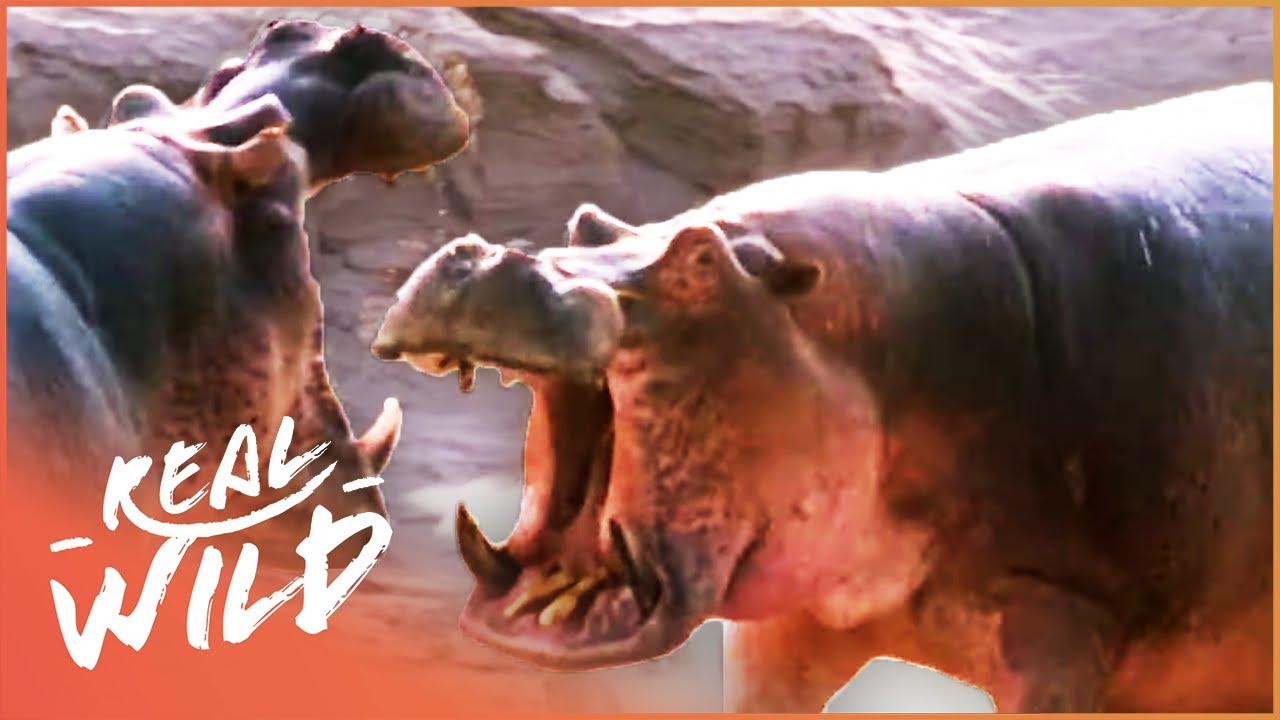
Hippopotamuses, often perceived as harmless, are responsible for more human fatalities in Africa than any other animal, driven by aggressive territorial behavior and violent social dynamics.
In the Bohemian Forest, Vaclav adopts two bear cubs orphaned by their mother, highlighting the challenges of survival and the bond formed in the wild.
North and South America, rich in biodiversity, are home to 14 wild cat species that face significant challenges in their fight for survival.
Kanga Pan in Mana Pools National Park serves as a vital water source for diverse wildlife, while a hidden predator poses a threat to the gathering animals.
Paul Nicklen and Cristina Mittermeier conduct a four-year mission to stop oil drilling in the Bahamas using their photography and social media reach.
Alexander Neich Oganov, a farmer and spiritual leader, has seven children and 14 grandchildren living in a small settlement near Lake Baikal.
Richard Fox operates his family ranch at an altitude of 2,300 meters in Wyoming, where he faces challenges feeding horses and cattle amid late spring snow.
A natural choke point between two lakes helps Bear Grylls catch fish using a makeshift net in the high mountains of northern Scotland.
Around 800 brown bears inhabit the Tatra Mountains, where they coexist with domestic animals and face legal hunting limits of 70 to 80 bears each year.
A mother bear with three cubs, just 8 months old, forages for food in autumn to build fat reserves before winter hibernation.
Michael "Nick" Nichols employs advanced technologies to photograph lions and elephants in Africa, aiming to reduce human-animal conflict and prevent extinction.
1,800 kilometers of lagoons and natural lakes in Kerala provide the Malayalis with a vital means of livelihood and cultural expression.
Géraud Burin des Rosiers attempts to hunt crocodiles with his bare hands and confronts venomous snakes in the Amazon rainforest.