From over 100,000 films, discover the handful you'll love.
Free or premium access to the world's largest documentary library.
2305 films(Page 6 of 49)
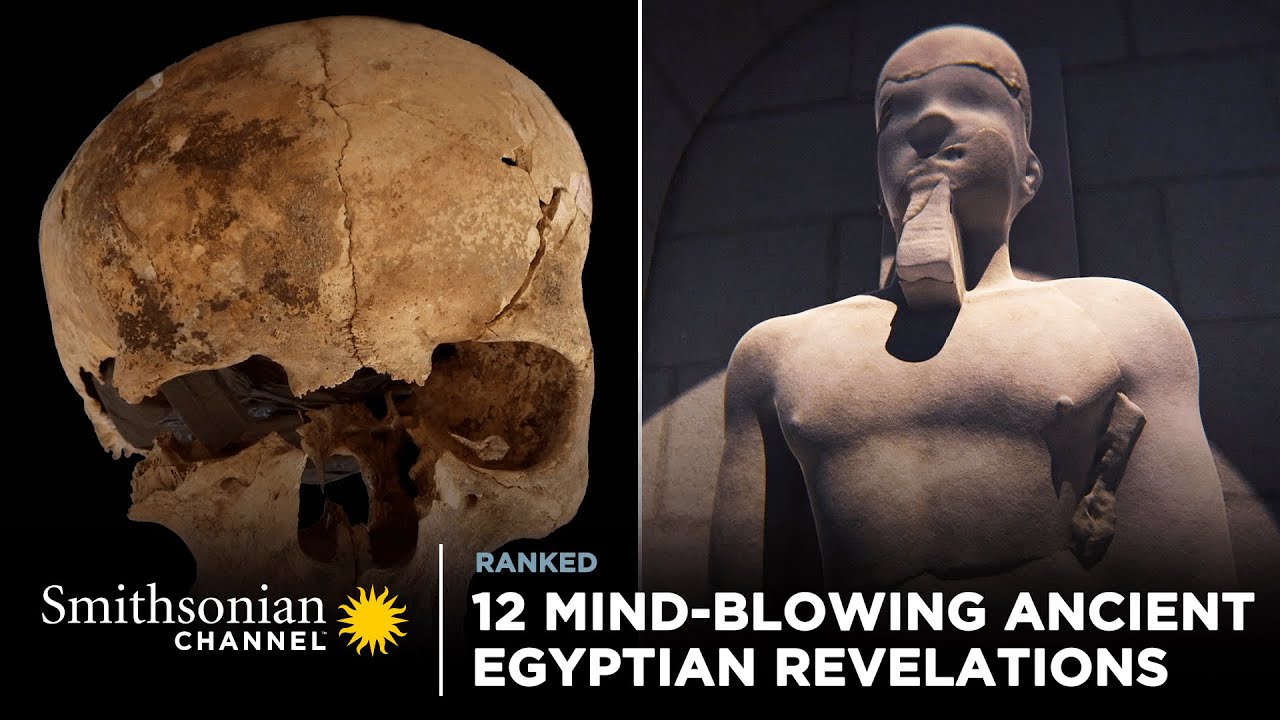
In the Sierra Madre Mountains of Mexico, forensic anthropologists analyze the remains of an 850-year-old pregnant teenager to reveal the circumstances of her violent death.
More than 60,000 man-made structures are revealed in the jungles of Guatemala, shedding new light on the ancient Maya civilization.
Over 2,000 artifacts were discovered at Branodunum, including a rare pewter dish, revealing the fort's significance during Roman occupation.
The search for the lost tribes of Israel, remnants of the twelve tribes mentioned in the Bible, explores their historical significance and survival after the Assyrian conquest.
Over 60 dogs were buried in an ancient cemetery in Hierakonpolis, suggesting their role in hunting and capturing wild animals in Egypt.
Two sets of remains, one belonging to a human and the other to a Paranthropus, were found at Kromdraai, dating back 2.5 million years.
460 bars of gold, worth $240 million, were recovered from a sunken ship, marking the largest haul of lost gold bullion ever retrieved from the seabed.
In Loch Migdale, archaeologists from Time Team investigate a potential crannog and a circular feature that may represent a prehistoric henge.
A 7-ton male Stegosaurus, equipped with meter-long spikes on its tail, poses a lethal threat despite its small brain size.
An iron age Fugou, an underground chamber in the UK, is investigated by Time Team to determine its extent and any associated remnants of the settlement.
Julius Caesar was stabbed 23 times by 23 assassins on the Ides of March, a murder that significantly altered the course of Western civilization.
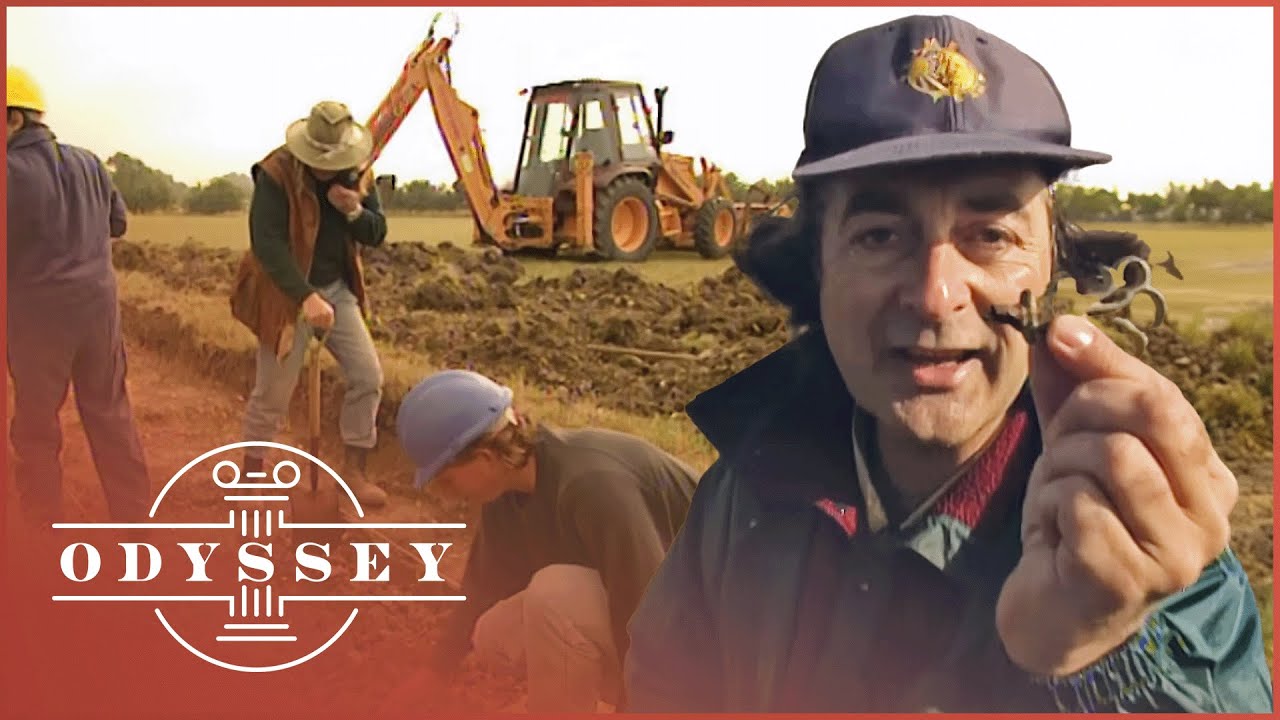
In East Anglia, Time Team investigates a field that has yielded hundreds of Roman artifacts, seeking to understand the historical significance of the site.
Antarctica's hidden secrets, including pyramid-like formations and the Cosmic Egg symbolism, are examined for connections to ancient knowledge and extraterrestrial influence.
India's civilization, with roots tracing back to the Indus Valley around 3500 BC, has maintained its cultural and religious systems for over 5,000 years.
High Worsall, a nearly vanished 14th-century village near Middlesbrough, is explored by Time Team as historians Robin Bush and Dawn Hadley research its historical significance.
Ancient civilizations such as Mesopotamia, China, India, and the Empires of the Americas are explored through their histories and cultural achievements.
In County Armagh, Time Team investigates a site that may be linked to Conchobar mac Nessa, a legendary figure from the Ulster Cycle of Irish mythology.
In a Dorset garden, Time Team excavates to reveal artifacts that trace human habitation back to the Neolithic period.
In Hartlepool, Time Team investigates the location of a lost Anglo-Saxon monastery founded by Saint Hilda, a key figure in the Christianisation of England.
Easter Island, measuring 20 kilometers long and 10 kilometers wide, is home to around 25,000 archaeological sites, only a fifth of which have been excavated.
Richmond Palace, a significant Tudor monument and residence of Queen Elizabeth I, was extensively searched for remains after its demolition in the 18th century.
A man buried on a layer of dead animals in Somerset raises questions about ancient Roman burial practices, alongside the mystery of 97 murdered infants.
National Park spans 244,000 acres and is home to the American bison, which weighs up to 2,000 pounds and engages in annual rutting battles.
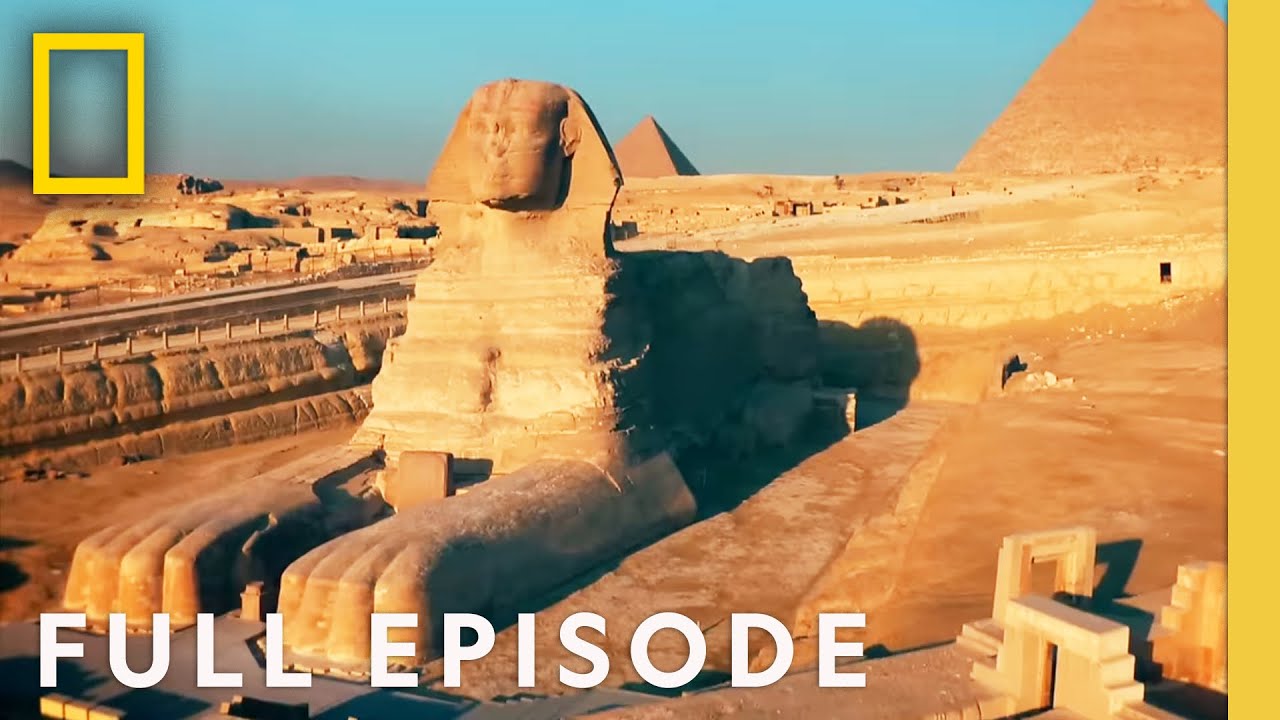
Over 130 pyramids have been discovered in Egypt, with teams of archaeologists investigating the origins and secrets of these ancient structures.
26 statues of the god Osiris stand as guardians at Hatshepsut's temple, a site of ongoing archaeological excavations in Luxor, Egypt.
New archaeological findings provide insights into the lives and practices of Druids, the enigmatic figures of Celtic history.
One and a half thousand feet above sea level, a team of archaeologists investigates the remnants of Tudor copper mines in the Lake District.
In 2009, workers in Anyang, Henan, discovered an ancient tomb that may belong to Cao Cao, a key figure from China's Three Kingdoms period.
In Scotland's Glasgow, archaeologist Anna Richie investigates a Dark Age graveyard featuring ancient gravestones and Viking hogback tombstones, exploring its historical significance.
Research suggests that the Anasazi of the American Southwest, once viewed as peaceful farmers, may have engaged in cannibalism, raising questions about their societal practices.
In Lincolnshire, a metal detectorist has found over 300 artifacts from the Roman, Iron Age, and Anglo-Saxon periods, prompting an investigation into the site's historical significance.
Ancient Mayan cities, long obscured by dense vegetation, are examined by scientists and archaeologists revealing their true scale and complexity.
A butler set fire to a Tudor mansion in Suffolk in 1773, leading to the loss of a historic estate that had stood for over 500 years.
Angkor Wat, the largest religious structure in the world, is examined through advanced technology to reveal insights about its construction and the lost city nearby.
A young PhD student excavated a field in South Oxfordshire in the 1960s, uncovering stone walls of a Roman building but lacking evidence to identify it.
Pigs rooting in a Dorset field uncovered Roman mosaic floor tiles, leading to an excavation that revealed a heated villa and burial sites.
A massive cataclysm is said to have destroyed Atlantis, an advanced civilization, approximately 11,000 years ago, leaving its fate a mystery.
Three days of excavation in Sutton Courtenay reveal the largest Anglo-Saxon great hall ever discovered in Britain, dating back 1,400 years.
Ancient Crete's Minoan civilization is explored as archaeologists search for the legendary labyrinth associated with the Minotaur of Greek mythology.
Francis Pryor examines archaeological evidence from Britain to challenge the notion that the Dark Ages were a period of barbarism following the Roman departure.
Three and a half thousand year old wooden posts emerge from the Thames, prompting archaeologists to investigate their possible connection to London's first bridge.
Lara Cassidy, a geneticist at Trinity College Dublin, reveals insights into the culture of ancient European farmers through the analysis of a burial site from 3000 BC.
A team of experts reconstructs two replicas of ancient Egyptian chariots to test their effectiveness in warfare during the New Kingdom era.
A lift takes workers up 55 meters to restore the Colosseum, revealing details hidden beneath centuries of grime.
Syon Abbey church measured 260 feet long and 108 feet wide, making it one of the largest monastic buildings in England before it vanished.
Excavation near Whitestaunton Manor reveals a Roman bath house in Somerset's Blackdown Hills.
In East Sussex, archaeologists investigate a fortified Roman settlement, an 8,000-year-old submerged Mesolithic town off the Isle of Wight, and Iron Age burials near Dorchester.
On July 16, 1945, the Trinity test in New Mexico detonated the first atomic bomb, leading to a surge in UFO sightings near military bases.