From over 100,000 films, discover the handful you'll love.
Free or premium access to the world's largest documentary library.
2305 films(Page 35 of 49)
Archaeological and historical analysis of 1st-century Nazareth and Jerusalem reconstructs the life of Jesus of Nazareth, examining ancient texts and recent discoveries.
Ramesses II, known as Ramesses the Great, ruled Ancient Egypt for 66 years, expanding its borders through military campaigns and monumental architectural projects like Abu Simbel.
Captured German records at the National Archives provide insights into American POWs during World War II, including card files and historical context.
The illicit network of tomb raiders like Giacomo Medici and high-society dealers Robin Symes and Christo Michaelides facilitated the smuggling of a 2,500-year-old relic to the J. Paul Getty Museum, igniting.
The Etruscans, an ancient civilization in Italy, are explored through their lost cities, unique formations, and sacred sites, narrated by Stacy Keach.
In Peru, the survival of indigenous customs and beliefs is explored through visits to Machu Picchu, Lake Titicaca, and Andean villages, highlighting their connection to the Sun God and Pacha Mama.
Easter Island's Moai statues reveal the advanced astronomical knowledge of ancient Polynesians and Andean cultures, linking their navigation techniques to modern science.
Alexander the Great's conquest of Egypt led to his acceptance as a living god and the founding of Alexandria, merging Greek ambition with Egyptian divinity.
Operation Demetra reveals a multi-billion dollar black market for ancient antiquities, highlighting a cross-border sting that seized over 25,000 artifacts.
Ancient priests are examined through controversial theories and archaeological anomalies that challenge established historical narratives and beliefs.
Britain's battlefields are examined through the lens of pivotal conflicts, featuring insights from archaeologists and weapons experts on historical warfare.
Egypt's black market for stolen artifacts thrives on the illicit trade of priceless items, from Minya's excavations to elite auction houses worldwide.
In the exploration of hidden historical narratives, Jamie Theakston examines controversial theories and suppressed events that challenge established beliefs.
Since 2015, Eric Kilgore has worked with the National Park Service to digitize records of casualties from the December 7, 1941, Pearl Harbor attack.
Yonaguni's underwater ruins, Nae Yagi's ice climbing challenges in Nagano, and Ondekoza's taiko drumming showcase Japan's unique cultural and natural extremes.
Pompeii, an ancient Roman city buried under volcanic ash from Mount Vesuvius in 79 AD, reveals its lost artifacts and historical significance.
In Teotihuacan, the Pyramid of the Sun serves as a focal point for exploring ancient solar observations, rituals like the Inti Raymi in Bolivia, and modern solar telescopes in the Canary Islands.
In ancient Greece, the Oracle of Delphi was a significant religious center where priestesses conveyed prophecies from the god Apollo.
Cambodia's cultural heritage has been severely impacted by the multi-billion dollar black market for looted Khmer art, driven by figures like Douglas Latchford and whistleblower Toek Tick.
Archivists Theresa Fitzgerald and Ashley Mattingly discuss military and civilian personnel records at the National Archives in St. Louis, detailing access and reproduction processes.
370 years ago, members of Parliament engaged in armed conflict with King Charles I, marking a turning point in England's first civil war.
The National Archives holds passport applications submitted to the Department of State between 1795 and March 31, 1925, which can aid genealogical research.
Cincinnati Music Hall, built on a former public cemetery, reveals its buried history as forensic anthropologist Dr. Elizabeth Murray investigates human remains found during renovations.
Syria's archaeological wealth has become a target for a multi-billion dollar black market, with ancient cities like Palmyra and Nimrud exploited to fund terrorism.
Accessing burned military records at the National Archives at St. Louis is possible through content recovery scanning, as explained by Preservation Specialist Ashley Cox.
Ancient Rome's transformation from a small city-state to a vast empire is examined through its legendary commanders, epic battles, and enduring legacy.
Archaeological findings across France, Germany, Austria, and Switzerland reveal the advanced civilization of the Celts, who built fortified cities and mastered iron long before Roman dominance.
Francesco Tiboni challenges the traditional narrative of the Trojan Horse by proposing it was a Phoenician ship, supported by archaeological evidence and ancient texts.
In Zimbabwe's Eastern Highlands, a high-security zone at Theford Estate protects white rhinos, showcasing their survival amid threats and exploring ancient San rock art.
Britain's bloodiest Monday in history is examined through the lens of pivotal conflicts, featuring insights from archaeologists and weapons experts.
In Peru's Chan Chan, the Chimú culture worshipped the Moon through rituals, while astro-photographers and cyclists celebrate its beauty across the Americas.
In 1795, the warship Triunfante sank during a French siege, and the documentary details the archaeological process of retrieving and displaying this significant wreck in Spain.
Historian Norm Christie leads a team of experts in a quest to locate the mass grave of 44 soldiers from the Battle of Vimy Ridge, lost for a century.
In the Hellfire Caves of West Wycombe, Jamie Theakston explores controversial historical theories and suppressed events through expert interviews and investigations.
Iceland’s 1975 women’s strike and evidence of ancient matriarchal societies challenge the conventional narrative of gender equality throughout human history.
Archives Specialists John Deeben and Rebecca Sharp examine the Accompanying Papers File, detailing bill files and documentation submitted to the US House of Representatives from 1865 to 1903.
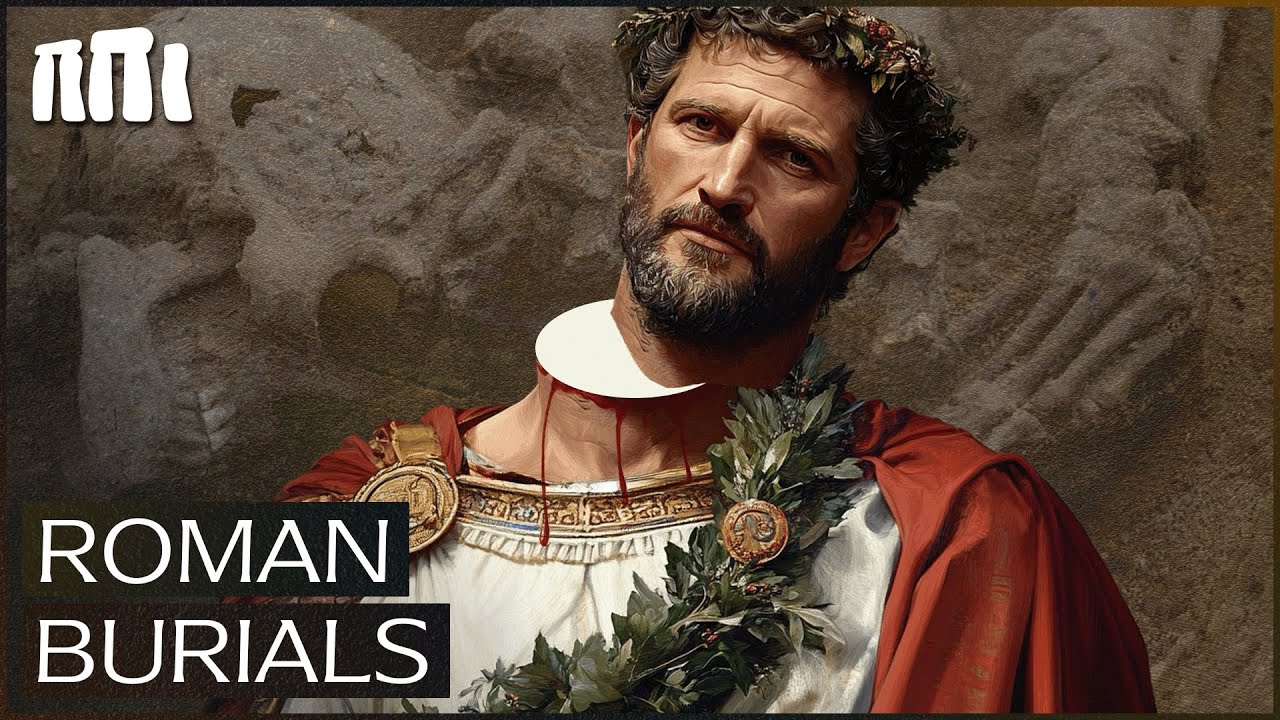
In Suffolk, archaeologists investigate ancient Roman burial practices, explore a lost monument, and examine a WWI battlefield, revealing significant historical insights.
The origins of the universe, life, and humanity are explored through insights from scientists like Pascal Picq and Jim Peebles, alongside visits to significant sites such as the Peak du Midi and the Large Hadron Collider.
Santiago, a major pilgrimage destination in Spain, holds historical and cultural significance as the final stop on the Camino de Santiago.
Ancient Rome's transformation from a small city-state to a vast empire is examined through its military conquests, political intrigue, and influential leaders.
Melting glaciers in the Alpine region are revealing centuries-old artifacts, prompting urgent preservation efforts by archaeologists from the University of Innsbruck.
Easter Island serves as the backdrop for a unique scientific inquiry led by a McGill University research team during the Medical Expedition to Easter Island.
An enormous ancient boat-shaped object, partially buried at 6,300 feet above sea level, has led to claims that it may be the remains of Noah's Ark.
Controversial theories and suppressed historical events are examined through expert interviews and investigations in Jamie Theakston's exploration of alternative history.
Chichen Itzá's Kukulkán temple, the Achaya Observatory in Chile, and the Venus Project highlight humanity's connection to Venus through ancient knowledge and modern aspirations.
In Alberta and British Columbia, paleontologists and amateur fossil hunters excavate rich dinosaur graveyards, revealing preserved specimens and ancient footprints.
Over 100 guests are invited to taste a recreated feast based on ancient food remnants found in the burial mound of King Midas in Turkey.