From over 100,000 films, discover the handful you'll love.
Free or premium access to the world's largest documentary library.
2305 films(Page 10 of 49)
Excavations at Syndale, Kent, reveal a Roman military trap from 43 AD.
The series reveals discoveries from a four-year Maritime Archaeological Expedition in the Black Sea.
Ancient biblical mysteries, including the tower of Babel and various relics, have intrigued scholars for centuries, prompting extensive historical analysis.
King Arthur, the legendary British monarch, remains a subject of intrigue as medieval archaeologists search for evidence of his existence and final resting place.
Hadrian's Arch, standing 25 meters tall, was built in honor of the Roman Emperor Hadrian's visit to Jerash in 129 AD.
Frozen landscapes and ancient mysteries are examined for their connections to theories of extraterrestrial activity and unexplained discoveries in extreme cold environments.
In Downpatrick, Northern Ireland, archaeologists excavate the 6th-century burial ground of St. Patrick, revealing medieval artifacts and the monastery's original enclosure.
Medieval life is examined through the skeletal remains of notable battles, including Richard III's Lost Chapel and Agincourt's Lost Dead.
In North Yorkshire, archaeologists led by Tony Robinson investigate a site believed to conceal the remains of an 11th-century medieval castle and other historical artifacts.
Leif Eriksson reached America 500 years before Columbus, challenging the narrative of who first discovered the continent.
Bolivia's vibrant landscapes, including colorful lakes and volcanic regions, alongside Peru's rich history, highlight the cultural significance of South America's diverse nations.
In Nether Poppleton, near York, archaeologists investigate mysterious earthworks to determine the village's origins as Saxon, Norman, or medieval.
Roman engineering reveals the secret of an empire that still stands through Roman concrete.
Erich von Daniken's theories propose that ancient civilizations were influenced by extraterrestrial visitors, raising questions about humanity's past.
In the remote country of Georgia, David Adams retraces the legendary journey of Jason and the Argonauts in search of the mythical golden fleece.
In 1987, an article about archaeologist Urus Zarin claimed to pinpoint the Earthly location of the Garden of Eden, igniting controversy among scholars and religious groups.
More than 100 tombs have been uncovered in the necropolis at Taposiris Magna, revealing clues about life in ancient Alexandria.
Tony investigates the possibility of a Norman castle on Castle Hill in Somerset.
In 1847, Charley Clusker traveled over 2,000 miles and faced extreme conditions in search of a legendary shipwreck in the Mojave Desert.
Tony Robinson leads a team uncovering Britain's first stone henge in a century in Devon.
In Dartmoor, a previously submerged area reveals a significant archaeological site featuring an unknown stone circle, crucial for understanding local history.
In the secluded Llygadwy valley, Tony Robinson and the Time Team investigate ancient artefacts to determine their authenticity and historical significance.
Pottery found in Much Wenlock dates back to the 12th and 13th centuries, indicating a planned development of the town during England's medieval period.
Byzantine treasures lost in the Black Sea are explored through archaeological findings and historical analysis, shedding light on their significance and fate.
In Worcestershire, mysterious crop circles lead to the excavation of a lost settlement that spans from the Bronze Age to the Iron Age.
In Lincolnshire, a rescue dig at an Anglo-Saxon cemetery reveals the remains of a six-foot warrior woman, the tallest ever found in Britain, along with significant artifacts.
In Northern Ireland, Tony and his team search for the remains of a Norman castle linked to a renegade knight, revealing its historical significance.
In Alfoldean, Sussex, archaeologists excavate a Roman coaching inn on Stane Street, revealing evidence of a once-thriving settlement.
The archaeological team uncovers the first evidence of a site where Alfred the Great made swords and weapons used to defeat the Vikings in 887.
In Newport, a team of archaeologists races against time to preserve a valuable Neolithic site threatened by rising tides and quicksand.
Jewish mysticism is examined through topics such as the authorship of the Dead Sea Scrolls, the significance of blue in Orthodox Judaism, and the location of Mount Sinai.
Finlaggan Island in Scotland, originally thought to be a medieval site, reveals evidence of prehistoric rituals that date back much further in time.
The Bronze Age collapse, a pivotal event affecting ancient civilizations like the Hittites and Mycenaeans, remains one of history's least understood disasters.
Mary Beard explores the myths and historical realities of ancient Rome's origins, highlighting its complex relationship with conquest, culture, and governance.
An ancient moat in Wales raises questions about its purpose, with theories ranging from a Roman fort to a fortified cattle enclosure or an early chapel.
In Somerset, archaeologists investigate a Roman villa from 43 A.D. that may have been built on an earlier Iron Age settlement, featuring insights from specialists John Creighton and Tom Moore.
Ancient cultures exhibit unexplained patterns, including mysterious sites, UFO sightings, and depictions of bird gods and lizardmen, raising questions about shared influences.
Eight gardens in Ipswich are excavated to reveal the remains of a Roman villa, originally documented by archaeologist Basil Brown in the 1940s.
Pharaoh Ramesses II, known as Ramesses the Great, is examined alongside the Karnak and Luxor temples and the transformative reign of Akhenaten in ancient Egypt.
Over 60,000 man-made structures were identified in the Yucatan Peninsula using LiDAR technology, revealing a vast ancient Mayan civilization.
British explorer Colonel Percy Fawcett dedicates years to searching for the legendary city of gold, El Dorado, believed to be hidden in the Amazon jungle.
On November 4, 1922, Howard Carter's discovery of the entrance to Tutankhamun's tomb marked a pivotal moment in the field of Egyptology.
New investigations in Mexico and Guatemala reveal the complex factors that led the ancient Maya to abandon their monumental cities.
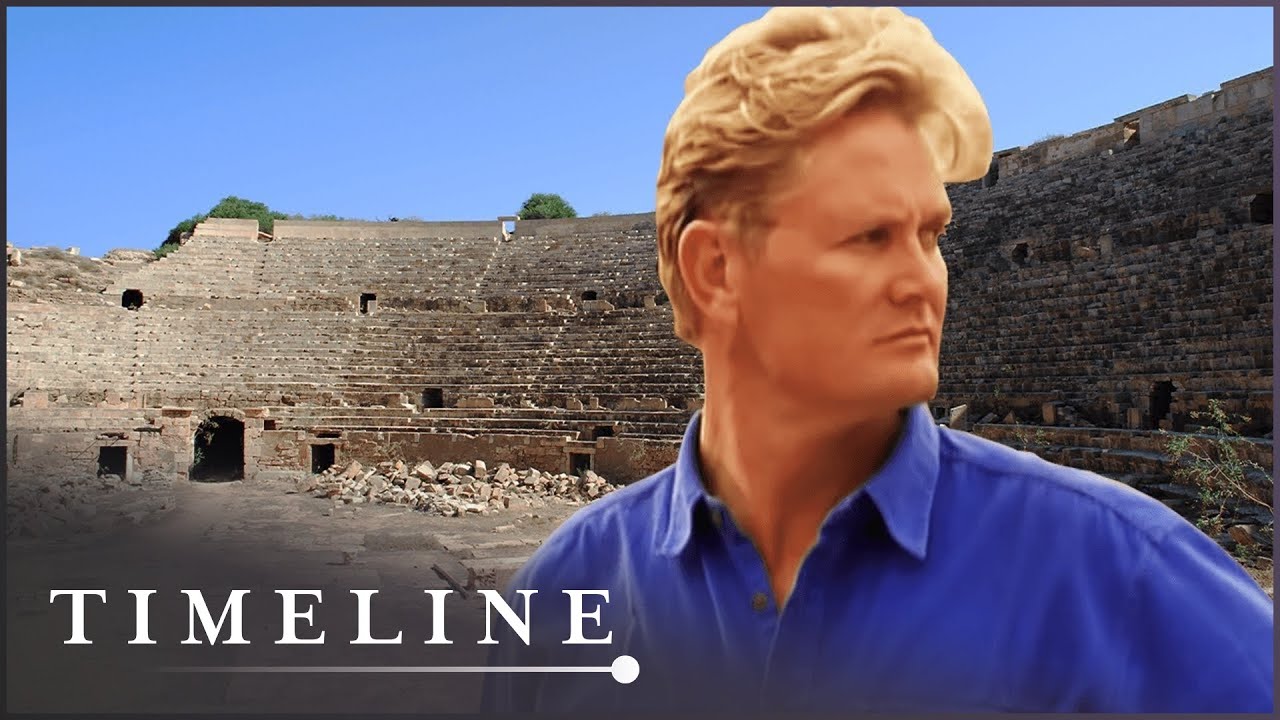
90% of Libya is desert, yet it also features the best-preserved Roman city in the world, Leptis Magna, built over 2,000 years ago.
Greenland's Viking colony, established around 1000 AD, thrived for nearly 500 years before its mysterious disappearance around 1500 AD, prompting scientific investigations.
An intact tomb, undisturbed for over 3,000 years, revealed the mummies and possessions of a working man named Carr and his wife Merit.
Egyptologist Lark Lenher investigates the 4,000-year-old Black Pyramid in Egypt, revealing its intricate tunnels and significant artefacts.
Lost civilizations and sunken cities, including the legendary Atlantis, are examined by scientists and archaeologists through the lens of underwater exploration.