From over 100,000 films, discover the handful you'll love.
Free or premium access to the world's largest documentary library.
2305 films(Page 14 of 49)
A live cavalry reenactment involving 30 modern riders attempts to stage a Roman tournament that has not been seen for over 1,600 years.
Jerash, an ancient city in Jordan founded by Alexander the Great's veterans, evolved from a Hellenistic settlement into a prominent Roman metropolis.
In Bath, Time Team investigates parch marks in the Royal Crescent park lawn, suggesting a Roman road, and explores Roman sarcophagi linked to St. Andrew's Church.
In El Sidrón Cave, Northern Spain, the remains of a Neanderthal family group, dated to 49,000 years ago, reveal a chilling story of cannibalism and sudden burial.
Ilé-Ifè, the sacred city of the Yoruba in Nigeria, was a thriving center of civilization known for its glass bead production before its decline around 1400 AD.
The excavation of the 'Triunfante' took place from 2008 to 2010, aiming to study its unique construction methods and recover artifacts for future display.
A 14-foot-long fish once swam in what is now Kansas, revealing a time when much of the Midwest was underwater.
21 ships of the U.S. Pacific Fleet were sunk or damaged during the Japanese attack on Pearl Harbor on December 7, 1941.
Ancient carvings and symbols from locations like Copan and Baiame's Star Vessel are examined for their potential connections to extraterrestrial encounters.
Ancient civilizations are examined for their potential advanced technologies and knowledge, challenging contemporary understandings of their capabilities.
Archaeological findings in Britain, including 800,000- to 1-million-year-old flint tools and Ice Age art, aim to determine when ancient humans first migrated to the region.
Marty and Rick Lagina investigate ancient artifacts and discoveries on Oak Island, Nova Scotia, that may reveal insights into its hidden past and legendary treasure.
At Guédelon in France, modern builders recreate a 13th-century castle using authentic medieval tools and techniques, showcasing the engineering of the era.
A crew of experts and volunteers recreates a Viking longship to navigate the Atlantic Ocean, exploring the historical impact of Vikings in England.
Kilmartin Glen in Scotland reveals its prehistoric significance through Stone Age rock carvings and Bronze Age tombs, showcasing connections from Portugal to Orkney.
Stonehenge has stood on Salisbury Plain for 5,000 years, with its current stone structure taking shape around 1,000 BC.
Eight gardens in Castle Hill, Ipswich, are excavated to reveal the remains of a Roman villa that dates back to the first century A.D.
Dr. Kirk Johnson found a fossil walnut and a dolphin vertebrae near his childhood home, sparking his interest in paleobotany and fossil hunting.
Ten pieces of Anglo-Saxon pottery are discovered in a Burford garden, prompting an archaeological investigation into the town's 1,500-year history.
Athens showcases a blend of modernity and archaeological wealth, while the Greek islands reveal their unique lifestyles and exceptional quality of life.
New archaeological evidence sheds light on the lives and practices of Druids, the enigmatic figures of ancient Celtic culture.
Dozens of runestones in modern-day Sweden document the Viking warriors who died in faraway Greece and Turkey during their expeditions in Eastern Europe.
A rusted, 40-foot shipwreck is discovered in the St. John's River, revealing hidden aspects of the American Civil War and its impact on society.
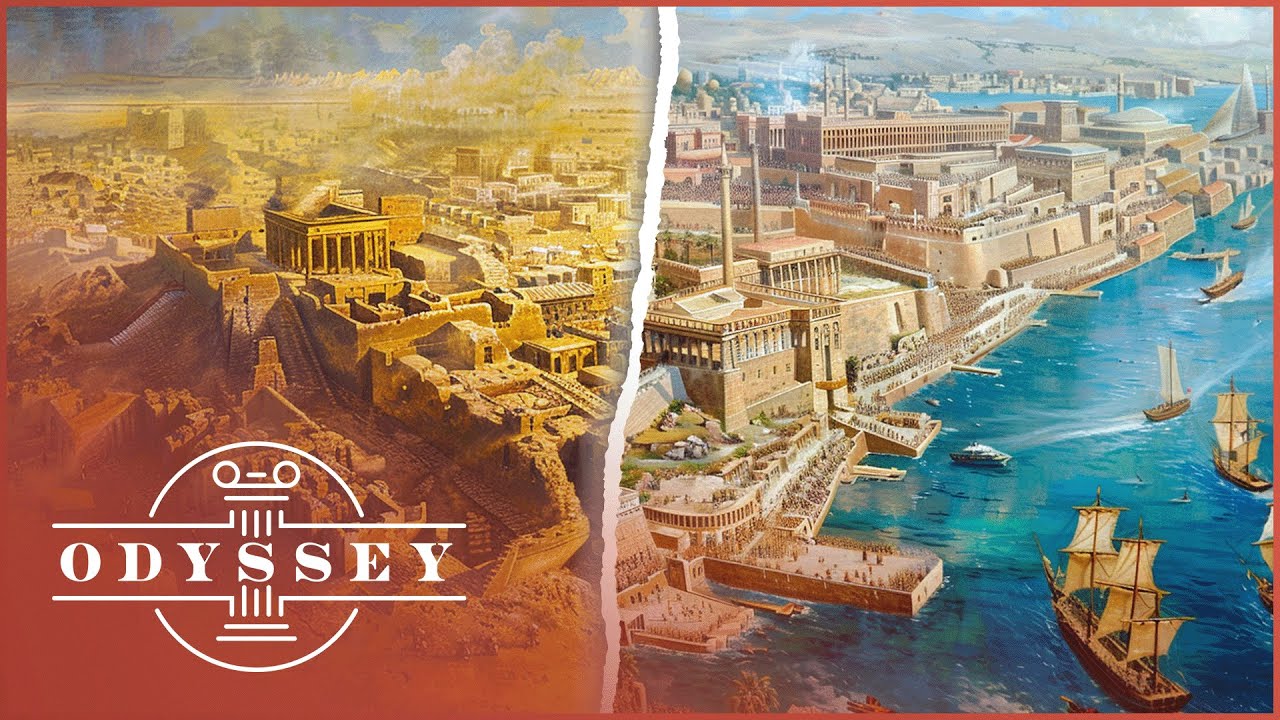
Ancient civilizations of the Mediterranean, the lost Amber Room, Venice's maritime history, and the Spanish Armada's clash are explored through ocean drainage.
Egyptian pyramids continue to intrigue researchers as Egyptologists and archaeologists utilize aerial and satellite imagery to reveal new insights into these ancient structures.
A British army base in the UK conceals a Roman villa that has remained largely inaccessible to archaeologists, prompting an investigation by Tony Robinson and the Time Team.
Roman remains in an Oxfordshire field, including a rare piece of glass and a cheese press, suggest the possible existence of a grand villa from the 4th century.
Marty and Rick Lagina continue their investigation of the buried treasure mystery on Oak Island, facing new challenges and setbacks in their quest.
Two hectares of oil seed rape are cleared in Leicestershire to search for evidence of an Anglo-Saxon burial ground and its associated artifacts.
Two post holes are excavated in a Nassington living room, suggesting the remains of a Saxon great hall once occupied by King Canute.
Three significant Dark Age burial grounds in England reveal insights into the lives of the Anglo-Saxons and Medieval Celts, as explored by Time Team's archaeologists.
Moses' leadership during the Exodus is examined through archaeological evidence and historical accounts that support the biblical narrative of parting the Red Sea.
Legends of Shangri-La, a mythical utopian kingdom in the mountains of inner Asia, have inspired countless adventurers and seekers throughout history.
In Italy, a team investigates new clues and hidden connections related to the centuries-old Oak Island mystery, seeking to solve its long-standing enigma.
Amateur archaeologist Derek Batten investigates a plot of land in Alderton, revealing its connection to William the Conqueror and the history of motte and bailey castles.
In 1925, Howard Carter's excavation of Tutankhamun's tomb revealed a pair of daggers, one forged from a meteorite, highlighting ancient Egyptian metallurgy.
In Nova Scotia, key 17th-century discoveries on Oak Island reveal significant historical artifacts and deepen the ongoing mystery of potential hidden treasures.
The Team searches for a medieval hospital in Burford, Oxfordshire, under Professor Mick Aston's guidance.
Mount Sinai, a sacred site for Judaism, Christianity, and Islam, is explored in a two-part investigation into its historical location and significance.
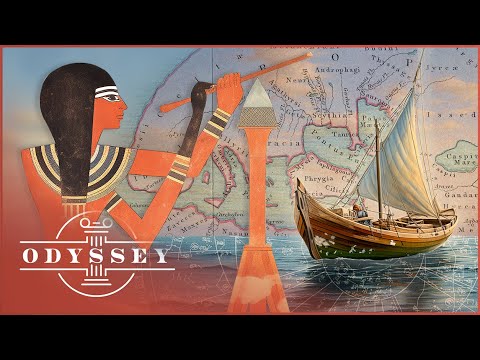
Ancient civilizations, from Mesopotamia to Rome, utilized maps as tools of power for trade, conquest, and warfare, shaping their understanding of the world.
In 1924, Anna Mitchell-Hedges found a skull made from a single block of pure quartz crystal in the jungles of Central America.
In the village of Wicken, archaeologists investigate the historical roots of a 400-year-old feud stemming from the merger of two distinct communities.
In 793 AD, a raid on Lindisfarne marked the beginning of the Viking Age, leading to Norse expansion across Britain and beyond.
Caerwent, historically known as Venta Silurum, reveals insights into Roman urban life through archaeological findings of market shops, villas, and local currency.
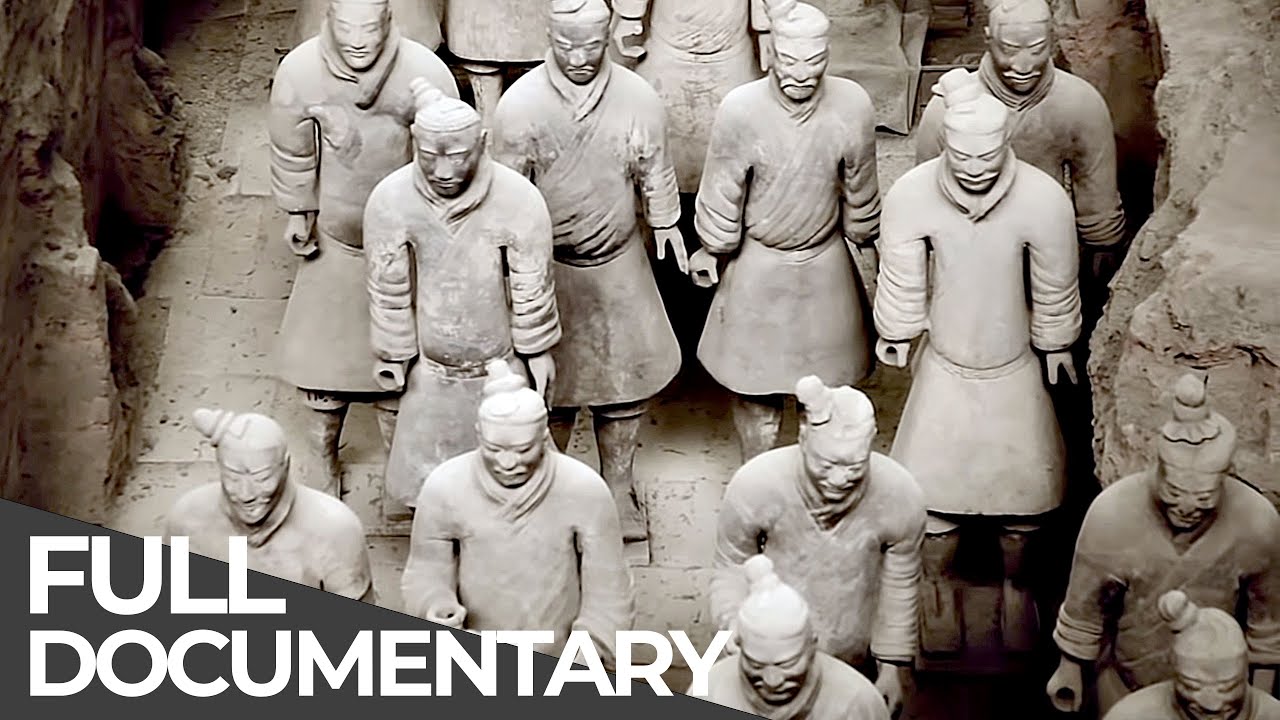
8,000 individual statues make up the Terracotta Army, each differing in facial expressions and armor, yet their construction techniques remain a mystery.
On December 9, 1965, an acorn-shaped metal object with hieroglyphic writing was reported in Kecksburg, Pennsylvania, raising questions about its origins.
In AlUla, Saudi Arabia, archaeologists and historians investigate the ancient city of Dadan, exploring its 9th-century BCE heritage and the reasons for its disappearance.
In the headwaters of the Oxus, British explorers' accounts of forgotten tribes reveal connections to Alexander the Great and the origins of ancient cities.