From over 100,000 films, discover the handful you'll love.
Free or premium access to the world's largest documentary library.
2305 films(Page 42 of 49)
A skeleton discovered at Stonehenge reveals signs of human sacrifice, puzzling scientists.
Stonehenge's mysteries are explored, suggesting it may have been a marriage site, with theories linking it to tombs and giants, featuring insights from Randall Carlson.
Planet Doc showcases the beauty of diverse landscapes and cultures, featuring wild animals, remote tribes, and the history of ancient civilizations.
Experts analyze a viral video of a mysterious sea creature in China in this episode.
A fragment of a 17th century English silver coin and a 14th century lead barter token are among the artifacts unearthed from over 10 tons of spoils on Oak Island.
A paleoanthropologist in South Africa finds fossilized skeletal remains of ancient humans.
Ancient Egypt's enigmatic sites and ongoing mass UFO sightings in the US are examined alongside theories of extraterrestrial influence on human history.
Tall el-Hammam in the lower Jordan River Valley may be the Biblical city of Sodom.
Each triceratops egg measured almost a foot long, with slim chances of survival in a world dominated by dinosaurs 64 million years ago.
In Manitoba, Canada, archaeologist Adrian Myers examines an abandoned World War II prisoner of war camp, revealing insights into the lives of German soldiers held there.
Mesopotamia, between the Tigris and Euphrates, reveals ancient Sumerian civilization and cuneiform.
Stonehenge's construction methods are examined, exploring how ancient civilizations transported massive stones without modern equipment.
The team discovers a musket ball on Lot 7, linking it to French firearms from the 1700s.
In the Rhône River, archaeologists and scuba divers investigate a 4th-century Roman shipwreck near Arles, revealing insights into the city's historical significance and the era's religious transformations.
Ancient cave art in Santa Monica is analyzed by theorists who propose that these carvings may reveal insights into past civilizations and extraterrestrial interactions.
A 19-foot-tall stone pillar, part of the ancient site Gobekli Tepe, is believed to be nearly 12,000 years old, predating known civilizations.
Evidence of a lost kingdom off the coast of Japan's Ryukyu islands suggests the existence of an ancient civilization, prompting a reevaluation of the region's history.
Archaeologists believe there are 200 underground cities beneath Cappadocia, Turkey, connected in a vast network that dates back thousands of years.
Aerial archaeologists use laser technology to map the ruins of Angkor, revealing a city that once spanned 3,000 square kilometers.
An archaeological find at a Knights Templar site reveals significant artifacts that enhance understanding of the Templars' historical activities and their connection to World War II.
In Japan, scenes include a flower market, children at a zoo, a steamship in harbor, and a ceremonial parade, while Egypt features irrigation efforts using an ox.
Roman artifacts unearthed on Oak Island may provide insights into historical events linked to the island's enduring mysteries and treasure hunting efforts.
Historic UFO images from 1952 are featured in Season 4, Episode 18 of the series.
Cleopatra's racial identity and Socrates' potential African descent are examined alongside the significant influence of Egyptian armies on ancient Greece's development.
In Belize, the remnants of the Maya civilization reveal extensive stone cities, palaces, and temples that highlight their architectural achievements and cultural legacy.
The original Berber tribes settled the Sahara over 3,000 years ago, leaving enigmatic inscriptions.
Dwayne Ollinger's team excavates 10 tons of soil at a site in Utah, searching for artifacts that may reveal connections to ancient human activity.
Experts analyze a ruin resembling the Tower of Babel in Season 3's 'Acts of God.'
In 1839, explorer John Lloyd Stephens entered the jungles of Honduras, discovering the ancient Maya city of Copan, filled with chaotic carvings and monuments.
A coin made of arsenical bronze, dating from as early as 1500, is discovered on Lot 5, prompting new inquiries into Oak Island's history.
A 13-foot diameter Masonic well in Portugal bears striking similarities to the Money Pit on Oak Island, suggesting a deeper historical connection.
In 6 A.D., Roman legionnaires established a winter camp in Carnuntum, marking the beginning of a significant military presence along the Danube.
Gobekli Tepe, a site in Turkey, features limestone pillars up to 18 feet high and dates back 12,000 years, predating known civilizations by over 5,000 years.
A ship's log reveals that a French vessel buried treasure in a pit on Oak Island in 1746, following a failed expedition led by Duc D’Anville.
Rome's emperor orders a major renovation of the Colosseum to demonstrate his power.
A massive underground city in Turkey, capable of housing hundreds, reveals significant insights into ancient civilizations and their architectural achievements.
Livyatan melvillei, a massive prehistoric predator, raises questions about its origins, lifestyle, and potential self-extinction due to its enormous appetite.
Corine Wegener, a modern-day monuments woman, travels globally to preserve cultural heritage in conflict zones, highlighting the importance of safeguarding history.
Fernando Paiz and La Ruta Maya focus on rescuing and preserving Maya cultural heritage by recovering artifacts illegally taken from Guatemala.
Archaeology Fellow Fredrik Hiebert discusses efforts to protect cultural heritage and repatriate looted artifacts from regions like Afghanistan and Peru.
Space archaeologist Sarah Parcak utilizes satellite imagery to monitor the destruction of cultural heritage sites around the world.
This compilation explores Göbekli Tepe and ancient sites linked to possible ancient aliens.
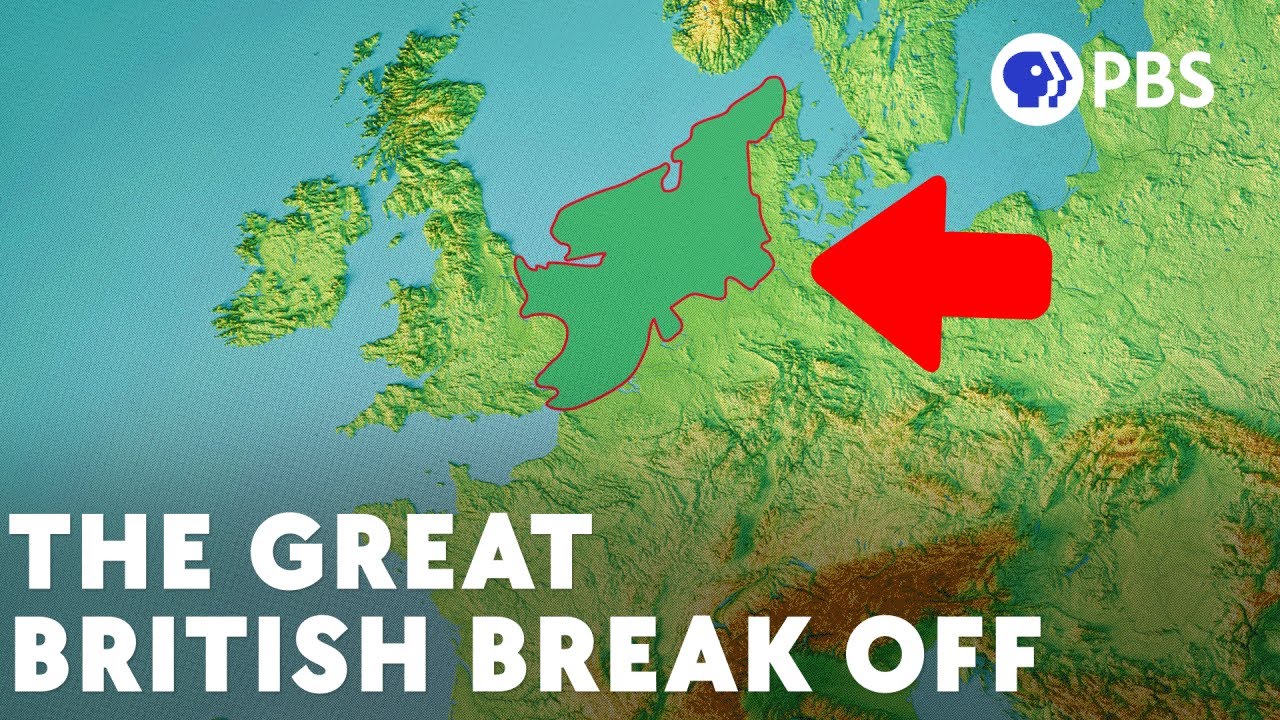
Doggerland, a submerged prehistoric landscape in the North Sea, may have been lost to a megatsunami, highlighting the geological forces that shaped it.
Three principal legends connected to the construction of the Egyptian pyramids involve Hermes, the ancient king Surid, and Shaddad Ibn Ad, a warlord linked to giants.
Asteroids may have played a crucial role in the origin of life on Earth, according to research presented by Eons for PBS Digital Studios.
All 129 crew members of the Franklin Expedition perished after their ships became trapped in ice during their quest for the Northwest Passage in 1845.
Paleontologists debate whether the fossil LH PV18 belongs to the theropod Tarbosaurus bataar or represents a distinct species, Raptorex kriegsteini.
At Tanque Loma, researchers propose that at least 22 giant ground sloths of the genus Eremotherium died due to being surrounded by their own feces.