From over 100,000 films, discover the handful you'll love.
Free or premium access to the world's largest documentary library.
2305 films(Page 16 of 49)
In Orkney, archaeologists at the Ness of Brodgar reveal a 5,000-year-old Stone Age temple that may have served as an ancient ritual site.
Aerial photos reveal a large curve in the snow near Dinmore Hill, suggesting a connection to one of Britain's largest Iron Age monuments.
In Western Ireland, archaeologist Dr. Tom Finan and his team excavate the remains of a long-lost Gaelic market town, challenging traditional narratives of Irish history.
Must Farm, a Bronze Age archaeological site in Cambridgeshire, reveals remarkably preserved stilted houses and insights into life 3,000 years ago.
A mysterious Bronze Age man-made island in a Scottish loch is examined by Time Team, alongside significant Neolithic sites including a possible miniature Stonehenge.
Tony Robinson and the Time Team investigate significant Iron Age sites in Britain, including a mysterious tunnel and a lost capital city.
Seventeen colossal Olmec heads, some weighing up to 40 tons, have been discovered in Veracruz, Mexico, with more possibly still buried underground.
Chaco Canyon, an archaeological site in New Mexico, showcases the sophisticated architecture and astronomical alignments of the ancient Anasazi civilization.
A Peruvian mummy with a pierced skull prompts forensic expert Doctor Joann Fletcher and her team to investigate its health, lifestyle, and burial practices.
Ancient desert cave scrawlings and modern urban graffiti illustrate the evolution of written communication from Mesopotamia to contemporary society.
In Smallhythe, archaeologists search for evidence of a 15th-century dockyard once frequented by King Henry V, revealing significant medieval shipbuilding activity.
Rick and Marty Lagina use heavy digging equipment on Oak Island, Nova Scotia, to search for potential Knights Templar treasures identified by a researcher.
New archaeological findings in Mexico's Yucatán are reshaping understanding of the development and decline of the ancient Maya civilization.
Hadrian's Wall, built in 122 AD, spans over 80 Roman miles across northern England and serves as a significant historical site reflecting Roman military strategy and culture.
Hadrian's Wall served as the northernmost boundary of the Roman Empire, highlighting the challenges of protecting Roman territory from neighboring tribes.
Tutankhamun's lineage is examined through modern scientific techniques, revealing the incestuous relationship of his parents and insights into ancient Egypt's culture.
The Ark of the Covenant, traditionally depicted as a gold box with winged figures, is reexamined for its true appearance and possible location by modern experts.
The Holy Grail, the Turin Shroud, and other legendary Christian relics are examined by experts to separate historical fact from myth.
Ancient pyramids in Antarctica are examined alongside theories of extraterrestrial encounters and the existence of forbidden caves that challenge historical narratives.
Marty and Rick Lagina continue their investigation of the buried treasure mystery on Oak Island, Nova Scotia, highlighting significant new findings and evidence.
In York, archaeologists from Time Team investigate potential ancient Roman burial sites, revealing significant historical findings from the city's past.
About 100,000 people set off for the gold rush, but only around 30,000 reached their destination, facing perilous conditions along the way.
Controversial theories and ancient enigmas are examined through expert interviews and investigations, challenging established historical narratives.
In Norfolk, Orkney, and Devon, Dr. Roberts examines ancient flint tools, shipwrecks, and religious artifacts to explore early human presence in Britain.
A single foreign bead found in a Viking burial site in Repton, England, revealed a vast network of trade reaching thousands of miles to Baghdad.
A 22-meter-high granite monolith weighing 140 tons was relocated from the ancient temple of Philae to protect it from rising waters caused by dam construction.
A mass graveyard of warriors, possibly linked to ancient European settlers, is discovered in Yorkshire, revealing new insights into Iron Age culture.
Avebury Stone Circle, a site of ancient habitation and work, is examined alongside evidence of Viking invasions and the discovery of Iron Age gold in Staffordshire.
Ramesses II's mummy, transported to Paris in 1976, faced a scientific mission to combat a fungal infection and revealed insights into his health issues.
Gaulish settlements reveal a sophisticated civilization with advanced craftsmanship, trade networks, urban development, and distinct cultural practices prior to Roman assimilation.
Archaeologists explore the UK's mystical landscapes, revealing a pre-Stonehenge monument, a medieval Dominican friary, and a sealed cobalt mine.
Archaeological investigations at St. John's Church in Cirencester explore the possibility of a Roman temple hidden beneath its foundations.
In the deserts of Jordan and on Pohnpei Island, ancient civilizations like the Nabataean Empire showcased remarkable feats of water engineering.
Some two million years ago, early humans began using simple stone implements for cutting, marking a significant development in human history.
King Edward III's Queenborough Castle, located at the mouth of the Thames, is investigated for its historical role as a royal palace and potential defense against the plague.
Neolithic tombs in Orkney reveal violent burial practices and evidence of cannibalism, shedding light on the lives of Britain's early inhabitants.
497 people drowned when the Royal Charter sank in 1859, taking with it over 130 million Australian dollars worth of gold still lost at sea.
Ramesses II, the legendary warrior pharaoh of Ancient Egypt, is examined for his military campaigns and lasting influence during the New Kingdom era.
Explorers and historians investigate legendary artifacts such as the True Cross, the Lost City of El Dorado, and Hitler's Spear of Destiny.
London's evolution from early settlements along the River Thames to its status as a global powerhouse is explored through historical and modern perspectives.
Ancient shipwrecks and artifacts from the Black Sea are explored by leading underwater archaeologists, revealing insights into the region's historical significance.
On the island of Gotland, archaeologists Tim Sutherland and Maria Lyngstrom investigate a pit of crossbow bows in Mästerby, seeking evidence of a forgotten medieval battle.
An upright chariot burial in Iron Age Britain reveals significant insights into cultural practices that challenge traditional Roman narratives.
Cladh Hallan's Bronze Age burials reveal insights into the complex lives of ancient Britons, as explored by Alice Roberts and archaeological teams in Scotland.
Chaco Canyon, Yosemite, and the Great Sand Dunes reveal a complex interplay of ancient history and unexplained phenomena across America's national parks.
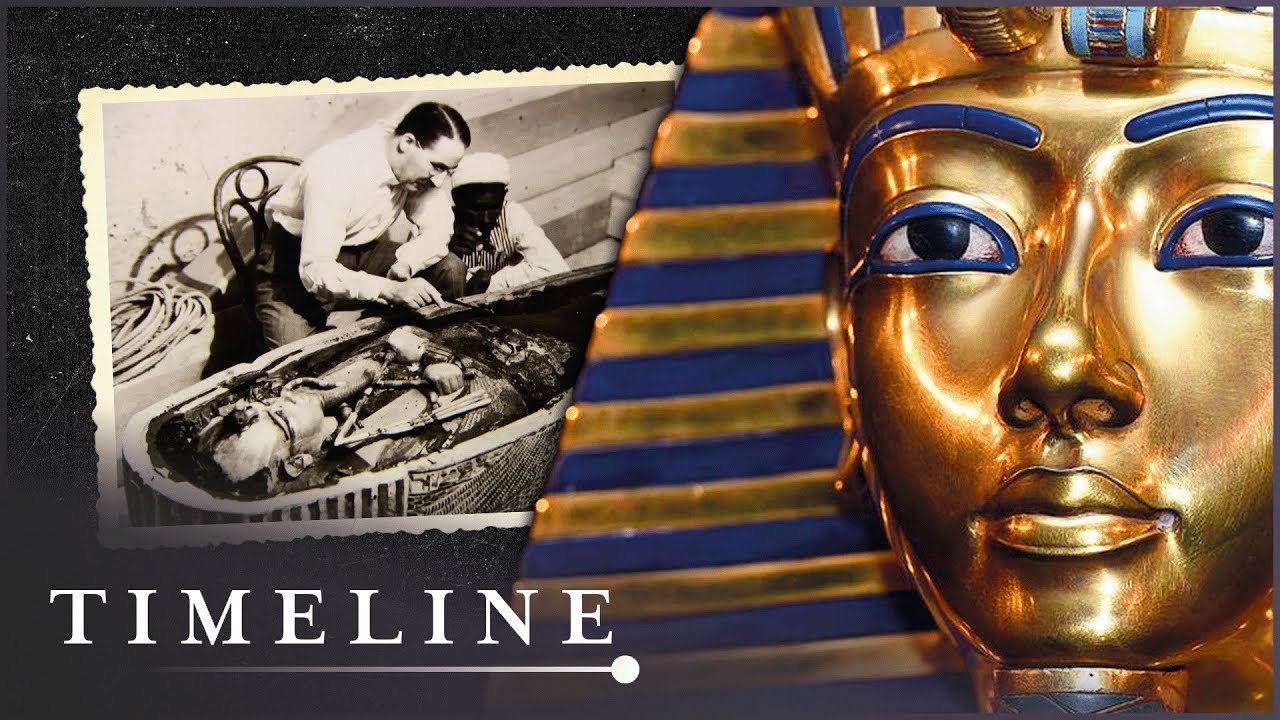
Harry Burton captures Howard Carter's Tutankhamun excavation, making history in photography.
A church graveyard in Britain is excavated by Time Team in search of a potentially significant Roman palace structure buried beneath.
700 kilometers of desert separate the ancient cities of Égrat and Petra, both significant sites of the Nabataean civilization.