From over 100,000 films, discover the handful you'll love.
Free or premium access to the world's largest documentary library.
2332 films(Page 38 of 49)
Experiences of stress and trauma can alter gene expression, potentially affecting the health and behavior of future generations, according to NOVA's research.
Mercury has up to 1 trillion tons of ice beneath its surface, a finding that could change how scientists understand the planet and its history.
New York City's water supply system treats between 900 million and 1 billion gallons of water daily for over 8.5 million residents.
Laura and Richard cope with the loss of their dog Dylan while preparing for cloned puppies.
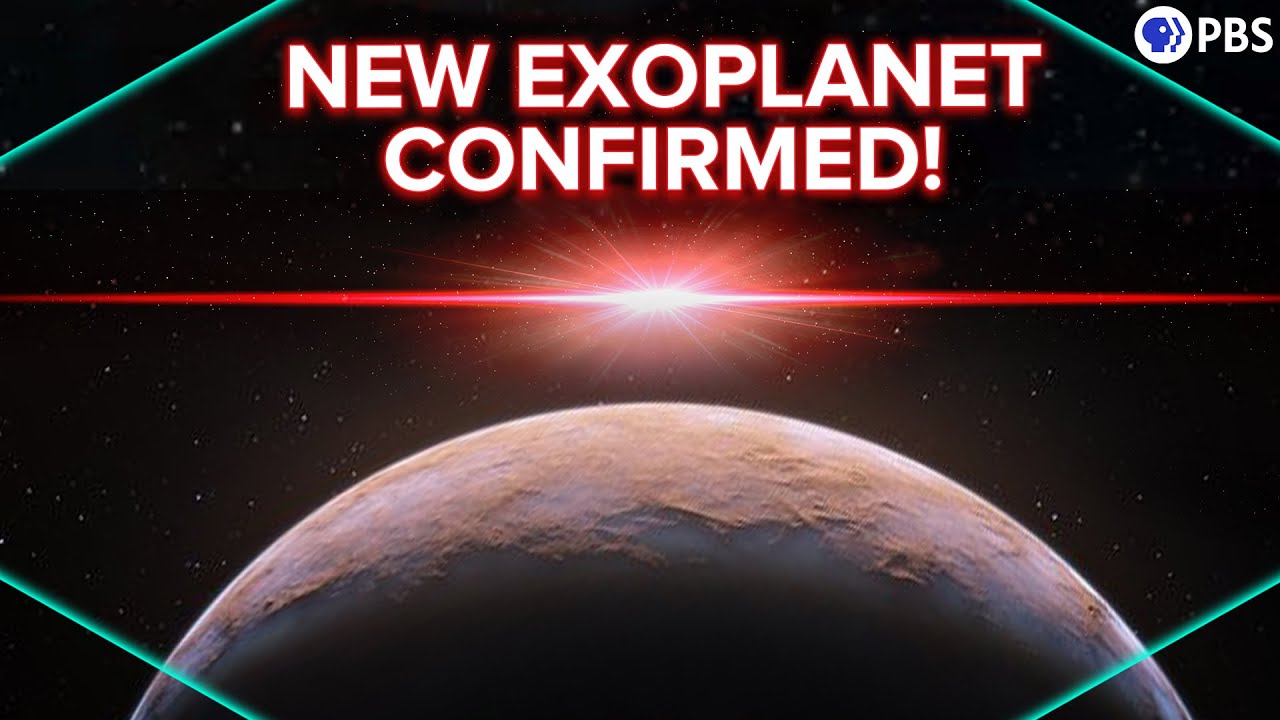
K2-18b, an exoplanet located 124 light years away, may have traces of dimethyl sulfide, a molecule associated with life on Earth.
Dr. J hosts an awards ceremony celebrating the Hubble Space Telescope's 20th anniversary in space.
Hubble Space Telescope's launch in 1990 promised unprecedented views of the Universe, but a distorted mirror necessitated a costly repair mission.
Today, Hubble helps scientists measure and image the effects of black holes in space.
The Hubble Space Telescope reveals new images of the Eagle Nebula's Pillars of Creation.
Hubble Space Telescope engages in ambitious projects to enhance astronomical data collection.
Hubble reveals key discoveries about Pluto before New Horizons' flyby in July 2015.
Hubble's Time Tunnel showcases Hubble's role in understanding the early universe's mysteries.
Hubblecast highlights Galileo Galilei's first telescope demo and Hubble's discoveries.
Hydroponics offers a solution for growing plants without soil in cities of tomorrow.
In 1967, Jocelyn Bell Burnell discovered pulsars while working on a radio telescope at Cambridge University, a breakthrough in astrophysics.
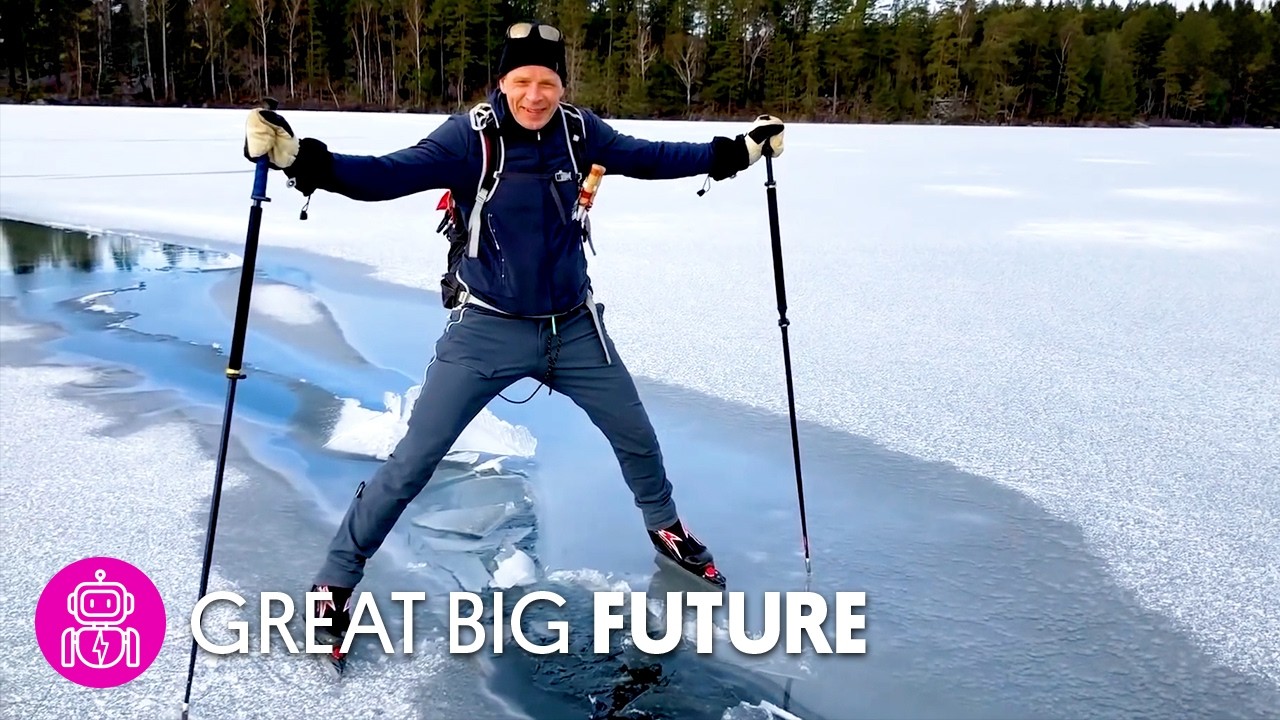
This video teaches skating on thin ice and features AI poker and a James Bond lair.
Behavioral ecologist Iain Couzin examines how locusts swarm and the dynamics of human societal functioning, highlighting collective behavior in nature.
Astrobotics is developing a GPS system that enables precise lunar landings, essential for future moon colonization and supply deliveries from Earth.
40,000 pieces of mail per hour can be handled by a mixed mail air culling device developed by R&D engineers at the U.S. Postal Service.
Dr. J discusses the European Southern Observatory's quest for pristine skies in Chile's Atacama Desert.
An EF5 tornado struck El Reno, Oklahoma, on May 24, 2011, prompting scientists to use supercomputer models to better understand supercell thunderstorms.
A 42 mph wind caused the Tacoma Narrows Bridge to collapse in 1940, illustrating the concept of resonance in everyday life.
Proxima Centauri, a faint red dwarf star, is located just over four light years from Earth and hosts the newly discovered exoplanet Proxima D.
Around two billion years ago, the first eukaryote cell emerged, marking a turning point in Earth's evolutionary history and offering a potential explanation for the Fermi Paradox.
In 1987, Steven Weinberg published a paper that suggests the existence of a vast number of other universes based on the fine-tuning of our own.
Reverend John Flute manages the maintenance of SETI@home, a network that processes signals from the Arecibo radio telescope in Puerto Rico.
In the clouds of Venus, researchers explore the possibility of life-forms thriving in the planet's upper atmosphere, utilizing findings from extreme Earth environments.
Justin Schmidt has been stung by insects at least 1,000 times to study the pain levels of various stinging species.
The International Space Station has been occupied since the year 2000, serving as a hub for scientific research and international collaboration in space.
Dr. Henry Lowe leads Medicanja, producing CBD products with support from Jamaican universities.
A litter of 10 to 25 baby sharks is born during the search for the rare Japanese angel shark in Japan's oceans.
Juliana Machado Ferreira addresses the illegal wildlife trade in Brazil, where poachers remove 38 million animals annually, through science, politics, and education.
Juliet Eilperin, an environmental reporter, profiles the historical views of sharks and their crucial role in maintaining healthy marine ecosystems.
Kakani Katija explores the impact of jellyfish on ocean currents and their potential influence on global weather patterns.
Malaria-carrying mosquitoes in Kenya are developing resistance to traditional control methods, prompting researchers and public health officials to seek innovative solutions.
Two orphaned kittens, three to three-and-a-half weeks old, are bottle-fed by Hannah Shaw, a professional animal rescuer and humane educator.
A giant squid can grow around 1 cm a day, making it the fastest-growing animal in the kingdom and transforming tiny larvae into the largest invertebrates.
Landsat 8, launched in February 2013, carries advanced cameras that capture images of Earth in multiple wavelengths, revealing details invisible to the human eye.
The Lightcraft is a laser-propelled spacecraft concept for future space travel innovations.
Kasha Clay collaborates with the National Academy of Sciences to document oral histories of elders from the United Houma Nation as their land disappears.
3.5 million acres of grassland habitat are being developed in northern Montana to create a continuous wildlife reserve and reintroduce bison to the area.
A young male astronaut may lose 15% of his bone density after one year in space, raising concerns about long-term survival in zero gravity.
Li-Fi technology, which utilizes light to transmit data, promises communication speeds up to 100 times faster than traditional Wi-Fi, revolutionizing wireless connectivity.
At 15, Oliver Faulstich lost his hearing due to a rare form of meningitis, but cochlear implants now allow him to participate fully in life.
Cassini Project scientist Dr.
Dr.
Speleologist Penelope Boston examines unique life-forms in Earth's extreme environments to gain insights into potential extraterrestrial life.
Dr. Edwin Powell Hubble's work decades before the Hubble Space Telescope revolutionizes astronomy.