From over 100,000 films, discover the handful you'll love.
Free or premium access to the world's largest documentary library.
2331 films(Page 12 of 49)
A 40-meter-high, 100-meter-long iron meteorite was reportedly discovered in the Mauritanian desert by Captain Gaston Ripert in 1916.
A telescope built in one of the most inhospitable places on Earth seeks to answer the question of how the universe began.
Astronomers search for Earth-like planets among four hundred billion stars in our galaxy.
70 to 80 pregnant lemon sharks arrive each spring in the Grand Bahama Bank, where researchers study their unique resting patterns and life cycle.
NASA's Mars rover Perseverance, designed to search for signs of ancient microbial life, successfully approached its landing site in Jezero Crater after a 293-million-mile journey.
One of the most advanced helmets in the world undergoes rigorous testing at BAE Systems' Rochester facility to ensure pilot safety and performance.
A type 1A supernova shines 5 billion times more brightly than the sun, illustrating the vast scale of cosmic events in the universe.
In Canada's Badlands and Grand Prairie, palaeontologists David Evans and his team excavate bones of a new dinosaur species amid challenging conditions.
In 1961, President John F. Kennedy challenged America to land a man on the moon and return him safely to Earth within the decade.
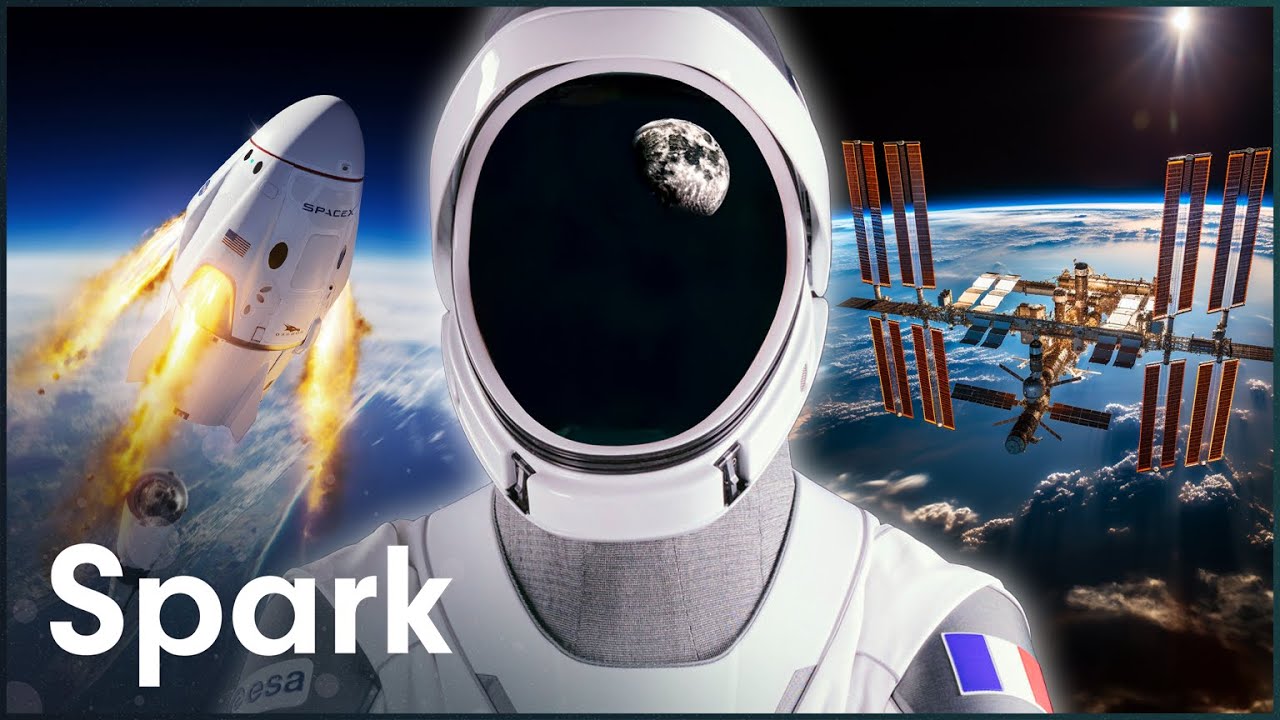
The International Space Station, operational for 23 years, is reaching its limits while new technologies aim to expand human presence in space.
The Atacama Desert is home to the world's largest radio telescope, ALMA, and Mega Transports.
Fewer than 300,000 chimpanzees remain in the wild, down from several million a century ago, as scientists investigate their potential for culture.
NASA's James Webb Space Telescope aims to enhance understanding of cosmic phenomena and improve strategies for planetary defense against asteroid threats.
A single Ohio class submarine carries 24 ballistic missiles, each capable of striking with little or no warning under extreme stealth.
Milestones in space exploration are examined, highlighting the Apollo moon landing, SpaceX's Dragon and Falcon spacecraft, and the Gaia mission's galaxy mapping.
Since the discovery of exoplanets in 1995, scientists have faced significant challenges in identifying habitable planets that can support human life.
NASA's Phoenix Lander successfully touched down on Mars on May 25, 2008, to search for signs of water and the potential for life on the planet.
1,000 years ago, Chinese researchers created black powder, which has since evolved into explosives used in construction, mining, and military applications.
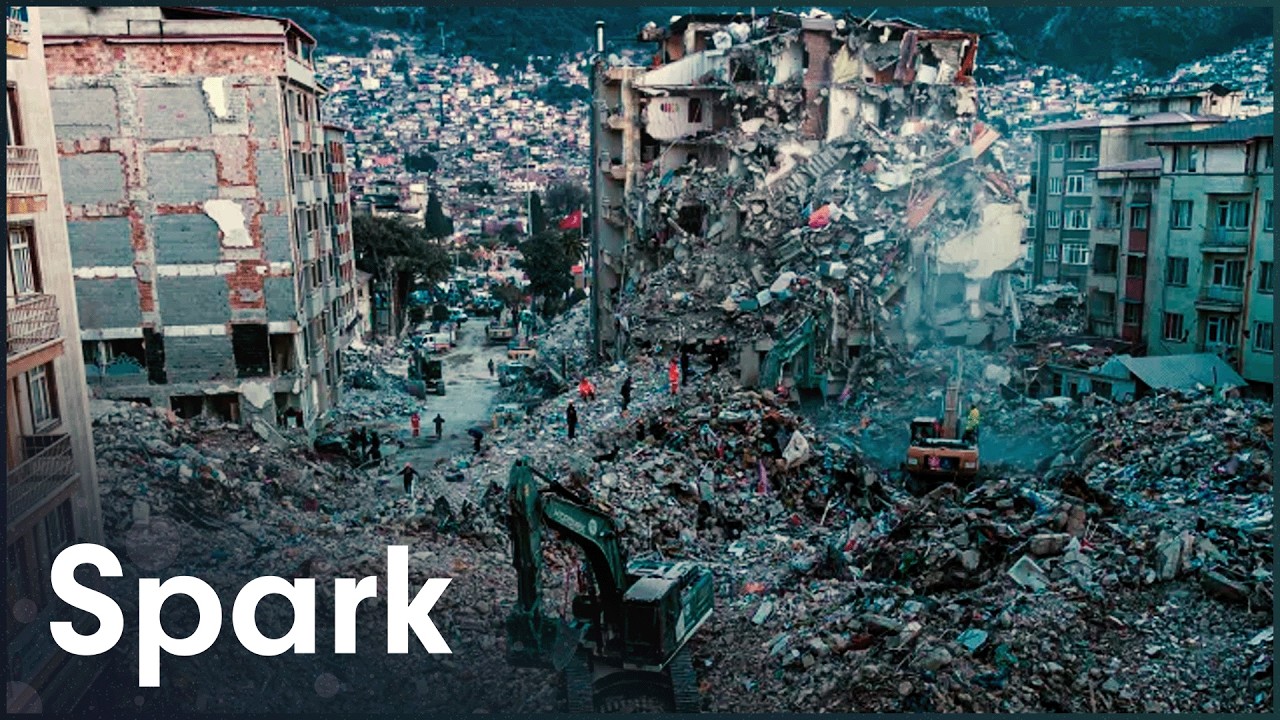
In the Mediterranean region, geologist Dr Iain Stewart examines the seismic activity in Greece, Turkey, and Jordan, revealing its impact on human history and geology.
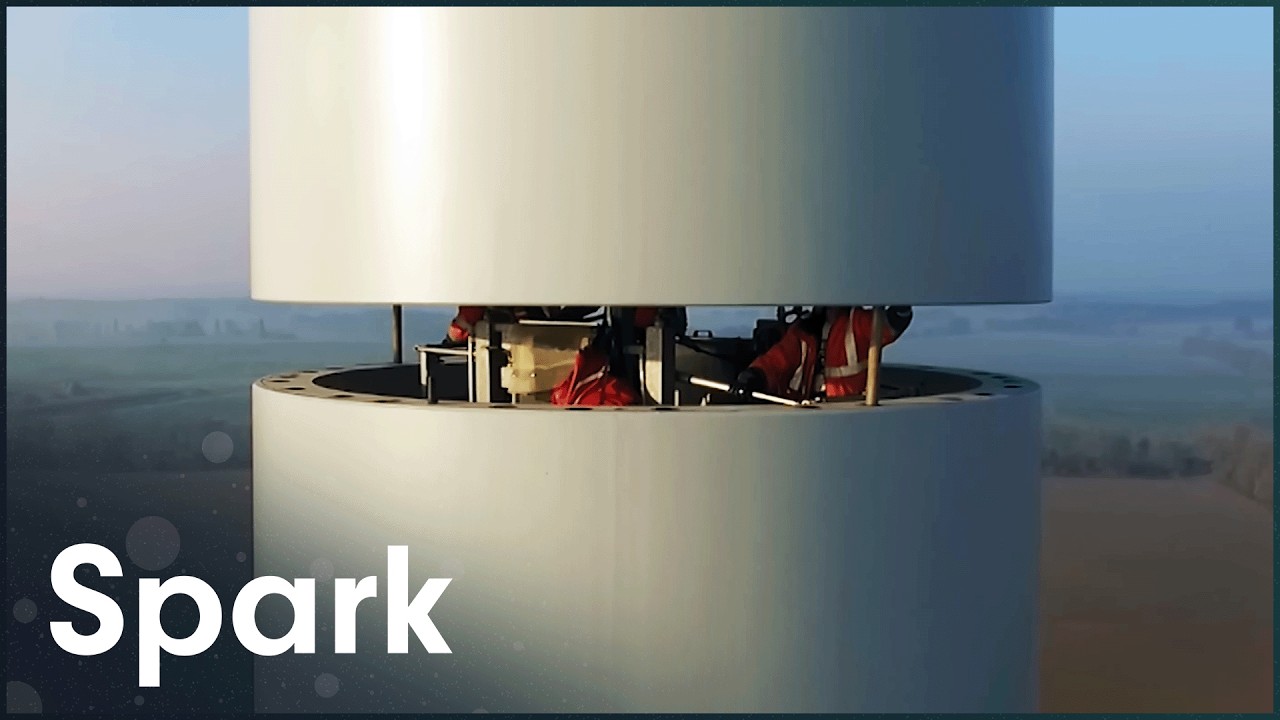
Massive onshore and offshore wind turbines are engineered through precise assembly of rotor blades and tower segments, utilizing advanced robotics and safety protocols.
Telescopes allow astronomers to look back nearly 13 billion years to the Big Bang, revealing the universe's structure and evolution over time.
Major players like Bugatti and Koenigsegg race to build the fastest car in the world.
NASA's Artemis program aims to return astronauts to the Moon for the first time in over 50 years, focusing on sustainable lunar exploration and future Mars missions.
The Big Bang theory, supported by the James Webb Space Telescope's findings, prompts a reevaluation of cosmic inflation, dark matter, and galaxy formation.
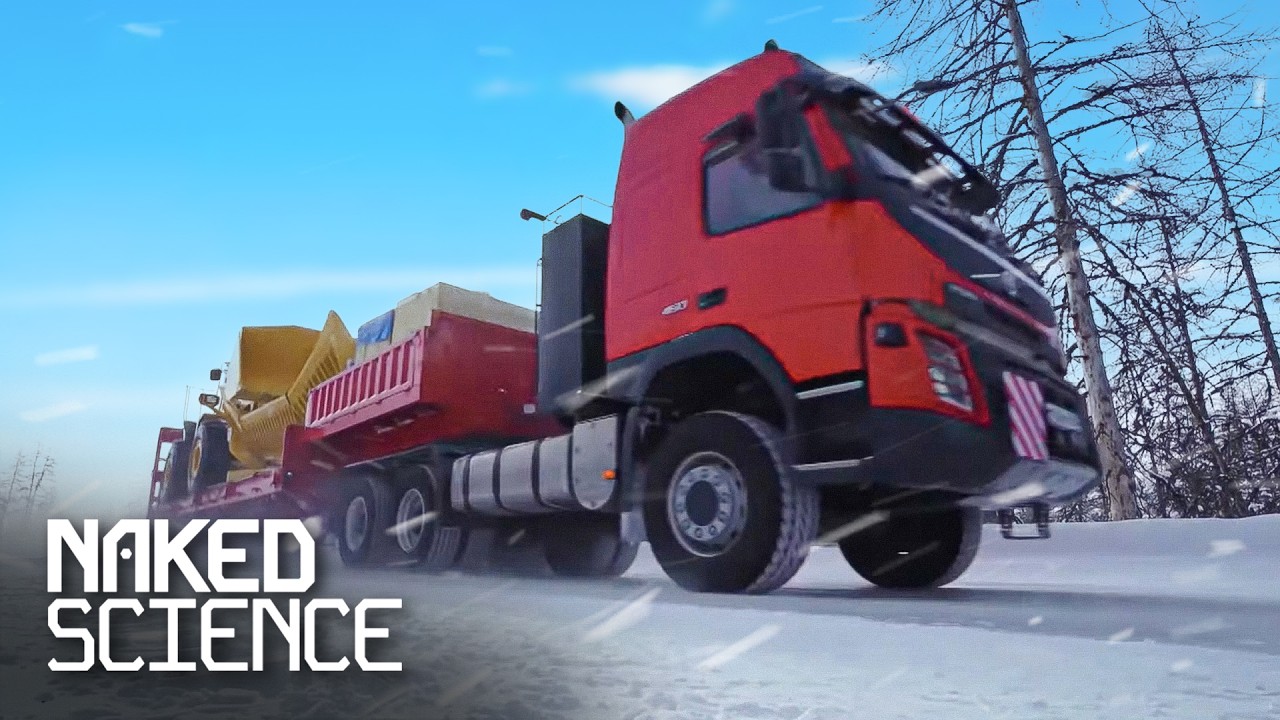
Transporting a massive bulldozer to gold mines in Russia's Kolymar mountain range involves specialized vehicles and careful planning to overcome harsh winter challenges.
13.8 billion years ago, the universe began with the Big Bang, a moment that set the stage for the fundamental particles that shape all matter today.
Aircraft fires pose significant risks at 30,000 feet, as showcased through real footage and insights into firefighting techniques and aviation safety measures.
A team of young scientists from the University of Alberta has only three weeks to excavate dinosaur fossils in Alberta's Dinosaur Provincial Park.
Over $20 million is awarded to scientists for achievements in physics, mathematics, and life sciences during a ceremony hosted by Pierce Brosnan.
The Bismarck, Germany's mighty battleship, fails during its mission against American convoys.
NASA's Cassini spacecraft launched on October 15, 1997, traveled nearly 900 million miles, and orbited Saturn from 2004 to 2017, gathering vital data.
In lower Bavaria, a teacher and a biologist from Munich study the transformation of caterpillars into butterflies while addressing the alarming decline in butterfly populations.
Nolanor Aviation pilots operate the Boeing 737-200C in the Arctic, showcasing its design for extreme cold and challenging gravel runways.
The Hercules-Corona Borealis Great Wall is thought to be three times bigger than the Giant Arc, challenging current theories of the universe's formation.
Dr. Alice Roberts investigates if humanity is still evolving through ancient bones and genetics.
At 200 meters long and weighing 22,000 tons, the Thunder Boat is the second-largest vessel in the French navy, designed for diverse military operations.
ValuJet 592 crashed into the Florida Everglades on May 19, killing all 105 passengers and prompting a deeper examination of black box technology in aviation safety.
Gamma ray bursts, studied by scientists at the University of Kansas, are believed to have caused a significant mass extinction event on Earth 450 million years ago.
A 365-meter skyscraper in Moscow aims to be the strongest and safest super high-rise ever built, employing expertise from 20 different countries.
A giant fireball weighing close to 1.5 tons exploded nearly 18 miles above Wisconsin on April 14, 2010, marking a significant meteorite fall.
Earth's weakening magnetic field, generated in its molten core, raises concerns among scientists about the potential loss of protection from harmful space radiation.
Geoff and Steve search for meteorites at Dugway Military Base using Doppler radar.
NASA's Kepler Space Telescope has identified billions of Earth-like exoplanets in our galaxy, suggesting that life may exist beyond our planet.
Chris, a volcano access specialist, explores volcanic regions in Congo, the Canary Islands, and Iceland, sharing insights on their unique landscapes and activity.
Mining diamonds from a frozen volcano in Canada involves extreme tasks and innovative creations, including gyroplanes and high-speed boats.
Gravity is the force keeping us grounded, with secrets revealed through The Ionosphere.
Experts still searching for the truth about MH370 reexamine the official documents.
In October 2014, an Antares rocket built by Orbital Sciences was set to ferry supplies to the International Space Station.