From over 100,000 films, discover the handful you'll love.
Free or premium access to the world's largest documentary library.
2332 films(Page 14 of 49)
A Voyager air tanker can refuel a Typhoon jet in about 10 minutes, playing a key role in Britain's air defense for the next 30 years.
Project Gemini's docking challenges, the Curiosity rover's findings on Mars, and satellite swarms investigating Earth's magnetic field are explored in this episode.
More than 100 scientists deploy a state-of-the-art fleet of over 20 vehicles to study tornadoes during the peak season from March to June.
The 1996 Centennial Olympic Park bombing in Atlanta resulted in two deaths and over 100 injuries, prompting a complex investigation by the FBI and other agencies.
The Rosetta mission, launched by the European Space Agency, successfully landed on comet 67P/Churyumov-Gerasimenko to study the origins of the solar system and life.
Project Apollo's legacy is examined alongside advancements in the Orbiting Carbon Observatory and the significance of zero gravity training in space exploration.
Cannabis has evolved into a billion-dollar industry in the United States, with increasing legal access for medical and recreational use across many states.
Mass UFO sightings, such as the Phoenix Lights and mysterious Atlantic Ocean events, raise questions about extraterrestrial contact and the physical evidence left behind.
Project Mercury, America's first manned space program, along with advancements in camera tracking and the International Space Station, highlights key milestones in space exploration.
Project Gemini, Venus Express, and NASA's Extravehicular Mobility Unit highlight key milestones in space exploration and advancements in deep space communications.
Babies can nap for up to 16 hours a day, revealing the significant role sleep plays in cognitive function and overall health.
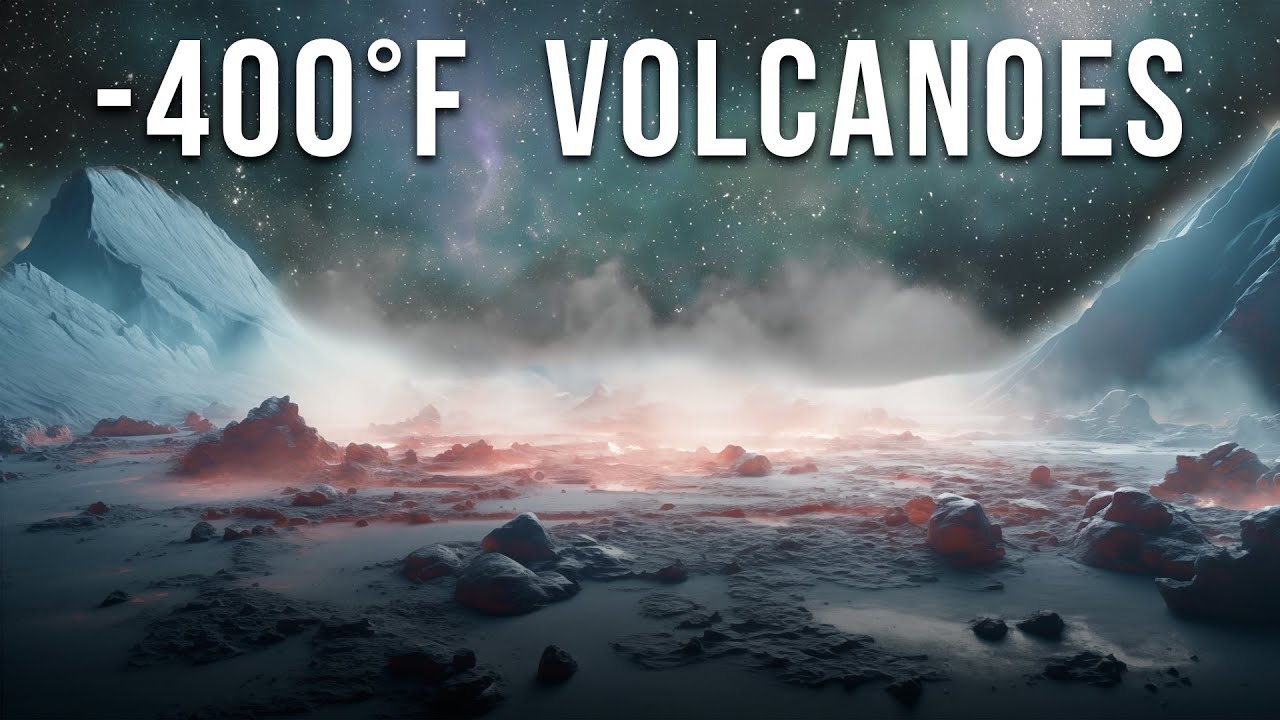
Triton, a moon of Neptune, has geysers that erupt a mixture of liquid nitrogen and dust at temperatures nearly 400 degrees below zero.
5 billion years from now, the sun will expand and consume some inner planets, leaving others as ghost worlds orbiting a dead star.
NASA's New Horizons probe traveled 3.5 billion miles to send back the first close-up images of Pluto, revealing a world of unexpected complexity.
4.5 billion years ago, Earth formed as a molten sphere surrounded by toxic gases, leading to the development of its life-sustaining atmosphere.
NASA's Apollo Program faced early challenges while ESA developed cave training for astronauts and the Planck satellite mapped cosmic microwave background radiation.
Apollo 13 was the seventh mission in the Apollo program, intended for a manned moon landing but faced a life-threatening fault just two days in.
Researchers, including Hakeem Oluseyi and Dennis Whyte from MIT, explore the potential to recreate stellar fusion on Earth for clean energy generation.
In Antarctica, a team of scientists conducts groundbreaking research to understand the continent's unique ecosystem and its implications for global survival.
Apollo 11 achieved the first successful manned lunar landing on July 20, 1969, amid a backdrop of Cold War tensions and early American space failures.
On July 25, 2000, Air France Flight 4590 crashed shortly after takeoff from Paris, killing all 109 passengers on board and four people on the ground.
The de Havilland DH.106 Comet, introduced in the 1950s, marked the shift from propeller-driven aircraft to jet technology in commercial aviation.
Construction of the world's first natural gas cruise ship at a German shipyard highlights the integration of traditional craftsmanship and modern technology.
In Munich, Germany, one of Europe's most advanced train factories assembles the Vectron electric locomotive, a 90-ton 'rolling data center' with 36 kilometers of cable.
NASA has collected high-definition data on Earth's land, oceans, and atmosphere over the past 20 years, revealing complex interactions across the planet.
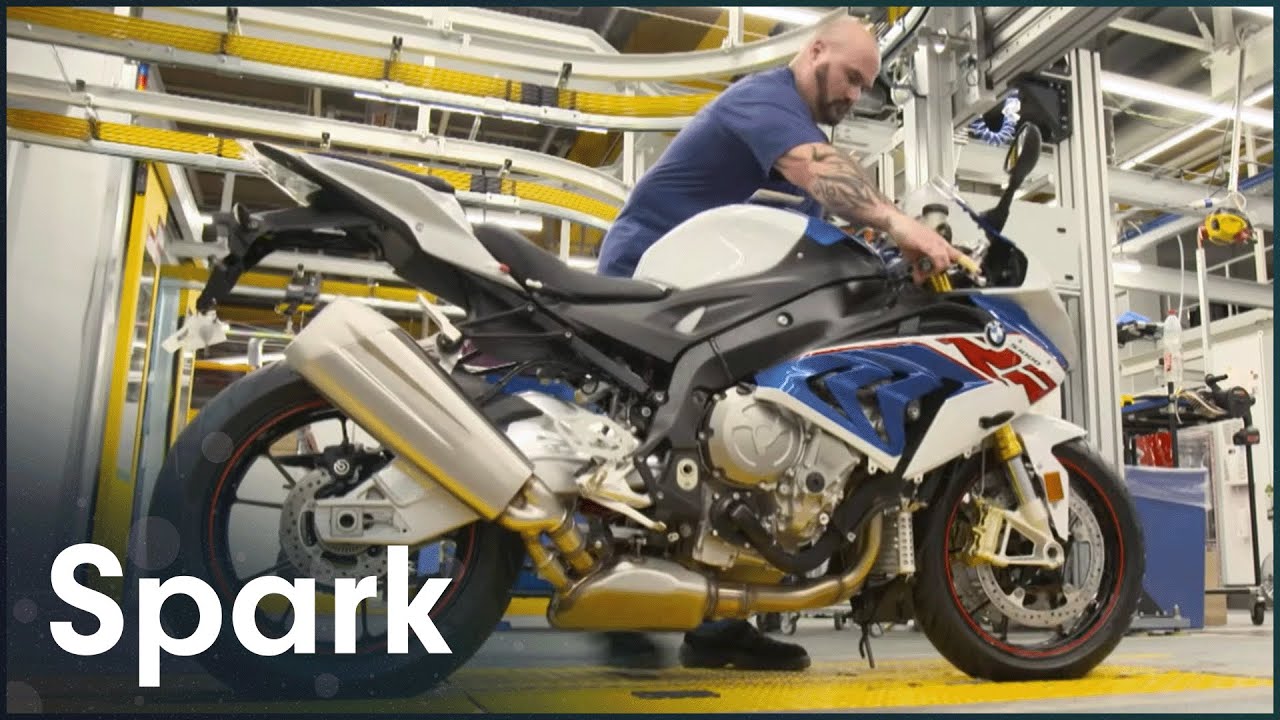
This video provides an exclusive look at BMW's motorcycle factory in Berlin, Germany.
A project to build the first real-time machine has just begun, with scientists aiming to master time itself within this century.
There are 100 billion stars in the Milky Way, each with its own history and story, as scientists seek to unlock the secrets of the universe.
Gravity, as explored through Newton's laws and Einstein's theories of spacetime, is essential for understanding the cosmos and the effects of weightlessness on astronauts.
At the Chernobyl site, engineers maneuver a massive roof over the No 4 reactor to contain radiation from the nuclear disaster's aftermath.
Venus's double-eyed vortex measures 1,800 miles wide and features hurricanes that whirl around each other, raising questions about the potential for life on other planets.
A solar superstorm in March 1989 left 6 million people in Quebec and Canada without electricity after a massive explosion on the Sun released charged particles.
Stephen Hawking's theories on black hole decay are examined alongside modern concepts suggesting the Universe may exist within a much larger timeline.
Heathrow Airport's escalators are constructed using advanced engineering and technology, highlighting the complexities of modern manufacturing processes.
The Guangjo TV Tower will reach a height of 610 meters, making it the tallest TV tower in the world when completed.
Knaack Krane Hamburg builds cranes that lift up to 750 tons, outdoing themselves in technology.
A team of free divers, including world champion Frederic Buyle, approaches great white sharks in their natural habitat without diving tanks or safety cages.
A 300 to 400-foot-long cylindrical object was reported by pilots near Fort Sumpter, raising questions about unidentified flying objects.
Naval aviation has evolved significantly since the first shipboard landing in 1911, showcasing the development of supersonic jets and unmanned aerial vehicles.
Millions of light years separate viewers from the stars, galaxies, and nebulae visible through a telescope on a clear night.
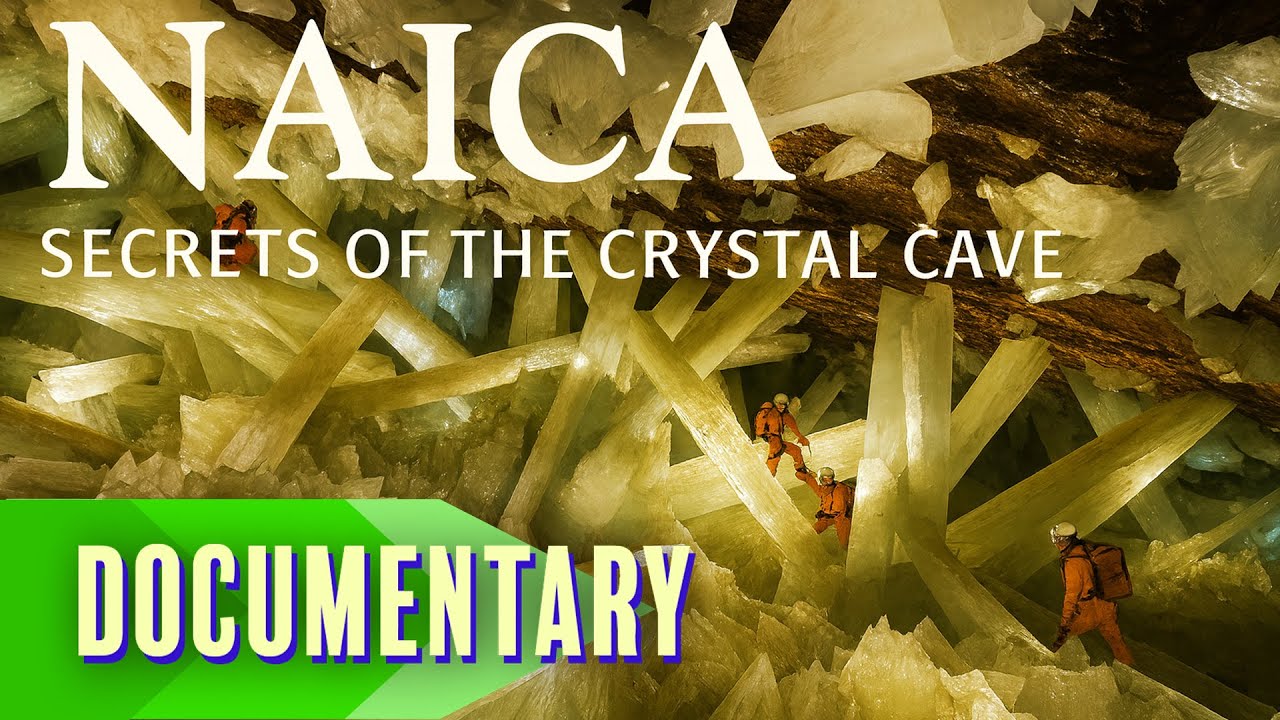
In the Naica Mine of Mexico, a team of international scientists confronts extreme conditions to study colossal crystals and their geological significance.
One in three people will be diagnosed with cancer at some point in their lives, prompting ongoing research into more effective treatments.
A comet 5 km wide, traveling over 100,000 km an hour, is on a collision course with Earth, threatening to cause a 100 million megaton explosion.
Construction of the Korean Jang Bogo Antarctic Station in Antarctica faces extreme conditions and challenges over five years of site investigations and building efforts.
Professor Brian Cox connects tornadoes in Oklahoma to the origins of our Solar System.
NASA's Apollo program trained astronauts through rigorous survival courses and simulations, enabling successful lunar missions from 1969 to 1972.
Luna 1, the first robotic emissary to the Moon, missed its target by nearly 6,000 km but became the first spacecraft to orbit the sun.
4.7 billion years ago, a tumultuous event led to the formation of the inner solar system's planets, including Mercury, Venus, Earth, and Mars.