From over 100,000 films, discover the handful you'll love.
Free or premium access to the world's largest documentary library.
2331 films(Page 31 of 49)
Pioneer Productions is a leading UK independent company known for quality documentaries.
The video discusses the search for Planet X and its significance in our solar system.
This ESOCast briefly describes the planetary discoveries around Gliese 581 and Exobiology.
A magnitude 9 earthquake in March 2011 caused the seafloor to move 50 to 60 meters, resulting in a devastating tsunami that killed 18,000 people.
Watch how advanced cloning helps protect endangered species and preserve biodiversity.
The video showcases a 26,000 light year zoom into Sagittarius A*, revealing its mass and significance.
Quasars, powered by supermassive black holes, emit energy brighter than 100 galaxies and provide insights into the early universe's formation.
A NASA scientist recreates Frank Malina's historic WAC Corporal rocket launched in 1945.
Comets represent leftover materials from the solar system's formation, crucial for Jupiter and Saturn.
Captain Chris Hearn utilizes a cutting-edge ship simulator to recreate the Titanic disaster, analyzing the critical decisions made by the crew before the sinking.
To reach escape velocity, a rocket must travel at 40,000 kilometers per hour, significantly faster than the 28,000 kilometers per hour needed for orbit.
Superconductors have the potential to transform technology and energy efficiency dramatically.
This video steps viewers through the landing sequence of NASA's Curiosity rover on Mars.
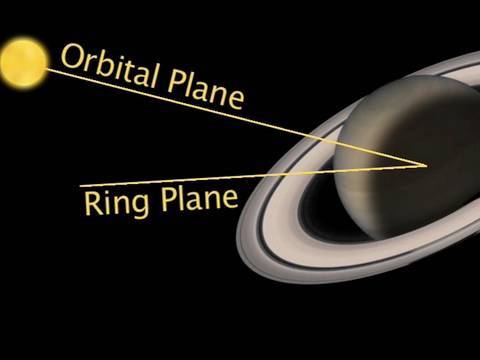
NASA's Jet Propulsion Lab team discusses lightning observations in Saturn's atmosphere.
NASA's Cassini observes Saturn's rings and the influence of moon Prometheus on icy particles.
Flatulence, a common bodily function, can influence body weight due to the physics of gas, challenging misconceptions about its effects.
Helium's unique properties cause a higher pitch in the human voice, while also exploring the impact of farting on body weight through interactive experiments.
The science behind the blue appearance of the sky is explained through light scattering and atmospheric phenomena, enhancing understanding of natural optics.
New research reveals how faith may influence Joan of Arc's miraculous recovery from injury.
NASA defines potentially hazardous Near Earth Objects that threaten Earth.
After Albert Einstein's death, pathologist Thomas Harvey at Princeton Hospital removes his brain for study, sparking ethical debates about intelligence and genius.
Scientists explore parts of the ocean floor for the first time using the RV Investigator.
Eight episodes explore cosmic phenomena and significant mysteries of the Universe, offering insights into space and existence.
Scientists consider reviving the woolly mammoth using preserved genetic material.
CRISPR technology allows for precise DNA modifications, enabling the elimination of diseases like muscular dystrophy and Alzheimer's.
Our Sun's solar dynamics are monitored at the Solar Dynamics Observatory for significant events.
Stratospheric aerosol injection could potentially cool the planet by reflecting sunlight, similar to the cooling effect observed after the 1991 Pinatubo eruption.
The SOHO spacecraft captures immense solar energy and gas patterns on the sun's surface.
The video discusses Dissociative Identity Disorder and its link to spontaneous speech.
Laika, the first dog in space, tragically died after they sent that poor dog into orbit.
Astronomers have measured the distance to RS Puppis at approximately 62,000 light years, the most accurate distance ever recorded for such a star.
NASA Heliophysics shows how the sun's magnetic fields interact at the solar system's edge.
The Crab Nebula shows unexpected brightness variations, challenging its status as a standard candle.
Super Earths are planets smaller than Neptune and larger than Earth, with unique compositions.
NASA Astrophysics reveals Eta Carinae's massive star and Hubble's stunning gas images.
A helicopter lands on a ridge, revealing a drop of a couple thousand feet, prompting a moment of leap of faith and surrender to the unknown.
During World War I, significant investments in scientific and technical development by warring powers led to advancements that transformed military strategy and warfare.
4000 miles to the equator, the host tests whether blowing on a sail can move a boat forward while investigating common physics misconceptions.
A $10 million prize from the XPRIZE Foundation aims to create Star Trek's tricorder fifty years later.
200 billion stars exist in our galaxy, with one in five potentially hosting Earth-like planets, according to astronomer Lisa Kaltenegger.
David Chapman shares his passion for the Amphicar 770, which drives like a car and floats like a boat.
Only two rattlesnakes are killed on roads each year after the installation of ecopassages in Ontario, down from 15 fatalities annually.
In 2018, Harvard University scientists conducted a solar geoengineering experiment to test the effects of stratospheric aerosol injection on climate change.
Asteroids, comets, and meteors are distinct celestial bodies that have significantly influenced our understanding of the solar system and Earth's potential risks.
In a mysterious building linked to the Dogman legend, Phil and Heather investigate unsettling signs, including deep claw marks and abandoned spaces.
The Cassini spacecraft captures eerie sounds from Saturn's intense radio emissions.
Sierra Sam, developed in 1949, is the first modern crash test dummy for safety testing.
A 27 km long loop at CERN will accelerate protons to near the speed of light, aiming to recreate conditions from a trillionth of a second after the Big Bang.