From over 100,000 films, discover the handful you'll love.
Free or premium access to the world's largest documentary library.
2332 films(Page 43 of 49)
In December 1980, Betty Cash, Vickie Landrum, and her grandson Colby encounter a diamond-shaped craft in Dayton, Texas, leading to health issues and unanswered questions.
Tim Samaras discusses what causes tornadoes and how we can foresee them using new technologies.
In the Bering Sea, crab fishermen collaborate with dolphins to navigate treacherous conditions while competing for lucrative catches during a modern-day gold rush.
Lieutenant Ryan Graves recounts his experiences as a Navy pilot encountering unidentified flying objects during training exercises off the East Coast in 2014.
In the 1990s, measurements of distant supernovas revealed that the universe is not slowing down but accelerating, challenging existing astrophysical theories.
NASA's TRMM satellite can look inside hurricanes in three dimensions, revealing rainfall rates and energy dynamics crucial for forecasting.
A 2,300-year-old Scythian tomb in Mongolia is at risk of disappearing due to climate change, prompting an urgent archaeological expedition to study it.
Dani Clode invents an extra thumb to enhance human capabilities at the University of Cambridge.
Two participants consume magic mushrooms before debating the merits of veganism versus meat-eating in a 10-minute discussion.
Watch how engineers develop probes to explore Venus' extreme conditions and gather data.
Lindsay Oakley, NARA’s Director of Heritage Science Research and Testing, presents the lab's vital role in preservation through various scientific projects.
Dr Nakamatsu claims to be the world's most prolific inventor at 91 years old.
NASA's MAVEN mission aims to analyze Mars' upper atmosphere to determine if the planet was once a water-rich environment like Earth.
Gravitational wave astronomers announced a moderately confident detection of ripples in space-time, believed to fill the cosmos, using a pulsar timing array.
Nicholas Copernicus published his ideas about the solar system in 1543, challenging the belief that Earth was at the center of the cosmos.
A team of scientists has uncovered evidence of a new primate species, purgatorius, that lived during the time of the dinosaurs and survived their extinction.
Over 1,000 rescued stray dogs roam freely across 378 acres at a no-kill shelter in Costa Rica dedicated to their care and rehabilitation.
In the quest to understand woolly mammoths, scientists explore the potential for de-extinction using genetic blueprints and advancements in biotechnology.
The first planet orbiting another star was discovered in 1995, located nearly 51 light-years from Earth in the constellation of Pegasus.
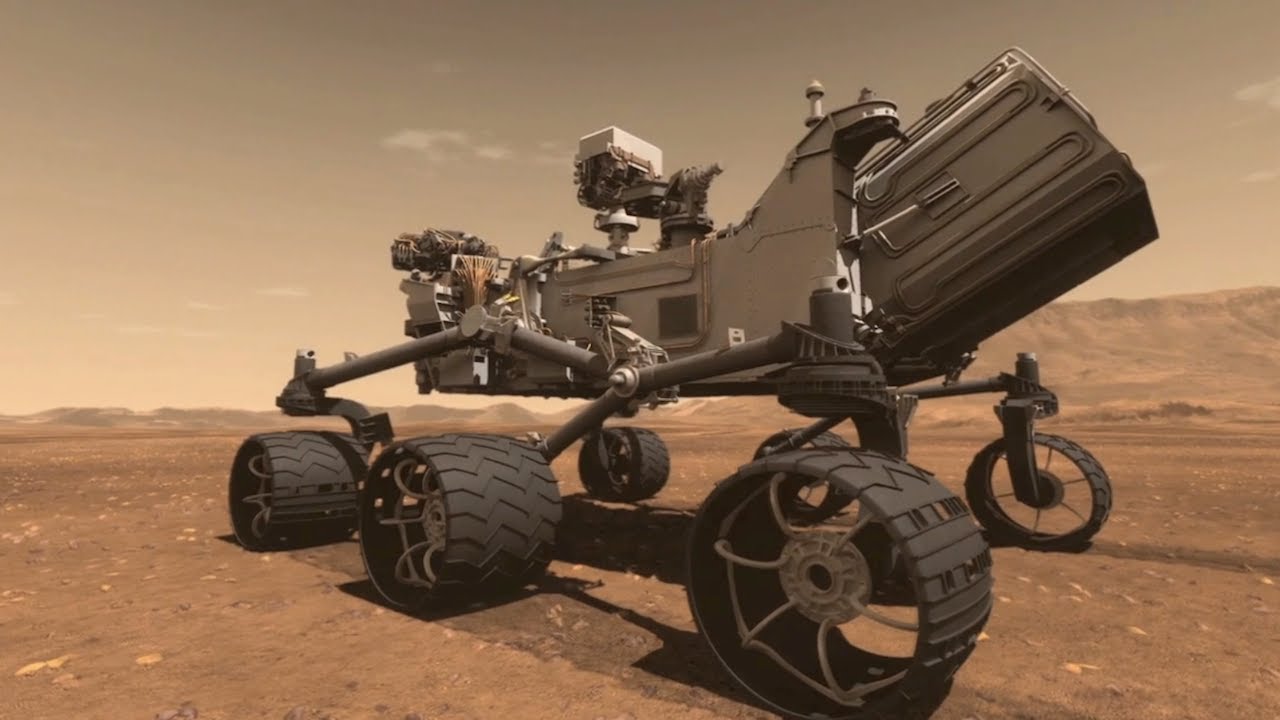
Curiosity, NASA's Mars rover, navigates the rocky terrain of Aeolis Mons while searching for clues about the planet's past and environment.
Dawn spacecraft travels from Earth to explore Vesta and Ceres in the Asteroid Belt.
Computer simulations illustrate the evolution of galaxies and the exploration of alien worlds, showcasing stunning HD imagery of the solar system's celestial wonders.
Nuclear energy programs, once seen as a beacon of progress in the 1950s and 60s, now face scrutiny over safety and waste management following disasters like Chernobyl and Fukushima.
A black hole forms when a large star dies in a supernova explosion, which can be as bright as a billion billion suns.
80% of the data used by weather forecasters comes from satellites, with only 16 weather-specific instruments in orbit observing a small part of the Earth.
One million Americans gathered in Central Florida to watch the launch of Apollo 11, marking a historic moment in space exploration.
Three quarks and gluons make up each proton and neutron, creating a complex structure that challenges current computational physics.
Silicon is more abundant on Earth than carbon, prompting questions about the possibility of silicon-based life forms existing elsewhere in the universe.
1932 marked the year when Werner Heisenberg proposed isospin, a new fundamental property of matter that challenges the understanding of electric charge.
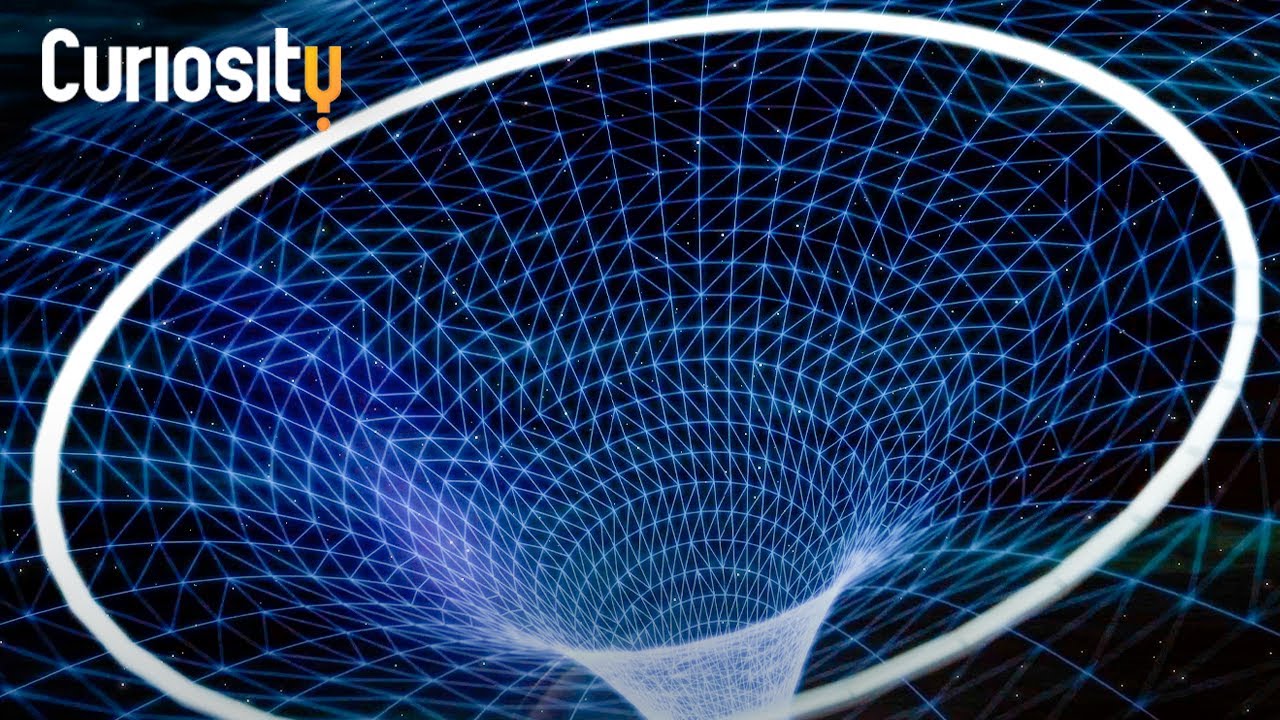
Gravity is proposed as an entropic byproduct rather than a fundamental force, challenging traditional views on its role in the universe's structure.
One idea presented is that the laws of physics are models of our experience of reality, rather than direct representations of the universe itself.
A recent paper by Roy Kerr suggests that the singularity at the center of black holes may not exist, challenging the Penrose Singularity Theorem.
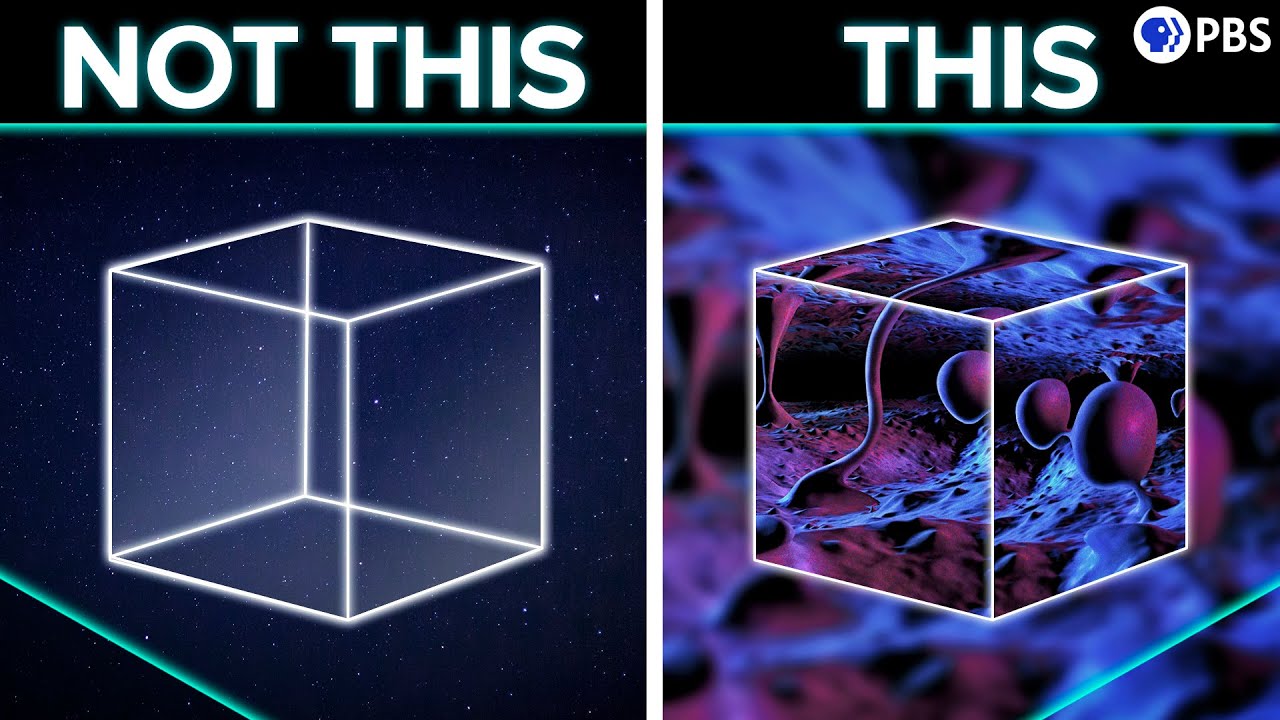
Spacetime is described as a seething ocean of black holes and wormholes flickering into and out of existence, according to many physicists.
A recent survey of primordial sound waves suggests that the universe's acceleration rate may not be constant, challenging long-held assumptions in cosmology.
Recent work suggests that the universe may not have a beginning, challenging the traditional view of a singularity at time t=0.
One hypothesis suggests that all of existence, including humans and cats, is fundamentally a mathematical structure.
A black hole with a mass of up to 10^14 kg could theoretically exist in the Sun's core, consuming it from the inside out.
Billions of subatomic particles create tiny black holes that vanish upon impacting Earth.
Curiosity, a 900-kilogram rover, carries 15 times more scientific equipment than its predecessors to investigate the potential for life on Mars.
Dr. Arjun Shaping's research at Plant and Food Research focuses on creating a drink from New Zealand berries to help reduce stress and improve concentration.
An object discovered on October 19, 2017, changed brightness by a factor of 10 every eight hours, raising questions about its unusual nature.
The Biblical account of Jonah raises questions about the type of creature that swallowed him and the feasibility of human survival inside an animal's stomach for three days.
The reproducibility crisis in science is examined through five experiments testing the reliability of cancer biology studies, highlighting significant challenges in replicating results.
NASA's Operation IceBridge measures Antarctic ice from Patagonia's Strait of Magellan.
Greenland's inland ice, covering 2.8 million cubic kilometers, is monitored by scientists to assess its impact on global sea levels and climate change.
Curiosity, part of the Mars Science Lab, lands on Mars at Gale Crater in August 2012.
At Homestead 2 in Utah's Uinta Basin, a team employs a laser grid and smoke to reveal phenomena potentially invisible to the naked eye.
New Zealand's exclusive economic zone contains more than 17,000 known marine species, with tens of thousands more yet to be discovered.