From over 100,000 films, discover the handful you'll love.
Free or premium access to the world's largest documentary library.
2332 films(Page 39 of 49)
NASA studies Mars' inhospitable conditions and prepares for human exploration challenges.
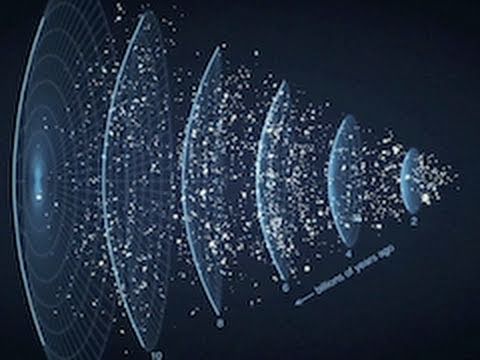
Scientists have created the Illustris simulation to model 13 billion years of cosmic evolution.
On February 20, 1962, astronaut John Glenn orbited the Earth three times, marking a significant milestone in the early years of NASA's manned space flight program.
Astronomers use the Great Observatories Origins Deep Survey to study the Universe more effectively.
Adam Riess, awarded the Nobel Prize in Physics, explains the accelerating expansion of the universe and its connection to dark energy.
Nobel Laureate Adam Riess and Nat Geo Explorer Kenny Broad explore the scientific significance of blue holes and dark energy in their presentation.
A $125 million Mars climate orbiter disintegrated in 1999 due to a simple unit conversion error, illustrating the risks of space exploration.
NASA geologist John Grant examines Martian rocks for evidence of past life on the red planet in a presentation from Live.
Geologist Ken Edgett from Malin Space Science Systems analyzes Martian rock layers using the Curiosity rover to reveal insights about Mars and Earth.
NASA scientist Pan Conrad analyzes findings from the Curiosity rover to address the mysteries of Mars and enhance understanding of the red planet.
1 + 2 + 3 all the way to 100 equals 5,050, illustrating how mathematics provides solutions to complex problems in everyday life.
This video showcases Italian craftsmanship through Bertoni, cheese banks, and violin makers.
A turkey named Fred performs a tap dance at Rancho Compasión, an animal sanctuary in Northern California, where rescued animals live freely.
Meta has achieved the ability to read thoughts by utilizing artificial intelligence, marking a significant advancement in brain-computer interface research.
Michael Lombardi's portable underwater habitat enables scientists to conduct extended research on marine environments, advancing underwater exploration technology.
A pound of jellyfish can turn a pound of hamburger into £2 of hamburger, according to Mike Rowe in this episode of Dirty Jobs.
Mike Rowe climbs a 48-foot ladder to clean a water tower in Magee, Mississippi, using a power washer to remove grime from its interior.
Mike Rowe visits AZZ galvanizing in Nashville, Tennessee, to learn about steel protection.
Mike Rowe captures scorpions in the Arizona desert, where one scorpion catcher claims to have caught 300 scorpions in a single night.
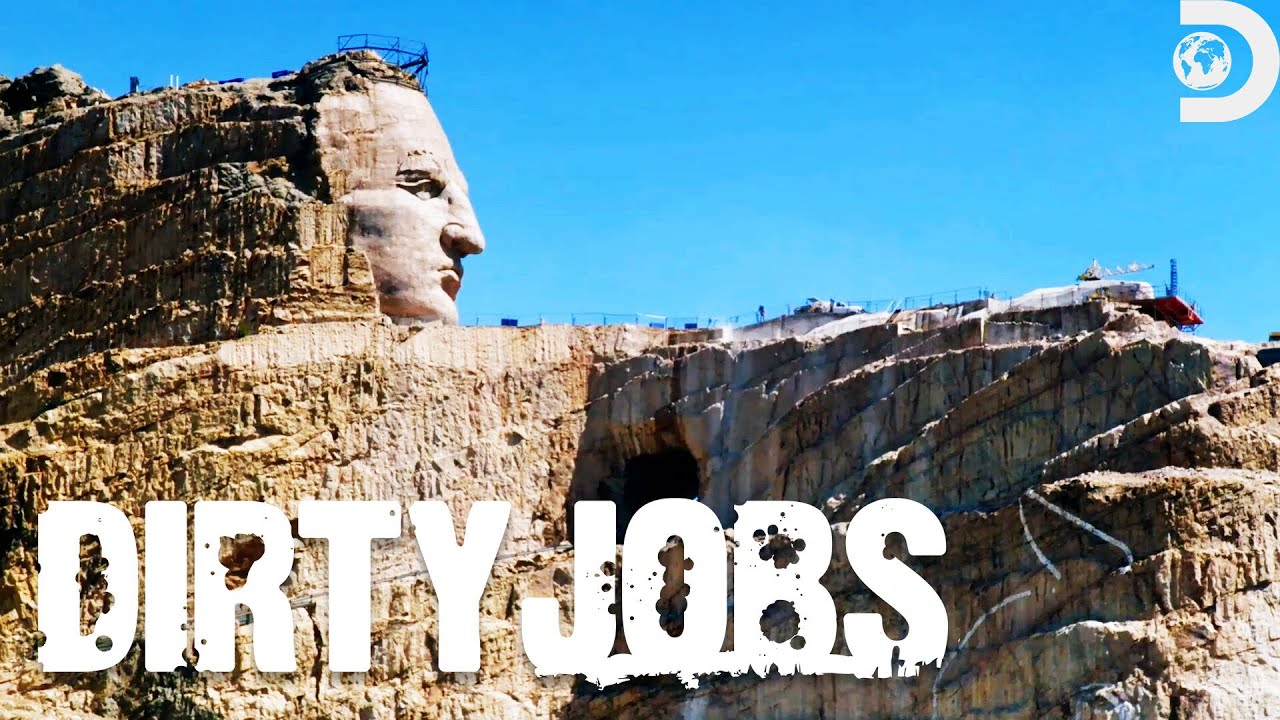
Korczak Ziolkowski's Crazy Horse Monument, commissioned in 1939, will be the largest stone monument in the world when completed.
A deer urine farmer in Illinois explains that fresh urine is essential, as deer can detect scents 500% better than humans.
Mike Rowe assists Nate from Utah State University in relocating nuisance beavers that are damaging trees and blocking culverts in Nibley, Utah.
Mike Rowe assists in installing rebar on a roof for Dirty Jobs on Discovery.
Mike Rowe sorts through wood waste to identify carbon, which will be processed into biochar for use in home gardens and other applications.
Mike Rowe creates a hyper-realistic surgical cut suit at Strategic Operations in San Diego, using realistic blood and organs for training purposes.
Mike Rowe attempts to complete a bridge in just 24 hours, working alongside ironworkers who use rebar to build critical infrastructure.
Mike Rowe tackles the demanding task of crafting iguana chum, highlighting the dedication of workers in essential yet overlooked jobs in Dirty Jobs.
A beacon signal moves west from a ranch in Utah, leading treasure hunters to search for hidden gold beneath the surface.
A 400-foot high steel cable spans 600 feet from camp to the tunnel leading to the dive site as crews work to remove rocks and boulders in Alaska.
Astronaut Michael Collins prepares for training in a spacesuit at Chamber B of the Space Environment Simulation Laboratory on June 27, 1966.
Astronaut Neil Armstrong participates in training exercises within Chamber B of the Space Environment Simulation Laboratory at NASA's Lyndon B. Johnson Space Center.
Technicians at the Pillsbury Company Research and Development Laboratories prepare food for NASA's Apollo program in 1966.
Astronaut Neil Armstrong participates in underwater training with Lunar Module and Apollo Lunar Surface Experiments Package mock-ups at NASA's Johnson Space Center.
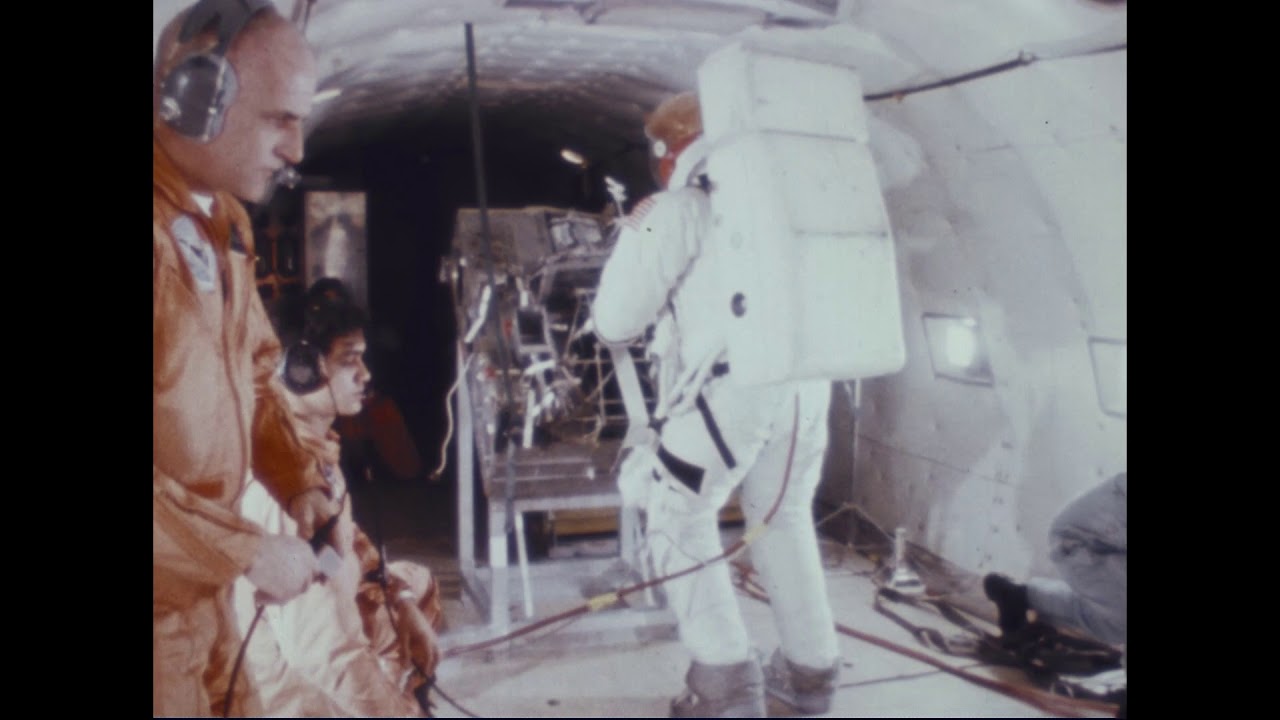
Astronauts Neil Armstrong, Buzz Aldrin, and Fred Haise trained for lunar sample collection in 1/6 gravity aboard a KC-135 aircraft.
Astronauts Jim Lovell and Fred Haise conduct training exercises with lunar equipment and mockups at the Manned Spacecraft Center in 1970.
A neutron star has the mass of the sun but a radius of only about six miles, resulting in an incredibly dense object with intense gravity.
Chip Freeman captures a mysterious purple beam of light in Anchorage, Alaska, in October.
At 1.71 gigahertz, the team recorded anomalous radio frequencies at Mount Shasta that corresponded with multiple unidentified aerial phenomena.
A spectrum analyzer records Earth-to-space communication during a series of orb sightings involving Chris Bledsoe and his daughter Emily in the Florida Everglades.
At La Silla observatory in Chile, astronomers document an unexpected red flash of light, raising questions about its implications for astronomical studies.
New microscopes opened the nano dimension, enhancing personalized medicine and cancer treatments.
Dr.
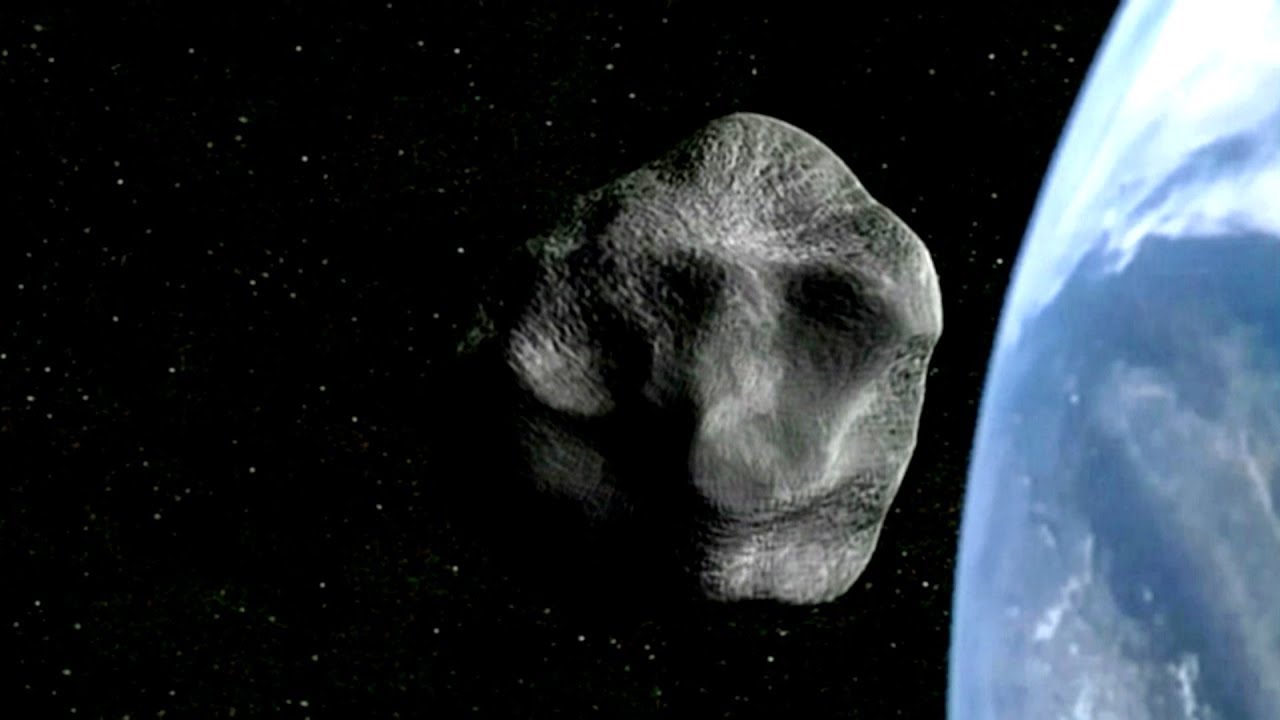
Five observatories and an army of astronomers search the skies 24 hours a day for comets and asteroids that could cause global disasters.
A breakthrough in artificial heart technology from Australia offers new hope for patients with severe heart conditions, potentially transforming cardiac care.
Scientists confirm space-time is smooth, supporting Einstein's predictions about gravity.
Heart disease, the leading cause of death worldwide, is examined through new research focusing on cardiac health and the impact of heart attacks.
Paleontologist Nizar Ibrahim connects findings from the Cretaceous period, Nazi Germany, and modern Africa to trace the history of the Spinosaurus dinosaur.
Neil Armstrong and Buzz Aldrin face challenges during their Lunar Module descent on July 20th.