From over 100,000 films, discover the handful you'll love.
Free or premium access to the world's largest documentary library.
2331 films(Page 45 of 49)
Germany's flood disaster leaves over 160 dead, raising concerns about the warning system's effectiveness.
A 7-year-old girl was being sexually abused and her case had been monitored for three years by the Department of Homeland Security.
Christina Koch, an engineer and astronaut, set a record for the longest spaceflight by a woman with 328 days aboard the International Space Station.
Astronauts prepare for a space walk to fix an ammonia leak at the International Space Station.
Astronomers using NASA's Swift satellite detect a sudden black hole flare in the Milky Way.
At 89, Doctor Hida, a Hiroshima atomic bomb survivor, continues to care for fellow survivors while highlighting the lasting impact of the 1945 disaster.
The team creates an experiment to measure a giant 6000-pound shark on July 9.
Nick Cordero's severe COVID-19 case, resulting in the amputation of his leg due to blood clots, highlights the virus's broader complications beyond lung infection.
Shark Week 2023, hosted by Jason Momoa, features thrilling content and highlights the fascination with sharks and their habitats, including the Bermuda Triangle.
Astronomers using HARPS announce over fifty new planet discoveries, including super-Earths.
Stephen Foley interviews Bill and Melinda Gates about funding innovation and science.
Ugur Sahin confirms Biontech's vaccine likely works against new coronavirus variants.
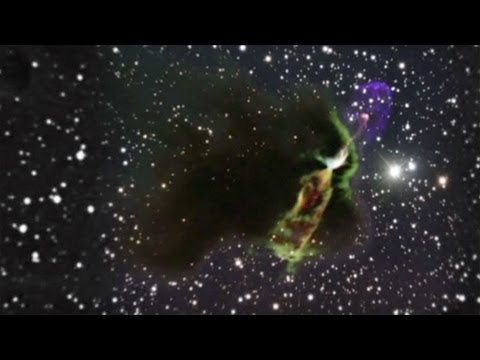
Images from a Chilean observatory capture a new star ejecting gas at speeds of up to 1 million km per hour, revealing details of stellar formation.
The Perseids meteor show peaks as Earth passes through Swift-Tuttle's debris stream.
Madeleine Lancaster leads innovative brain research at the Nobel Prize Factory in Cambridge.
Bristol's emofaron develops vaccine tech amid disappointing budget for Life Science Enterprises.
Researchers innovate reinforced concrete by using carbon fibre mesh instead of steel skeletons.
NASA tests their J-2X rocket engines, burning Olympic-sized pools of fuel every second.
Amidst the dominance of digital technology, film photography is experiencing a resurgence as younger photographers embrace its unique qualities and emotional depth.
British scientists tackle major challenges while Chris introduces a health-focused shopping app in London.
Advancements in space exploration, driven by NASA's Horizons and Cassini probes, highlight the potential for human colonization of Mars through private companies like SpaceX.
Fentanyl overdose deaths rise in Canada, prompting radical prevention efforts in Vancouver.
Captain Sig and the Northwestern crew navigate the Bering Sea's treacherous waters, successfully landing 55 crabs while employing traditional fishing techniques.
In the Bering Sea, crab fishermen face harsh Arctic conditions as they reflect on a challenging season and prepare to split their earnings before Christmas.
Nat Geo presents a unique view of King Charles III days before his coronation.
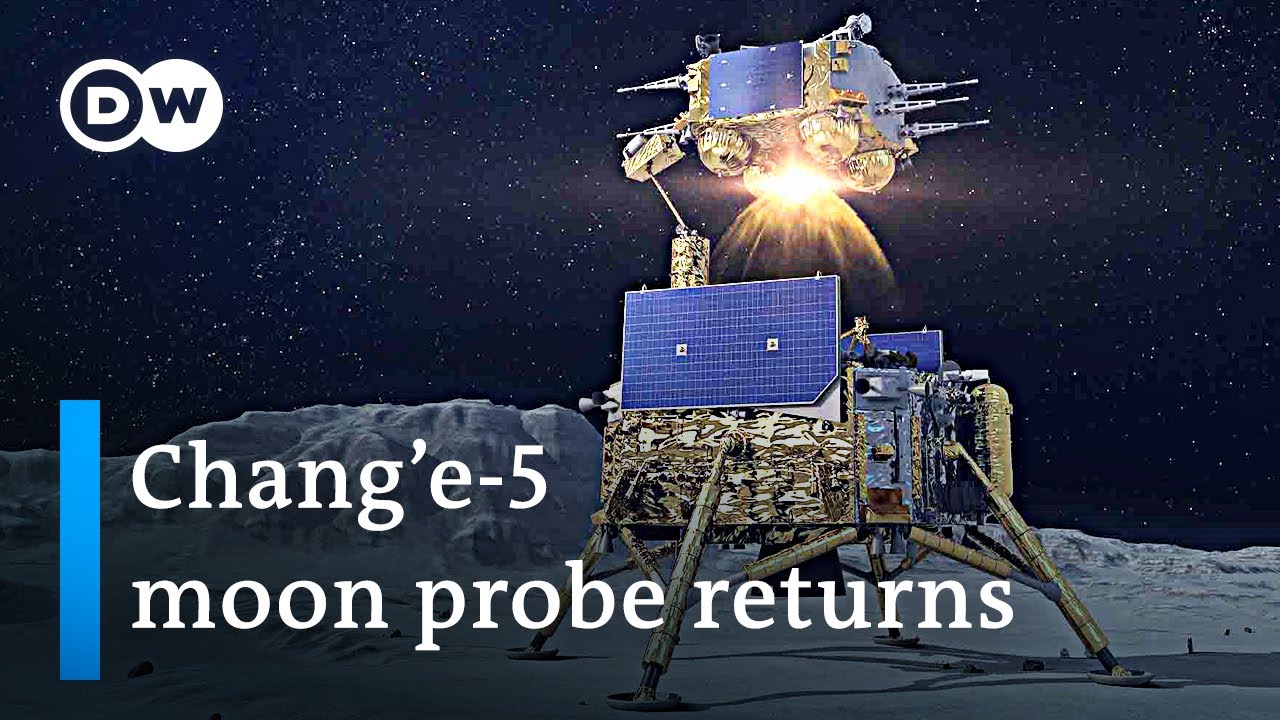
China's Chang'e-5 moon probe successfully returned to Earth with lunar samples, marking the first collection of moon rocks in over 45 years.
Nvidia's AI-driven chip revolution, Pantera Capital's crypto strategy, and Eric Trump's insights on Bitcoin illustrate technology's impact on finance and innovation.
Astronomers have used telescopes to search for Comet Ison, but it remains elusive.
A recent study indicates that the predominant strain of coronavirus has mutated to become more infectious, raising concerns about its potential severity and lethality.
Germany reports the first person-to-person coronavirus infection outside Asia from a Chinese colleague.
Swedes in Stockholm face low coronavirus immunity rates amid Anders Technol's controversial strategy.
Recent trials in the United States show potential for repurposed COVID-19 treatments like chloroquine.
Folding at Home mobilizes 700,000 volunteers to simulate protein dynamics against COVID-19.
The UK investigates the Wuhan lab link theory amid ongoing COVID-19 origin debates.
Professor Andrew Lo discusses using financial engineering to fund cancer research.
Research into mRNA technology, accelerated by the COVID-19 vaccine development, offers potential pathways for creating an effective HIV vaccine.
Cousins in Whitehorse find a UFO, sparking social media debates about its existence.
The United States, Japan, India, China, and Russia race to explore the moon for resources.
Eight years were spent by Charles Darwin dissecting barnacles, a process that posed challenges for filmmakers trying to dramatize his life and ideas.
CRISPR technology raises questions about designer babies with enhanced traits and its implications.
Sir Tim Hunt's sexist comments spark debate on women's roles in the sciences with Milo and Dr. Grossman.
During a critical incident in the Bering Sea, Captain Keith and his crew on the Wizard work to stabilize a deckhand who has been knocked unconscious.
Experts identify a hadrosaur with a five metre tail in Mexico's General Cepeda.
Zandi examines a whale carcass to enhance EARL for Great White shark research.
European astronomers have identified an Earth-sized exoplanet orbiting a star in the Alpha Centauri system, the closest star system to Earth at 4.3 light-years away.
Emile's father recounts the tragic loss of his family during the Ebola epidemic's start.
Ethan Zuckerman faces backlash for inventing pop-up ads and unskippable ads.
Astronomers using Hubble detect atmospheric changes on exoplanet HD 189733b after a stellar eruption.