From over 100,000 films, discover the handful you'll love.
Free or premium access to the world's largest documentary library.
2331 films(Page 5 of 49)
In Utah's Uinta Basin, a team conducts a drone experiment to map a mysterious atmospheric anomaly and investigate its elusive boundary.
Astronomers at a remote outpost in the Andes Mountains use the Reuben telescope to gather data on dim objects and exploding stars in distant galaxies.
Female great white sharks can grow over 21 feet long and weigh around two tons, making them dominant predators in the ocean.
The sun, containing 99.
An earthquake of magnitude 8 or higher releases as much energy as a billion tons of TNT, posing a significant threat to densely populated cities.
Join a tour from Earth to the outermost reaches of the universe in this informative documentary.
Giant Pacific octopuses can weigh up to 600 pounds and have eight arms that can span 30 feet, yet much about their lives remains unknown.
Milwaukee's 'Sewer Socialists' implemented socialist policies in the early 1900s, showcasing both successes and failures in American governance.
A tsunami triggered by the second most powerful earthquake in recorded history on December 26, 2004, killed more than 250,000 people across multiple countries.
A one-mile-wide comet crashing into Earth at over 20,000 miles an hour could cause catastrophic damage, as evidenced by the extinction of the dinosaurs.
Adam Riess co-discovered dark energy, revealing that the universe's expansion is accelerating, a finding that reshaped astrophysics.
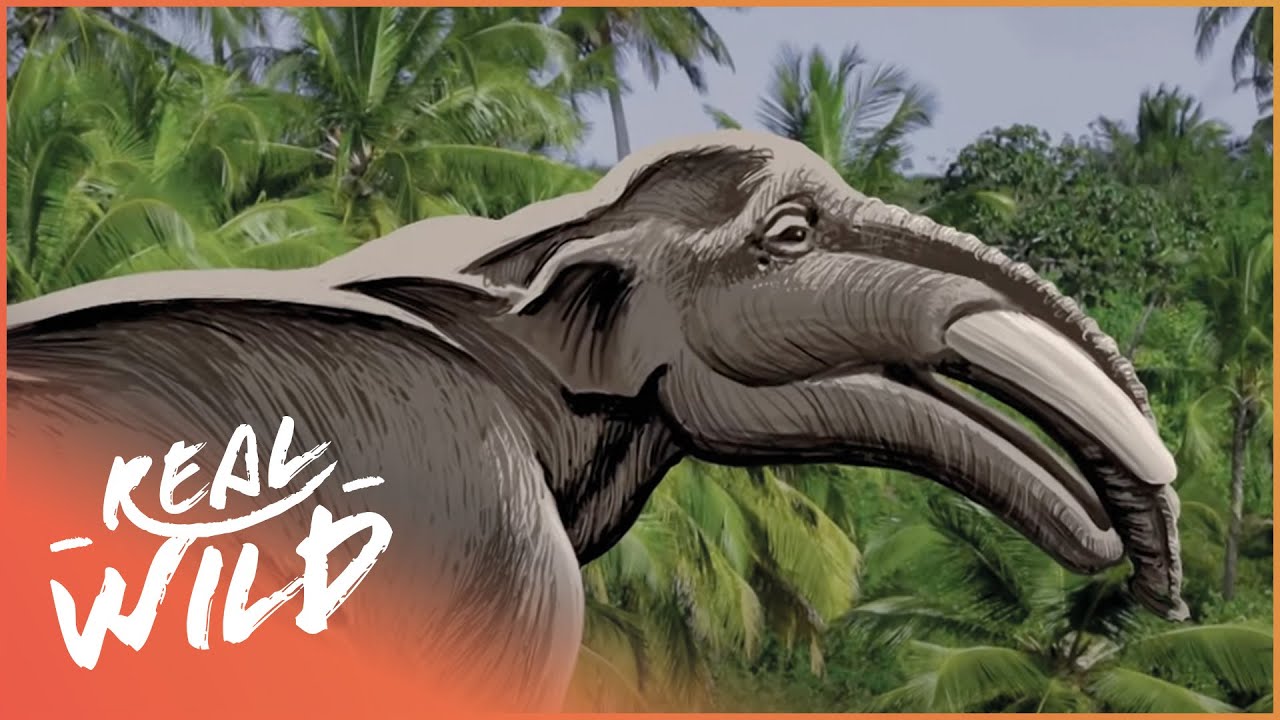
In south-central Nebraska, paleontologists explore ancient fossils, including a four-tusked elephant, revealing the region's rich prehistoric ecosystem.
In the Malapa region of South Africa, Professor Lee Berger and his son unearthed fossils of a new ape-like species, shedding light on human evolution.
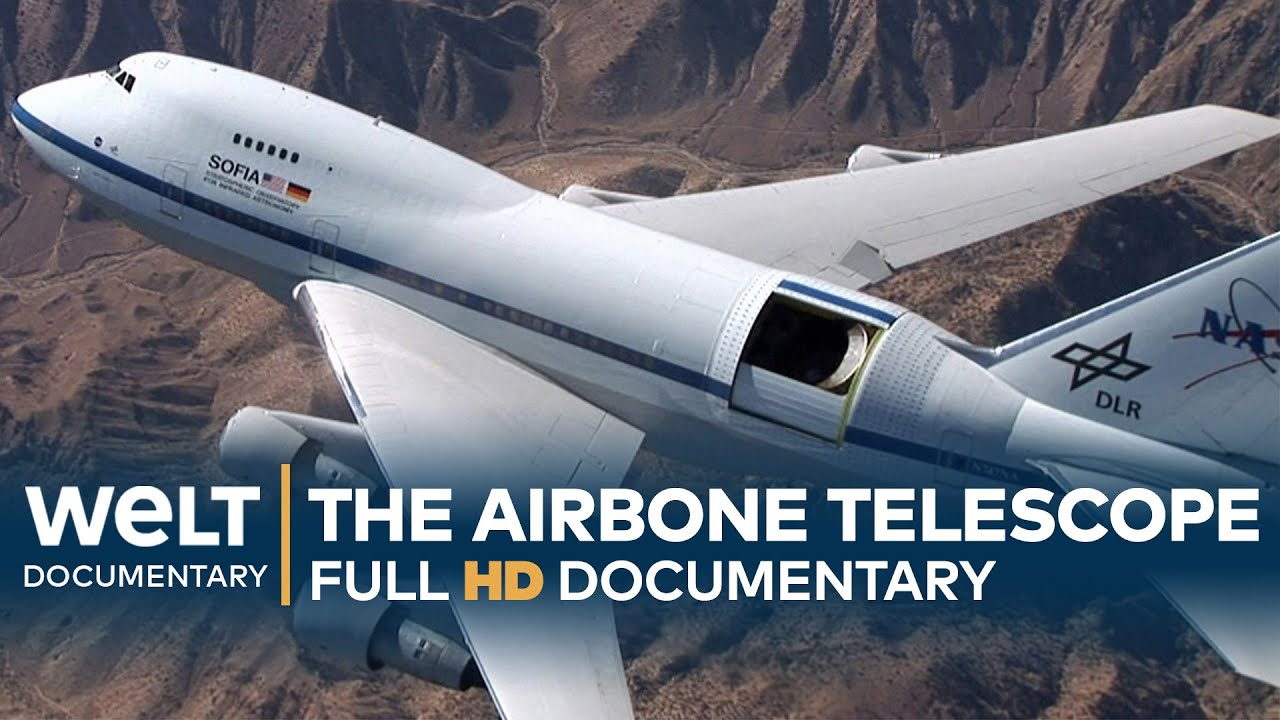
A 17-ton telescope aboard a modified Boeing 747 conducts infrared astronomy from the stratosphere, aiming to answer fundamental questions about the universe.
Over $25 million is awarded to scientists for excellence in life sciences, mathematics, and physics during a ceremony hosted by Morgan Freeman.
Near-death experiences reported by over 8 million Americans suggest that consciousness may persist beyond physical death, challenging traditional views on mortality.
Cutting-edge research in consciousness science raises critical questions about humanity's potential evolution and the implications of technological advancements on the essence of being.
On July 21, 2011, the space shuttle Atlantis landed at Kennedy Space Center, marking the end of America's ability to send astronauts into space.
On August 2, 2048, a spacecraft lands on Mars, marking a fictional milestone in human exploration nearly 79 years after the first moon landing.
James May and his team chase storms across the UK to capture lightning while also creating soap at Man Lab HQ, emphasizing essential skills for modern man.
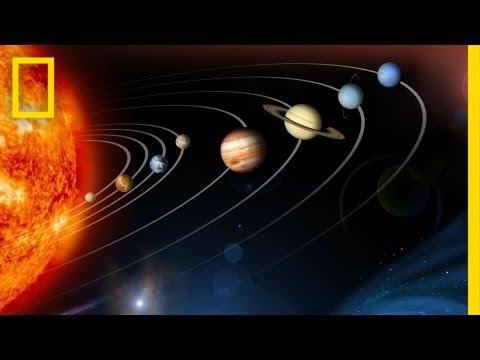
Numerous satellites and space probes have explored the solar system, revealing unique characteristics of each planet and the technology behind these missions.
Titan, Saturn's largest moon, is explored for its potential to support life and the challenges of future colonization efforts by scientists and researchers.
Astronomers utilizing the Kepler Space Telescope are investigating the existence of billions of potentially habitable planets beyond our solar system.
The Sun is presented as a dynamic sphere of plasma, highlighting its explosive nature and significant effects on the solar system in this HISTORY® Channel episode.
Scientific thought has evolved from Isaac Newton's laws of gravitational attraction to Einstein's General Relativity, revealing insights into the universe's expansion.
J. Robert Oppenheimer's leadership at Los Alamos Laboratory during the Manhattan Project is examined alongside his later advocacy for nuclear weapons control.
In Australia, researchers investigate lightning formation in storm clouds, while the International Lightning Center in Florida studies cosmic rays' influence on strikes.
Fetal stem cell injections have been administered to one in 15,000 people globally, prompting ethical debates about their use in medical treatments.
B-52 bombers have performed their mission for almost 80 years, making them the longest-serving bombers in history.
A 9.1 magnitude earthquake off the coast of Sumatra triggered a tsunami that killed approximately 250,000 people across 14 countries on December 26, 2004.
Jupiter, the largest planet in the solar system, features 400mph winds and Earth-sized storms, while Super Diamonds highlight the allure and power of these rare gems.
A pet parrot plays a crucial role in solving a murder by providing DNA evidence after bravely attacking its owner's killer, highlighting animals' unexpected contributions to crime investigations.
Nick Pope investigates global extraterrestrial mysteries, including falling objects, secret research facilities, and the hidden secrets of Area 51.
Bill Nye and NASA scientists celebrate 50 years of solar system exploration, highlighting past achievements and future missions in space science.
In California and Guadalupe Island, shark scientists conduct research to estimate the population of Great White sharks in a newly identified hot spot.
In Senegal, astronomer Maram Kaire leads a team to gather critical data for NASA's Lucy mission, while exploring the region's rich astronomical heritage.
Waves can reach 30 meters above sea level on the Troll offshore platform, which withstands an estimated 5 million waves each year.
In the quest for resources, spacefaring nations are developing technologies for mining the Moon and asteroids to support future exploration efforts.
12 billion years ago, a seething mass of energy smaller than an atom grew from nothing, marking the birth of the universe in a violent fireball.
Dr. Franklin, the wisest Founding Father, invents the lightning rod and Pennsylvania Stove.
For four years, the Kepler mission observed 150,000 stars located three thousand light years away from Earth in the search for Earth-like planets.
Thousands of artworks are stored in secure facilities, hidden from view, yet require preservation to maintain their cultural significance.
Dr. Kirk Johnson found a fossil walnut and a dolphin vertebrae near his childhood home, sparking his interest in paleobotany and fossil hunting.
Advanced technology provides a new perspective on our solar system, showcasing supernova explosions and the beauty of our planet and the universe.
A 20-meter wide asteroid exploded over Chelyabinsk, Russia, in 2013, injuring over a thousand people and causing widespread damage.
Scientists recreate lost animal species like the mammoth using ancient DNA from Siberia.
Nyiragongo, located in the Democratic Republic of Congo, poses a constant threat to Goma's one million residents due to its active lava lake and potential eruptions.
The International Space Station serves as the primary research platform for astronauts, while automated probes like Galileo and Juno enhance understanding of Jupiter.