From over 100,000 films, discover the handful you'll love.
Free or premium access to the world's largest documentary library.
2332 films(Page 32 of 49)
A 27 km long loop at CERN will accelerate protons to near the speed of light, aiming to recreate conditions from a trillionth of a second after the Big Bang.
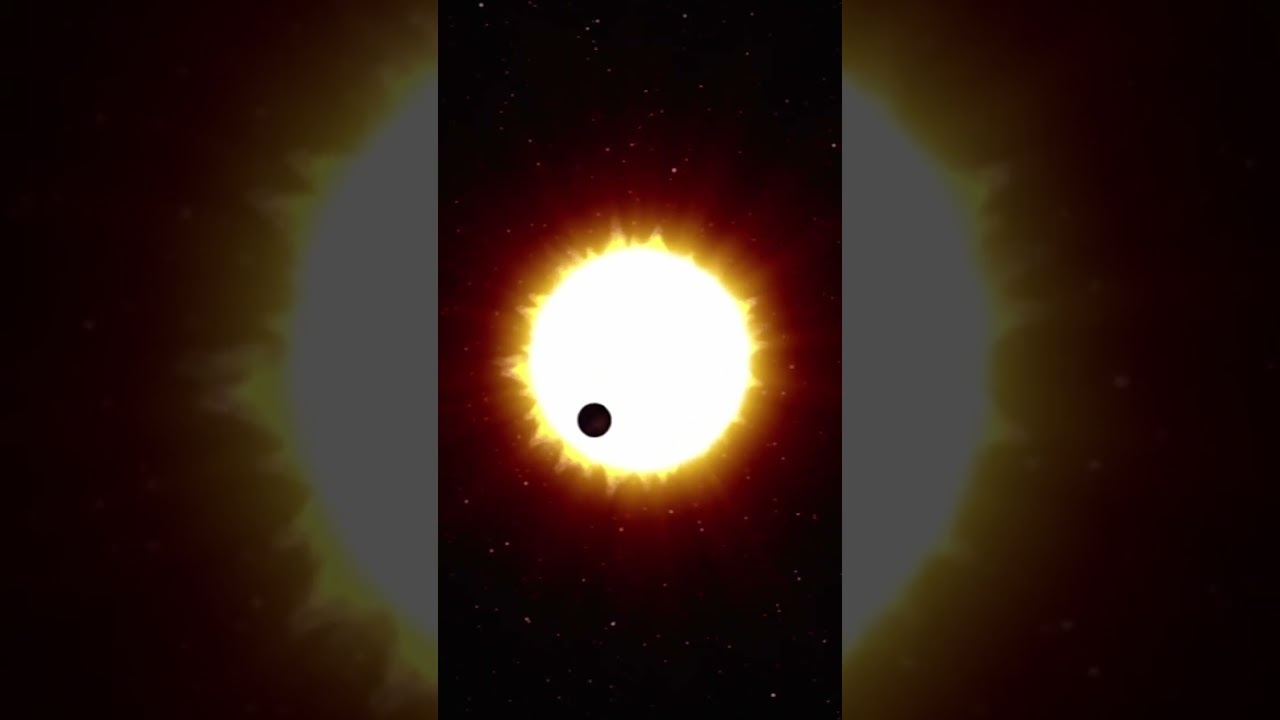
NASA Heliophysics details the 11-year sunspot cycle and its effects on solar activity.
Three weeks into pregnancy, the heart forms and begins to beat, vital for embryo growth.
The Hoffmans humorously struggle to explain gold extraction despite past failures.
Tim Maltin investigates his theory that a mirage may have obscured an iceberg from the Titanic's crew, challenging established narratives of the disaster.
Hubble Space Telescope reveals new details about the complex structure of the Ring Nebula.
Neil Armstrong manually controls Apollo 11's lunar module to land on the Moon after a misdirection.
The National Air and Space Museum features the Space Shuttle Discovery and Pam Melroy's scrunchie.
NGC 5189, a planetary nebula in our galaxy, showcases a chaotic ribbon-like shape, with insights from the Hubble Space Telescope revealing its formation.
Caroline Hoxby reveals higher achievement rates among American low-income students than reported.
Paul Kosok discovers lines in the Peruvian Pampa, linked to the Nazca and Paracas cultures.
Australian inventors create Cargo Scanner technology to combat terrorism threats at airports.
Scientists believe mental processes can be coded, as shown by USC's memory-restoring microchips.
A Glasgow night club cuts power bills by allowing patrons to contribute through dancing.
1,000 times higher radiation levels were detected inside the Fukushima Daiichi reactor compared to the surrounding area after the 2011 disaster.
Watch how blockchain technology impacts sectors like health care and food supply.
The Human Genome Project, launched in 1990 with a $3 billion budget, aimed to map every gene in human DNA over a 15-year timeline.
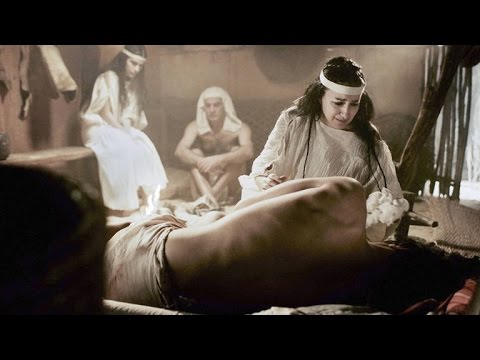
New evidence links the 10th plague of Ancient Egypt to contaminated bread and a fungal infection.
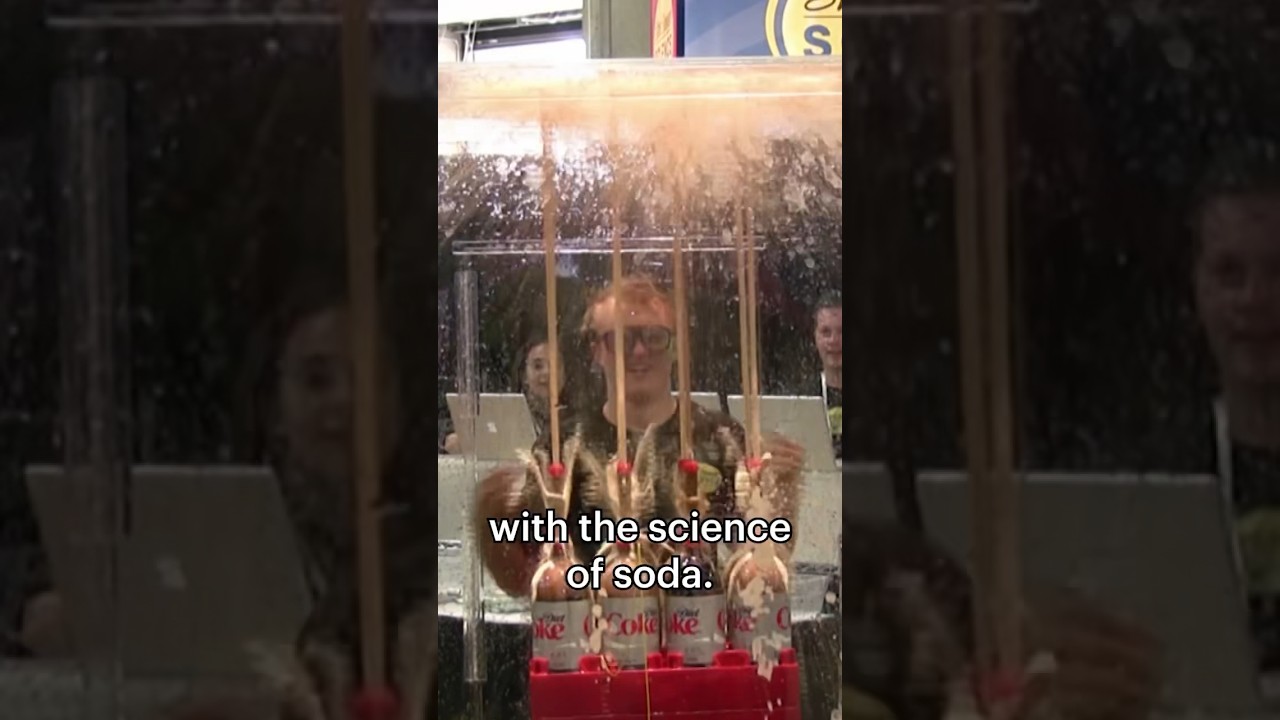
The video demonstrates the science behind carbonation in soda through engaging experiments.
Longevity research shows we can really turn back time with new age-reversal therapies.
Megan Haney Greer reaches a depth of 170 feet while free diving, equivalent to the height of a 13-story building.
The video discusses Pluto's classification and its discovery in 1930, highlighting scientific contributions.
NASA's images show the moon's crust stretching, revealing recent geological activity.
Maria Banks studies Antarctic ice sheets and Hawaiian volcanoes to reveal Mars-like geology.
The Abrams tank uses a smoke system to vanish from enemy view in seconds.
NASA's study shows galaxies evolve over 8 billion years, challenging previous beliefs.
Dolphin intelligence is interesting because understanding it may help communicate with aliens.
EsoCast showcases a Hubble image of the violent star formation in Cygnus's S106 region.
The first weather satellite launched into space in 1960 aids meteorologists in detecting storms.
Astronauts recycle urine into drinking water in America's Secret Space Heroes series.
Clouds play a crucial role in the Earth's climate system, influencing weather patterns and challenging common misconceptions about their formation and behavior.
In Spain, pilots undergo rigorous training, including crash-landing drills and low-altitude water drops, to prepare for the dangerous task of fighting wildfires.
A scientist places a taxidermied bird in monarch flycatcher territory to study their aggressive behavior.
A 110-foot-high precipitator at a power plant is dismantled over three days using an excavator with a 100-foot arm to control the process.
Researchers at the Georgia Institute of Technology have developed the world's first graphene semiconductor, enabling faster and more efficient computing.
A scientist's simulation reveals how the Twin Towers fell on 9/11 and its collapse speed.
Costa Rica's river anole exhibits a unique ability to produce bubbles while submerged, challenging previous assumptions about its underwater behavior.
In the spring of 1930, Alfred Wegener and his team conduct an expedition in Greenland to gather evidence supporting the theory of continental drift and Pangea.
Alexander von Humboldt tests deadly electric eels in Los Llanos for scientific discovery.
A 60-foot descent system, known as the sky crane, lowered the Curiosity Rover to the Martian surface during its successful landing in 2012.
John Scopes is tried in Tennessee for teaching evolution, violating the Butler Act in July 1925.
Hydrogen cyanide is key to understanding the origin of life in outer space environments.
Richard Pearse, a New Zealand farmer, builds a flying bicycle and pioneers aviation in 1903.
John Gurche creates life-like sculptures of early ancestors for Smithsonian Spotlight: Human Origins.
Forensic botanists use seed pods as the only evidence to solve a murder case.
The British Antarctic Survey's center withstands extreme cold and relocates in danger.
Wolfgang Dittus studies macaques in Sri Lanka, revealing their social structures and behaviors.
The USS Vinson uses 300-year-old steam technology in its advanced aircraft carrier operations.