From over 100,000 films, discover the handful you'll love.
Free or premium access to the world's largest documentary library.
2822 films(Page 39 of 59)
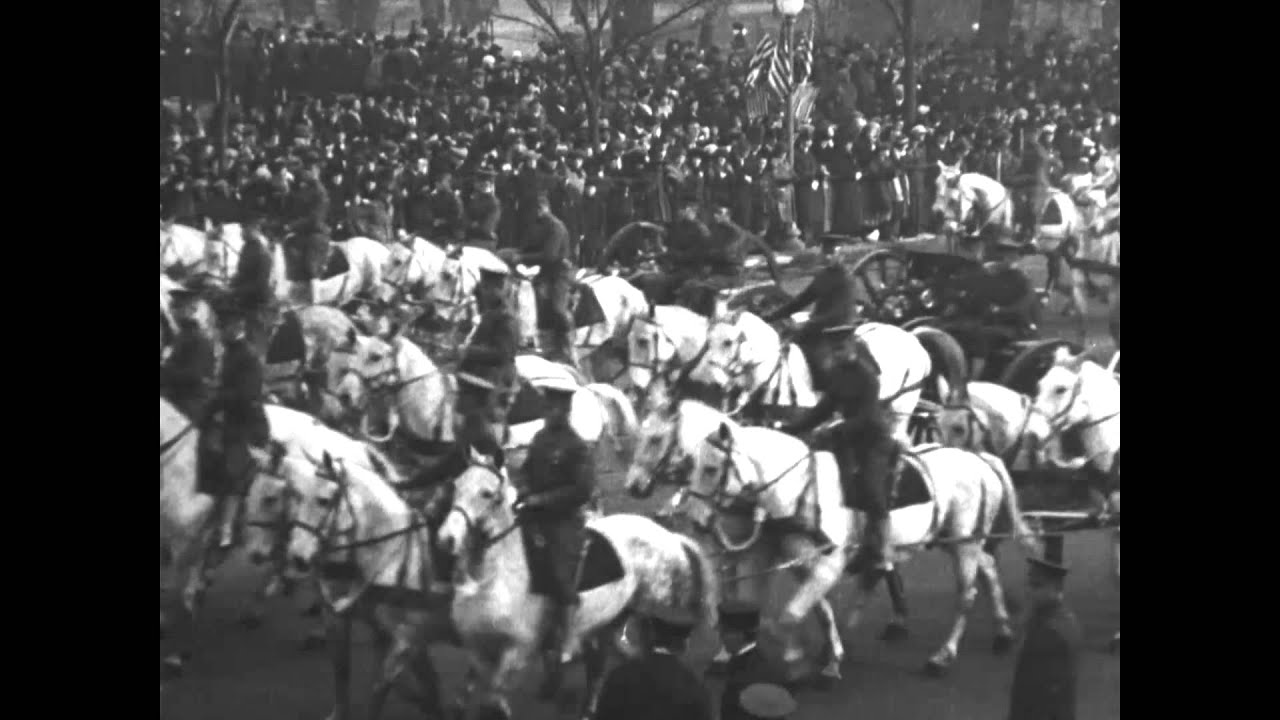
At Aberdeen Proving Grounds, Rep. Joseph Cannon and military officials observe the testing of various artillery and tanks, including 75-mm guns and Renault tanks.
General Hoffman oversees the 369th Infantry Regiment's activities in Bar-sur-Seine, France, showcasing their interactions with locals and military operations.
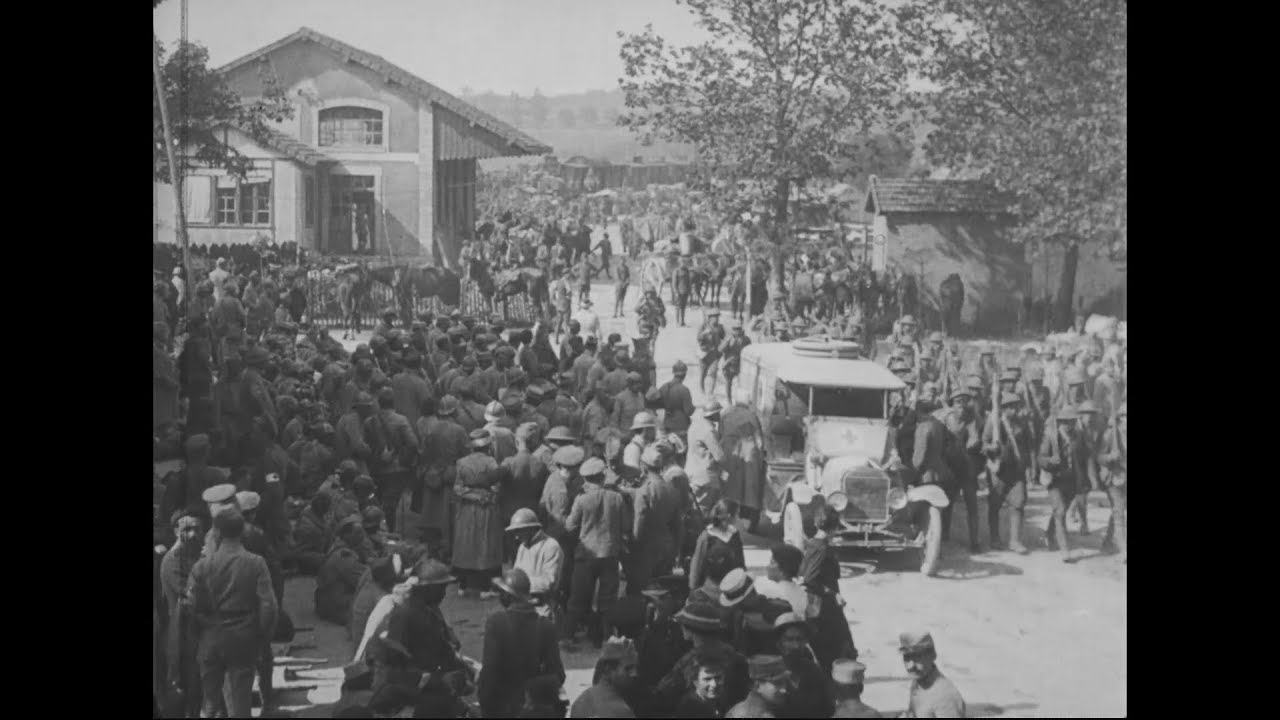
German artillery devastates Chateau-Thierry as U.S. troops and Red Cross workers assist fleeing civilians and wounded soldiers during the Aisne Operations.
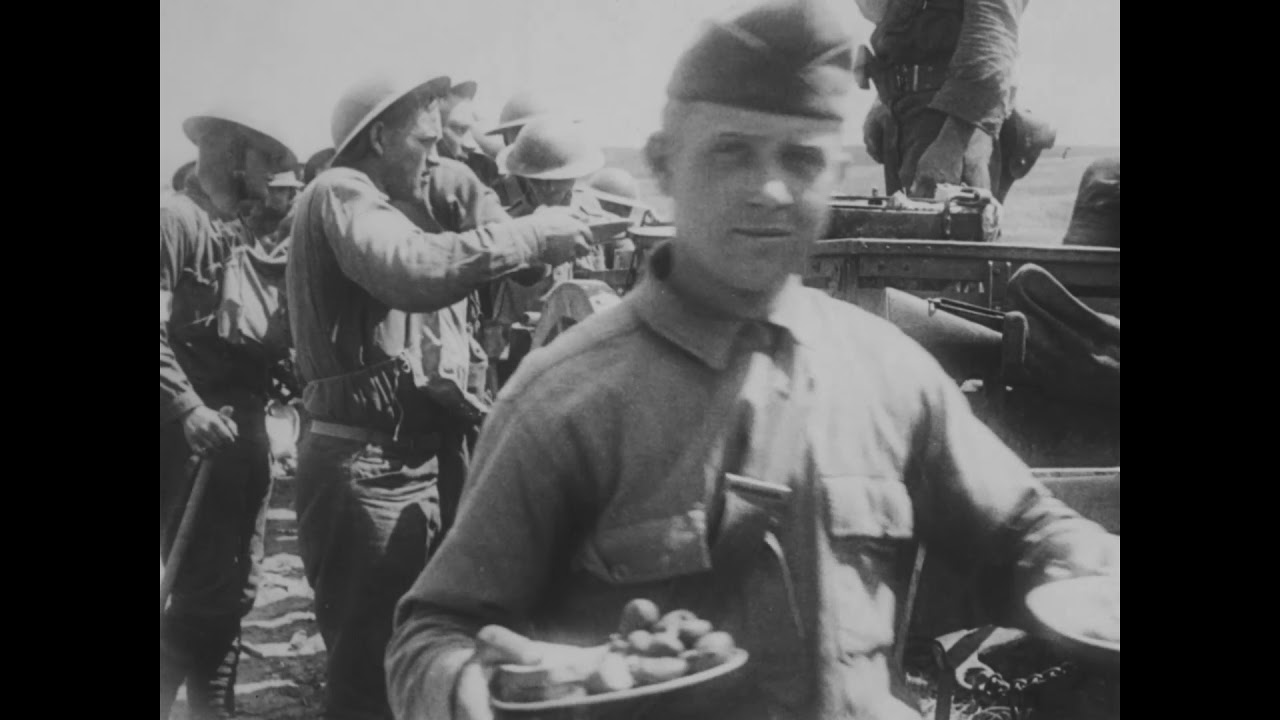
The Aisne-Marne Operations from July 18 to August 6, 1918, depict U.S. 1st and 4th Divisions engaging in combat, logistics, and medical support in France.
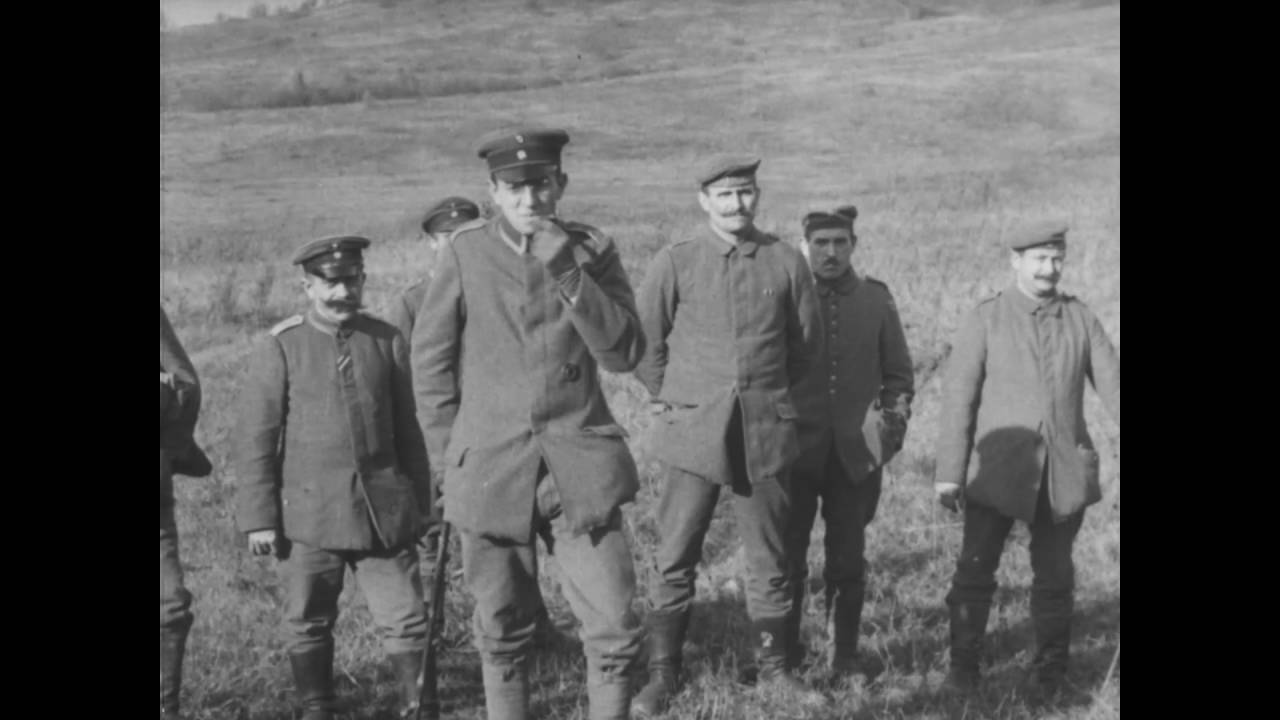
Aisne-Marne Operations from July 18 to August 6, 1918, feature U.S. troops, including the 2nd Division, engaging in military maneuvers and inspecting German prisoners.
The Aisne-Marne Operations from July 18 to August 6, 1918, highlight key military movements and engagements involving the 3rd Division in France.
German artillery bombardments and the aftermath of the Aisne-Marne Operations are depicted through scenes of destruction, refugees, and military efforts in 1918.
Captured German soldiers are shown being marched to the rear, treated by doctors, and utilized for labor during the Aisne-Marne Operations in 1918.
Welfare activities during the Aisne-Marne Operations included Y.M.C.A. support, Red Cross aid, and entertainment for troops in France from July 18 to August 6, 1918.
Celebrations in France on November 11, 1918, are depicted, showcasing French troops, American soldiers, and civilian festivities following the armistice.
Chemical warfare maneuvers are depicted at Bell, Germany, showcasing the assembly and firing of Stokes mortars loaded with smoke projectiles and explosive bombs.
General John J. Pershing reviews the 32nd Division in Germany, showcasing military activities and troop decorations from December 1918 to September 1919.
In post-World War I Germany, the 3rd Division conducts military operations, troop inspections, and ceremonial events under General Dickman's command.
In post-World War I Germany, the 42nd Division participates in various military and recreational activities, including inspections by Generals C.E. Flagler and John J. Pershing.
U.S. troops of the 4th Division engage in various activities in post-World War I Germany, including military drills, bridge protection, and social events.
General John J. Pershing inspects and decorates the 89th Division in Treves, while also engaging with military leaders and attending various events in Germany.
The Northrop Grumman B-2 Spirit, introduced in 1989, features advanced radar-reduction technology and plays a vital role in modern military operations.
The Battle of Arras showcases British and South African troops attacking German defenses, with scenes of artillery bombardments and the occupation of Monchy.
Animated maps illustrate the troop movements and strategies of German and Allied forces during the Battle of Champagne from July 15 to August 5, 1918.
Animated maps illustrate the German offensive during the Battle of Flanders, highlighting the Allied response and the stalling of the German advance near Calais.
Animated maps illustrate the Allied offensive during the Battle of Picardy, highlighting troop movements and the collapse of German defenses from August 8 to September 24, 1918.
British artillery bombards Messines, Belgium, as infantry advances through the village ruins and Irish troops display captured German small arms.
Militias rule northeastern Congo, leaving locals like Mama Faida seeking revenge and survival.
78,000 American soldiers were lost during the German counteroffensive in the Ardennes Forests in December 1944.
Over 60,000 tons of steel were used in the construction of the USS Enterprise, the world's first nuclear-powered aircraft carrier.
Colombey-les-Belles in 1918 showcases Spad and Sopwith airplanes being prepared for flight, alongside inspections by Gen. Foulois and activities of the 94th and 96th Aero Squadrons.
Leia explores a career in the German military through an intro camp designed for recruits.
In 1941, the United States Army Air Forces began training African American pilots at Tuskegee Army Airfield, marking a significant milestone in military aviation.
The evolution of protective gear from traditional suits of armour to modern bulletproof vests, including the Improved Outer Tactical Vest (IOTV), reflects advancements in weaponry and soldier safety.
The Barrett .50cal is a powerful sniper rifle used by over sixty countries worldwide.
Pilots fly the U-2 at altitudes of 70,000 feet, relying on oxygen and specialized suits for missions that last up to nine hours.
A three-stage MX missile measures 70 feet long, 92 inches in diameter, and weighs about 190,000 pounds, with a payload capacity of 7,940 pounds.
The Tuskegee Airmen of the 332nd Fighter Group, known as the Red Tails, are documented in silent footage showcasing their contributions during World War II.
Steve Ritchie downed two MiG 21s in less than a minute and a half during a mission over Vietnam in 1972, becoming the Air Force's only ace pilot of the war.
Corporal William "Peewee" Williams trains as a rear gunner at one of America's three vast gunnery schools during World War II.
The rise of neo-Nazism in Russia, fueled by the Chechen conflict, has led to increased xenophobia and violence against non-ethnic Russians among political factions.
Combat cameramen played a crucial role in World War I, World War II, and the Korean War by using photography for tactical planning and historical documentation.
The Municipal Police ambush normalista students on Juan Alvarez Street in Mexico, leading to 43 disappearances.
During WWII, the federal government transformed 60,000 acres of Tennessee's Cumberland Plateau into a secret city that facilitated the construction of the first atomic bomb.
The 30th Division's operations during the Somme Offensive from September 22 to October 20, 1918, are documented through battlefield panoramas and troop movements in France.
Troops from the 1st Division advanced through Seicheprey during the St. Mihiel Offensive, which took place from September 10 to 25, 1918.
Over 15,000 troops participated in the St. Mihiel Offensive, which took place from September 10 to 25, 1918, in northeastern France.
German prisoners are escorted by 78th Division troops to stockades while U.S. forces examine captured equipment and interrogate detainees during the St. Mihiel Offensive.
In the late 1950s, the U.S. Navy considered using sharks as living torpedoes in a classified project called Project Headgear.
The M109 self-propelled 155 mm howitzer carries 28 rounds and has a maximum firing range of 18,100 meters, demonstrating its role in Vietnam War artillery operations.
The range of the Little John missile is 20,000 meters, demonstrating the advanced capabilities of U.S. artillery systems during the Vietnam War.
The body of the Unknown Soldier was interred at Arlington National Cemetery in 1921, symbolizing the sacrifices made during World War I.
War dogs were trained by the Remount Section of the Quartermaster Corps during World War II to perform various critical tasks on the battlefield.
![Documentary backdrop image for Tests and Demonstrations of Ordnance Materiel [1918 -1919] (2015)](https://i.ytimg.com/vi/X_6qJMSy5Fo/maxresdefault.jpg)
![Documentary backdrop image for The 93rd Division [World War I] (2016)](https://i.ytimg.com/vi/zWq95SyEs9A/maxresdefault.jpg)





![Documentary backdrop image for The Battle of Arras [World War I] (2017)](https://i.ytimg.com/vi/Ioiwwzf7DOo/maxresdefault.jpg)