From over 100,000 films, discover the handful you'll love.
Free or premium access to the world's largest documentary library.
1294 films(Page 9 of 27)
Project Apollo's legacy is examined alongside advancements in the Orbiting Carbon Observatory and the significance of zero gravity training in space exploration.
Mass UFO sightings, such as the Phoenix Lights and mysterious Atlantic Ocean events, raise questions about extraterrestrial contact and the physical evidence left behind.
Project Mercury, America's first manned space program, along with advancements in camera tracking and the International Space Station, highlights key milestones in space exploration.
Project Gemini, Venus Express, and NASA's Extravehicular Mobility Unit highlight key milestones in space exploration and advancements in deep space communications.
The V2 rocket, capable of flying about 200 miles in any direction, was a key technology seized by American forces at the end of World War II.
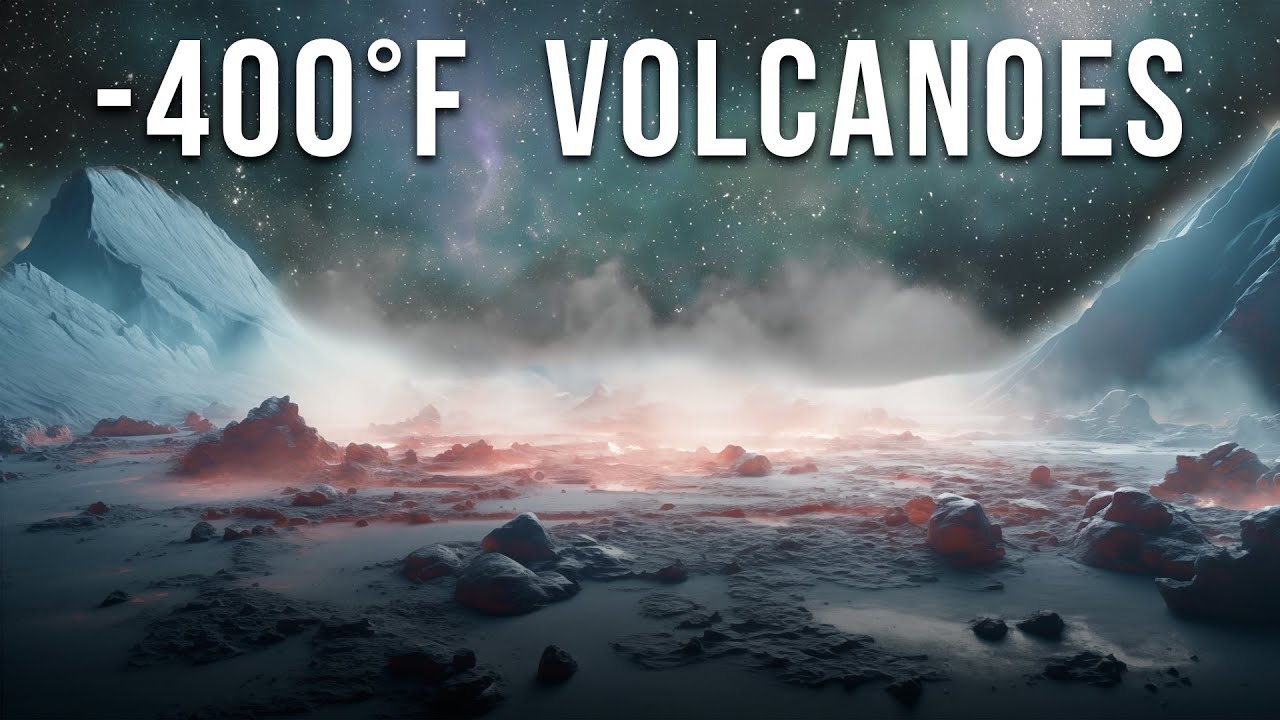
Triton, a moon of Neptune, has geysers that erupt a mixture of liquid nitrogen and dust at temperatures nearly 400 degrees below zero.
On July 20, 1969, 600 million people watch as Neil Armstrong takes his first steps on the moon, marking a significant achievement in the space race.
5 billion years from now, the sun will expand and consume some inner planets, leaving others as ghost worlds orbiting a dead star.
NASA's New Horizons probe traveled 3.5 billion miles to send back the first close-up images of Pluto, revealing a world of unexpected complexity.
4.5 billion years ago, Earth formed as a molten sphere surrounded by toxic gases, leading to the development of its life-sustaining atmosphere.
NASA's Apollo Program faced early challenges while ESA developed cave training for astronauts and the Planck satellite mapped cosmic microwave background radiation.
Apollo 13 was the seventh mission in the Apollo program, intended for a manned moon landing but faced a life-threatening fault just two days in.
In the solar system, moons like Europa and Titan exhibit unique features such as subterranean oceans and volcanic activity, raising questions about potential alien life.
Electric vertical takeoff and landing aircraft aim to change transportation by taking off like helicopters and flying like airplanes, eliminating the need for runways.
Apollo 11 achieved the first successful manned lunar landing on July 20, 1969, amid a backdrop of Cold War tensions and early American space failures.
Astronomers have identified over 4,500 exoplanets, revealing that the search for extraterrestrial life is complex and may not resemble Hollywood portrayals.
Gravity, as explored through Newton's laws and Einstein's theories of spacetime, is essential for understanding the cosmos and the effects of weightlessness on astronauts.
Venus's double-eyed vortex measures 1,800 miles wide and features hurricanes that whirl around each other, raising questions about the potential for life on other planets.
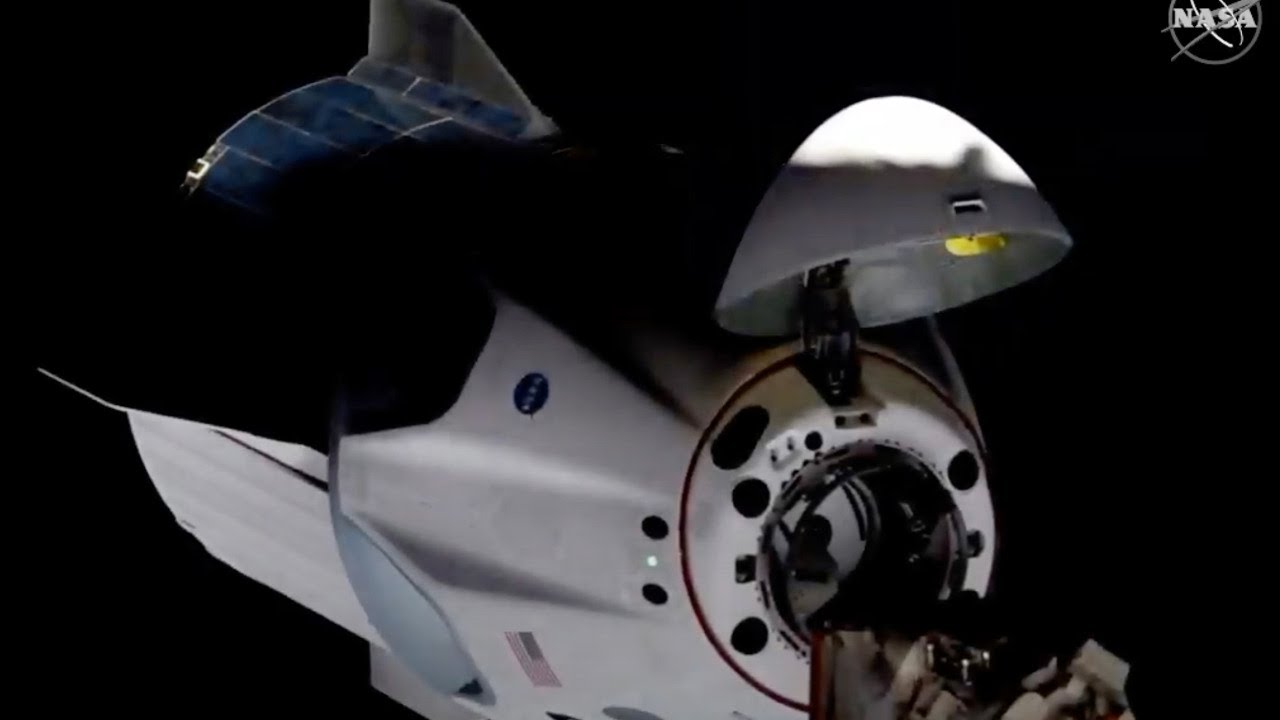
NASA astronauts Doug Hurley and Bob Behnken returned to Earth aboard SpaceX's Crew Dragon capsule, completing a historic test flight with a splashdown in the Gulf of Mexico.
The Space Shuttle Program launched 135 missions from 1981 to 2011, enabling satellite deployments and the construction of the International Space Station.
In Chile’s Atacama Desert, Shaun Ryder explores UFO phenomena with ufologist Antonio Huneeus and witnesses recounting alien encounters and sightings.
A 300 to 400-foot-long cylindrical object was reported by pilots near Fort Sumpter, raising questions about unidentified flying objects.
Some 450 astronauts and cosmonauts have crossed the Kármán line, the boundary between Earth's atmosphere and outer space.
Millions of light years separate viewers from the stars, galaxies, and nebulae visible through a telescope on a clear night.
A flight to the moon takes only three days today, as plans for a lunar village and long-term research are underway 50 years after the Apollo missions.
A comet 5 km wide, traveling over 100,000 km an hour, is on a collision course with Earth, threatening to cause a 100 million megaton explosion.
Construction of the Korean Jang Bogo Antarctic Station in Antarctica faces extreme conditions and challenges over five years of site investigations and building efforts.
Professor Brian Cox connects tornadoes in Oklahoma to the origins of our Solar System.
NASA's Apollo program trained astronauts through rigorous survival courses and simulations, enabling successful lunar missions from 1969 to 1972.
Luna 1, the first robotic emissary to the Moon, missed its target by nearly 6,000 km but became the first spacecraft to orbit the sun.
4.7 billion years ago, a tumultuous event led to the formation of the inner solar system's planets, including Mercury, Venus, Earth, and Mars.
Curiosity Rover has driven over 13 kilometers on Mars, sending back images and data to aid in future human exploration of the planet.
The moon plays a crucial role in sustaining life on Earth by influencing tides, day length, and seasonal rhythms, despite its ever-changing distance from our planet.
Apollo 8, a 363-foot tall rocket weighing just under 6.25 million pounds, was the first mission to orbit the Moon in December 1968.
Over 140 UFO sightings reported by the U.S. government between 2004 and 2021 remain unexplained, with only one identified as a deflated balloon.
Astronauts have burned to death during tests, and others have perished upon launch, revealing the dangers of space exploration.
NASA's Apollo program is examined through its engineering challenges and the historic lunar landing that marked a pivotal achievement in space exploration.
More than 100 astronauts have lived and worked on the International Space Station since 2000, conducting research under unique conditions.
450 cosmonauts, astronauts, and taikonauts have crossed the Kármán line, the boundary between Earth's atmosphere and outer space.
Humanity races to mine asteroids and unlock boundless resources for deep space travel.
Researchers learn about black holes and their life cycle in this informative documentary.
Apollo 13's 1970 mission faced a critical crisis when an oxygen tank explosion forced Jim Lovell and his crew to rely on NASA's innovative problem-solving for their survival.
Quasars and black holes, including those in the Milky Way, are examined through the lens of the Hubble Space Telescope and the laws of physics in extreme conditions.
Every second, 10,000 kg of ring rain falls to the surface of Saturn, indicating that its rings will disappear in 100 million years.
Hubble's design includes 400,000 components and 26,000 meters of wiring, making it one of the largest telescopes ever built.
Cape Canaveral serves as the backdrop for Professor Brian Cox and Dara O Briain's exploration of the Apollo 11 mission, featuring astronaut Charlie Duke's insights and advancements in space exploration.
Neil Armstrong lands on the moon on July 20, 1969, marking a triumph for Americans over Soviets.
NASA's Project Mercury aimed to put a human into space, marking a significant milestone in the United States' space exploration efforts.