From over 100,000 films, discover the handful you'll love.
Free or premium access to the world's largest documentary library.
1294 films(Page 4 of 27)
Geoff and Steve search for meteorites at a 63,000 year-old crater near Odessa, Texas.
Apollo 8 orbited the Moon ten times, becoming the first manned mission to do so on December 24, 1968, amid significant risks and national challenges.
Humanity prepares to return to the Moon as a stepping stone for Mars exploration.
A solar storm in March 1989 caused a blackout in Quebec, leaving 6 million people without power for 12 hours due to a massive explosion on the sun.
Season 3, Episode 3 questions if we can travel faster than light speed in space travel.
Voyager 1, launched in 1977, is now 22 billion kilometers from Earth and continues to transmit data from outside the solar system.
Space debris poses a significant threat to astronauts aboard the International Space Station and satellites, with hundreds of thousands of fragments orbiting Earth.
The solar system, centered around the Sun, includes eight planets and the heliosphere, a protective bubble formed by solar wind.
NASA's Space Launch System and the James Webb Space Telescope are highlighted alongside the Skylab space station and the Artemis Program in this informative series.
Mariner 2 successfully transmitted data from Venus after 100 days in deep space, marking a significant achievement in early interplanetary exploration.
This episode questions if there is another planet similar to Earth in the universe.
Apollo missions from 1968 to 1972 are explored through firsthand testimonials and archival footage from the astronauts who walked on the moon.
Eclipse Chasers features leading eclipse scientists studying solar storms and their impact on Earth.
Explorer Josh Gates leads a team, including Jessica Chobot and Phil Torres, as they investigate cryptids and unexplained phenomena around the world.
The search for alien life focuses on water sources in the solar system, especially Europa.
Since the Apollo 8 mission in 1968, Earth's population has more than doubled, raising concerns about the planet's delicate balance and environmental threats.
In 1959, the Soviet Luna 3 space probe captured the first images of the Moon's far side, revealing its distinct geological features and challenging existing theories.
The moon, an 81 million billion ton mass, orbits nearly a million miles from Earth and has temperatures ranging from 250° to -380°.
Four episodes from the series 'Secrets of the Universe' explore the vastness of space, highlighting significant discoveries and mysteries that shape cosmic understanding.
On-orbit observation and advancements in Space Communication and Telescopes are essential for understanding Earth's climatic systems and future directions.
NASA's Perseverance rover launched on July 30, 2020, marking a significant step towards human exploration of Mars and the return to the Moon.
In 2015, NASA telescopes identified a promising exoplanet with Earth-like temperatures and potential liquid water, prompting astrophysicists to explore similar solar systems.
The evolution of transport from steam power in the 19th century to space exploration highlights significant technological advancements that have transformed global navigation.
Over 13 billion years of light travel reveals what the universe looked like in its infancy, providing insights into its early formation.
Astronaut and scientist Ulrich Walter examines the fundamental role of gravity in shaping life on Earth and its significance in understanding the universe.
Mankind's deep curiosity drives exploration of Mars and the universe through technology like Hubble.
Apollo 11 astronauts undergo rigorous training to prepare for their historic moon landing, highlighting the challenges and significance of their mission.
In 1971, the Mariner 9 spacecraft transmitted over 7,000 photographs of Mars, revealing a cratered surface and suggesting past water flow.
Apollo 17 was the last manned lunar landing, with Commander Eugene Cernan and Lunar Module Pilot Harrison Schmitt collecting vital geological data.
In July 1969, NASA conducted a secret experiment involving six men in the PX-15 submarine, exploring the depths of the Gulf Stream for 30 days.
25 years have passed since the first module of the International Space Station launched into orbit on November 20, 1998.
500 years ago, a supernova visible from Earth changed the prevailing belief about the universe, leading to a deeper understanding of its size and shape.
At the edge of the solar system, astronomers investigate unusual orbits of celestial bodies that may indicate the existence of a ninth planet.
3,700 exoplanets have been identified so far, yet no signals from extraterrestrial civilizations have been detected in nearly 60 years of searching.
NASA scientists and former astronauts examine evidence suggesting potential extraterrestrial contact in Season 4, Episode 5 of Ancient Aliens.
Since its launch in 2013, the Gaia Observatory has mapped nearly 2 billion stars, providing the most detailed overview of the Milky Way galaxy.
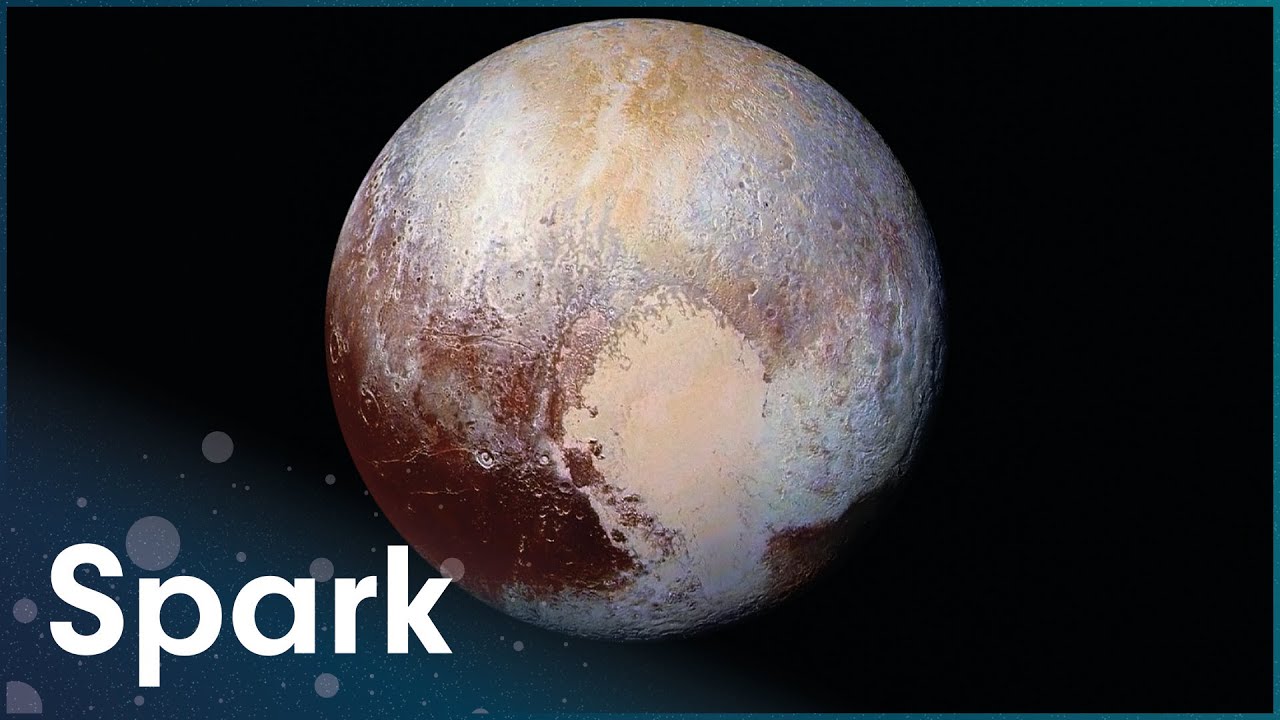
Pluto is 3.5 billion miles from Earth and has potential underground oceans and geysers.
Gas giants Jupiter and Saturn, along with their moons and the potential existence of Planet Nine, are explored in the outer Solar System's icy realms.
A lander intended for Mars crashed 3.7 kilometers above the surface due to a false altitude reading, illustrating the challenges of space exploration.
Ice Cube, a neutrino telescope at the South Pole, consists of over 5,000 detectors spread out in a cube about a kilometer on each side.
In 1900, Max Planck tackled the mystery of why a heated light bulb filament changes color, sparking the birth of quantum mechanics.
The James Webb Space Telescope has captured images and data from over 13 billion years ago, enhancing our understanding of the universe since 2021.
Mars presents extreme challenges for human survival, prompting discussions on genetic evolution and technological advancements from figures like Nikola Tesla and NASA's robotic missions.
Chris Horsley inspects Katla in Iceland to install an early warning system for the volcano.
Explore the unique challenges of life, love, and sex in space as astronauts navigate daily routines and relationships beyond Earth.
There are an estimated one trillion planets in the Milky Way galaxy, many of which could potentially support life.
More than 200 witnesses recount various UFO incidents, highlighting the ongoing relevance of unexplained phenomena and the Pentagon's acknowledgment of a secret UFO program.
In 1961, President John F. Kennedy's ambitious goal to land a man on the moon faced significant technological challenges and skepticism from the public.