From over 100,000 films, discover the handful you'll love.
Free or premium access to the world's largest documentary library.
1294 films(Page 20 of 27)
In 1974, a message was sent from the Arecibo radio telescope towards Messier 13, a globular cluster containing hundreds of thousands of stars.
Scientists prepare for the Day of the Asteroid and the risks of future impacts on Earth.
A supernova can release energy equivalent to the output of the sun over its entire lifetime in just a few seconds.
Cosmic rays pose significant challenges for human space travel as Earth faces potential threats like ice ages and pollution, necessitating the search for new habitats.
Zenon, an observation satellite, has autonomously deviated from its orbit and is withholding critical data on Earth's water reserves.
A group of 12 travelers, including Buzz Aldrin, journeys to the South Pole, a region where ice is over 1,000 meters thick.
At 8:54 a.m. on February 1, 2003, the crew of Space Shuttle Columbia lost communication with Mission Control just moments before the shuttle disintegrated during re-entry.
22 seconds into the launch of Space Shuttle Discovery, a pressure transducer reading indicated a dangerous overpressurization, prompting urgent responses from NASA engineers.
A $100 million deep space probe spirals out of control and crashes after a critical failure in its parachute system.
Dark matter, which makes up about 80% of the universe's mass, is examined for its potential connection to black holes and their gravitational effects.
Physicists at CERN conducted a lengthy experiment to determine whether antimatter falls down or falls up in relation to Earth's gravity.
One out of every two stars has a potentially habitable planet, according to findings from the Kepler mission, which has transformed the field of astronomy.
Jean-Patrice Keka and his team have launched five rockets in the Democratic Republic of the Congo, aiming to establish a unique African space program.
20 years of planning and construction culminate in LIGO's first search for gravitational waves, marking a new era in the study of the universe.
This video discusses gravitational lensing and Einstein's rings from Hubblecast's intriguing episode.
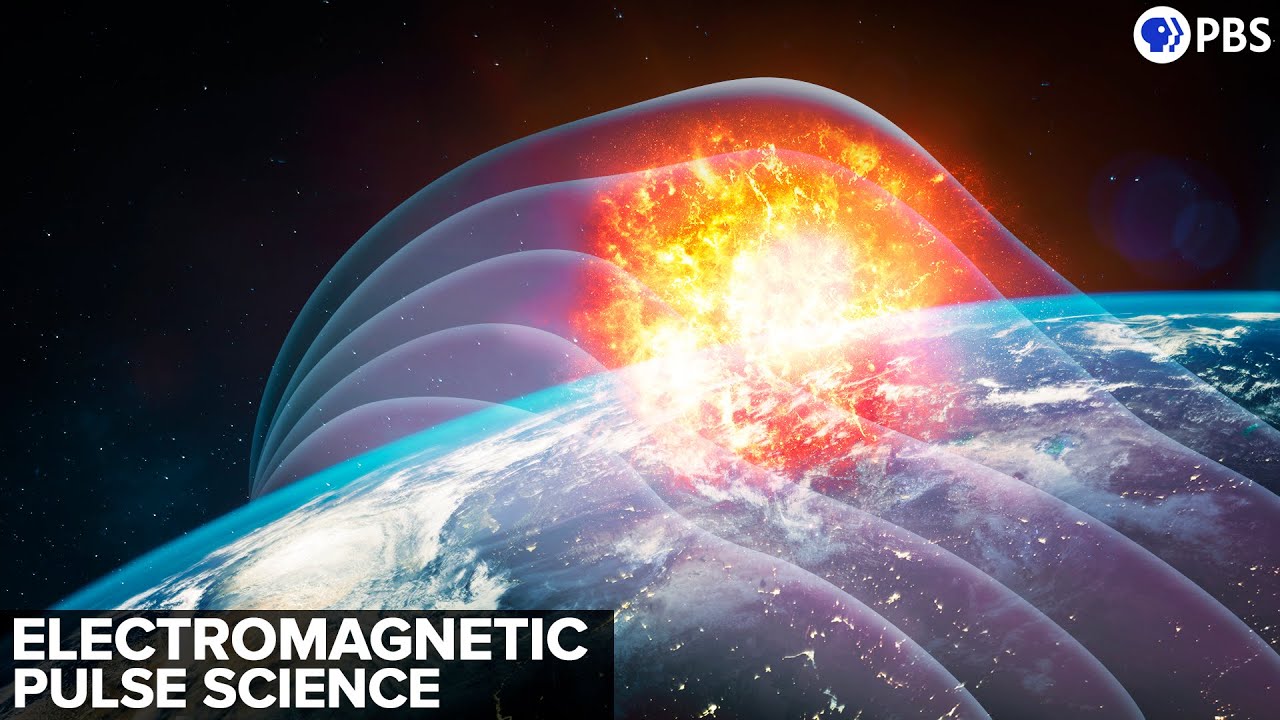
A third of all low Earth satellites were destroyed due to the electromagnetic pulse generated by the Starfish Prime nuclear test in 1962.
Astronomers predict that the universe will eventually chill down to absolute zero in a scenario known as the 'Big Freeze.
NASA's Dart probe's collision with the asteroid Dimorphos on 26 September 2022 sets the stage for the European Space Agency's Hera mission to study its aftermath.
The Mars Reconnaissance Orbiter can perceive features as small as a dinner plate, providing unprecedented detail of the planet's surface.
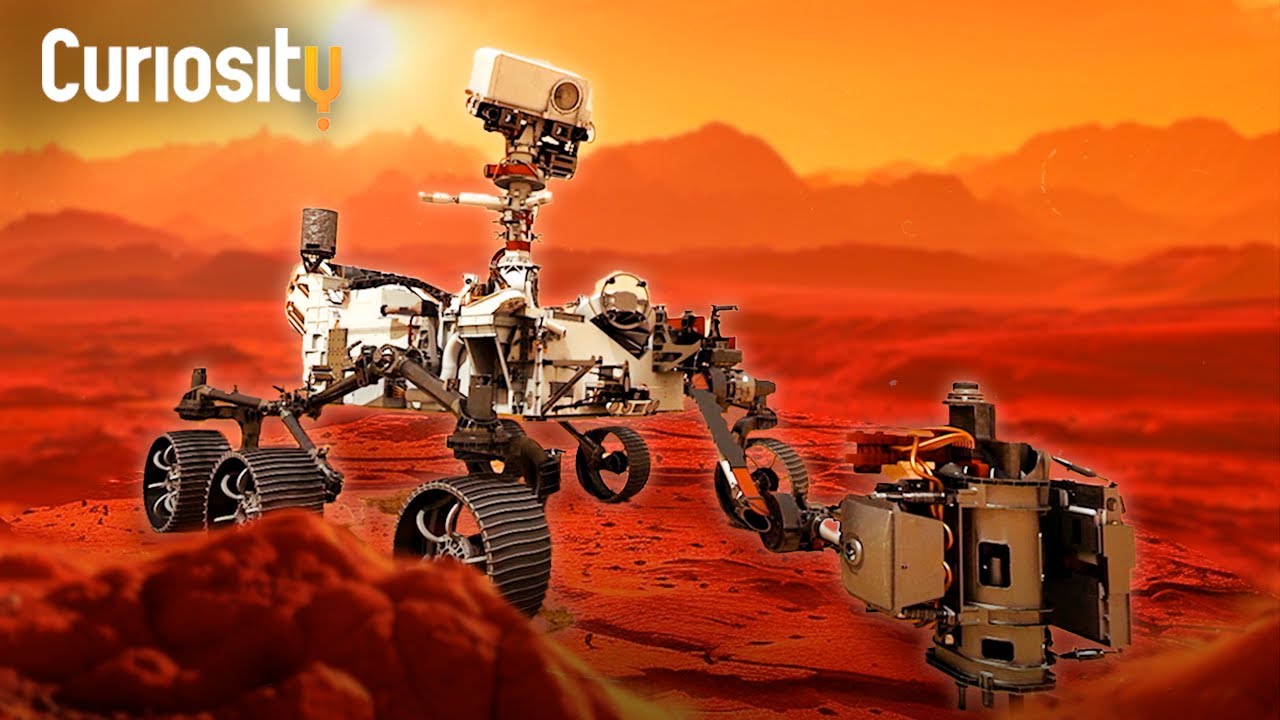
Perseverance rover's mission on Mars focuses on searching for signs of ancient life and preparing for future human exploration of the Red Planet.
200,000 miles from Earth, Apollo 13's crew faced a catastrophic explosion that left them without power and guidance during their mission to the moon.
On April 24, 1990, the Hubble Space Telescope launched but soon faced a malfunctioning high-gain antenna that halted operations.
Planet hunters, including Swiss astronomers Michel Mayor and Didier Queloz, utilize advanced techniques to identify exoplanets and assess their potential for life.
NASA's search for extraterrestrial intelligence covers more astronomical territory in its first few minutes than all previous searches combined over 30 years.
Freddy Dodge and Juan Ibarra assist struggling mine owners by implementing innovative strategies to significantly increase their gold recovery in Alaska.
NASA’s Parker Probe Plus is exploring the Sun's outer atmosphere to enhance understanding of its power and the effects on Earth.
Giant galaxy clusters help Hubble look deeper into the Universe using gravitational lensing.
The Hubble Space Telescope has been capturing images of the universe for 25 years, including the iconic Pillars of Creation and the Cat's Eye Nebula.
The space shuttle program aims to make travel to low Earth orbit cost-effective but faces challenges.
A new infrared image of the Horsehead Nebula reveals delicate wisps of gas that are usually obscured by thick dust, marking Hubble's 23rd anniversary.
Captain Sig Hansen recounts how his old magnetic compass is essential for navigating the treacherous Bering Sea during high-stakes crab fishing.
A black hole called Sagittarius A*, located 27,000 light years away, was photographed for the first time by astronomers in 2019.
PBS Member Stations rely on support to explain black holes and gravity's role in them.
Ingenuity completed its first controlled powered flight on Mars in April 2021, paving the way for future drone missions in space exploration.
Humanity's potential view of the universe could extend to around 63 billion light years, according to calculations discussed in the film.
Scientists map the moon's gravity patterns and study Saturn and Mars in Cosmic Vistas.
Hayabusa2 successfully extracted subsurface samples from the asteroid Ryugu, marking a significant achievement in understanding the solar system's origins.
The video discusses how large telescopes help us see deeper into the universe on clear nights.
NASA's Kepler spacecraft is capable of detecting Earth-like planets, paving the way for future telescopes to analyze their atmospheres for signs of life.
A bionic flying fox robot, weighing just 580 grams and with a wingspan of 228 centimeters, mimics the flight of its natural counterpart.
Moon Express is the first private organization to receive approval for commercial missions to the moon, aiming to mine resources like platinum and water.
In May 2009, Atlantis completed five spacewalks to refurbish the Hubble Space Telescope, restoring its functionality after years of critical repairs.
Nora AlMatrooshi and Mohammed Al Mulla train at NASA's Johnson Space Center, preparing for missions to the moon and beyond as part of the UAE's astronaut program.
In 1941, astronomer Erik Holmberg conducted one of the first universe simulations using 37 light bulbs to represent billions of stars.
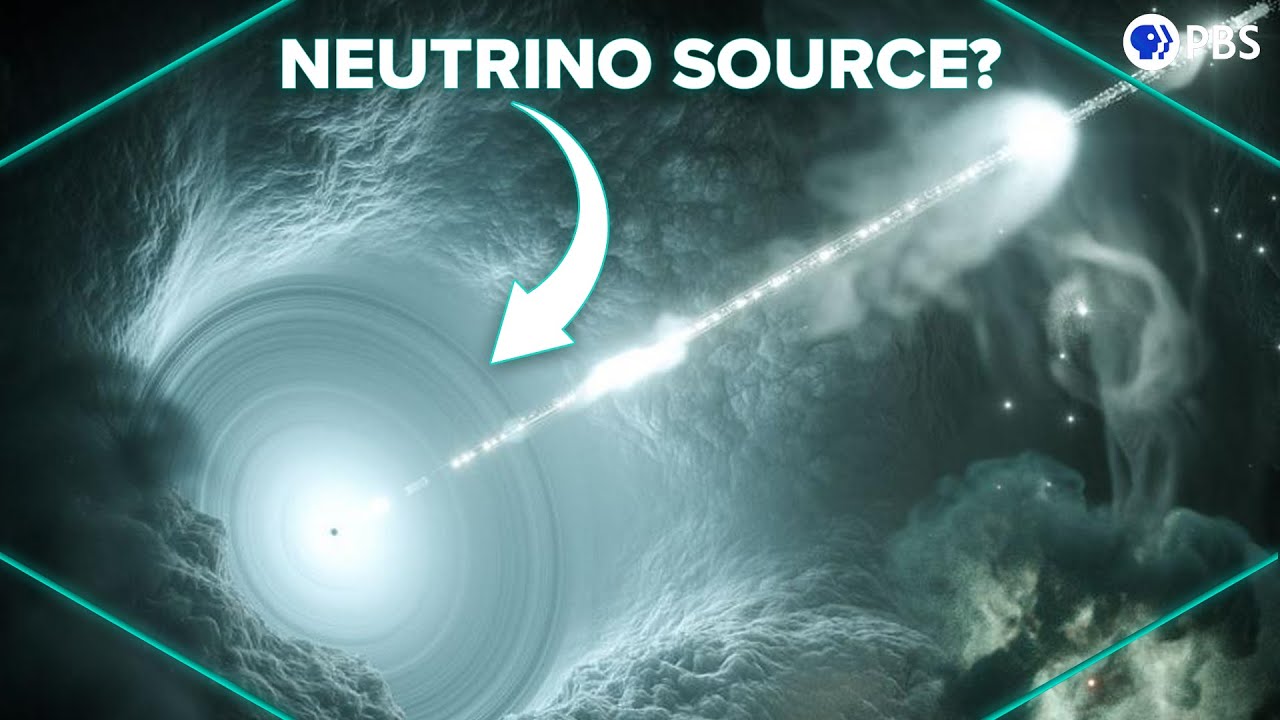
The Sun produces 10^38 neutrinos every second, which can be used to study black holes and their surrounding environments.
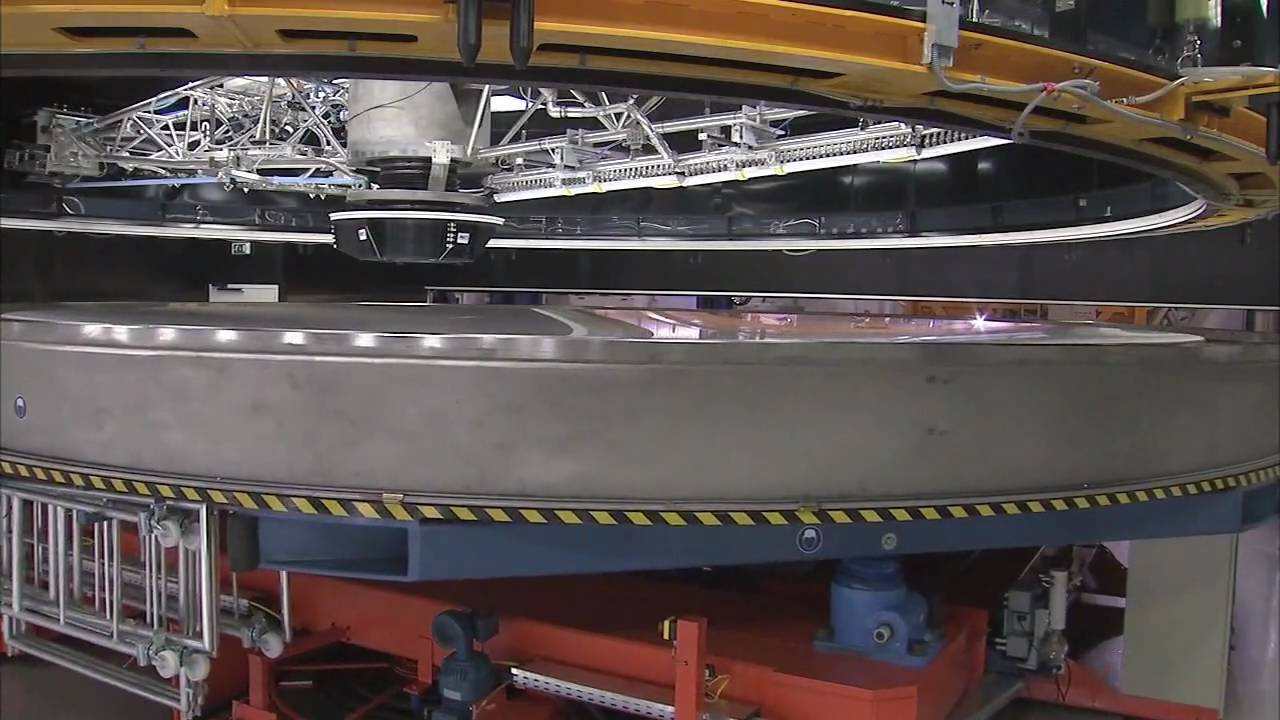
A 50-ton telescope mirror is carefully removed from the Very Large Telescope in Chile for cleaning and recoating to ensure optimal performance.
Mercury has up to 1 trillion tons of ice beneath its surface, a finding that could change how scientists understand the planet and its history.
Scientists study a hybrid moon mission where humans and robots work together on the Moon.