From over 100,000 films, discover the handful you'll love.
Free or premium access to the world's largest documentary library.
1294 films(Page 13 of 27)
Earth's formation is traced from the early solar system through geological and astronomical developments to the present day, featuring insights from expert John Smith.
Solar and lunar eclipses provide insights into Earth's atmosphere and orbital dynamics, illustrating the complex interactions between the sun, moon, and planet.
Mars missions pose significant challenges to human health, including muscle atrophy, bone loss, and cosmic radiation risks, as explored by NASA experts and medical researchers.
Curiosity, NASA's car-sized Mars rover, utilizes advanced scientific tools to search for signs of life on the Red Planet.
The concept of infinity is explored through the vastness of the universe, examining both the infinitely large and the infinitely small.
Astronauts on long-duration missions to Mars face significant psychological challenges, including isolation, depression, and potential conflicts, as explored by experts like Julie Payette and James Cameron.
Watch Linda Miller modernize a Victorian station and find solutions for noisy trains.
For over 25 years, NASA's Space Shuttle program served as a vital platform for scientific research and technological advancements in low Earth orbit.
Ernest Shackleton, Gertrude Bell, Neil Armstrong, and Jane Goodall exemplify 20th-century exploration, transforming it from imperial conquest to cultural understanding and conservation.
Mars showcases its breathtaking beauty through a three-dimensional visual experience, accompanied by music composed by Bjørn Arild Lynne.
Astronaut Piers Sellers and Explorers Constance Adams, Bethany Ehlman, and Kevin Hand discuss life in micro-gravity and robotic exploration of Mars and Europa.
Prof. Dr. Ulrich Walter outlines the rigorous training and challenges faced by astronaut candidates, sharing insights from his own experiences and those of legendary astronauts.
Sixty-five million years after a comet caused mass extinction, astrophysicist Noah Boyle and computer scientist Shiang Yatan monitor a new impending impact from Hawaii.
In 2015, NASA telescopes identified a promising exoplanet with Earth-like temperatures and potential liquid water, prompting astrophysicists to explore similar solar systems.
Eighteenth-century scientific breakthroughs fundamentally transformed humanity's understanding of the cosmos and paved the way for lunar exploration.
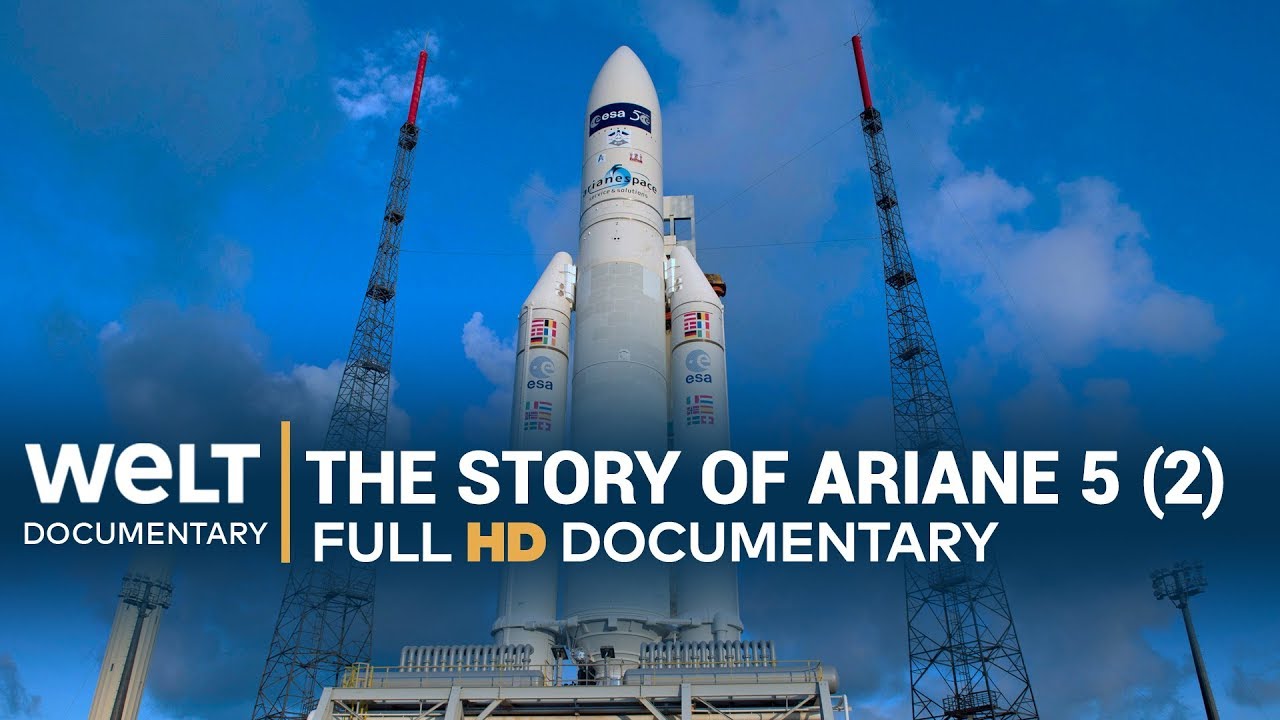
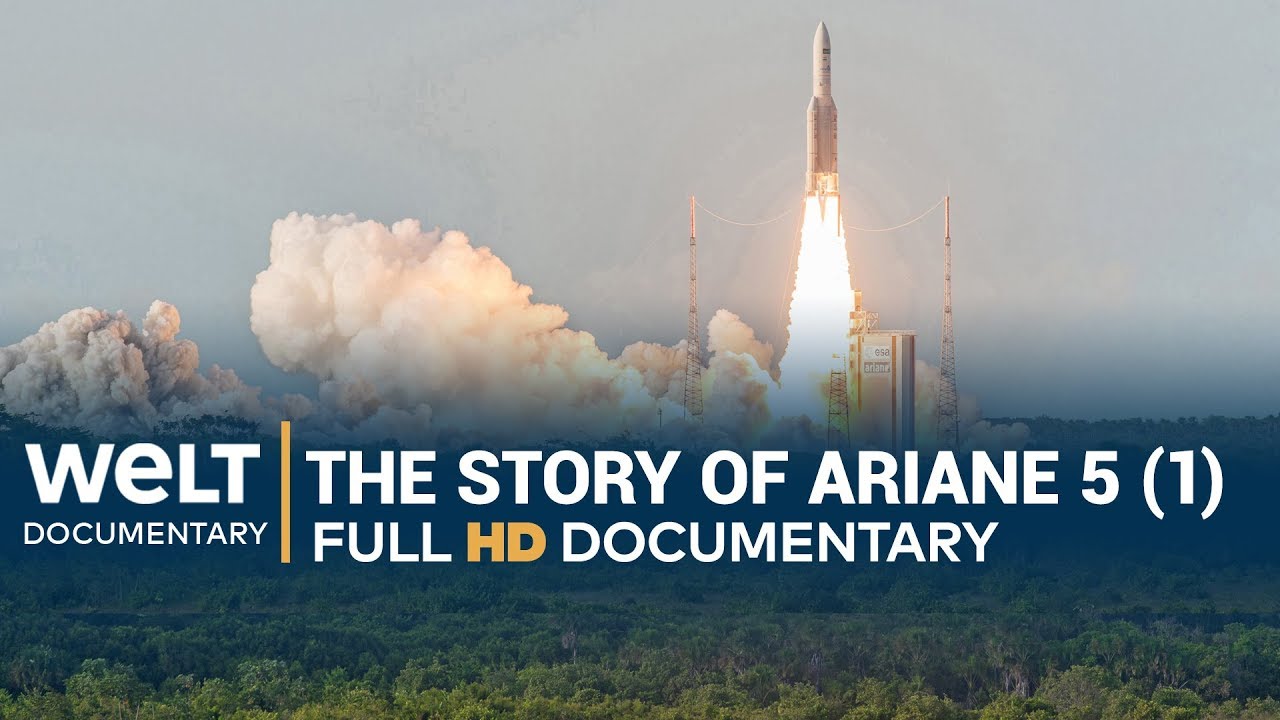
Ariane 5 has achieved nearly 100 launches with a reliability rate of 98%, making it the world's most successful commercial satellite launch vehicle.
This episode showcases the Bell X-1 and F22 Raptor, highlighting aviation's fastest aircraft.
In 2030, China leads the race to Mars with advanced rovers, prompting an international team from Canada, the U.S., Russia, France, and Japan to prepare for a historic human mission.
Astronaut Prof. Dr. Ulrich Walter explores the daily life, challenges, and relationships of astronauts living on the International Space Station and beyond.
In 2015, Nepal's devastating earthquake prompted the use of radar satellites for precise geological mapping, highlighting the critical role of satellite technology in modern communication and disaster response.
Ariane 5, Europe's most reliable rocket, plays a crucial role in transporting satellites into space, supported by a vast network of aerospace professionals.
Venus once had a similar climate to Earth but is now a hostile environment.
The Apollo lunar module's engineering challenges and innovations are examined, highlighting the critical contributions of NASA engineers during the 1960s moon landings.
The question of whether the universe is infinite or finite is explored, examining concepts of edges, the nature of nothingness, and the possibilities beyond.
A hidden wiring flaw inside Apollo 13’s oxygen tank triggers a catastrophic explosion in space, forcing NASA and the crew to fight for survival.
Weighing 390 tons fully loaded, the Antonov 124 can transport cargo weighing up to 120 tons across thousands of kilometers.
Astronauts Neil Armstrong, Buzz Aldrin, and Michael Collins participate in water egress training in the Gulf of Mexico on May 24, 1969.
150 miles is the diameter of asteroid 16 Psyche, a unique metal body that two new robotic probes will study to learn about the solar system's formation.
Jack Parsons' intriguing life and mysterious death raise questions of foul play and espionage.
Astronauts Frank Borman, Bill Anders, and Jim Lovell orbited the Moon on December 21, 1968, aboard the Saturn V rocket, weighing almost 3 million kilograms.
Shuttle Atlantis completed its final flight on July 8, 2011, marking the end of a program that conducted 135 missions over three decades.
Solar Orbiter has traveled over two and a half billion kilometers since its launch in 2020, studying the sun's atmosphere and solar winds.
In the new lunar exploration era, nations like China, Japan, India, and the United States aim to return to the moon, exploring possibilities and challenges.
The International Space Station faces constant threats from space debris, prompting NASA and Russian engineers to develop advanced shielding and life support systems.
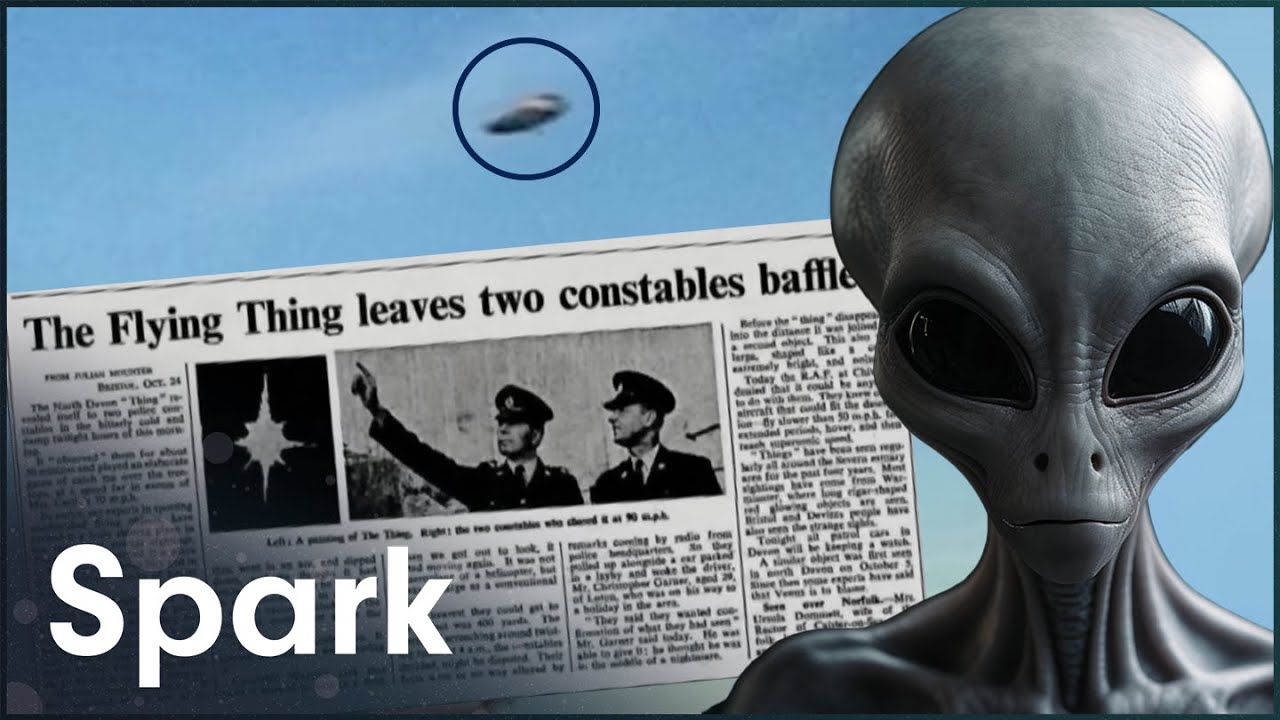
77% of Americans believe there are signs that aliens have visited Earth, yet the government has not acknowledged this widespread belief.
Since 2017, more scientists have recognized that Unidentified Aerial Phenomena could justify a scientific investigation.
As of 2023, military and commercial pilots have reported seeing 801 unidentified objects in the airspace over the United States.
Billionaires Elon Musk, Richard Branson, and Jeff Bezos race to dominate the space industry.
HMS Northumberland, a 180-foot Royal Navy frigate, embarks on a four-month mission to locate a missing Russian submarine in the Arctic Circle.
In a Doha Debates podcast episode, host Soraya Salam and guests including Nick Pope and David Grinspoon discuss the implications of extraterrestrial life for humanity.
SpaceX's rise to dominance in commercial spaceflight has reshaped access to Earth orbit, challenging NASA's historical leadership and prompting new competition from Europe.
35,000 feet is the altitude from which participants will view the total solar eclipse on August 21, 2017, during a special event in Oregon.
NASA and SpaceX successfully launched the Crew-1 mission from Kennedy Space Center, marking the first operational commercial crew mission to the ISS.
Competing nations and private companies race to colonize the Red Planet with bold technologies.
World leaders and the military have dreamed of space weapons, now becoming a reality.