From over 100,000 films, discover the handful you'll love.
Free or premium access to the world's largest documentary library.
1294 films(Page 6 of 27)
Astronomer Munazza Alam uses data from the Hubble and James Webb Space telescopes to search for Earth-like exoplanets while observing Ramadan traditions.
The UFO phenomenon captivates a diverse group of enthusiasts and researchers who dedicate their lives to investigating extraterrestrial encounters and evidence.
Area 51, ancient artifacts like the Antikythera mechanism, and UFO sightings are examined in a concise timeline of extraterrestrial evidence spanning 3,000 years.
The Hubble Space Telescope reveals discoveries about the Milky Way and Einstein's theories.
Scientists estimate there could be as many as 40 billion Earth-like planets in the Milky Way galaxy alone.
The SLS is designed to advance human space exploration and support the Artemis program.
100 billion galaxies may exist in the universe, yet researchers still seek to understand the mysteries of black holes and cosmic phenomena.
On July 17, 1975, one billion viewers watched as American astronaut Thomas Stafford and Soviet cosmonaut Alexey Leonov shook hands in space.
A barn-size UFO aggressively approaches a teenager hitchhiking, while a retired French engineer encounters a crashed flying saucer that emits a high-pitched whistle.
Half of the astronauts at a press conference celebrating their arrival in space experienced nausea, forcing them to hide themselves to vomit.
NASA's Spitzer Space Telescope has provided the first weather map of a planet beyond the solar system, revealing conditions that could not support life.
There are an estimated one trillion planets in the Milky Way galaxy, raising questions about the possibility of life beyond Earth.
US Air Force pilots recount encounters with a 60-foot metallic UFO, while a police constable describes a beam of light from a mysterious crash site.
Chris Horsley investigates Mount Etna's heightened volcanic activity and its implications.
Asteroid mining is emerging as a potential solution to the demand for rare metals, with Luxembourg positioning itself as a financial hub for space operations.
In the South of France, the construction and activation of satellites illustrate the intricate processes behind data transmission that enable modern communication.
The JAXA-ESA 'BepiColombo' Mission targets Mercury, enhancing commercial space flight prospects.
Extreme planets are examined through supercomputer simulations that visualize their violent conditions and the cosmic events surrounding supermassive black holes.
More than 100 years ago, H.G. Wells popularized the idea of extraterrestrial life with works like The War of the Worlds and A Trip to the Moon.
Apollo 7, launched in October 1968, was the first crewed flight of the Apollo program and set the stage for future lunar missions.
One solar flare can release energy equivalent to over 200 million hydrogen atomic bombs, posing a significant threat to life on Earth.
Comets, asteroids, and meteoroids, remnants from the solar system's formation, pose both scientific interest and potential danger to Earth.
The Challenger space shuttle explodes 73 seconds after launch, emphasizing space travel dangers.
The search for extraterrestrial life encompasses theories from the Big Bang to advanced technologies like warp drives, featuring insights from physicists and astronomers.
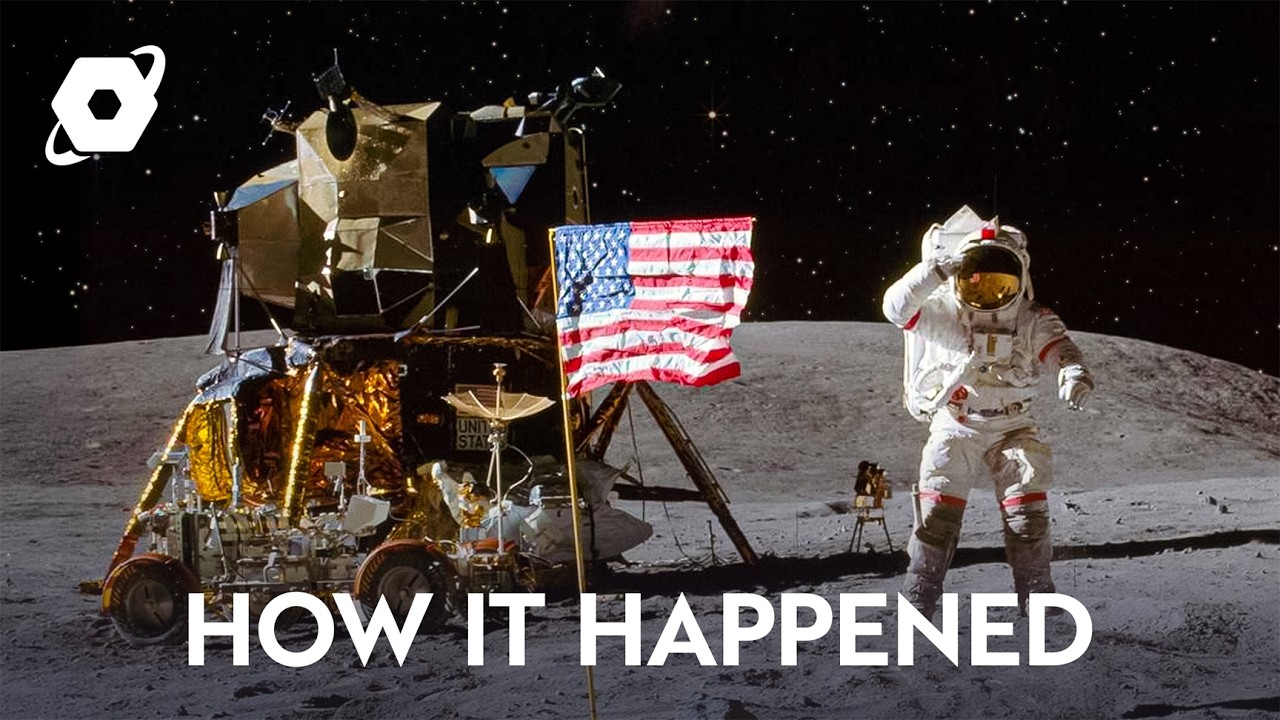
Twelve astronauts walked on the moon during the Apollo program, conducting scientific studies that provided new insights into the lunar surface.
Nearly 6,000 satellites orbit Earth, with about half classified as dead, contributing to a growing risk of collisions in space.
The European Space Agency lands a probe on Comet 67P/Churyumov-Gerasimenko for the first time.
Humanity seeks new habitats in space as Earth grapples with overpopulation and climate change.
Carp, Ontario, has gained notoriety as a UFO hotspot, raising questions about the legitimacy of sightings and the mysterious entity known as Guardian.
On August 15, 1977, a strong narrowband radio signal lasting 72 seconds was received by Ohio State University's Big Ear radio telescope, suggesting possible extraterrestrial origin.
NASA's Apollo 11 mission is examined through archival footage, astronaut interviews, and artifacts from the Smithsonian's National Air and Space Museum.
Astronomers have mapped 1 billion stars using advanced technology and data from organizations like NASA and ESA, revealing insights into the cosmos.
In rural Australia, a farmer encounters a mysterious 25-foot-wide object emerging from a swamp, while similar phenomena occur in New Mexico and Germany.
Orbiters of Jupiter and Saturn provide new insights into their moons and the outer solar system.
Sir Richard Branson's flight aboard Virgin Galactic's SpaceShipTwo Unity on July 11 marks a significant milestone in private commercial space travel.
This episode examines conditions for life in our solar system and beyond Earth.
Only 18 men returned from Ferdinand Magellan's expedition, which set sail in 1519 with five vessels and 239 crew members, completing the first circumnavigation of the globe.
The Antonov An-225 Mriya is the world's largest aircraft, designed to carry oversized cargo.
In Missouri, a group of 500 residents reports sightings of bright lights and strange crafts, while a cigar-shaped object targets a family in Nova Scotia.
Alan Lightman recalls a moment when he felt as if he were merging with the stars while alone on a boat in the quiet waters off a Maine island.
Dr. Kathryn Sullivan, the first American woman to walk in space, discusses the challenges of establishing human settlements on Mars.
This ultimate documentary features Mike Oldfield's music and highlights key figures in space flight.
The Japanese Asteroid Sample Return Mission prepares to collect samples from an asteroid.
Humanity faces existential threats from climate change, planetary collapse, and the eventual demise of Earth, prompting discussions on survival through space colonization and AI evolution.
NASA's Apollo program faced challenges from budget cuts and public disinterest, culminating in the critical Apollo 13 mission that tested engineering limits and teamwork.
The video presents 10 episodes from The New Frontier series about outer space mysteries.
Experts from NASA, the United Nations Office for Outer Space Affairs, and the SETI Institute explore the implications of potential first contact with intelligent extraterrestrial life.
Two advanced space probes, one from NASA and the other from Europe, are studying the Sun's atmosphere and solar winds from within Mercury's orbit.