From over 100,000 films, discover the handful you'll love.
Free or premium access to the world's largest documentary library.
1294 films(Page 7 of 27)
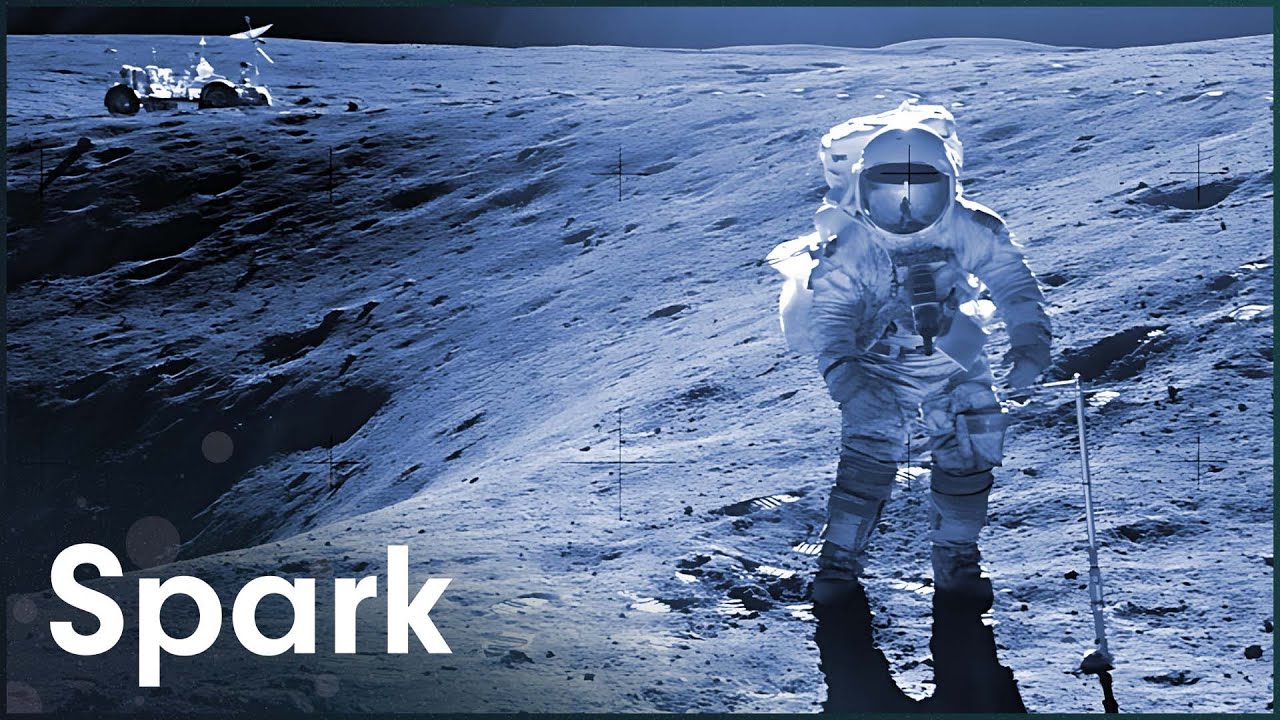
Apollo 16's crew accumulated more memories during their 11-day flight than most people acquire in a lifetime.
On July 20, 1969, nearly a billion people watched as Neil Armstrong declared, "The Eagle has landed," marking humanity's first steps on the Moon.
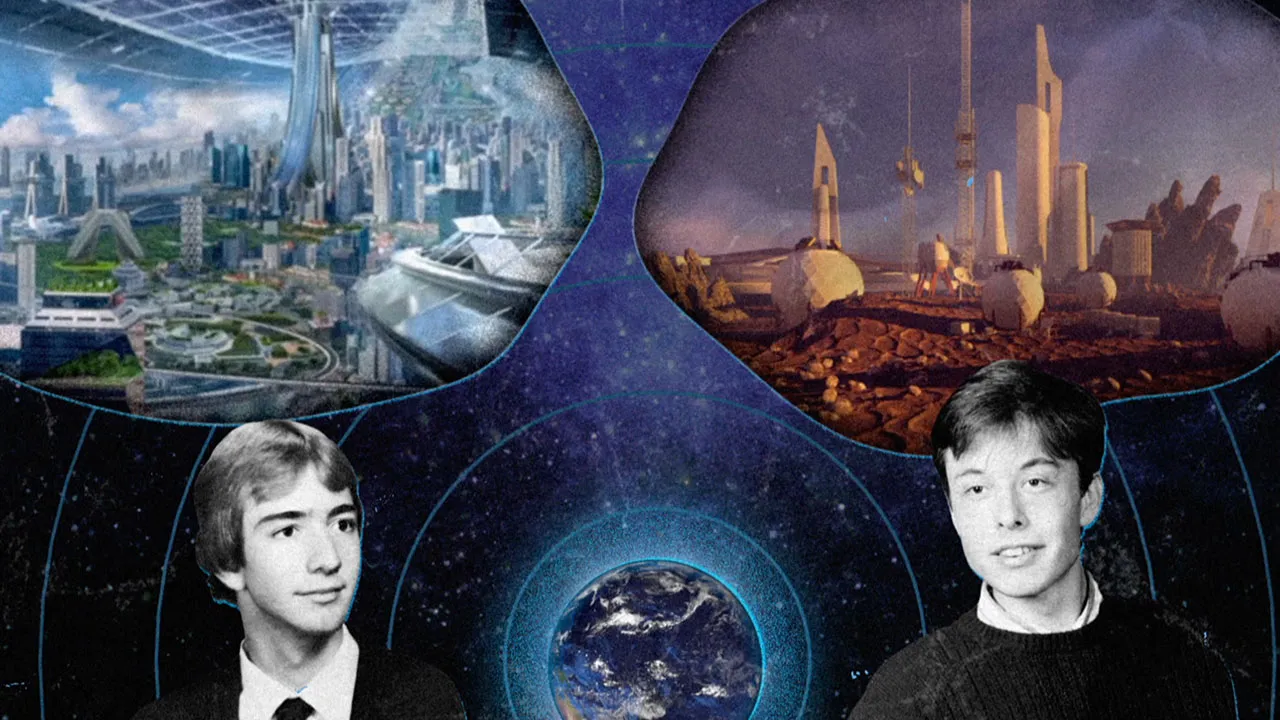
Six astronauts, all space tourists, board a rocket launched by Jeff Bezos's Blue Origin, marking a significant shift in commercial space travel.
Saskatchewan crop circles, a Hudson Valley wave of sightings, and a low-flying saucer that kills plants highlight a series of unexplained UFO phenomena.
Three astronauts aboard Apollo 8 became the first humans to orbit the moon in 1968, paving the way for future lunar exploration and potential settlements.
What would happen to Earth and the solar system if the Moon suddenly disappeared, alongside explorations of light speed and cosmic objects?
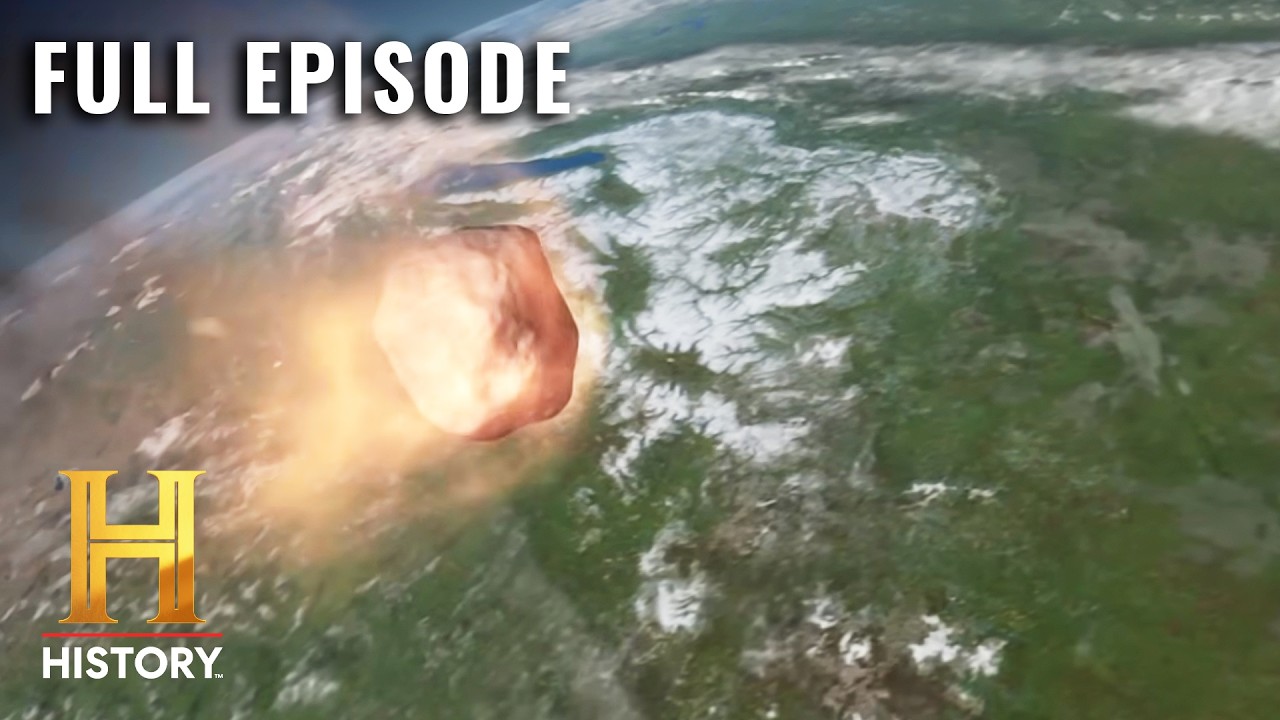
In 2026, scientists assess the potential threat of a catastrophic asteroid impact on Earth, similar to the event that led to the extinction of the dinosaurs.
A CP-140 Aurora aircraft must locate and eliminate a mock submarine target in a 145 square kilometer ocean range off British Columbia's coast.
The episode reveals how we accurately keep time and triangulate location through history.
New projects advance slowly, moving hardware into testing for Mars exploration missions.
Over the last five years, the space tourism industry has invested 13 billion dollars, with trips to outer space priced at 250,000 dollars per person.
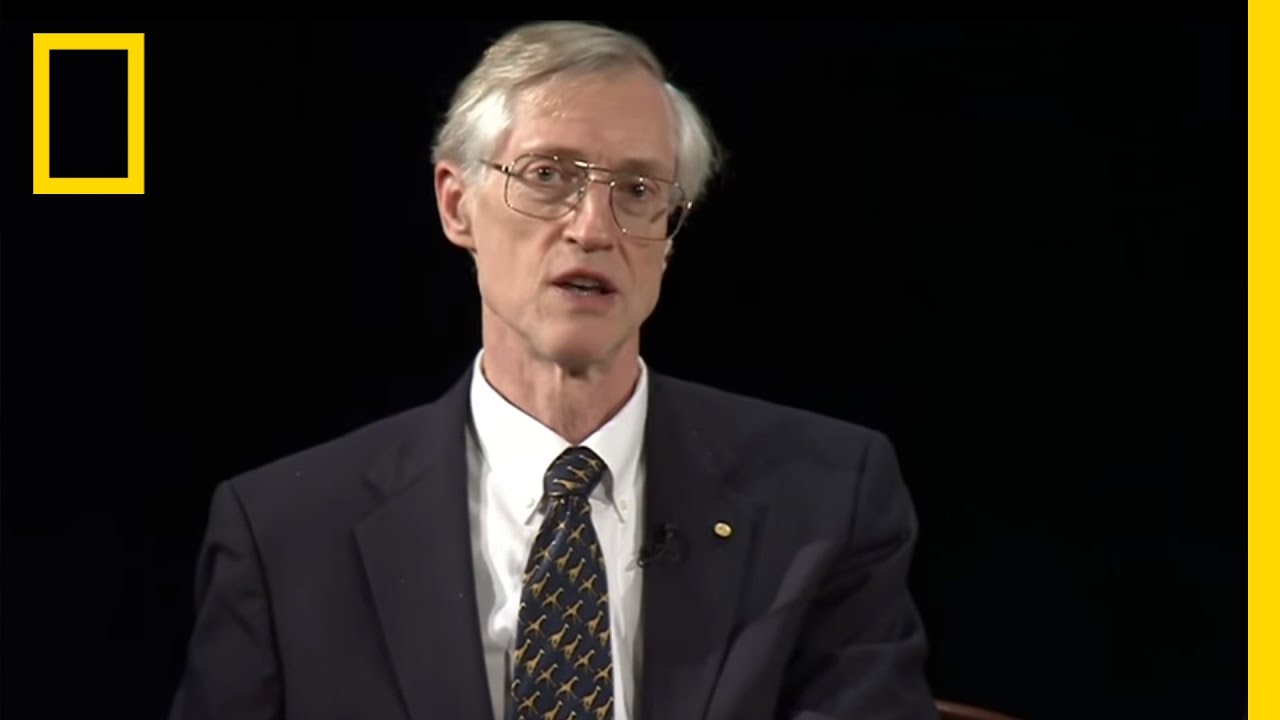
Nobel Laureate John Mather and Nat Geo Explorer-in-Residence Robert Ballard discuss the role of technology in expanding the limits of the known universe.
A team of scientists tests rocket components aboard helium balloons at an altitude of 30 kilometers in Fairbanks, Alaska, to advance space travel technology.
Current estimates suggest there are approximately two trillion galaxies in the observable universe, each containing around 100 billion stars.
For almost 20 years, people in a Norwegian valley have reported strange lights hovering near them, sparking ongoing investigations into their origin.
Seven new stars form each year within the Milky Way, driven by events like supernova explosions and interactions with other stars.
Stars, fueled by nuclear fusion, undergo a life cycle marked by intense energy production and dramatic transformations, culminating in their eventual demise.
Explore the rigorous training and challenges of becoming an astronaut through the insights of Prof. Dr. Ulrich Walter and stories of legendary space explorers.
After 13 years of orbiting Saturn, the Cassini probe's final plunge to the planet's surface significantly advanced scientific understanding of its rings and moons.
More than 200 moons orbit planets in our solar system, each with unique characteristics and potential for primitive life.
NASA's Apollo program faced significant challenges, including a deadly capsule fire during the Gemini missions that highlighted the risks of space exploration.
Asteroids, which formed the Earth 4.5 billion years ago, are essential for understanding the origins of life and the future of human space exploration.
Astronomers search for Earth-like planets among four hundred billion stars in our galaxy.
NASA's Mars rover Perseverance, designed to search for signs of ancient microbial life, successfully approached its landing site in Jezero Crater after a 293-million-mile journey.
A type 1A supernova shines 5 billion times more brightly than the sun, illustrating the vast scale of cosmic events in the universe.
A four-year-old chimpanzee named Ham became the first primate to travel into space on January 31, 1961, aboard a Mercury Redstone rocket.
In 1961, President John F. Kennedy challenged America to land a man on the moon and return him safely to Earth within the decade.
The International Space Station, operational for 23 years, is reaching its limits while new technologies aim to expand human presence in space.
The Atacama Desert is home to the world's largest radio telescope, ALMA, and Mega Transports.
NASA's James Webb Space Telescope aims to enhance understanding of cosmic phenomena and improve strategies for planetary defense against asteroid threats.
A single Ohio class submarine carries 24 ballistic missiles, each capable of striking with little or no warning under extreme stealth.
Milestones in space exploration are examined, highlighting the Apollo moon landing, SpaceX's Dragon and Falcon spacecraft, and the Gaia mission's galaxy mapping.
Humans have searched for habitable exoplanets since 1995, facing significant challenges.
NASA's Phoenix Lander successfully touched down on Mars on May 25, 2008, to search for signs of water and the potential for life on the planet.
In Chile, Shaun Ryder visits an Air Force Base linked to a prominent UFO sighting and speaks with pilots and CEFAA officials about unexplained aerial phenomena.
Telescopes allow astronomers to look back nearly 13 billion years to the Big Bang, revealing the universe's structure and evolution over time.
NASA's Artemis program aims to return astronauts to the Moon for the first time in over 50 years, focusing on sustainable lunar exploration and future Mars missions.
The Big Bang theory, supported by the James Webb Space Telescope's findings, prompts a reevaluation of cosmic inflation, dark matter, and galaxy formation.
On February 20, 1962, John Glenn completed three orbits of the Earth in a mission that lasted four hours and 56 minutes aboard Friendship 7.
Over $20 million is awarded to scientists for achievements in physics, mathematics, and life sciences during a ceremony hosted by Pierce Brosnan.
NASA's Cassini spacecraft launched on October 15, 1997, traveled nearly 900 million miles, and orbited Saturn from 2004 to 2017, gathering vital data.
The Hercules-Corona Borealis Great Wall is thought to be three times bigger than the Giant Arc, challenging current theories of the universe's formation.
Recurring UFO sightings in locations like Norway and the Pacific Ocean raise questions about the intentions of these phenomena and their impact on eyewitnesses.
Gamma ray bursts, studied by scientists at the University of Kansas, are believed to have caused a significant mass extinction event on Earth 450 million years ago.
A haptic exoskeleton developed in Italy allows users to lift up to 100 kilograms while transferring the feeling of touch from a robot to a human.
A giant fireball weighing close to 1.5 tons exploded nearly 18 miles above Wisconsin on April 14, 2010, marking a significant meteorite fall.
Earth's weakening magnetic field, generated in its molten core, raises concerns among scientists about the potential loss of protection from harmful space radiation.
NASA's Kepler Space Telescope has identified billions of Earth-like exoplanets in our galaxy, suggesting that life may exist beyond our planet.