From over 100,000 films, discover the handful you'll love.
Free or premium access to the world's largest documentary library.
1294 films(Page 23 of 27)
Some billionaires suggest moving pollution-heavy industries to space for Earth's protection.
David Toon analyzed over 5 million NASA solar satellite photos, identifying more than 50,000 objects he believes indicate advanced intelligence near the sun.
More than 90 percent of water on the International Space Station is recycled from sinks, toilets, and condensation for reuse by astronauts.
Experience the International Space Station, brimming with experiments and life support systems.
Space exploration has evolved from the Cold War rivalry between the United States and the Soviet Union to a competitive landscape involving NASA, SpaceX, and various nations.
The event horizon defines a black hole, trapping information and causing spaghettification.
Spirit and Opportunity, NASA's twin rovers, explored the Martian surface for over a decade, revealing evidence of ancient wet environments.
On August 17, 2017, astronomers detected the merger of two neutron stars, producing gravitational waves and an electromagnetic flash for the first time.
SpaceX's Starlink project aims to provide global high-speed internet access through a constellation of low Earth orbit satellites, addressing connectivity challenges worldwide.
At the height of the golden age of piracy, there were at least 10,000 pirates operating worldwide, ambushing merchant ships and establishing a republic in the Bahamas.
Experts analyze unusual structures on Mars and unexplained phenomena on the Moon, presenting evidence that challenges current understanding of these celestial bodies.
The Super Blood Moon eclipse of 2015 features a rare alignment of the Sun, Moon, and Earth.
Astronomers at the European Southern Observatory in Chile identify seven planets orbiting Gliese 667C, including two in the habitable zone for potential liquid water.
Astronomers have identified supermassive black holes at the centers of giant galaxies, which exert immense gravitational forces on their surroundings.
A supernova can release as much energy in 10 seconds as all the stars, galaxies, and quasars in the observable universe combined.
Earth and the Sun navigate the Milky Way together, showcasing their intricate relationship and the cosmic forces that shape their existence.
Mars approaches Earth every two years, prompting robotic missions to explore the Red Planet.
In the Orion Nebula, stunning images from the Hubble Space Telescope illustrate the complex processes of star formation, featuring insights from Dr. J. and ESA Hubble.
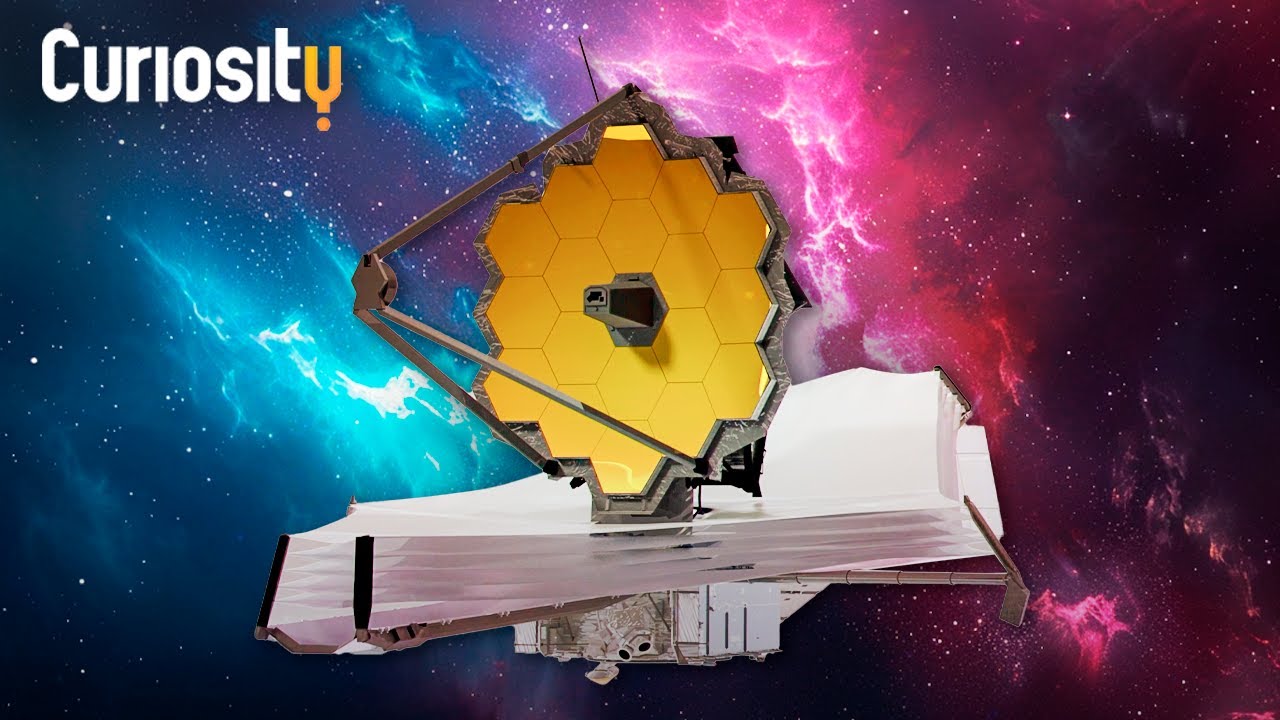
25 years and $10 billion later, the James Webb Space Telescope is set to launch from French Guiana in December to study the universe's earliest light.
Peter Girguis, a Harvard professor, explores how chemical signatures in Martian methane and ancient Earth zircon crystals may indicate extraterrestrial life.
India's recent ballistic missile test raises concerns about space debris orbiting Earth.
Wernher von Braun, a Nazi scientist, aids Americans in rocket technology after WWII.
The Standard Model Lagrangian, a complex equation, represents the best understanding of the subatomic world in particle physics.
The X-15 reached a speed of 2.5 Mach, or 1,660 miles per hour, at an altitude of 67,000 feet during its test flights in the 1960s.
Yuri Gagarin, the first human in space aboard Vostok 1, is remembered not only for his historic flight but also for the mysterious circumstances surrounding his death.
Planet hunters have detected nearly 5000 planets beyond our solar system, challenging old theories.
Five million pounds of liquid oxygen fueled the Saturn 5 rocket that launched Apollo 12 on November 14, 1969, despite a lightning storm overhead.
48 individual galaxies are observed simultaneously by the James Webb Space Telescope, revealing new details about cosmic interactions and star formation.
NASA's Junior Astronaut campaign promotes U.S. Savings Stamps and Bonds through a scenario featuring Jay North as "Dennis the Menace" and Gail Gordon as "Mr. Wilson."
Saturn's moon count has increased to 82, surpassing Jupiter by three, thanks to discoveries made using the Subaru telescope in Hawaii.
NASA's Cassini mission, launched in 1997, spent over 13 years studying Saturn and its 60 moons, transforming our understanding of the planet.
On 20 July 1969, Neil Armstrong became the first human to step onto the Moon, declaring, "That's one small step for a man, one giant leap for mankind."
The moon's origins are explored through the theory of a colossal impact between Earth and a Mars-sized body, supported by decades of scientific research and exploration.
Epic black holes and nuclear furnaces transform the universe in dynamic ways.
This video showcases Frank White's Overview Effect experienced by astronauts in Space.
In Phoenix, Arizona, a mass UFO sighting in 1997 captivated thousands of witnesses, raising questions about the nature of these unexplained phenomena.
On September 19, 1783, a hot-air balloon carrying animals ascended from Versailles, marking a significant moment in the history of human flight.
Young astronauts train in a secret facility using The Quantum Guide for future space colonization.
Jarl Quarkson, a trainee space colonist, faces a challenging assignment from instructor Cerin Higami that reshapes his understanding of the cosmos and humanity's future.
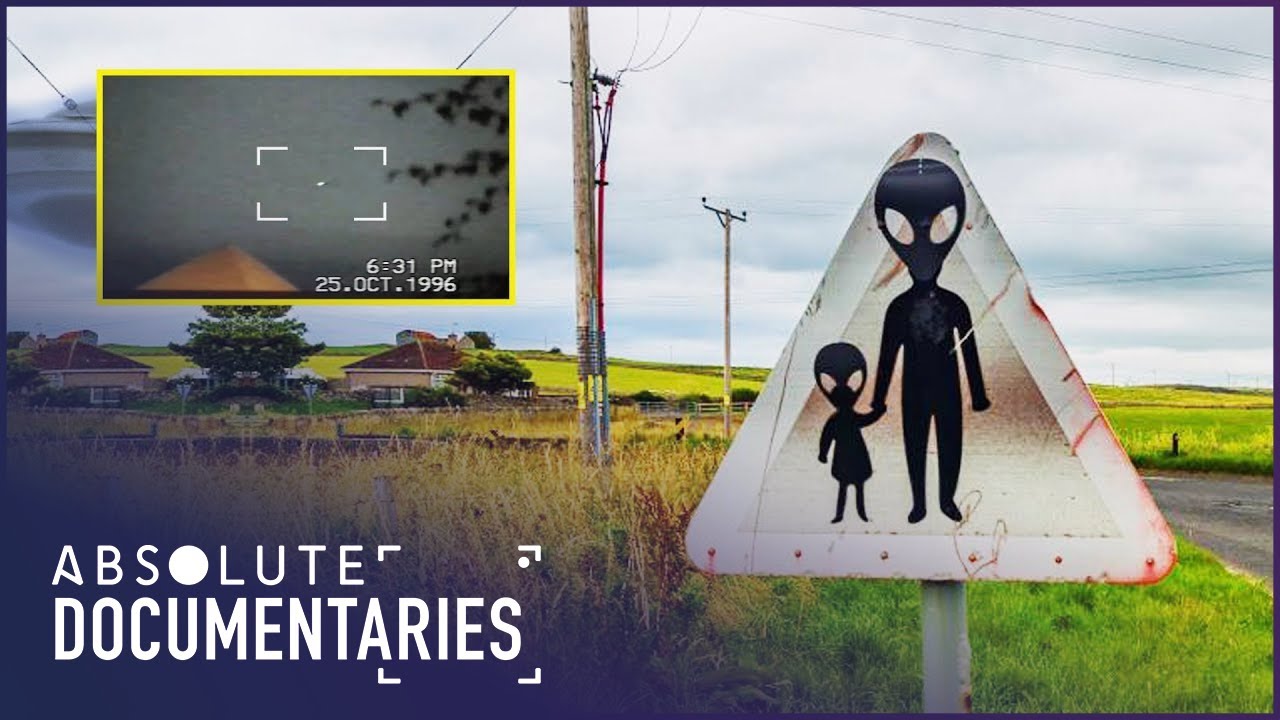
Bonnybridge, Scotland, is a UFO hotspot with sightings of howling crafts and cigar-shaped vehicles.
This show discusses the search for Earth-like planets and the possibility of life beyond Earth.
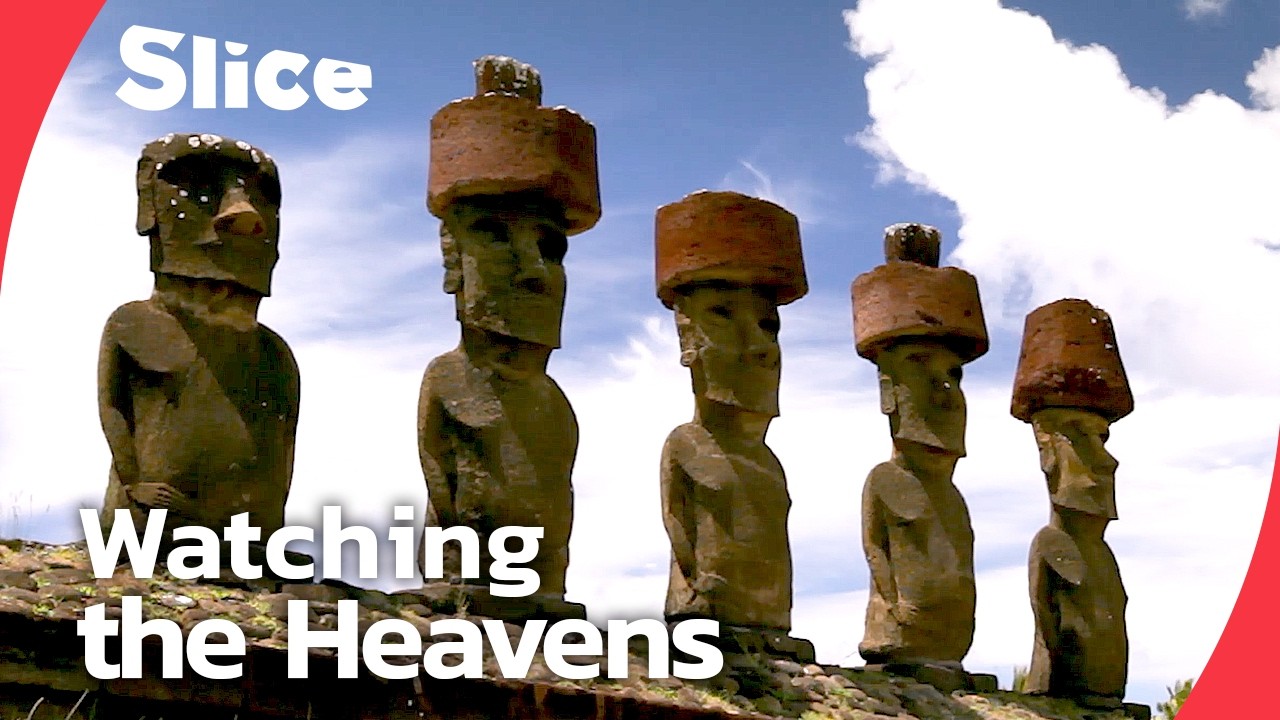
On Rapa Nui, also known as Easter Island, ancient priests and astronomers like Edmundo Edwards and Leo Pakarati studied celestial events to guide navigation and rituals.
New Horizons' mission to Pluto and the Kuiper Belt provides unprecedented images and data, revealing the dwarf planet's unexpected diversity and activity.
In five billion years, the Solar System will face transformation as Sun-like stars reach their end, contributing to the cycle of stellar evolution.
SpaceX's Dragon space shuttle achieved a historic manned launch from the US and a successful splashdown, marking a significant milestone in human space travel.
Concord first smashed through the sound barrier on October 1, 1969, with a sonic boom heard 20 miles away during a test flight.
Surface temperatures on Mars average -50° C, yet scientists continue to search for water and signs of past life on the planet.
A fire broke out inside the Apollo capsule during a critical test, leading to the tragic loss of three astronauts in January 1967.