From over 100,000 films, discover the handful you'll love.
Free or premium access to the world's largest documentary library.
1294 films(Page 11 of 27)
In the vast expanse of the solar system, hundreds of moons are examined for their potential to harbor alien life, fueled by advancements in space exploration.
Black holes, distant galaxies, and cosmic mysteries are explored in an uninterrupted journey through the universe, highlighting recent discoveries in space science.
NOVA's interactive escape room event challenges participants to solve engineering problems, such as restoring power and launching a rocket, to prevent a Y3K meltdown.
Astronauts on the International Space Station must exercise for up to 2 and a half hours daily to maintain their health in microgravity.
John F. Kennedy's influential speeches on civil rights, space exploration, and environmental issues are examined alongside essays from leading historians and thinkers.
Pauline Nordin, a Swedish fitness competitor and founder of Fighter Diet, pilots a MiG-29 fighter jet in an attempt to become the second female Swedish citizen in space.
Space exploration reveals fascinating facts about black holes, exoplanets, and star formation, providing a calming backdrop for relaxation and sleep.
Mars presents a complex environment for potential human settlement, revealing both its stunning beauty and hidden challenges as technology advances.
Jupiter's interior is mostly liquid hydrogen, allowing it to spin on its axis at high speed, completing a rotation in just 10 and a half hours.
The International Space Station, 23 years old, is reaching its limits while new technologies promise to expand manufacturing capabilities in space.
Sally Ride made history as NASA's first female astronaut during the seventh shuttle mission, inspiring generations amid significant social and scientific changes.
The Hubble Space Telescope reveals that the Milky Way contains 100 million times the number of stars visible to the naked eye.
India's ambitious space program, led by the Indian Space Research Organisation (ISRO), showcases significant advancements and aspirations to become a global space superpower.
Astronomers are using advanced telescopes and instruments to study massive black holes and cosmic eruptions that reshape galaxies and influence the universe's evolution.
More than 1,800 trips to orbit have been made by variants of the Soyuz launcher since its first flight in 1957.
Astronomers explore the search for extraterrestrial life, examining exoplanets and the potential for contact with intelligent beings beyond Earth.
NOVA's interactive escape room event, "Live Escape Room Night 2: Lights, Circuits, Action!" challenges participants to prevent a Y3K meltdown.
NASA's Solid Rocket Boosters were left hanging by a thread, endangering civilians near over a million pounds of explosive rocket fuel.
Jupiter's icy moons, with their potential subsurface oceans, are the focus of scientific exploration aimed at understanding life in extreme environments.
Researchers are increasingly applying scientific methods to investigate unidentified flying objects, challenging long-held perceptions of these phenomena.
On May 25, 2008, NASA's Phoenix lander successfully touched down on Mars to search for signs of water and the potential for life.
Mega Air reveals the operations of commercial satellite air freight and emergency pilots.
At 235 mph, the space shuttle had the fastest touchdown speed of any flying vehicle ever built, marking a significant achievement in aerospace engineering.
The violent birth of a black hole occurs when a massive star's core collapses, resulting in a supernova and emitting ultra-high energy light.
Aisha Bowe became the first Black woman to fly with Blue Origin on the New Shepard rocket, marking a significant milestone in aerospace history.
NOVA's interactive escape room series, "Live Escape Room Night 3: Power Up!", challenges participants to prevent a catastrophic Y3K meltdown.
Nicole Stott spent over 100 days aboard the International Space Station, where she gained insights on Earth's interconnectedness and environmental stewardship.
The Rosetta mission by the European Space Agency (ESA) successfully studied Comet 67P/Churyumov-Gerasimenko, revealing insights into the Solar System's evolution.
NASA's Apollo program, following the Gemini missions and marked by the Apollo 1 tragedy, culminated in Neil Armstrong's historic Moon landing on July 20, 1969.
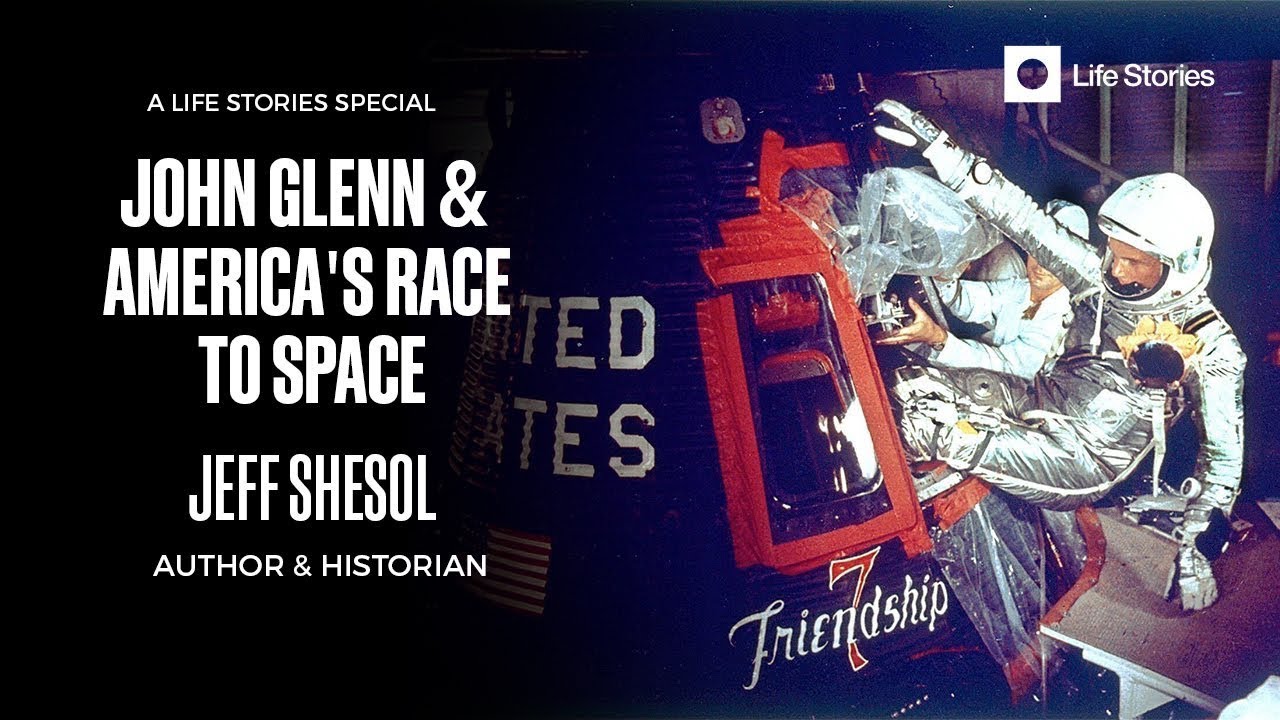
John Glenn Jr.'s Friendship 7 flight in 1962 exemplified the United States' space race against the Soviet Union, influenced by President John F. Kennedy and NASA's Project Mercury.
23 days is the total time former NASA astronaut Dr. Catherine Sullivan spent in space, discussing the future of human life on Mars and the Moon.
NASA's space shuttle fleet was grounded for two and a half years following the Columbia disaster, which resulted in the loss of the vehicle and its crew.
Infinity, a concept that has perplexed thinkers from Pythagoras to Aristotle, is explored through modern astronomical discoveries and mathematical theories about the universe's limits.
Approximately 1,000 operating satellites in Earth's orbit are essential for monitoring climate change and advancing technology to protect the planet.
Astronauts undergo rigorous training and preparation to survive the extreme conditions of space travel, relying on advanced technology and extensive physical conditioning.
Dark energy, a mysterious force shaping the universe, is examined through advanced telescopes and cameras that analyze galaxy movements.
Justin Shaifer explores the challenges of living on Mars by engaging with scientists and engineers at organizations like Sierra Nevada Corporation and Honeybee Robotics.
Extraterrestrial life is examined through the lens of NASA and the European Space Agency, exploring humanity's preparedness for potential first contact.
Olympus Mons rises to a height of 24 kilometers, making it the tallest peak in the solar system and a focal point of Mars's diverse geology.
In Chile's Atacama Desert, advancements in infrared light and gamma radiation allow astronomers to explore the universe beyond the capabilities of the Hubble Space Telescope.
NASA's Curiosity rover achieved a successful touchdown on Mars after a peak deceleration of 90 meters per second at an altitude of 6.5 kilometers.
Modern space telescopes, including the Webb Telescope, utilize Artificial Intelligence to analyze over 5,000 exoplanets for signs of extraterrestrial life.
Bubble wrap, originally designed as wallpaper in 1957, and the Hubble Space Telescope, launched in 1990, showcase innovative designs with unexpected uses.
Eighty young innovators participate in a NASA summer program aimed at launching companies that could impact a billion people within a decade.
ALMA, the largest radio telescope in the world, conducts research in Chile to explore the origins of the universe while examining life in extreme conditions.
Dennis Lamont holds the record for the largest amateur rocket ever flown, which stands the height of a four-story building.
Images and data from the James Webb Space Telescope reveal insights into the Cosmic Dawn, marking a significant advancement in astronomical observation.
In the Spanish Canary Islands and North Chile, astrophotography sessions and the VISTA infrared telescope reveal the Milky Way's beauty while exploring indigenous connections in Brazil.