From over 100,000 films, discover the handful you'll love.
Free or premium access to the world's largest documentary library.
1294 films(Page 16 of 27)
The Hubble Space Telescope's first light images in HD showcase galaxies, nebulae, and other celestial phenomena, revealing intricate details of the universe.
Part 3 reviews the best Hubble images set to Chopin's music, showcasing nebulae and galaxies.
Hubble Space Telescope images showcase stunning views of nebulae, galaxies, planets, black holes, and stars, accompanied by Frédéric Chopin's Nocturne Opus 62 N. 2.
Hubble captures its best images year by year, starting with Saturn in April 1990.
Astronomers capture infrared images of the Monkey Head Nebula, located 6,400 light-years away, showcasing its active star birth region.
Space Camp CrunchLabs offers hands-on activities and expert insights aimed at making space exploration accessible to everyone, including free space selfies.
An ambitious creator builds a satellite named SAT GUS, tackling thermal vacuum testing and camera integration with help from NASA and private aerospace experts.
Cassini reveals possible ice volcanoes on Titan, resembling those on Earth.
Astronomers use art to visualize over 500 distant exoplanets identified by Spitzer Science Center.
Nora AlMatrooshi and Mohammed Al Mulla train with NASA for future space missions.
Interstellar flight presents significant challenges and technological advancements that could determine humanity's future in space exploration and survival.
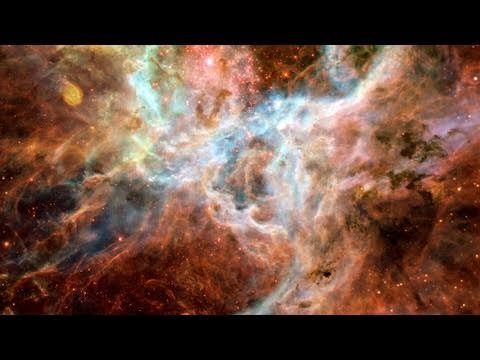
The video showcases the Tarantula Nebula in a new image from the Hubble Space Telescope.
Io is Jupiter's volcanic moon, known for its intense lava activity and unique geology.
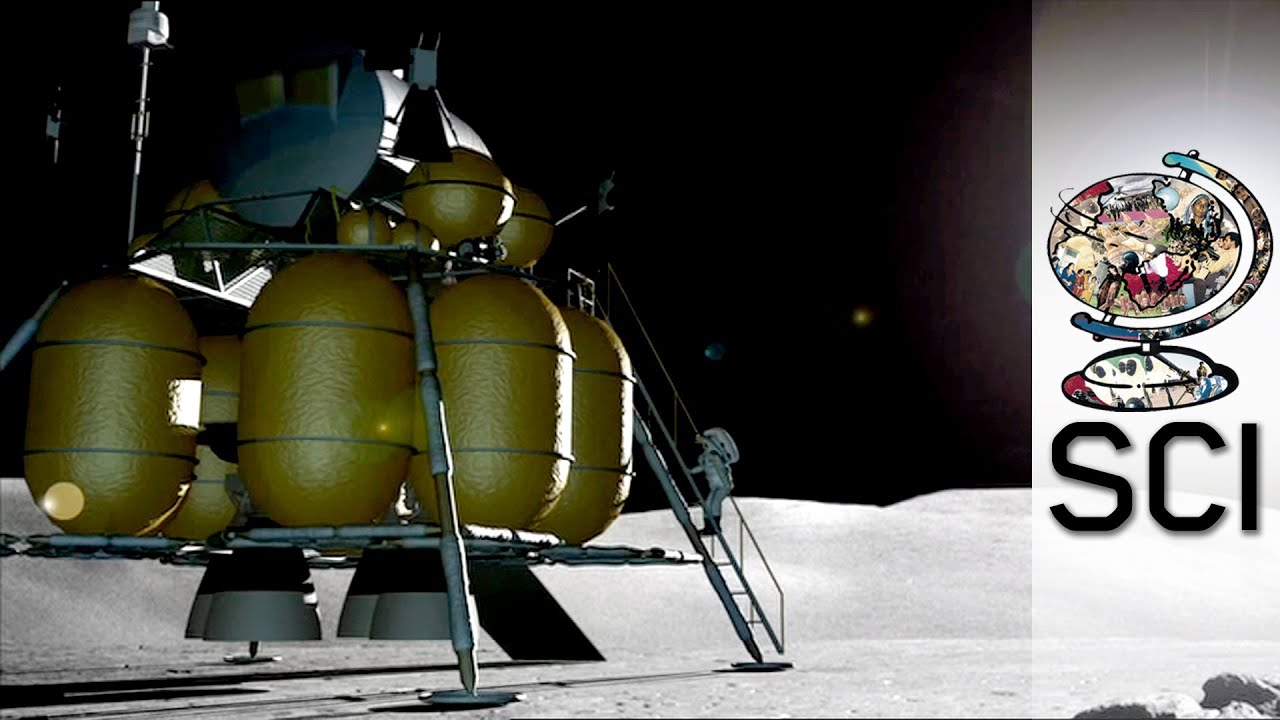
1 kilogram costs about $25,000 to launch into space, prompting researchers to consider mining resources directly from the moon for future missions.
NASA's decision to launch the Challenger on January 28, 1986, despite concerns about O-ring failure, exemplifies the normalization of deviance in high-risk environments.
NASA's Kepler telescope has identified thousands of exoplanets, with one in five potentially capable of supporting life.
Around 4 billion years ago, Jupiter and Saturn's alignment triggers asteroid bombardment on Earth.
In the constellation Sagittarius, NASA's Spitzer Space Telescope reveals a dragon-shaped cloud of dust where baby stars are rapidly forming alongside the Omega Nebula.
The Hubble Space Telescope tracks impressive magnetic energy from a distant galaxy.
Mars Reconnaissance Orbiter's HiRISE camera captures high-definition images that reveal the intricate geological features and vibrant landscapes of the Red Planet.
NASA's rover Opportunity, initially intended for a nine-month mission, has spent over six years exploring Mars, analyzing craters and rocks.
The Mars rover Opportunity operates for Nine Years, exploring Endeavour Crater's geology.
Mars Odyssey, operational since 2001, has mapped the planet and detected hydrogen, leading to the confirmation of frozen water by NASA's Phoenix mission in 2008.
Planetary scientists reveal that ancient Mars had a warmer, wetter environment than today.
NASA and private companies aim to send astronauts to Mars despite daunting challenges.
Engineers at Johnson Space Center design a Deep Space Habitat for living on Mars.
In a visual exploration of the cosmos, the film showcases the beauty of the universe, from Earth's aurorae to distant galaxies and the edge of the universe.
A 24,000 lb telescope has captured hundreds of thousands of photographs of star formations and distant galaxies, revealing images invisible to the naked eye.
Herschel Space Observatory and Spitzer Space Telescope showcase the Milky Way's coldest and hottest regions using advanced infrared imaging.
Scientists predict a collision between the Milky Way and Andromeda Galaxy in 4 billion years.
Scientists narrow the search for dark matter using NASA's Fermi Gamma-ray Space Telescope.
Watch as NASA's Jet Propulsion Laboratory combines science and creativity in an epic pumpkin carving showdown using lasers!
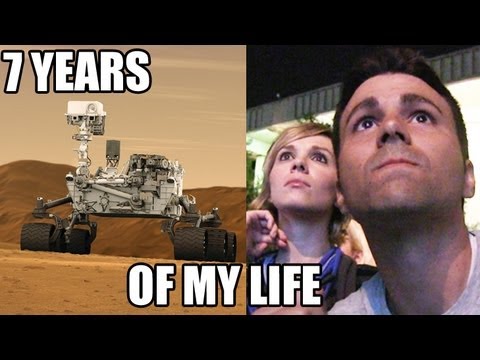
NASA's Curiosity Mars Rover landing is explored through the perspective of an engineer, highlighting the emotional and technical challenges of the mission.
NASA Astrophysics reveals gamma-ray bursts are the universe's brightest explosions.
A vivid image from Hubblecast shows colliding galaxies known as Arp 142 in Hydra.
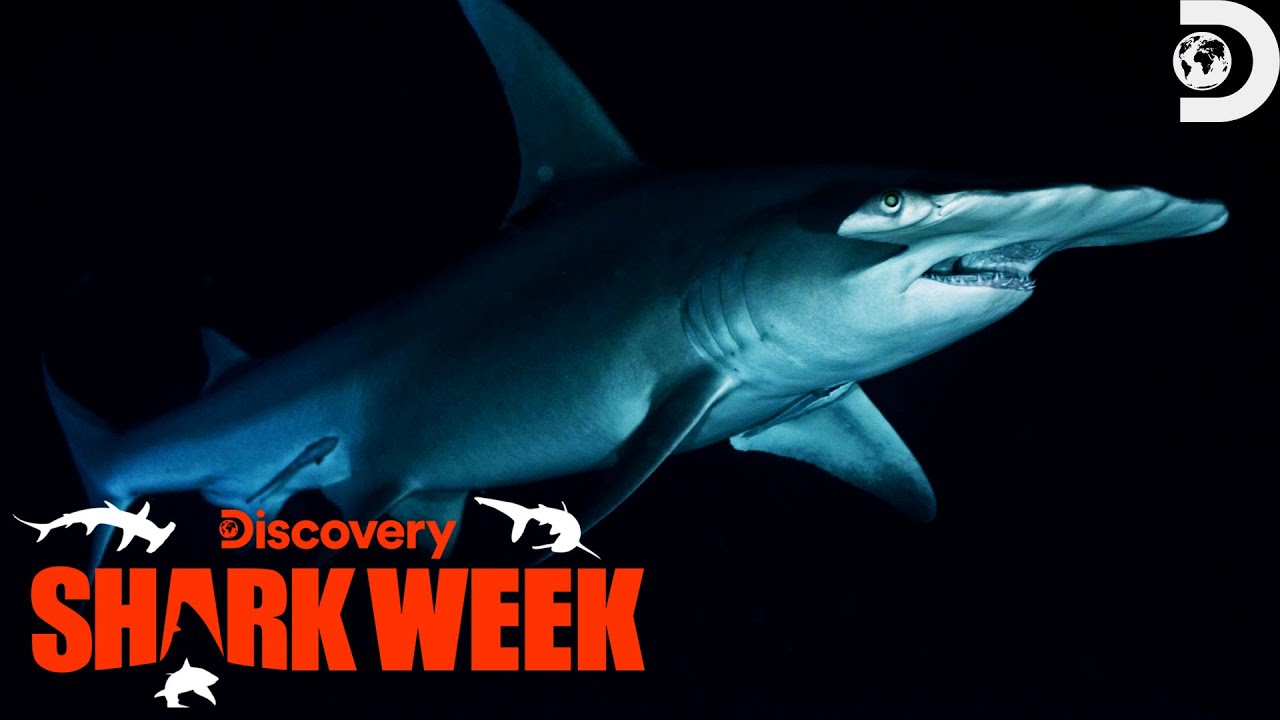
Octobot faces a thrilling encounter with a monstrous Hammerhead Shark during Shark Week.
New infrared images from the Vista Telescope showcase the fabled Orion Nebula's beauty.
Our sun, a G-type main sequence star, is shown to be calmer than other yellow dwarfs, revealing insights into its stability and characteristics.
Recent observations reveal the violent history of Abell 2744, or Pandora's Cluster.
Parker Schnabel travels to South America, using his homemade sluice box to extract over 500mg of gold from challenging jungle and mountain goldmines.
Parker investigates the billion-dollar motherlode mystery in the Klondike, examining whether hidden gold remains in the tailings of a former mining pit.
IRIS makes a major heliospheric discovery about solar heat transport.
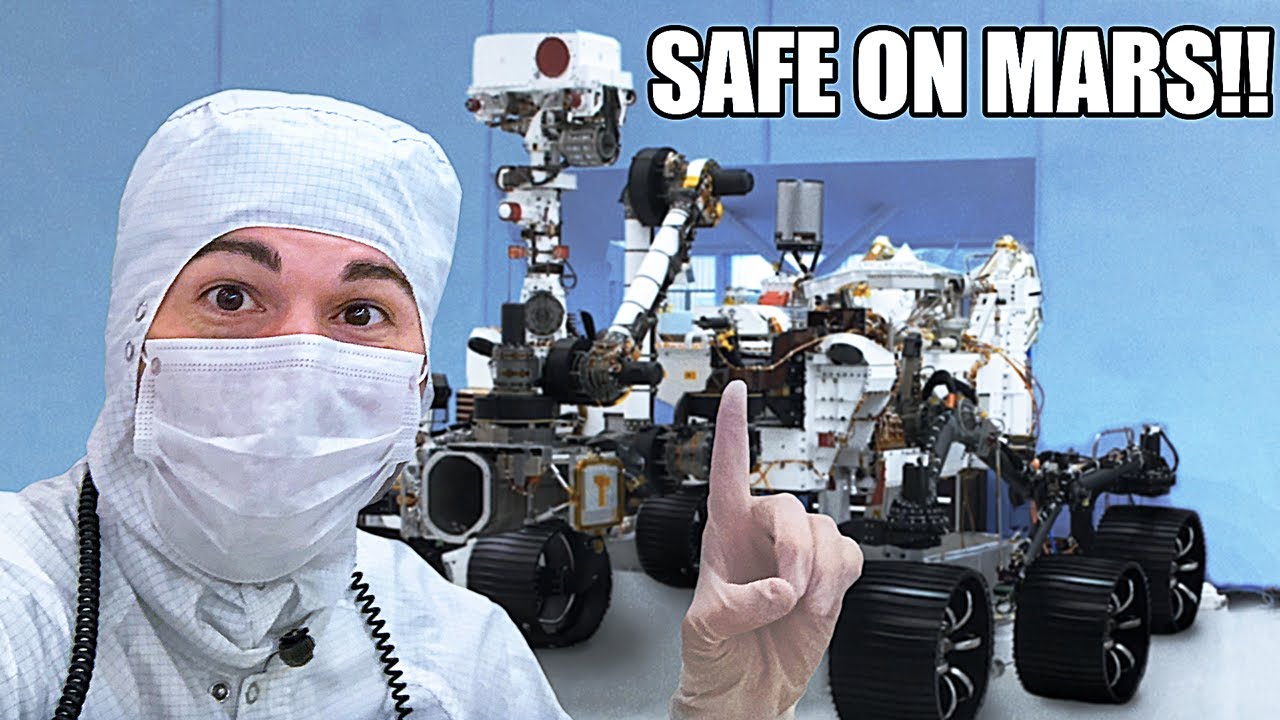
NASA's Perseverance rover successfully landed on Mars, showcasing the intense 'seven minutes of terror' during descent and the innovative technology behind the mission.
The video discusses the search for Planet X and its significance in our solar system.
The New Yorker discusses Spanish cartoonists' fascination with space and Pluto's status change.
The video addresses the debate over Pluto's classification in the solar system.
This ESOCast briefly describes the planetary discoveries around Gliese 581 and Exobiology.
The video showcases a 26,000 light year zoom into Sagittarius A*, revealing its mass and significance.