From over 100,000 films, discover the handful you'll love.
Free or premium access to the world's largest documentary library.
1294 films(Page 14 of 27)
A satellite launch using the small Geo platform will take place this year, enabling telecommunications for mobile devices and large screens without subscriptions.
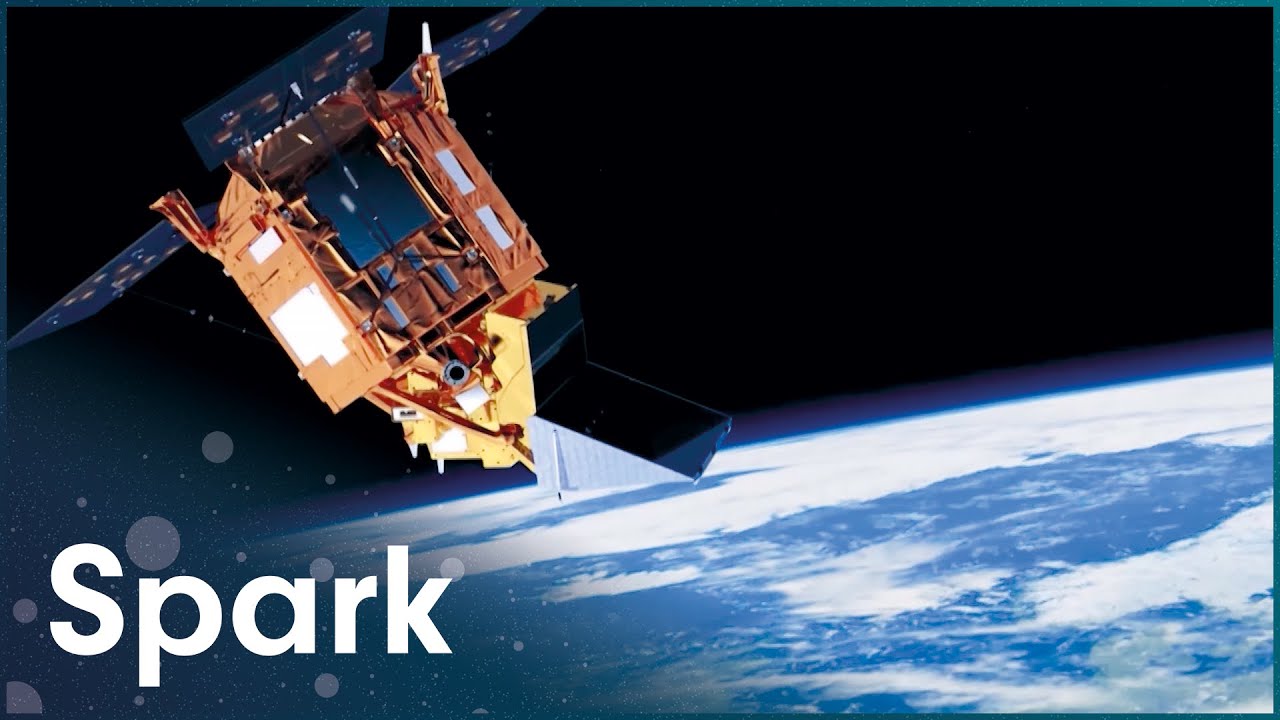
Nearly 6,000 satellites orbit Earth, with about half classified as dead, contributing to a growing threat of collisions in space.
NASA's Perseverance rover launched from Cape Canaveral on July 30, 2020, on a $2.
Nearly a million objects larger than half an inch are currently orbiting Earth, posing a constant threat to operational satellites and future space missions.
SpaceX has conducted around 380 launches of the Falcon 9 family of reusable rockets, facing growing competition from companies like Rocket Lab and United Launch Alliance.
A panel discussion moderated by NASA Chief Scientist James L. Green explores the impact of the Apollo missions on geosciences and future space endeavors.
Astronauts aboard the International Space Station are on evacuation alert due to worsening air leaks reported in the Russian segment, according to NASA.
Dmitri Gishon, co-founder of Mailroot Group, operates a tech empire in Moscow that controls the three largest Russian social networking sites.
Over 100 missions to the Moon are planned before 2030, as the United States and China lead a new space race for lunar resources.
Construction of a spaceport on North Uist in the Outer Hebrides sparks a debate among residents over economic benefits and environmental concerns.
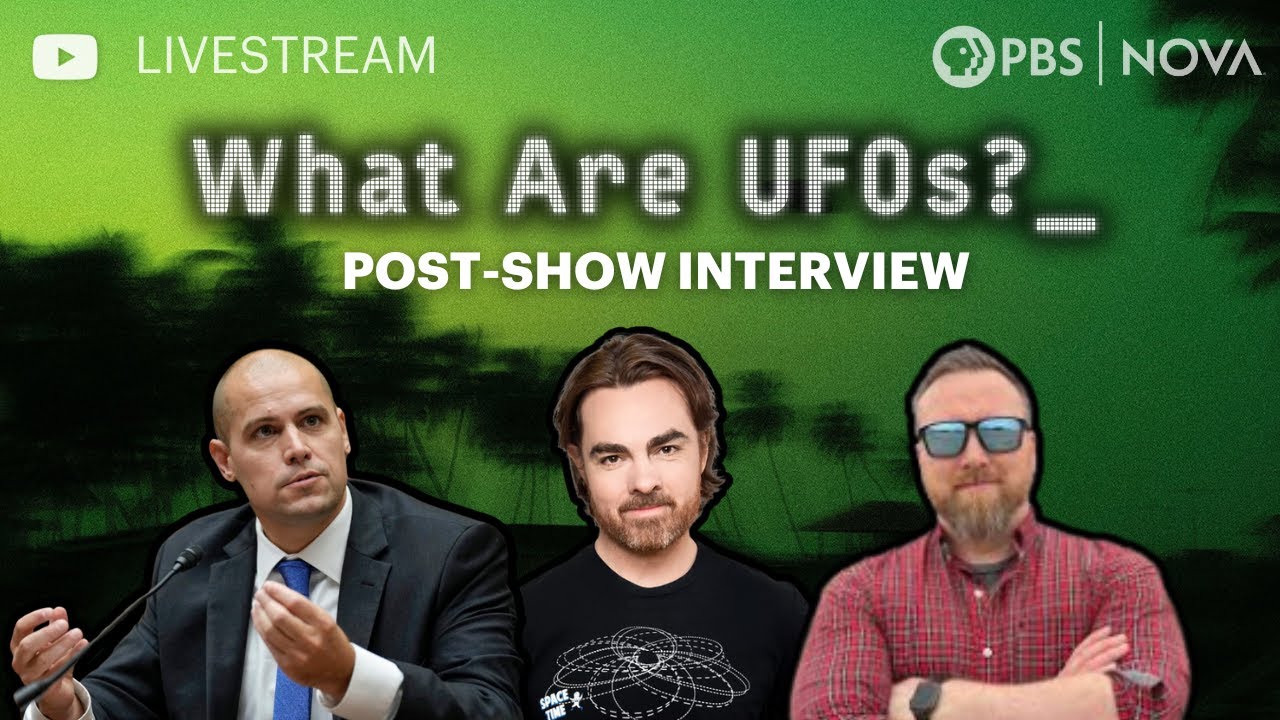
Ryan Graves, a former U.S. Navy pilot, and Alex Hollings, a UFO expert and investigator, provide insights into the phenomenon of unidentified flying objects in a post-show interview livestream hosted by Matt O'Dowd from PBS Space Time.
On April 8, 2024, a total solar eclipse will traverse the continental United States, with a livestream hosted by NOVA featuring NASA scientists in Russellville, Arkansas.
10,000 years is the estimated time it took 'Oumuamua to cross the solar system, leading Harvard professor Avi Loeb to suggest it may be an artificial object.
In 2020, experts discuss how satellites, including NASA's Landsat program, have transformed our understanding of Earth and the implications for future space technology.
Charlie Bolden, former NASA chief, advocates for Mars exploration, highlighting its significance for understanding the solar system and the need for ongoing investment in space technology.
Mars One, a Dutch company, aims to send humans to Mars by 2023 despite recent bankruptcy.
This episode covers space tourism, NASA's spacesuits, and the Artemis project updates.
SpaceX's Starlink project aims to deploy over 12,000 satellites into orbit, raising concerns about space traffic and environmental impacts.
Inspiration4 will launch in the early fourth quarter of 2021, marking the first all-civilian mission to space at speeds of 17,500 miles per hour.
Next week, an Ariane 5 rocket will scream skyward with the James Webb Space Telescope on board.
Congress held its first public hearing on UFOs in over 50 years, as the Pentagon investigates unidentified aerial phenomena.
Space tourism is being explored by companies like Blue Origin and Virgin Galactic, raising questions about the $500,000 cost for a 90-minute trip into orbit.
NASA Heliophysics shows the sun from both sides to improve space weather forecasting for Earth.
Advancements in powerful telescopes and supercomputers have provided a new perspective on the universe's large-scale structure, revealing the limitations of current understanding.
Freddy and Juan assist an Oregon miner in improving his gold-panning techniques, leading to a significant increase in his gold recovery potential.
Japan's Hitomi satellite provides detailed measurements of X-ray gas motion in the Perseus cluster of galaxies, located 240 million light-years away.
NASA Astrophysics shows a supercomputer simulating the Milky Way's formation from small galaxies.
Mike Foale spent over a year in space and launched six times, providing insights into life aboard the Space Shuttle, including its unique toilet system.
Thousands of tons of space junk threaten Earth’s satellites, but scientists propose solutions.
Astronaut Bruce McCandless floated 100 meters from the spacecraft during the first test of NASA's Manned Maneuvering Unit in 1984, remaining untethered for nearly six hours.
The Fermi Paradox raises questions about the absence of evidence for extraterrestrial life despite the vastness of the universe and the recent reach of Earth's radio signals.
By 1976, America had landed a probe on Mars, sparking global curiosity about the possibility of extraterrestrial life.
Chariklo, an asteroid in South America, is discovered to have two narrow rings.
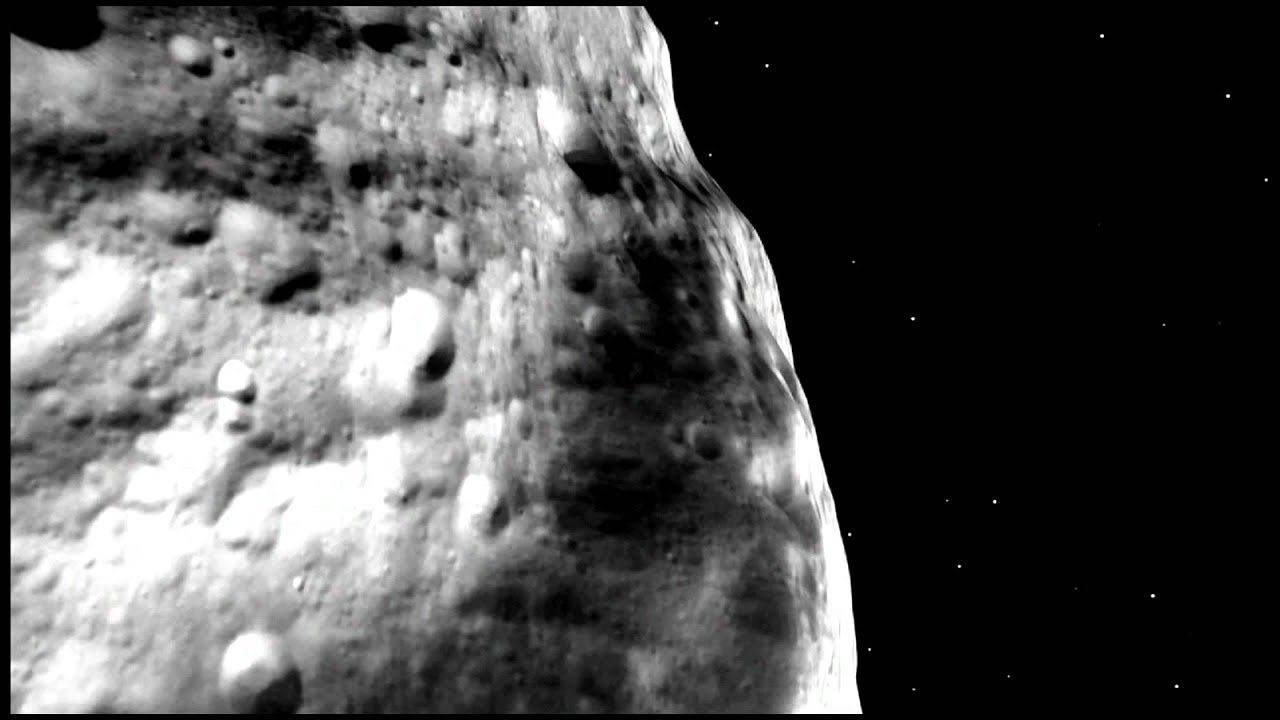
NASA's Dawn spacecraft provides a detailed flyover visualization of the giant asteroid Vesta, highlighting its unique features and formation processes.
Joe Edwards discusses the challenges of living aboard a spacecraft in zero gravity.
The video features Dr. J and showcases The Andromeda Galaxy using four Hubble Space Telescope observations to reveal its disc and surrounding halo.
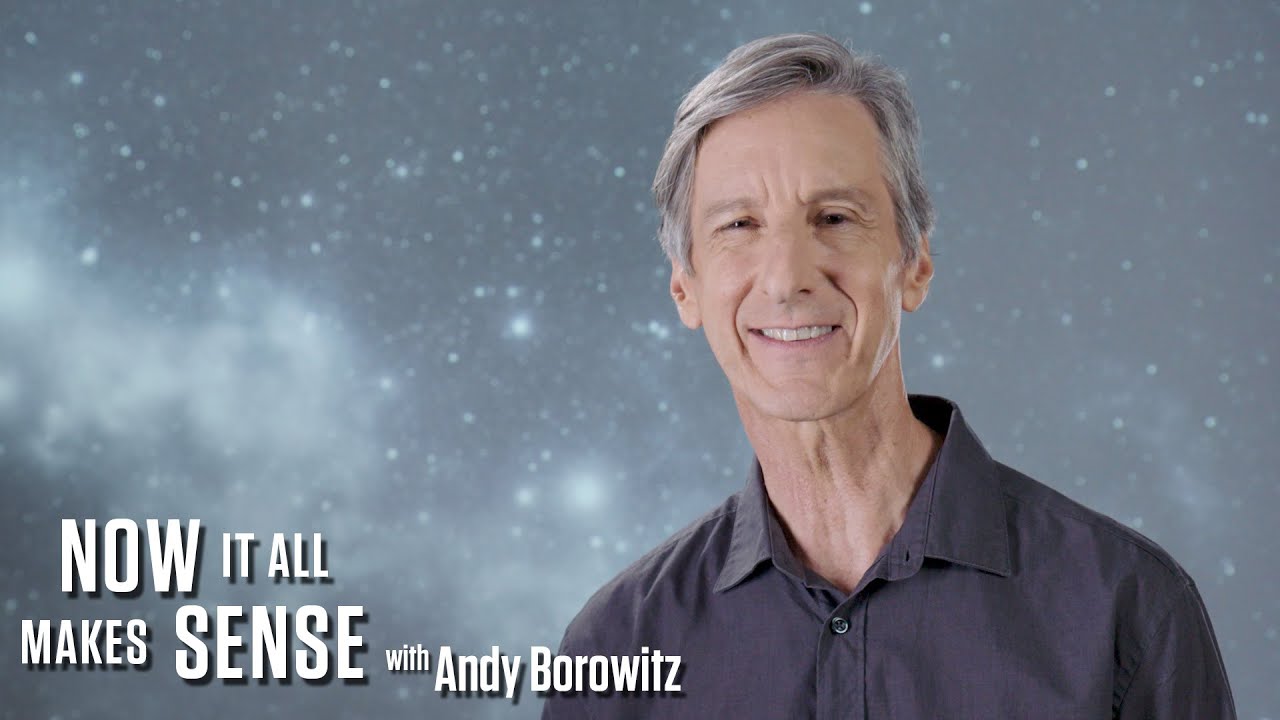
Andy Borowitz examines the sci-fi influences behind Donald Trump's Space Force program in his #NowItAllMakesSense segment for Retro Report.
Fifty years after Apollo 11, humorist Andy Borowitz examines the origins and evolution of moon landing conspiracy theories and other truth-adjacent myths.
On July 20, 1969, Neil Armstrong and Buzz Aldrin made history with mankind's first steps on the Moon's Sea of Tranquility, celebrated through ultra high-resolution imagery.
Apollo 12 features ultra high-resolution photos of the lunar surface from NASA.
Eminent astrophysicist Fred Hoyle stated that it looks like a super intellect has manipulated physics to allow for intelligent life in the universe.
An asteroid that passed close to Earth in 2015 was estimated to contain more platinum than has ever been mined on the planet.
NASA's Scientific Visualization Studio showcases the Cygnus OB2 stellar association.
Astrophysicists reveal Planet Nine's influence on Sedna's orbit in the solar system.
Dr Derek Muller visits the University of Queensland to explore SCRAMSPACE's hypersonic advancements.
Tucker has made 234 asteroid discoveries, including three near-Earth objects, from his backyard observatory built in the late 1980s.
In 10 million years, a cloud will collapse onto a black hole in the Milky Way galaxy.
Hubble Space Telescope reveals secrets of nearby galaxy Messier 106, located 20 million light-years away.