From over 100,000 films, discover the handful you'll love.
Free or premium access to the world's largest documentary library.
1964 films(Page 9 of 41)
World-renowned polar explorer Børge Ousland recounts his experiences skiing to the North Pole and sailing around the Arctic Ocean.
In 1883, Krakatoa erupted with catastrophic force, resulting in massive explosions and lava flows that reshaped the surrounding landscape and impacted global climate.
By the end of the century, sea levels are expected to rise as much as one meter, threatening coastlines around the world.
More than 50,000 people live along the edges of Greenland, where the sun disappears for months and life persists amid ice and ocean.
Icy coastlines, from the Arctic to the Southern Ocean, support diverse marine life, highlighting their crucial role in the health of the world's oceans.
In a single day, swarms of locusts can consume food crops that hundreds of thousands of people depend on for survival.
Denmark leads in wind technology, exploring energy solutions for Europe and beyond.
NASA launched twin satellites in 2006 to study solar storms and sunspots, which affect Earth's climate and technological systems.
Gold mining in the Amazon rainforest of Bolivia leads to severe deforestation and mercury poisoning, impacting local communities in Potosí and La Paz.
Naked Science examines past mass extinctions and their implications for humanity's future.
Professor Brian Cox witnesses a total solar eclipse in India and explores the sun's power.
In the snowy landscapes of Scandinavia, Norway lemmings and South African rock dassies illustrate remarkable survival strategies against predators in their unique ecosystems.
The Galapagos Archipelago faces ecological decline due to climate change and disrupted ocean currents, as documented by a team aboard the Sedna IV.
Human activities have significantly accelerated extinction rates, threatening biodiversity and prompting urgent calls for sustainable practices to mitigate long-term consequences.
Project Apollo's legacy is examined alongside advancements in the Orbiting Carbon Observatory and the significance of zero gravity training in space exploration.
Wildlife adapts to disasters, using unique strategies to survive and thrive in harsh conditions.
One out of every two species on Earth faces extinction due to unchecked global warming, according to experts featured in the film.
A local salt scraper in Lac Rose earns a living by collecting salt, a task he describes as "slave labor" but views as essential for his family's survival.
75% of Americans live close to the coast, facing increasing threats from hurricanes and rising sea levels due to climate change.
The Nature of Life presents solutions to Global Climate Change and promotes sustainable living.
CCGS Amundsen, Henry Larsen, MS Fram, and G.O. Sars navigate the Arctic Ocean, conducting vital research and resupplying remote communities in extreme conditions.
In Antarctica, a team of scientists conducts groundbreaking research to understand the continent's unique ecosystem and its implications for global survival.
Greenland's Inuit face challenges from modernization and global warming in their Arctic home.
In Rajasthan's semi-deserts, nomadic pastoralists utilize centuries of ecological knowledge to navigate harsh landscapes while addressing modern agricultural challenges.
NASA has collected high-definition data on Earth's land, oceans, and atmosphere over the past 20 years, revealing complex interactions across the planet.
More than 10 million macaroni penguins were counted in the latest survey, reflecting their stable population amid ongoing conservation efforts.
Global warming is projected to shift the global wine map, threatening traditional regions like southern Europe and California with rising temperatures and altered grape characteristics.
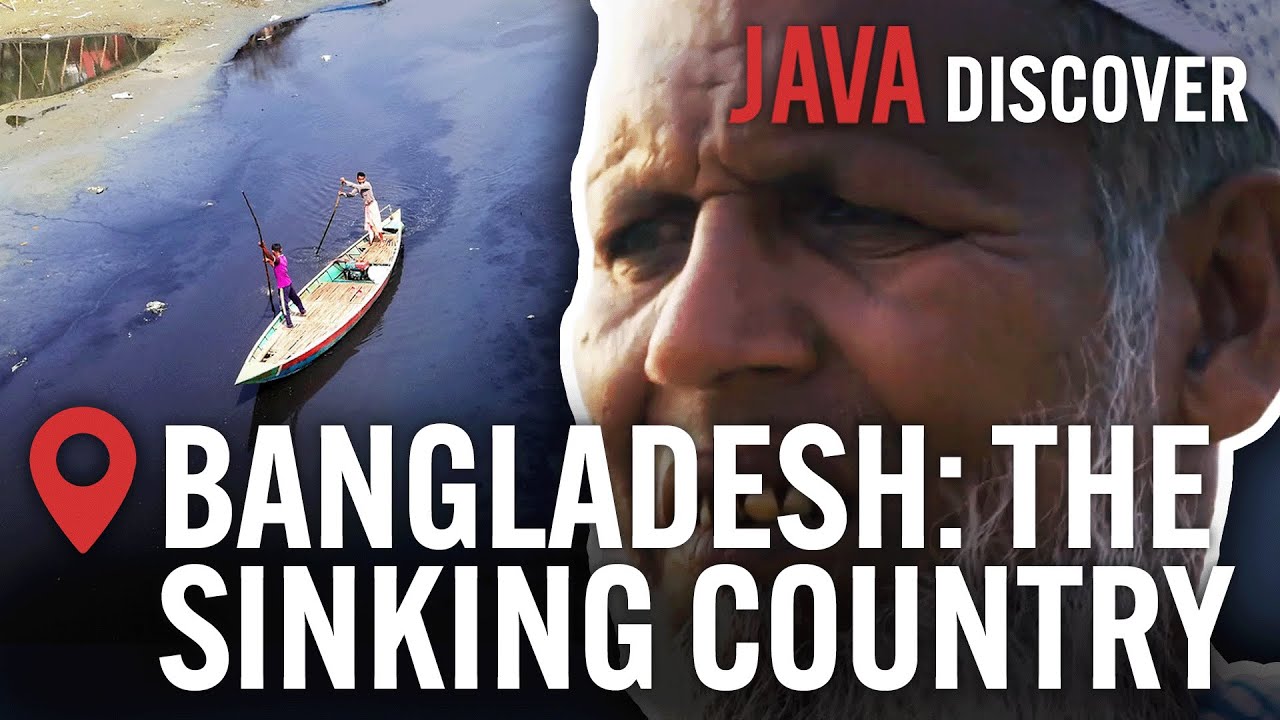
Bangladesh faces a dire future as rising waters threaten 30% of its land and 60 million people.
Five great mass extinction events have occurred in the last half billion years, with the first linked to a brief Ice Age that drastically altered life on Earth.
Snow is vital for ecosystems, but global warming threatens its future in the Alps and United States.
A 320-ton magnet is transported over 100 kilometers through southern France for the world's largest nuclear fusion reactor, set to begin operations in 2025.
Hurricane Hazel and Hurricane Hugo, two of the deadliest storms in U.S. history, devastated Charleston, South Carolina, causing significant destruction and loss of life.
Rising water pollution and increasing temperatures in the Nile region echo the Biblical plagues, highlighting urgent contemporary environmental challenges.
In 2014, a storm caused 100 percent mortality of harp seal pups in the Arctic, illustrating the severe impact of climate change on marine life.
More than 70 percent of the Earth's surface is covered by water, yet only a small fraction is freshwater available for all living beings.
A Martian dust storm can reach speeds of over 160 km an hour, posing a suffocating threat to life on Earth if it were to occur here.
Climate Chaos highlights the devastating impact of climate change on southern hemisphere communities.
Earth's unique features and optimal position in the Milky Way are illustrated through stunning visuals from NASA and the Hubble Space Telescope Institute.
Freshwater ecosystems host unique wildlife, including the platypus, hippopotamus, and specialized crocodiles, each adapted to their specific habitats.
A Mars-sized planet named Thea collided with Earth 4.5 billion years ago, leading to the formation of the Moon and enabling life to thrive.
A massive surge barrier with 78 floating gates is under construction to protect Venice from the Acqua Alta phenomenon and rising sea levels.
Changing Ocean Asia highlights urban challenges and solutions in Singapore's sinking cities.
The Great Jiangsu Flood in China in 1931 and the Great Cyclone Disaster of 1896 in St. Louis are examined as two of history's deadliest natural disasters.
On May 20, 2013, an EF5 tornado devastated Moore, Oklahoma, claiming 24 lives and causing $2 billion in damages, while a 2009 flood in Istanbul resulted in mass casualties and destruction.
The Mediterranean Sea evolved from a desert valley into a vibrant marine ecosystem after the collapse of the rock dike in the Strait of Gibraltar over 5 million years ago.
In the 1970s, scientists in Iceland realized they had harnessed only a tiny fraction of the country's geothermal energy potential.
Blizzards affect mankind, paralyzing regions from Canada to Northern China every winter.
Growth is the fundamental principle of capitalism, but Karl Marx warned that it could eventually lead to the system's collapse.