From over 100,000 films, discover the handful you'll love.
Free or premium access to the world's largest documentary library.
1248 films(Page 6 of 26)
Viral videos of sharks attacking boats prompt Dr.
Zanzibar, an exotic island chain in the Indian Ocean, is home to unique wildlife such as giant tortoises, red colobus monkeys, and coconut crabs.
Japan's diverse archipelago, now counted at over 14,000 islands, hosts a unique mix of Asian and Arctic wildlife shaped by varying climatic zones.
The Bissagos Islands consist of 88 islands spread over roughly 100 kilometers, forming a labyrinth of sandbanks and mangrove swamps in West Africa.
The sum of the Drake equation currently stands at one plus, indicating humanity as the only known intelligent life in a galaxy of a thousand stars.
Hawaii is 5 million years old and is home to volcanic landscapes, dense rainforests, and the fourth-largest island, Kauai, known as the Garden Island.
Explore Turkey's Aegean coast and meet June Haimoff, a turtle conservationist in Dalyan.
On the Falkland Islands, albatrosses and Rockhopper penguins face contrasting fates for their offspring during the critical summer mating season.
Art Wolfe travels through Glacier Bay, the Katmai Coast, and remote regions of Antarctica to document endangered wildlife, including humpback whales and Grizzly Bears.
A 23-pound salmon caught in a Welsh river marked the last of its kind for years, reflecting the decline of fish populations due to overfishing.
In U.S. waters, hundreds of critically endangered manatees face threats from boats, disease, and cold weather, while dugongs struggle to survive in isolated marine sanctuaries.
Corsica, known as "Kalliste" in ancient Greece, features stunning alpine landscapes, dramatic rock formations, and a distinct cultural identity among its inhabitants.
In Fiji, local traditions are highlighted through Manasa Bulivou's offerings to the Shark Gods and Hannah Bennett's surfing at Cloudbreak, reflecting the culture's bond with the ocean.
Sharks are studied globally in this Sharkfest MEGA episode, focusing on their behavior near Hawaii's volcanoes, rising bull shark attacks in Australia, and a rare great white shark incident in Canada.
The Black Sea reveals three shipwrecks that hold secrets of its storied past, while advances in maritime technology lead to awe-inspiring wrecks and the heroism of three Black sailors during the Pearl Harbor attack.
Nearly 70,000 tons of lobsters are harvested from the Atlantic Ocean each season, generating an estimated value of more than a billion euros.
Jacques Cousteau calls this region the 'aquarium of the world' in northwest Mexico.
Less than 250 millimeters of rain falls annually on the Valdés Peninsula, a vital refuge for marine mammals in Argentina.
In diverse ecosystems from the Iguazu Falls to the Arctic, animals demonstrate remarkable intelligence and adaptability through hunting, camouflage, and teamwork.
Up to half a million Olive Ridley sea turtles arrive at Ostional Beach in Costa Rica during the "arribada," a synchronized nesting event each September.
The Humboldt Current along South America’s Pacific coast supports diverse marine life, from blue whales to penguins, while sustaining the Atacama Desert's ecosystem.
Giant manta rays in the Socorro Islands off Mexico's Pacific coast are studied by Dr. Robert Rubin, highlighting their interactions with divers and marine life.
Divers in New Zealand's Foveaux Strait dive up to 75 feet on a single breath to harvest sea urchins, a delicacy worth nearly half a billion dollars annually.
Daniel Opitz films humpback whales in Hawaii, focusing on their complex songs and conservation efforts.
Great white sharks have existed for over 500 million years and play a crucial role in maintaining the health of marine ecosystems.
Underwater explorer Barry Clifford gained international attention in 1985 for locating the Whydah, the first fully verified pirate shipwreck, off Cape Cod, Massachusetts.
Manatees must consume up to 60 kilos of aquatic plants each day to survive in the waters of Florida's Gulf Coast and inland rivers.
Scotland's coastal regions, influenced by the Atlantic's warm currents, support diverse wildlife, including sea otters and starfish, across stunning landscapes.
Kangaroo Island, located off the coast of South Australia, is home to unique wildlife such as the Kangaroo Island Kangaroo and endangered species like the Australian Sea Lion.
Italy's diverse landscapes range from the icy Dolomites, where Ibex adapt to winter, to Sardinia's Mediterranean shores and Sicily's unique wildlife sanctuaries.
Manganese nodules, found at depths of four kilometers in the Pacific, are considered a potential new source of metals for modern technology.
Controversial behaviorist Dr. Erich Ritter tests shark-human interactions with lemon, bull, and great white sharks in locations like the Bahamas and Gansbaai, South Africa.
In Japan's coastal bay, white-spotted bamboo sharks gather each summer to mate and lay camouflaged eggs, while facing threats from potential predators.
Humpback whales, measuring up to 45 feet long, gather in the Caribbean each winter to mate and give birth, revealing critical aspects of their lives.
Kenya's majestic landscapes and wildlife are showcased, highlighting the urgent conservation needs of the Northern White Rhino and the challenges faced by baby turtles.
Weighing over 2,000 kilograms and measuring ten meters long, whale sharks feed exclusively on plankton, which can be abundant at seasonal hotspots.
Wikie and Keijo, two orcas stranded in a closed waterpark on the French Riviera, face the decision of being moved to Tenerife, where orcas still perform.
A group of ravens returns to the Canary Islands after decades, finding food and competing for survival in harsh, high-altitude conditions.
Liz Bonnin travels over 7,000 miles to the Galápagos Islands, where she encounters unique wildlife and emphasizes the need for conservation efforts.
The Bissagos Islands, a UNESCO Biosphere Reserve, serve as a unique ecosystem for biologists like Raúl León, showcasing diverse wildlife in West Africa.
A young Weddell seal gains two kilos per day from its mother's high-protein milk during the first six weeks of life in Antarctica's icy waters.
More than a quarter of Norway lies at over 1,000 metres above sea level, creating a unique habitat for wildlife like reindeer and musk oxen.
Great White Sharks have evolved over 11 million years, adapting alongside seals and other pinnipeds in response to a cooling climate, as documented by cameraman Andy Casagrande.
Aurélien Brulé's efforts in Indonesia focus on saving gibbons from habitat destruction caused by oil palm production and the illegal pet trade.
Bowhead whales, which may live over 200 years, are studied by biologists using new research techniques alongside Alaskan Inupiat during a traditional hunt.
In Alaska's Glacier Bay and Katmai Coast, Art Wolfe explores the habitats of humpback whales, orcas, and the world's largest population of grizzly bears.
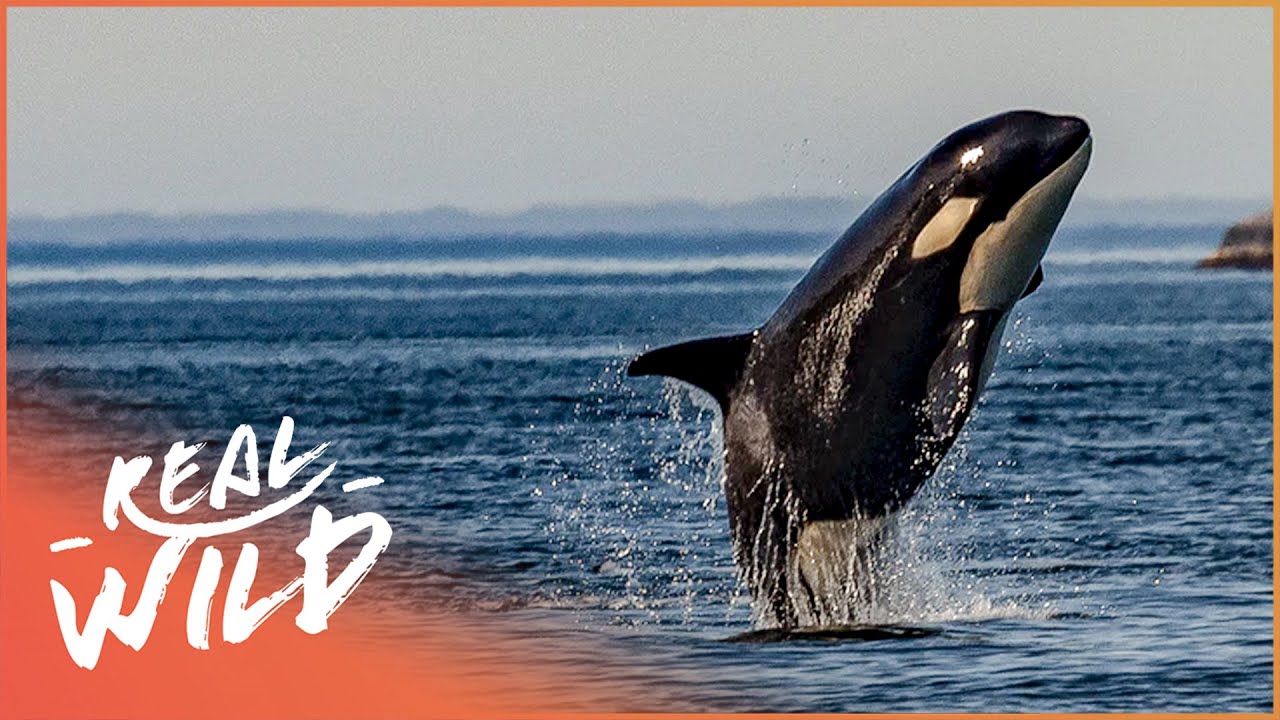
Killer whales along the Pacific coast of North America are severely impacted by ocean pollution, threatening their health and survival.
Juan Leal sings Flamenco while fishing in Conil de la Frontera along the Atlantic coast.