From over 100,000 films, discover the handful you'll love.
Free or premium access to the world's largest documentary library.
1777 films(Page 6 of 38)
Nearly 40,000 Italian troops were taken prisoner during the British counterattack in December 1940, marking a turning point in the North African campaign.
The Battle of the Philippine Sea marked a decisive American victory against Japan in 1944, characterized by superior pilot skills and the infamous Great Marianas Turkey Shoot.
A total of 91,000 German soldiers entered Soviet captivity at Stalingrad, marking a significant defeat for the Nazi regime during World War II.
91,000 German soldiers surrender at Stalingrad in February 1943 after months of intense fighting and a Soviet counteroffensive that encircles them.
Hardy Amies orchestrated a campaign of assassinations in occupied Belgium while serving as a captain in the Special Operations Executive during World War II.
Key battles of World War II, including Stalingrad and Berlin, are examined for their roles in the defeat of Hitler and the Nazi regime.
R. Hattenhauer has searched approximately 150 miles of mines in southeast Germany for the missing Amber Room, looted by Nazis during World War II.
Adolf Hitler, born in 1889, rises to power after developing anti-Semitic views in Vienna.
Hitler's failed invasion of the Soviet Union, the Allied Normandy landings, and the atomic bombings of Hiroshima and Nagasaki are pivotal events of World War II.
London's docks area was bombed for eight months during the Blitz, as civilians faced nightly threats and destruction from German air raids.
In 1943, a U.S. military orientation film details the German military offensive from 1939 to 1940, highlighting key events such as the invasion of France and the evacuation at Dunkirk.
The Germans develop Blitzkrieg, enabling the Nazis to conquer Poland and France swiftly.
On August 20, 1944, a Russian offensive trapped the German 6th and Romanian 3rd armies, marking a significant turning point in the Eastern Front.
On October 1, 1949, Mao Zedong announces the establishment of the People's Republic of China during a parade in Tiananmen Square, marking a historic shift.
The Battle of Okinawa in 1945 resulted in approximately 240,931 casualties, marking it as the deadliest conflict in the Pacific theatre of World War II.
Over 12,000 B-17 bombers were built during World War II, with only one flying example remaining in Europe, known as Sally B.
In June 1941, Nazi Germany launched Operation Barbarossa, marking the beginning of a brutal invasion of the Soviet Union, as depicted through rare archive footage.
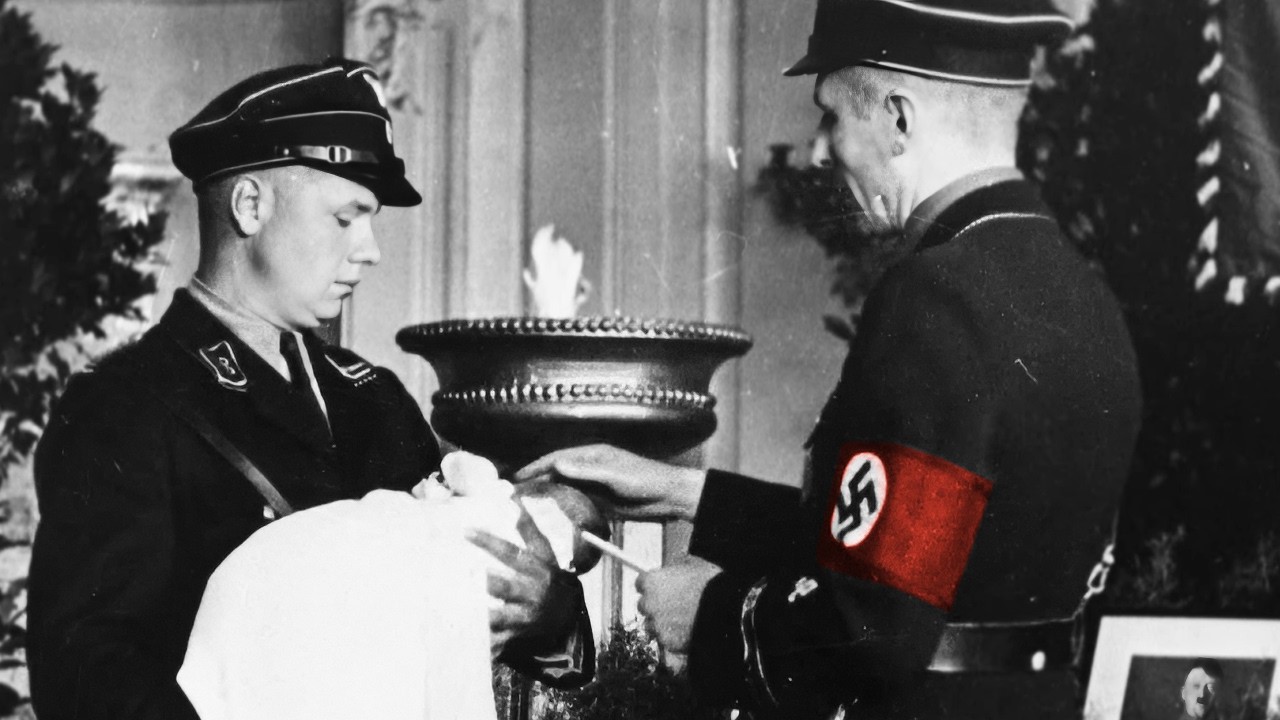
The Nazis' Lebensborn program breeds children for the Master Race during World War II.
Operation Barbarossa, launched by Nazi Germany against the Soviet Union in 1941, was marked by strategic errors and brutal war crimes that led to its eventual failure.
Nazi Germany's downfall is examined through key events from summer 1944 to May 1945, including the Battle of the Bulge and the July 20 plot against Hitler.
By late 1943, the Allies had dominated the Atlantic, leading to the loss of nearly 800 German submarines and 32,000 Allied sailors.
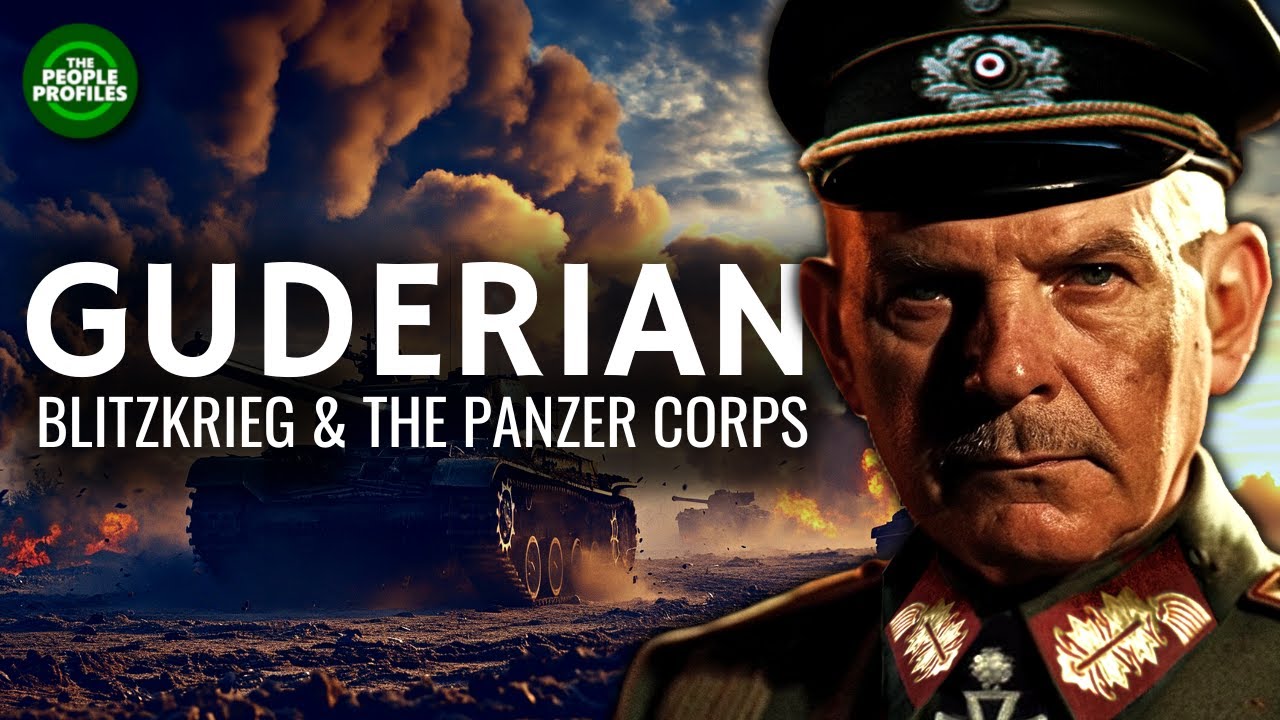
Heinz Guderian was born on June 17, 1888, in Kulm, West Prussia, and became a key figure in the development of Blitzkrieg tactics during World War II.
On November 11, 1942, the Soviet Red Army launched Operation Uranus, a counteroffensive that encircled and defeated the German Sixth Army at Stalingrad.
The final phase of World War II is marked by Allied advances into Germany, General Montgomery's Operation Market Garden, and Hitler's last offensive during the Battle of the Bulge.
Franklin D. Roosevelt reaches the Oval Office as Hitler rises to power during the Great Depression.
The US military expanded from 1,000 ships to 5,500 in just a few years following the attack on Pearl Harbor.
Germany's invasion of Poland in 1939 marked the beginning of World War II, a conflict that reshaped global politics and society for decades.
Japanese troops landed on Guadal Canal in April 1942, threatening Allied positions in the Pacific and prompting a shift to offensive operations.
In May 1940, Hitler gambled that a rapid victory in the West would end the war quickly, but his plans faced unexpected challenges from Allied forces.
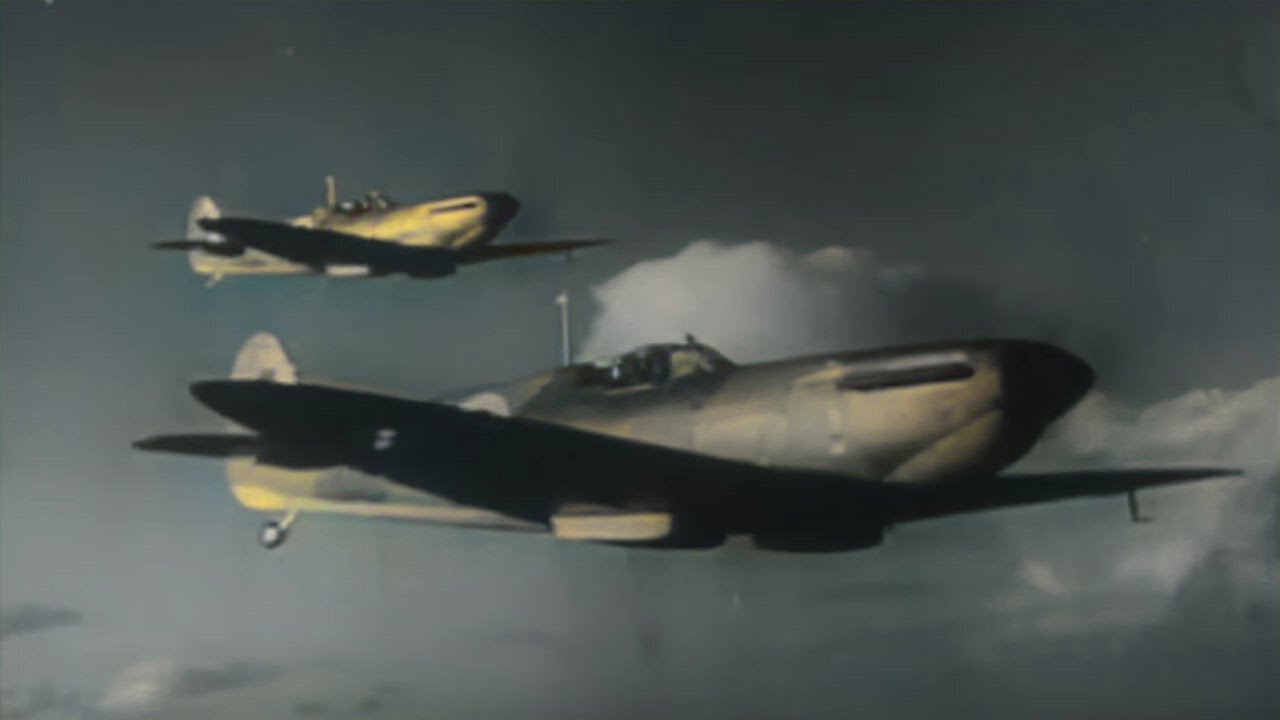
On July 10, 1940, RAF pilots engaged in aerial combat against the Luftwaffe, facing overwhelming odds of ten enemy aircraft to one.
In summer 1944, as Hitler's army retreats, the Allied Forces launch a massive offensive against Germany, revealing the harsh realities of the final battles through rare archive footage.
A German division of 250,000 soldiers advanced on Stalingrad in 1942, facing heavy bombardments and fierce urban combat.
In 1936, the Wehrmacht's invasion of the Rhineland marked a clear violation of the Treaty of Versailles and signaled Germany's growing military ambitions.
Civilians adapt to food shortages during WWII, ensuring troops have enough to fight.
Rare color footage filmed by American military cameramen, including George Stevens, captures the Allied advance into Germany during the final months of World War II.
More than 300,000 Soviet soldiers died during the battle for Berlin, which marked the end of the Third Reich in May 1945.
On September 27, 1940, Japan signed the tripartite pact with Germany and Italy, marking a significant escalation in the global conflict of World War II.
An estimated 6 million Jews were exterminated in Nazi camps, a grim reality that began to surface for the Allies in the summer of 1944.
In 1945, Franklin D. Roosevelt faced tensions with Winston Churchill and Joseph Stalin while grappling with chronic heart disease and a troubled marriage.
Around 1,500 fires erupted in London during the Blitz, forcing firefighters to battle flames for over 15 hours amid the destruction.
In December 1941, the Japanese attack on Pearl Harbor propels the United States into World War II, leading to significant battles in the Pacific and the internment of Japanese Americans.
Almost 1,300 French sailors were killed when British forces opened fire on their former allies to prevent their ships from falling into German hands.
Operation Overlord, the Allied invasion of Northern France during World War II, was a meticulously planned amphibious assault that ultimately secured victory for the Allies.
Hitler's invasion of the Soviet Union marked a critical turning point in World War II, highlighting the catastrophic miscalculations that led to Nazi Germany's downfall.
Adolf Hitler entered Paris on June 14, 1940, as Britain prepared to defend itself against the impending threat of Nazi invasion.
In 1942, Port Moresby was the only allied base in New Guinea, while Japanese forces controlled the rest of the island.
In 1923, Adolf Hitler's failed coup, known as the Beer Hall Putsch, leads to his imprisonment, during which he writes Mein Kampf.
Hitler's invasion of Poland in 1939 prompted Great Britain and France to declare war, despite his initial uncertainty and the allies' lack of response.