From over 100,000 films, discover the handful you'll love.
Free or premium access to the world's largest documentary library.
1777 films(Page 7 of 38)
In the Pacific theater of World War II, American forces captured the Japanese-held islands of Guam, Tinian, and Saipan, marking a crucial turning point in the conflict.
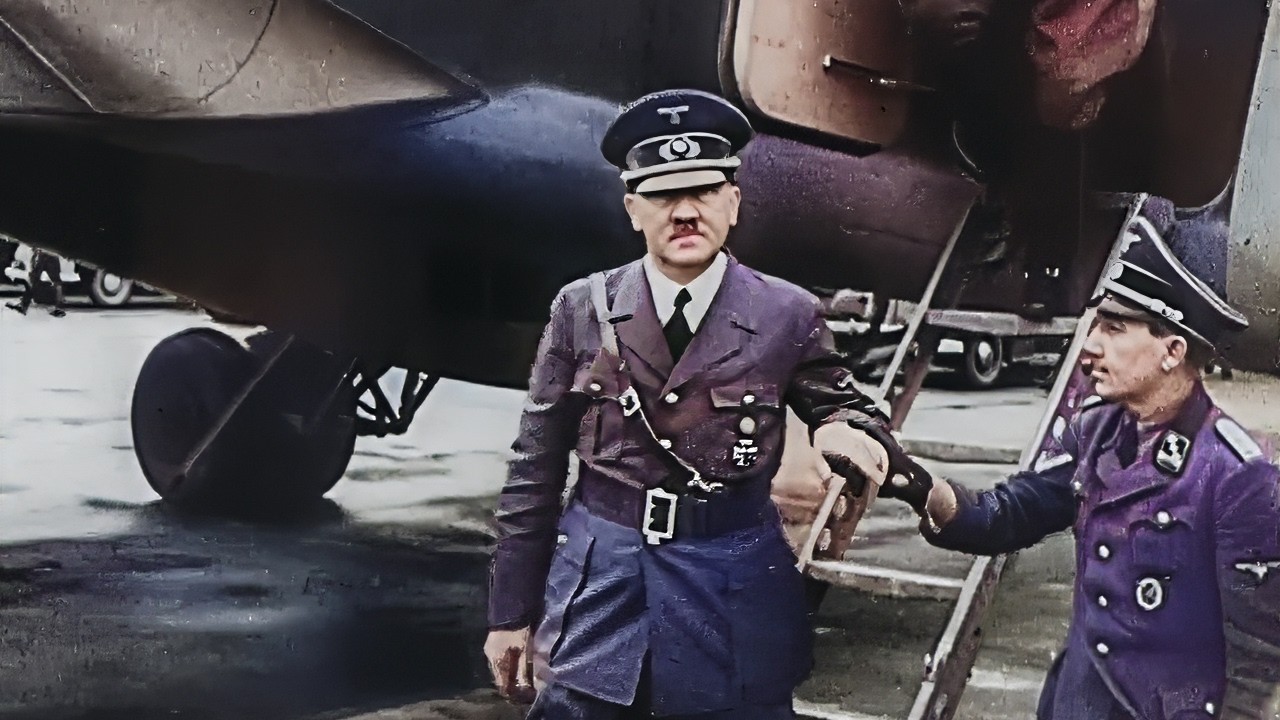
On July 20, 1934, Adolf Hitler promoted the SS to a self-contained organization within the NSDAP after using them to eliminate political rivals.
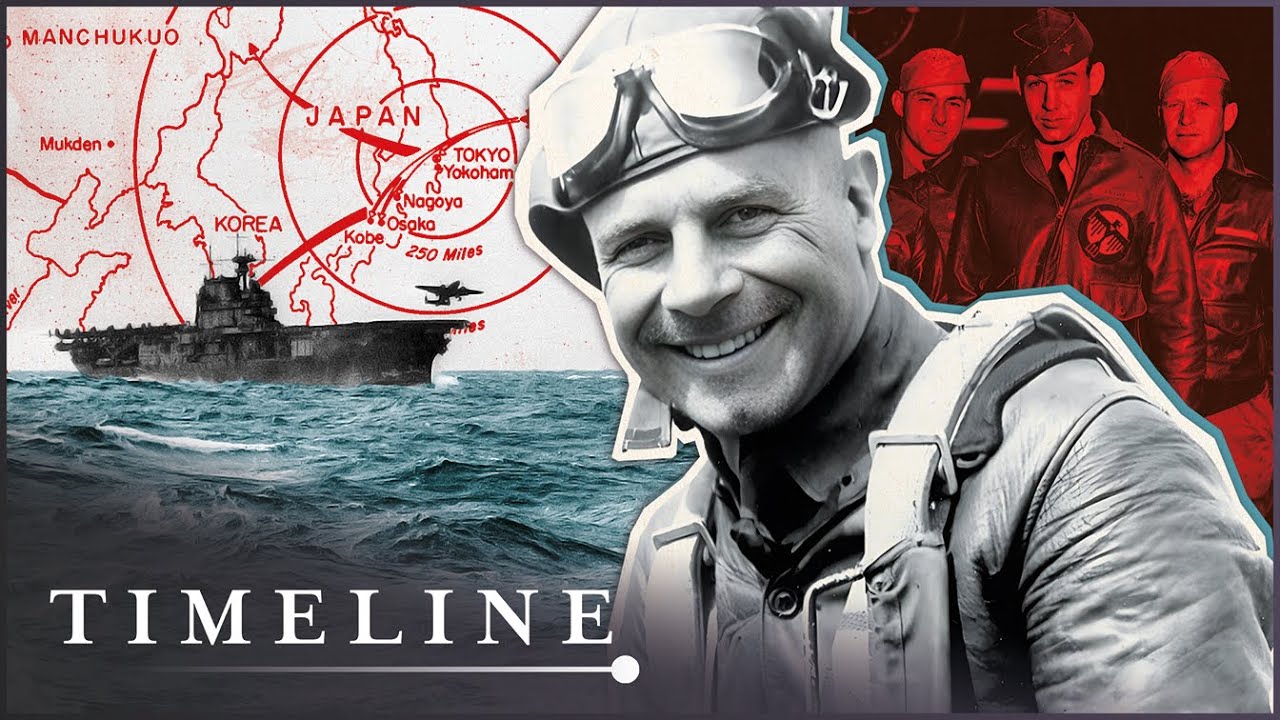
Jimmy Doolittle's true story highlights his American heroism and Congressional Medal of Honor.
Eight months after landing in Crimea, British, French, and Turkish forces remained encamped outside Sevastopol, facing exhaustion and dwindling morale.
The Japanese bomb the U.S. Fleet at Pearl Harbor on December 7, 1941, entering World War II.
Operation Barbarossa, Hitler's 1941 invasion of the Soviet Union, marked the largest and costliest land offensive in history during World War II.
In 1942, the US Marine Corps launched the first amphibious tank assault in history to reclaim Japanese-held islands in the South Pacific following Pearl Harbor.
The Battle of Stalingrad marked a pivotal victory for the Red Army during World War II, characterized by intense tank battles that resulted in significant casualties.
Hitler declared war on the USA following the Japanese attack on Pearl Harbor, escalating the global conflict during World War II.
7,000 people died during the defense of Malta, a key battleground in the Mediterranean during World War II.
Allied forces suffered over 12,000 casualties, including 2,000 dead and 3,500 missing, during the invasion of Sicily from July to September 1943.
757 aircraft were destroyed by Task Force 58 during the USS Yorktown's operations in World War II, as depicted in the 1944 documentary "The Fighting Lady."
The Nazis' massive construction project shelters factories underground during World War II.
Survivors of the Battle of Stalingrad recount their experiences, highlighting the intense combat and sacrifices made by both German and Russian soldiers during World War II.
Blitzkrieg, a revolutionary military strategy employed by Nazi Germany, enabled rapid invasions of Holland and Belgium, significantly altering the course of World War II.
The Vikings leave Scandinavia, settle in Europe, and influence history through Normandy.
In the Pacific theater during World War II, American pilots faced perilous conditions while conducting bombing missions against Japan, often losing planes during their return to aircraft carriers.
In 1260, the Mamluks, led by Baibars, faced the Mongol Empire, which had enslaved or destroyed nearly every opponent in its path.
The Short S. 25 Sunderland, a British flying boat patrol bomber, served for three decades and became one of the RAF's most effective aircraft against U-boats.
The North African Campaign during World War II showcased the intense conflict between Axis and Allied forces, highlighted by rare archive footage from the front lines.
33 million items are housed at the Imperial War Museum, where staff work to preserve and display significant military artefacts from Britain's history.
In 1943, the genocide of European Jews reached a quasi-industrial stage, prompting desperate resistance from Polish Jews in the Warsaw Ghetto.
The Allies gain momentum in late 1942 with breakthroughs in North Africa and Stalingrad.
Operation Overlord and subsequent Allied offensives on the Eastern and Western Fronts, along with the Pacific island-hopping strategy, culminated in the defeat of Nazi Germany and Japan in World War II.
The Bismarck, a formidable German battleship of World War II, is examined through archival footage and interviews with former naval officers, highlighting its legacy in maritime warfare.
A combined operation involving hundreds of thousands of American and British soldiers was planned over 125 days to launch the Allied invasion of Tunisia.
The Fritz X bomb, an early precision weapon, had a success rate over 80 times higher than conventional bombs during its combat debut in 1943.
On March 7, 1945, US forces captured a bridge near Remagen, allowing the Allies to penetrate deep into German territory.
Poland's resistance fights against Nazi Germany and the Soviet Union during World War 2.
Ten individuals' lives are forever changed during the final ten days of World War II as the Nazi Empire collapses in April 1945.
In 1942, the Vemork Power Plant in Norway produced 1,000 kilos of heavy water, a crucial component in Nazi Germany's nuclear ambitions.
On May 23, 1945, British troops arrested Admiral Donitz, marking the final act of the Nazi regime as the Allies took control of Germany.
In June 1940, Henri Chamberlin, a criminal born in 1902, becomes a leader in the Gestapo, overseeing arrests and exploitation during the German occupation of Paris.
By 1949, British war crimes units had wound up their operations after capturing only a handful of Nazis, leaving thousands still at large.
Franklin D. Roosevelt's death, Winston Churchill's election defeat, and Adolf Hitler's demise are examined alongside Harry S. Truman's presidency and Gandhi's assassination.
Black 6 is the only currently flying German World War II aircraft in its original condition, restored over 19 years by a dedicated volunteer team.
The Battle of Stalingrad marked a pivotal turning point in World War II, representing Hitler's first major defeat and a significant shift in the conflict's momentum.
In 1942, as Hitler's forces occupied vast territories in Europe, key strategic decisions began to shift the momentum of World War II in favor of the Allies.
The Flying Tigers defend China during WWII, influencing Japan's Pearl Harbor attack.
Nazi Germany developed a range of unconventional weapons during World War II, including the Krummlauf assault rifle, Elefant tank, and sound gun.
130 Japanese planes are lost in a single day during an intense aerial battle over Truk Atoll, marking a significant moment in World War II.
Three million troops were committed to Operation Barbarossa, marking Germany's largest military campaign during World War II.
In 1944, Heinrich Himmler dispatched elite German troops to seize an ancient manuscript known as the Bible for the Aryan race before Italy fell to the Allies.
Stalingrad, a pivotal city during World War II, became the site of a fierce battle where the Red Army halted the advance of the Nazi forces in 1942.
Historian James Holland and ex-US Army Ranger Dr Mike Simpson analyze the planning, logistics, and execution of the Normandy campaign during World War II.
Operation Sea Lion, Hitler's planned invasion of Britain following the Battle of France, ultimately failed due to British resilience and strategic defenses.
The West Wall, Leningrad, Guadalcanal, Okinawa, and the Balkans are examined as key locations in World War II's bloodiest battles.
On August 6, 1945, the United States dropped the first atomic bomb in history, marking a turning point in warfare and global politics.