From over 100,000 films, discover the handful you'll love.
Free or premium access to the world's largest documentary library.
1777 films(Page 3 of 38)
Between 1940 and 1945, the German army lost 50,000 tanks and 4 million men on the Eastern Front during World War II.
Thousands of Allied troops were rescued from the beaches of Dunkirk in May 1940 as Nazi forces advanced across Europe.
The U.S. Third Armored Division lost over 600 tanks and 2,500 soldiers while fighting to breach the Siegfried Line in Nazi Germany during World War II.
On 24 May 1941, the German battleship Bismarck engaged in a fierce battle against British forces, marking a significant moment in naval warfare.
Canadian and American soldiers train in Montana to emulate the combat tactics of the elite World War II unit known as the Devil's Brigade.
Hideki Tojo was Prime Minister of Japan from 1941 to 1944 and played a crucial role in instigating World War II in the Pacific.
Islanders on Tanna have awaited the arrival of John Frum for over 100 years, believing he will bring them cargo from the gods.
President Truman authorized the use of atomic bombs on Hiroshima and Nagasaki in August 1945, leading to massive destruction and loss of life.
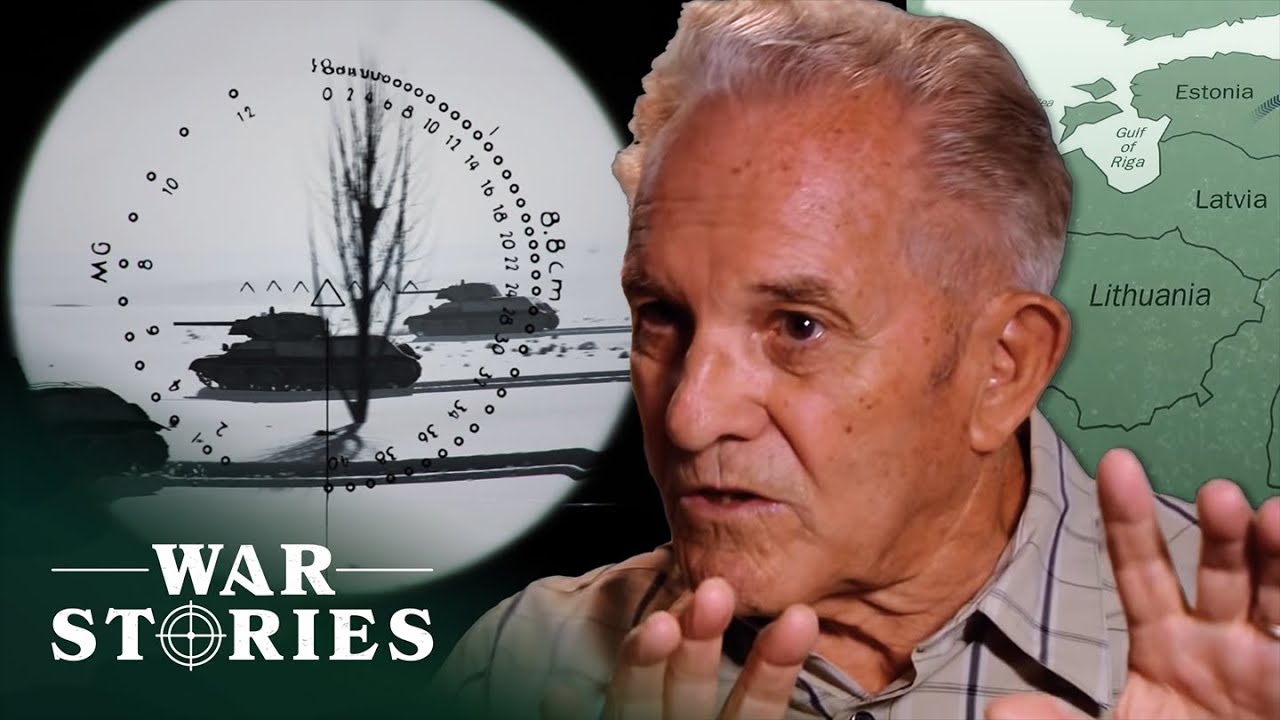
1.2 million Soviet troops and 1,500 tanks launch a massive offensive against German forces in January 1944 during the brutal Baltic campaign.
A German U-boat, U-455, was discovered off the coast of Italy at a depth of 400 feet, nearly intact and resting vertically on the seabed.
The British Channel Islands experienced a complex occupation from 1940 to 1945, marked by collaboration, resistance, and the harsh realities of life under Nazi rule.
10,000 Allied air force officers were forced to march through Northern Europe in January 1945 as the Nazis sought to prevent their liberation.
In July 1942, a small force of Australian and New Guinea soldiers trekked overland to Buna, aiming to secure a vital airfield for future operations.
In 1940, Air Chief Marshal Hugh Dowding led RAF Fighter Command with only 34 squadrons available to defend Britain against the Luftwaffe's attacks.
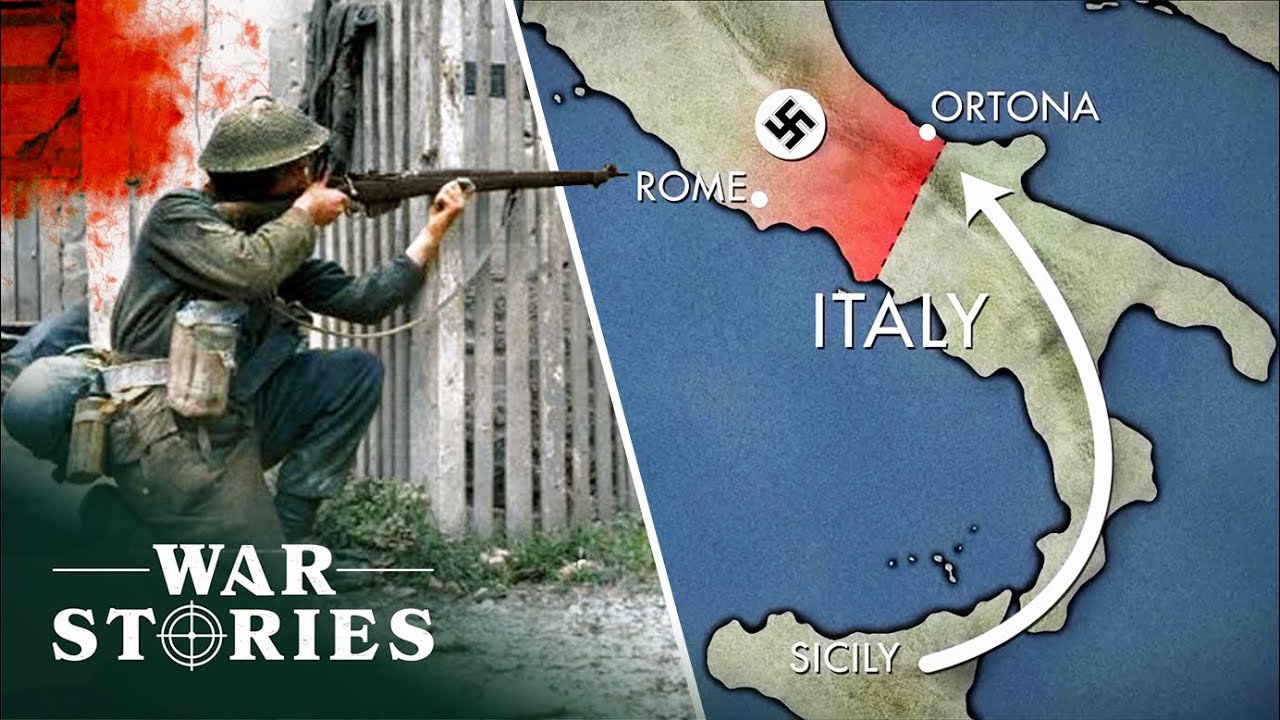
In 1943, Canadian forces faced Nazi Germany's elite airborne troops in the brutal Battle of Ortona, known as the 'Italian Stalingrad'.
Neville Chamberlain signed the Munich Agreement on September 30, 1938, conceding the Sudetenland to Hitler, which failed to prevent the outbreak of World War II.
On January 14, 1944, the Soviet Red Army launched an offensive with 1.2 million troops and 1,500 tanks against German forces in the Baltic States.
Operation Barbarossa, launched by Nazi Germany against the Soviet Union on June 22, 1941, failed due to key strategic errors and Hitler's overconfidence.
More than 30 attempts to eliminate Adolf Hitler failed, with key figures like Georg Elser and military officers risking their lives to stop him.
William Patrick Hitler, born on March 12, 1911, is the son of Brigid and Alois Hitler, Adolf Hitler's elder brother.
Nearly 260 men, women, and children defend the Alamo against 5,000 Mexican troops led by General Santa Anna during a key moment in American history.
On December 7, 1941, the Japanese attack on Pearl Harbor killed thousands of soldiers and marked the end of American neutrality in World War II.
600 Marines died and 4,700 were wounded during the four-month battle for Guadalcanal, which marked America's first major offensive against Japan in World War II.
Edited private footage chronicles the Normandy Invasion, including the Channel crossing, Utah Beach, the liberation of Paris, and the entry into Aachen, Germany.
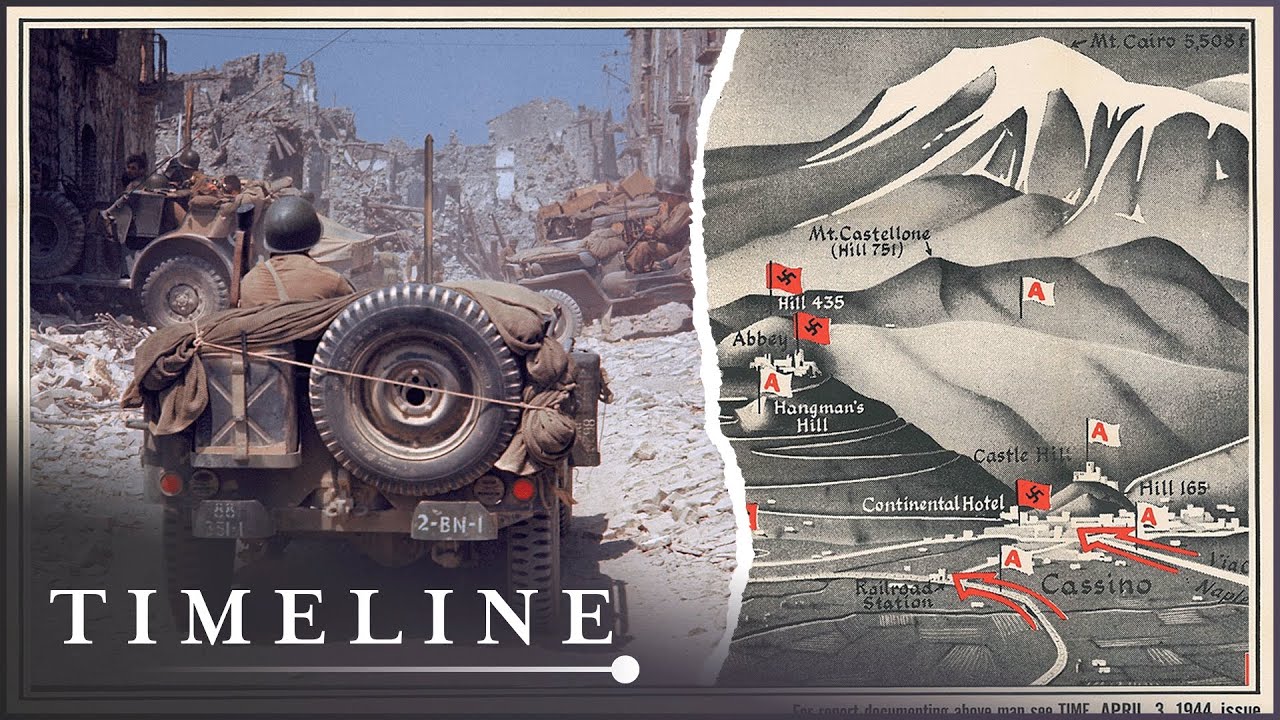
Allied bombers dropped 1,000 tons of bombs on the town of Cassino in a desperate attempt to break through German defenses during a brutal five-month battle.
Over 3,000 Allied soldiers were killed or taken prisoner during a failed raid on the French port of Dieppe in August 1942, shaping future invasion strategies.
World War II, involving over 30 nations and resulting in more than 70 million deaths, is analyzed through its battles and human cost.
On September 1, 1939, German troops invaded Poland, marking the beginning of World War II and escalating tensions across Europe.
Canadian soldiers in Italy and women on the home front contributed significantly to the Allied war effort during World War II's Italian Campaign.
Food prices in Germany increased 130-fold between 1918 and 1922, contributing to widespread chaos and political violence during the Weimar Republic.
December 23, 1944, marks a critical moment as American forces engage in fierce combat against German troops in the harsh winter of the Ardennes Forest.
In 1959, the West German government indicted Joseph Mengele for mass murder, demanding his extradition from Argentina as he evaded capture.
More than three million Axis soldiers launched the largest military invasion in history against the Soviet Union in June 1941.
Over 20 million people died as a result of Joseph Stalin's policies during his rule in the Soviet Union from the mid-1920s until 1953.
In 1941, Adolf Hitler launched Operation Barbarossa, initiating a brutal conflict with the Soviet Union that would become one of history's deadliest wars.
The crew of the Memphis Belle faces intense flak and fighter attacks during a World War II bombing mission over Germany, highlighting their courage and teamwork.
General Patton's campaign to capture the fortified city of Metz during World War II highlights the strategic significance and intense combat of the Lorraine region.
2 million lives were lost during the Pacific Theater of World War II, including 1.74 million military personnel from Japan and nearly half a million Americans.
600,000 children were evacuated from London in just three days as the city braced for the bombings of World War II.
On February 8, 1945, Canadian forces engaged in a fierce battle at Hochwald Gap, aiming to push the German army back over the Rhine during World War II.
More than 130 crashes occurred during the US Navy's training of 15,000 carrier pilots on Lake Michigan's makeshift aircraft carriers during World War II.
Two million fatalities from World War I left Germany in shock, creating a fertile ground for Adolf Hitler's rise to power through political manipulation.
In the Hürtgen Forest, US troops engaged in one of their longest battles on German soil from September 1944 to February 1945, facing severe casualties.
In 1930, unemployment in Germany reached 3,076,000, contributing to the rise of the National Socialist Party and its eventual takeover of the government.
In Normandy, historian James Holland and ex-US Army Ranger Dr Mike Simpson examine the logistics and preparations behind the D-Day invasion, challenging established myths.
More than 200,000 births resulted from relationships between French women and German soldiers during the occupation from 1940 to 1944.
One and a half million percenters, along with 20,000 rifles and 200 machine guns, arrived in Spain for monarchist militias during the 1934 uprisings.
Adolf Hitler's violation of the Versailles Treaty began in 1933, escalating tensions that ultimately led to the outbreak of World War II.