From over 100,000 films, discover the handful you'll love.
Free or premium access to the world's largest documentary library.
1777 films(Page 20 of 38)
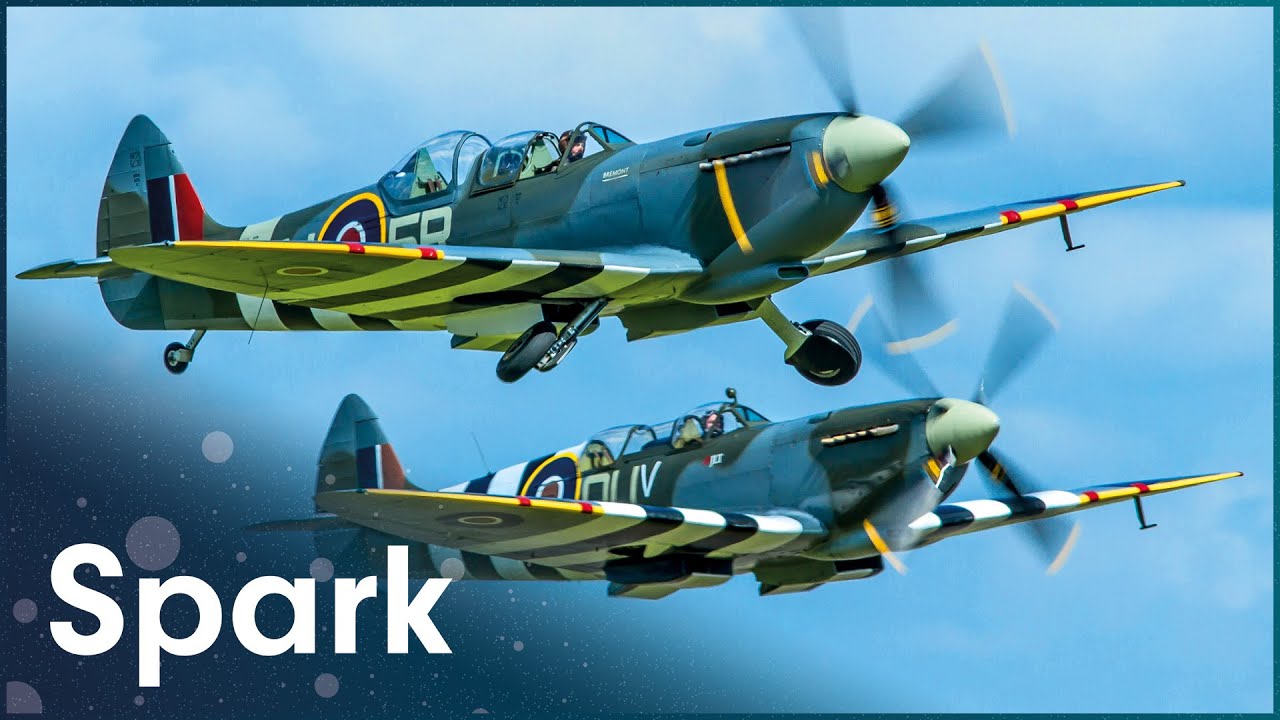
Duxford airfield, a key base during World War II, was home to the U.S. Eighth Air Force and played a vital role in the Battle of Britain.
In 1991, during the war in Croatia, a sister searches for her brother Ivan, a traffic policeman who went missing near Vukovar amidst escalating conflict.
Operation Neptune, launched on June 5-6, 1944, marks a critical Allied amphibious and airborne assault during World War II, resulting in significant casualties and a turning point in the conflict.
World War II reaches Germany on January 28, 1945, marking a hundred days of terror.
At the end of World War II, a team of experts, including Robert Edsell and historian James Holland, investigates Hermann Göring's missing multi-billion dollar art collection.
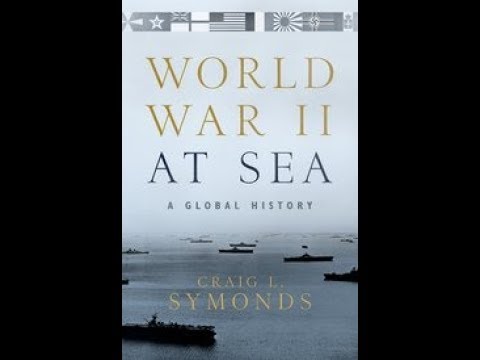
Craig L. Symonds provides a comprehensive narrative of World War II's naval battles across all oceans and seas from 1939 to 1945.
Norm Christie reveals unknown stories of significant battles in Battlefield Mysteries.
Two down and one to go, General George Catlett Marshall outlines the Allied strategy to defeat Germany and Italy before turning to Japan.
September 1, 1939, marks the start of World War II, highlighting key events such as the Winter War, the scuttling of the Admiral Graf Spee, and the Dunkirk evacuation.
More than 38,000 German soldiers were held in prisoner of war camps across Canada during World War II, including Theo Melzer in Lethbridge, Alberta.
In 1940, the Battle of Britain marked a pivotal moment in World War II, as Germany faced its first significant defeat after underestimating British resistance.
British Intelligence's Operation Mincemeat misleads Hitler with a fake corpse in Spain.
Eighty-six vessels, including battleships and cruisers, lay anchored in Pearl Harbor on the morning of December 7, 1941, before the surprise attack.
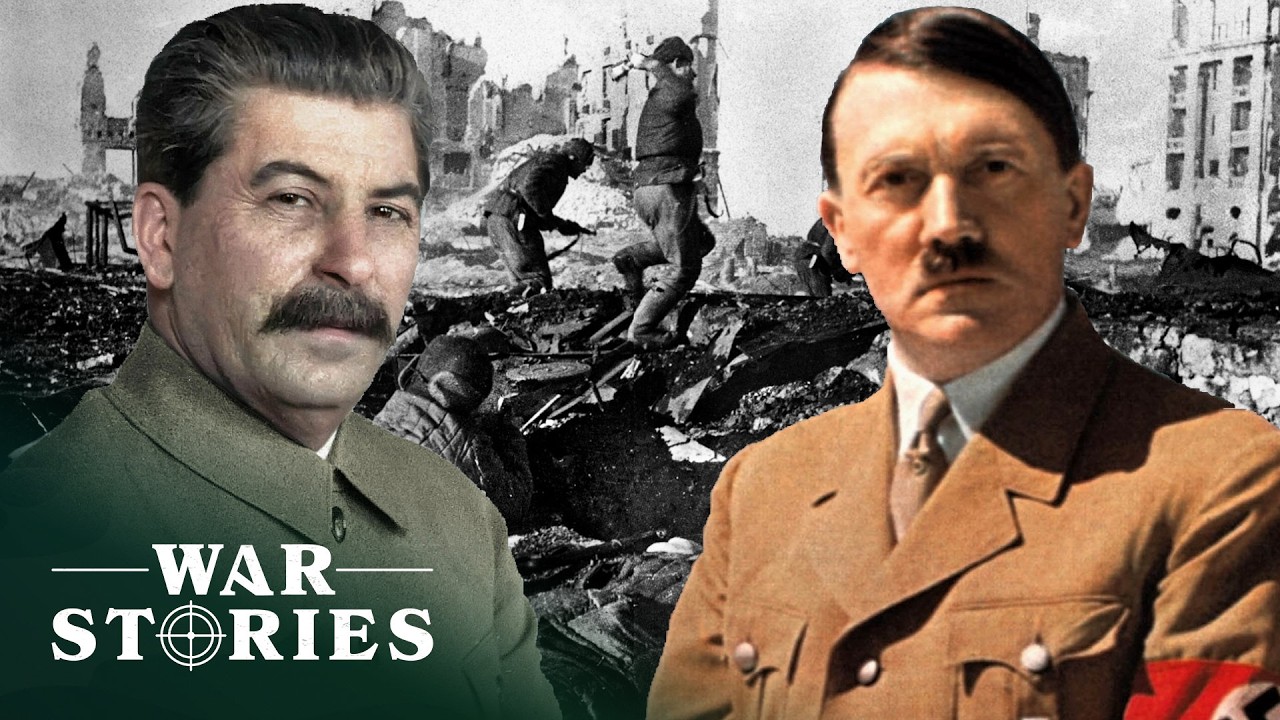
The catastrophic surrender of the German Sixth Army at Stalingrad marked a pivotal turning point in World War II's Eastern Front, influencing subsequent battles in Kursk and Italy.
The surrender of Japan is documented through key events in the Pacific Theater, including General MacArthur's return and the signing aboard the USS Missouri.
Leros, a Greek island, reflects on its World War II history marked by occupation, shipwrecks, and ongoing efforts to preserve its complex legacy.
In February 1942, British paratroopers launched a night assault on the German Würzburg radar station to recover crucial radar technology during World War II.
In 1944, President Franklin D. Roosevelt faced critical decisions that shaped the outcome of World War II and influenced the course of history.
Access to Eva Braun's personal photograph album reveals the final days of Adolf Hitler in his underground lair and explores escape possibilities for his inner circle.
By the mid-1600s, Berlin's population exceeded 20,000, marking its growth as a significant city in Europe before the turmoil of the 20th century.
Cara Moore Labonic, a reference archives specialist, discusses the challenges of locating personnel records for women who served as cryptographers during World War II.
On December 7, 1941, Japan launched a surprise attack on Pearl Harbor, marking a significant turning point in American involvement in World War II.
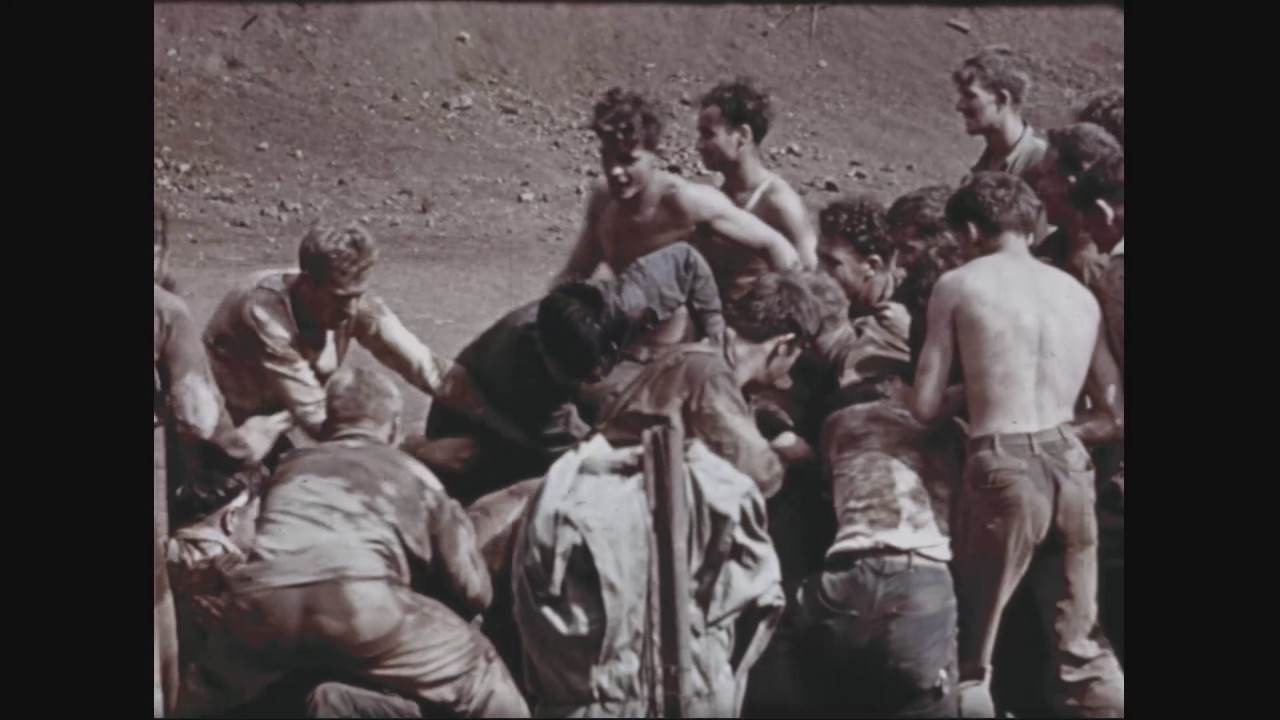
United States Army Ranger Combat Training School in Hawaii is depicted through silent footage from World War II, showcasing military training techniques and exercises.
Allied airmen fight for survival in Buchenwald Concentration Camp during WWII under Director Michael Dorsey.
On June 6, 1944, Operation Overlord's success hinged on a coordinated air assault by 11,000 Allied aircraft that neutralized German defenses along the Normandy coast.
Rare, digitized archival footage from World War II captures frontline combat and civilian life, providing a comprehensive view of the global conflict.
George VI's unexpected ascent to the British throne amid the turmoil of World War II highlights his transformation from a reluctant leader to a symbol of national resilience.
2,403 Americans died during the Japanese attack on Pearl Harbor on December 7, 1941, which led to the United States entering World War II.
Operation Oak, the 1943 rescue of Benito Mussolini, is reexamined through new evidence, revealing a different narrative of Nazi propaganda and military actions.
The final stages of World War II are examined, highlighting key events from the Battle of Leyte Gulf to the atomic bomb's impact and the Nuremberg Trials.
In early 1945, the Allied forces launched Operations Veritable, Plunder, and Varsity to breach the Rhine River and advance into Nazi Germany, resulting in significant casualties.
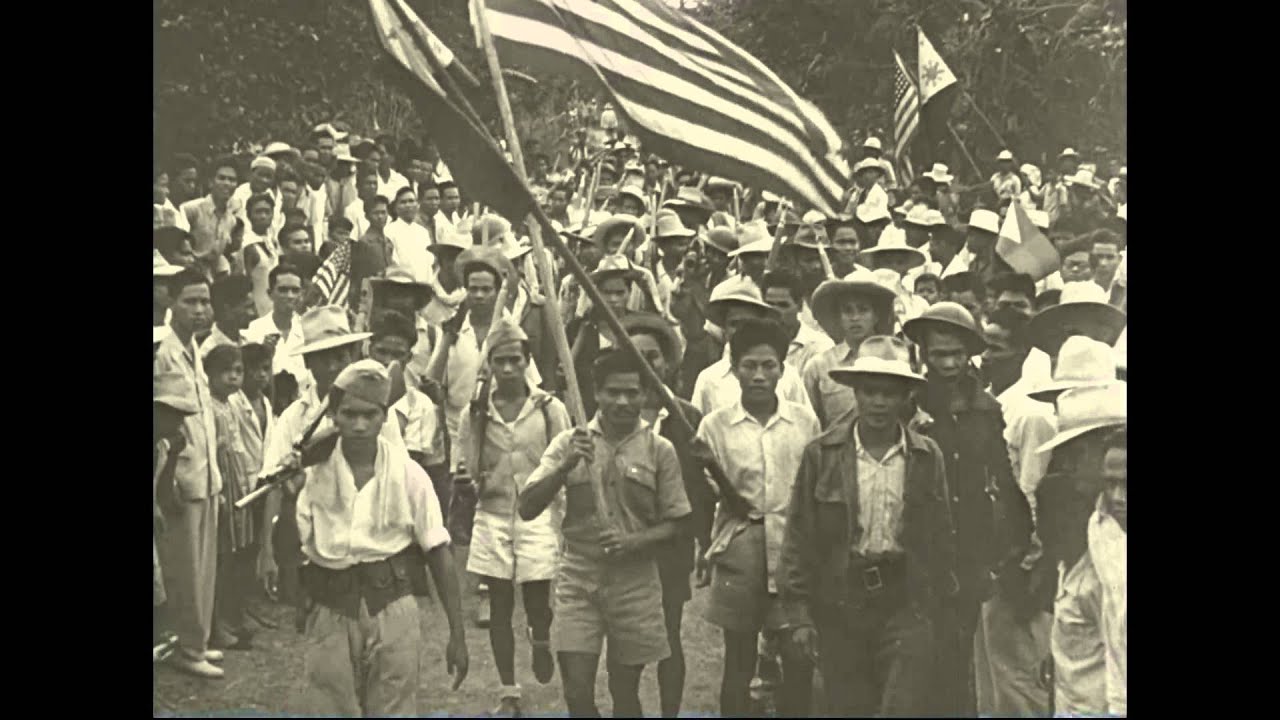
In the Philippines during World War II, US missionaries and civilians faced a perilous rescue operation as they became trapped underwater.
World War II's industrial mobilization, from Roosevelt's "Arsenal of Democracy" to Stalin's Five-Year Plans, reshaped labor and resource allocation on a massive scale.
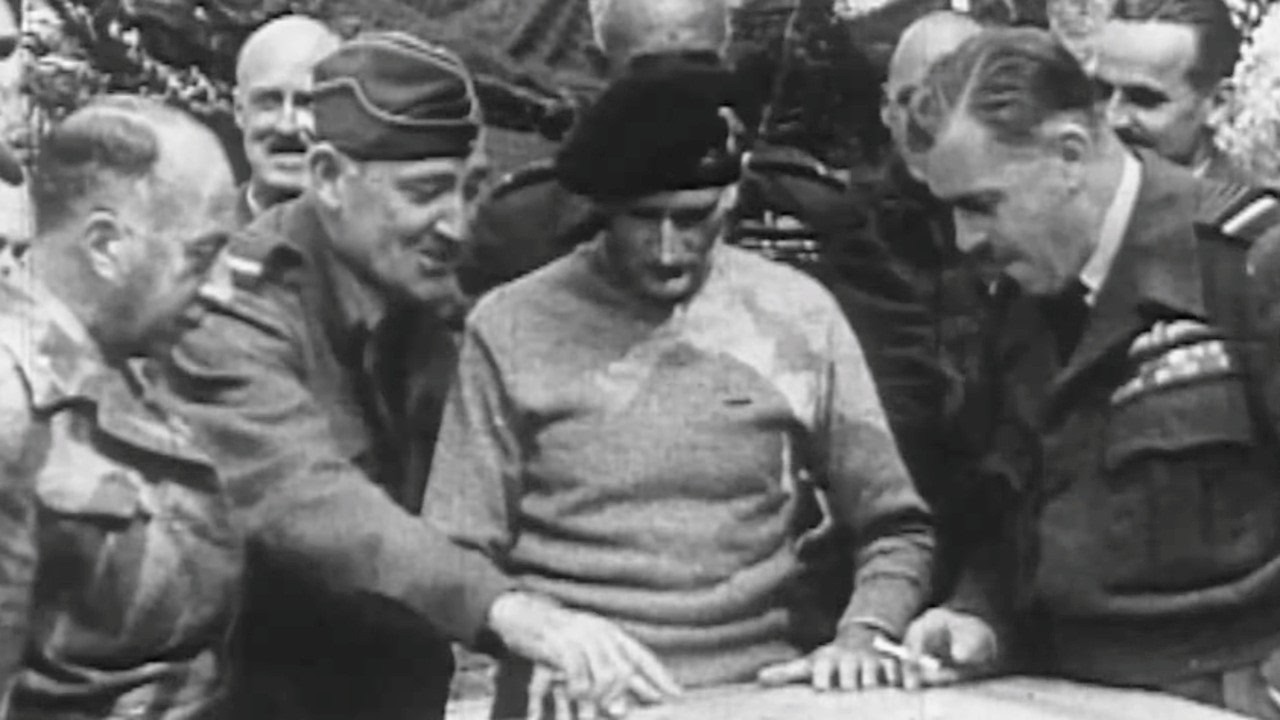
In July 1945, General George Marshall and Field Marshall Montgomery meet in Berlin amidst scenes of bomb damage and P-47s conducting bombing runs.
Six Hungarian scientists, driven from Europe by persecution, played crucial roles in developing the atomic bomb at Los Alamos during World War II.
More than 120,000 British subjects were taken prisoner after Singapore fell to the Japanese in February 1942 during World War II.
In commemoration of Veterans Day, two classic U.S. Government films from World War II, including John Ford's Academy Award-winning work, are screened.
Operation Barbarossa marked a critical turning point in World War II, as strategic decisions at Stalingrad and El Alamein shifted the balance of power from the Axis to the Allies.
Daniel Dancis, an archivist at the National Archives, discusses the creation of Spanish language posters commissioned during World War II to engage Hispanic Americans.
A Japanese broadcast from 1944 features music, war news, and commentary by Iva Toguri D’Aquino, infamously known as "Tokyo Rose."
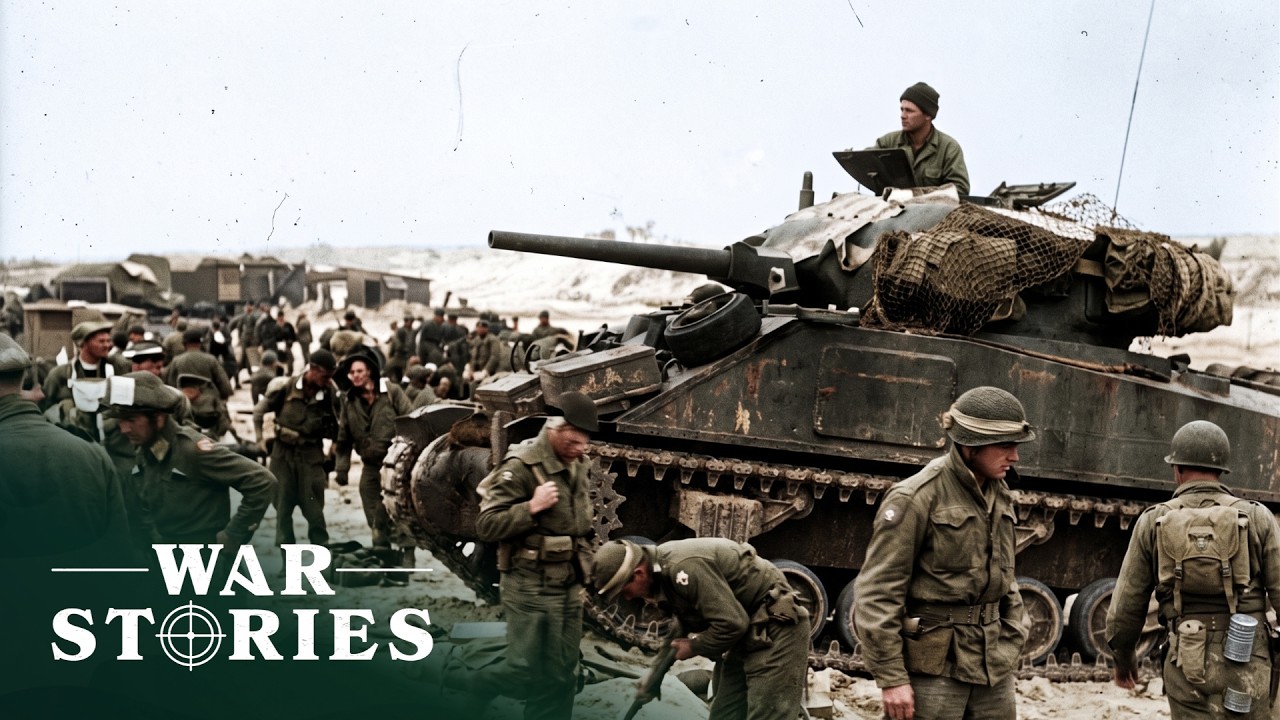
Operation Overlord, launched on June 6, 1944, was a pivotal military campaign that included the deception of Operation Fortitude and the brutal assault on Omaha Beach.
Nazi Germany's strategic failures in the Battle of Britain are examined through the lens of air campaigns, aircraft engineering, and the Royal Air Force's resilience.
World War II's advancements in weaponry are examined through innovations like the M1 Bazooka, STG-44, and the Zielgerät 1229 Vampir, highlighting their impact on modern warfare.
In 1943, the United States Army Air Forces (USAAF) underwent significant expansion, evolving into a formidable global military power during World War II.
Archives technicians Aaron Arthur and Kaitlyn Crain Enriquez provide strategies for researching World War II military unit photographs at the National Archives.
Operation Overlord details the strategic planning and execution of the D-Day landings on June 6, 1944, highlighting General Eisenhower's forces against Hitler's Atlantic Wall.
A year and a half into World War II, President Franklin D. Roosevelt declared that the "first crack in the Axis has come" during a fireside chat on July 28, 1943.
In early 1945, the final months of World War II saw the Soviet advance into East Prussia, the sinking of the Wilhelm Gustloff, and the Battle of Iwo Jima.