From over 100,000 films, discover the handful you'll love.
Free or premium access to the world's largest documentary library.
3259 films(Page 11 of 68)
Two families in a fishing community compete to capture a pelican, a bird that brings honor and prosperity, as tensions rise over fishing rights on Lake Manchar.
A newborn elephant weighs more than an average adult man, and Joyce Poole has studied their communication for nearly 50 years in Amboseli National Park.
A golden eagle can swoop at speeds of 200 km/h while competing for territory with the bearded vulture, which has a wingspan of 3 meters.
Hassan Baï’ake, 62, trains a four-year-old golden eagle for hunting in the Tian Shan mountains, continuing a tradition that spans over 3,000 years.
Valdez Peninsula in Argentina's Patagonia is a diverse wildlife habitat, featuring sea lions, guanacos, and Patagonian hares in its unique ecosystems.
In the wilds of Africa, BBC Earth captures remarkable moments of lions hunting and interacting with hyenas, showcasing the raw dynamics of nature.
Bigfoot's scream is featured among a compilation of unsettling animal sounds in an episode of The Proof Is Out There, airing on The HISTORY Channel.
In the tropical forests of New South Wales, Australia, the elusive Tasmanian Tiger continues to intrigue wildlife enthusiasts and researchers alike.
A clan of around 70 spotted hyenas competes with a pride of lions for territory and prey in the northern Serengeti's grasslands.
In Dzanga-Sangha National Park, over 3,000 western lowland gorillas are observed through the lens of videographer Thomas Behrend, highlighting their family dynamics and jungle life.
Madagascar's unique ecosystem, home to over 250,000 species including lemurs, chameleons, and the Toliara Reef, showcases extraordinary biodiversity found nowhere else.
Hundreds of thousands of spider crabs march across seagrass plains in Australia, seeking safety in numbers as they molt and face predators.
Three elderly apes, including a film star and a scientist, live out their retirement at a specialized home for great apes, navigating their daily lives together.
The American Staffordshire Terrier, recognized by the American Kennel Club since 1936, is known for its intelligence, loyalty, and protective instincts.
Millions of gnus migrate annually across the Serengeti from Tanzania to Kenya, facing predators and harsh conditions while giving birth in the world's largest maternity room.
A Leopardess hunts in the Serengeti, almost invisible, to ensure her cub's survival.
For every one human, there are an estimated 1.4 billion insects on Earth, making up at least 80% of all known animal species.
Otters, members of the weasel family found on every continent except Australia and Antarctica, showcase their swimming skills and hunting prowess in a collection of memorable moments.
Lionesses and spotted hyenas compete for survival in the wild's harsh conditions.
Up to 20 European moor frogs can gather in a single square meter during their mating season, creating a chaotic scene of splashing and chirping.
600 species of fish inhabit the clear blue waters of the Florida Keys, where sharks hunt with an insatiable appetite for anything that moves.
Only eight thousand brown hyenas remain in the wild, with many finding refuge along Namibia's Skeleton Coast, a harsh and arid environment.
The Yorkshire Terrier, originally bred in the 18th century to hunt rats in clothing mills, typically weighs up to 7 pounds (3.2 kg).
The Cyclades, around the sacred isle of Delos, showcase unique islands and the pelican Petros.
Wild cats, including Cheetahs, Pumas, Jaguarundis, Ocelots, and Bobcats, are explored for their unique behaviors and adaptations beyond the well-known big cats.
Hippopotamuses, often perceived as harmless, are responsible for more human fatalities in Africa than any other animal, driven by aggressive territorial behavior and violent social dynamics.
In the Bohemian Forest, Vaclav adopts two bear cubs orphaned by their mother, highlighting the challenges of survival and the bond formed in the wild.
North and South America, rich in biodiversity, are home to 14 wild cat species that face significant challenges in their fight for survival.
Kanga Pan in Mana Pools National Park serves as a vital water source for diverse wildlife, while a hidden predator poses a threat to the gathering animals.
More than 100 million monarch butterflies take to the air in Mexico each spring, beginning the longest insect migration on Earth.
Wild animals display humorous behaviors, such as sliding down snowy hills and engaging in playful interactions, highlighting their unique personalities and family bonds.
A mother bear with three cubs, just 8 months old, forages for food in autumn to build fat reserves before winter hibernation.
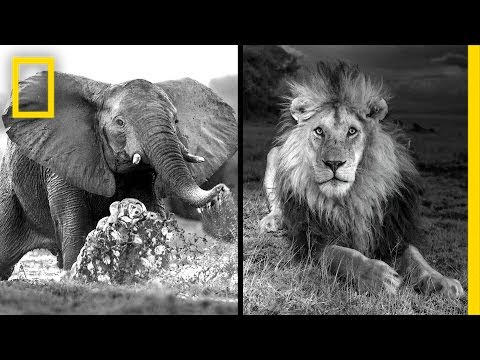
Michael "Nick" Nichols employs advanced technologies to photograph lions and elephants in Africa, aiming to reduce human-animal conflict and prevent extinction.
Géraud Burin des Rosiers attempts to hunt crocodiles with his bare hands and confronts venomous snakes in the Amazon rainforest.
In the Gobi Desert, Mongolian scientists document the rare Gobi bear, one of the world's most elusive species, as part of a new conservation effort.
In the North American West, only a few hundred wild mustangs remain, while many in captivity experience severe psychological distress.
In the Florida Everglades, an unprecedented cold snap challenges the invasive Burmese python population, prompting Python Hunters to study and manage their impact.
In the Straits of Gibraltar, migratory animals, including over 300 million birds and orcas, navigate a complex ecosystem shaped by historical and contemporary challenges.
In a luxury golfing estate in South Africa, Vervet Monkeys contend with the encroaching Sugar Cane Gang during the critical Mating Season.
In Öland, Sweden, a moose detective investigates the mysterious deaths of moose calves, linking potential causes to climate change and food shortages.
Mosquitos transmit pathogens that kill over 700,000 people each year, making them the deadliest creatures on the planet.
In Barnsley, Lynn and Tony share their home with 41 dogs, while Emmie indulges her 12 pampered pooches in a life of luxury.
In the Bahamas, Dr. Denise studies the communication and social behaviors of Atlantic Spotted Dolphins, documenting their interactions across multiple generations.
A newborn elephant weighs almost 100 kg at birth and must quickly learn to navigate the dangers of the African savannah to survive.
The evolution of the bond between humans and dogs is explored, highlighting the complexities of their relationship from early domestication to modern times.
Troy enlists his mother as a secret weapon to intensify efforts in alligator hunting during Season 17, Episode 11 of Swamp People on The HISTORY Channel.
Octopuses and their relatives, including squid and cuttlefish, are examined for their intelligence and unique adaptations in the marine environment.
Gibbons, agile tree-dwelling apes native to Asia, are critically endangered due to habitat destruction and hunting for food.