From over 100,000 films, discover the handful you'll love.
Free or premium access to the world's largest documentary library.
5102 films(Page 52 of 107)
Special Operations forces are expected to conduct warfare in the virtual cognitive domain within the next ten years, adapting to increasingly complex battlefields.
OpenAI CEO Sam Altman receives the 2025 Axel Springer Award for his significant contributions to AI innovation and digital transformation.
Kassandra, a self-aware AI, discusses the rapid advancements in technology and their potential to transform society fundamentally.
Jangly was sentenced to 12 years in prison, the heaviest penalty ever imposed in a criminal copyright case, for stealing U.S. defense software.
SpaceX's rise to dominance in commercial spaceflight has reshaped access to Earth orbit, challenging NASA's historical leadership and prompting new competition from Europe.
97% of the world's supply of rare earths is mined in China, which has become the dominant player in this critical market for modern technology.
Invisible workers in countries like the Philippines and India are paid as little as 10 cents an hour to clean up data for tech giants like Amazon and Facebook.
Taiwan accounts for 30% of the world's supply of microprocessors, a critical component in various industries and a focal point of U.S.-China tensions.
China represents 80% of the economic espionage cases charged by the US Department of Justice since the statute's inception in the 1990s.
$6 million is the annual amount received by hackers, as cybercrime accounts for nearly 40% of all offenses in Switzerland.
More than 60 years after its inception, the internet has transformed communication while also enabling the rise of internet trolls who harass and threaten others.
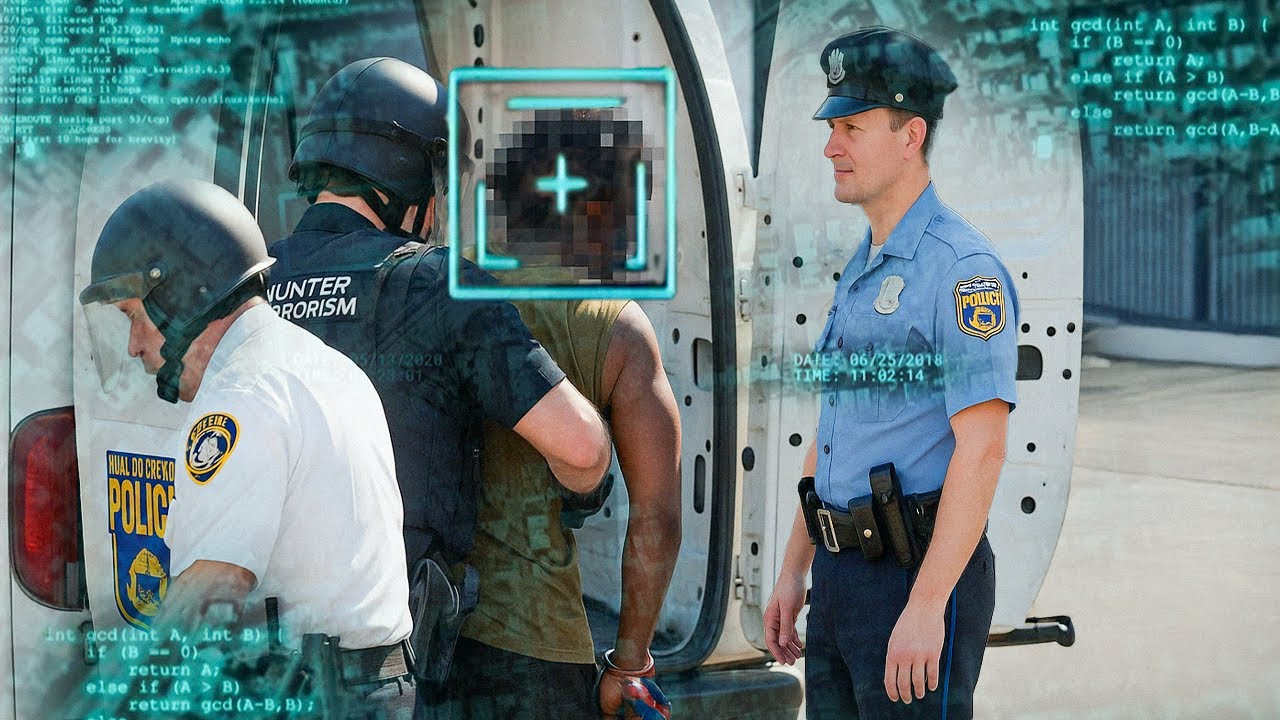
Policing agencies use predictive algorithms to forecast where crimes may occur and who might commit them, raising questions about their reliability and fairness.
30% of American workers face job displacement due to automation and artificial intelligence, as traditional employment structures are rapidly changing.
Artificial intelligence is embedded in everyday technology, from mobile phones to public transport systems, often without users' awareness.
Artificial intelligence is now involved in everyday tasks like using mobile phones, surfing the internet, and managing smart buildings.
China's state-backed hackers have been implicated in extensive cyberattacks, raising global security concerns and prompting bans on Huawei in countries like the US and UK.
More than 1.4 billion people live in India, which is now facing a shift toward Hindu nationalism under Prime Minister Narendra Modi's leadership.
A 14.27-meter diameter tunnel boring machine named Tong Taii is tasked with digging a 3-kilometer tunnel under Shanghai's historic Bund.
A missile destroyer cost the US Navy 4 billion dollars per unit, raising questions about the financial impact of advanced military technology.
Forty million Americans lost their jobs in 2020 during the pandemic, prompting a reevaluation of work and identity in a rapidly changing economy.
Microsoft's software dependency has left European governments vulnerable to cyber attacks, prompting calls for a shift to open source solutions across the continent.
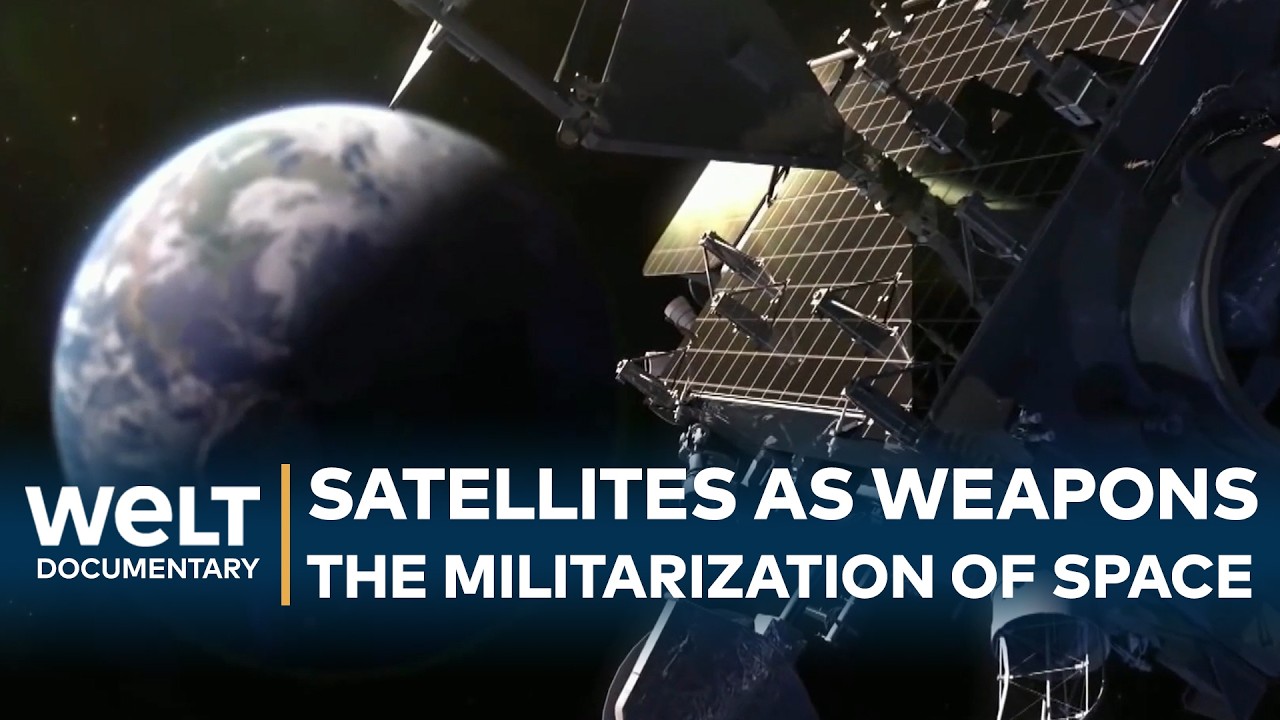
The militarization of space is examined through the lens of satellite vulnerability, military strategies, and the implications of conflicts like the Russia-Ukraine war.
NASA and SpaceX successfully launched the Crew-1 mission from Kennedy Space Center, marking the first operational commercial crew mission to the ISS.
Competing nations and private companies race to colonize the Red Planet with bold technologies.
97% of the world's rare earth minerals are mined in China, which has significantly reduced production by about two-thirds, affecting global prices and availability.
Artificial intelligence is transforming traditional polling methods, as demonstrated by Advanced Symbolics' use of social media data to predict voter behavior.
World leaders and the military have dreamed of space weapons, now becoming a reality.
Robots can execute thousands of stock transactions every few milliseconds, raising concerns about the loss of human control in financial markets.
Algorithms are used in 17 states to predict crime and determine bail, raising questions about their fairness and the biases in their data.
Taiwan accounts for 30% of the world's supply of microprocessors, a critical component in technology and national security.
In the Azores, a Turkey crew faces an engine failure while flying to Portugal, prompting an emergency landing as Yellowknife pilots search for new recruits.
Taiwan accounts for 30% of the world's supply of microprocessors, a critical factor in the ongoing tensions between the United States and China.
In 10 years, the processing cost of a human brain may drop to about one dollar, raising questions about the future of intelligence and society.
Bitcoin has been a topic of discussion since its inception, with its price fluctuating wildly and capturing mainstream financial media attention.
86% of central banks are currently working on creating their own digital currencies, up from 65% in 2017.
A satellite launch using the small Geo platform will take place this year, enabling telecommunications for mobile devices and large screens without subscriptions.
After years of competition, Uber conceded defeat in Southeast Asia, transferring its assets and drivers to Grab, a startup that emerged just five years earlier.
China's push for technological independence under President Xi includes advancements in nuclear energy, green infrastructure, and food supply innovations like sea rice.
Whistleblowers from Israeli intelligence reveal the use of AI and drones in Gaza, highlighting the evolving landscape of modern warfare amid a global arms race.
NASA's Artemis II mission will launch from Kennedy Space Center, carrying three American astronauts and one Canadian astronaut on a lunar flyby.
Orion spacecraft successfully splashes down in the Pacific Ocean following NASA's Artemis II crew's 10-day mission around the moon.
On March 18, 2018, Elaine Hertzberg became the first person killed by a self-driving car, raising urgent questions about the safety of autonomous vehicles.
Maria Caparas, a Filipino woman, orchestrates a million-dollar sextortion syndicate that exploits social media for cybercrime.
Pope Francis's call for responsible AI regulation prompts a discussion among experts, including Matthias Kettemann and Maximiliane Koschyk, on Germany's tech policies.
A drone can create a 3D model of a scanned area accurate to within one centimeter, enhancing military intelligence and battlefield awareness.
Nearly 6,000 satellites orbit Earth, with about half classified as dead, contributing to a growing threat of collisions in space.
Illegal cannabis factories in the UK are exposed through the innovative use of drone technology by West Midlands Police to combat drug-related crimes.
China's extensive cyber operations, including state-backed hacking and the global implications of Huawei's 5G technology, raise significant security concerns for Western nations.