From over 100,000 films, discover the handful you'll love.
Free or premium access to the world's largest documentary library.
634 films(Page 1 of 14)
Animal eyes exhibit a variety of unique adaptations, as explained by experts Dr. Dan Nilsson and Dr. Marty Banks, highlighting their evolutionary significance.
In the Late Carboniferous Period, predatory amphibians and giant arthropods dominated swamps while ancient seed plants and amniotes adapted to drier climates.
Lunar rocks collected by Apollo astronauts provide insights into the unusual origins of Earth's moon, revealing a cosmic history that challenges conventional theories.
The Devonian Period saw the emergence of Tiktaalik, one of the first vertebrates to transition from water to land, amidst a flourishing of plant life and ancient invertebrates.
Practicing medicine, from the use of medicinal plants to early surgical techniques, may have roots that extend back to before the emergence of modern humans.
In the Rising Star Cave system in South Africa, paleoanthropologists study a chamber containing the bones of the extinct species Homo naledi.
Eons hosts reflect on their survival experiences and answer viewer questions in this final episode before exploring future topics.
The Paleozoic Era, marked by significant evolutionary developments and mass extinctions, represents a chaotic yet crucial period in Earth's history.
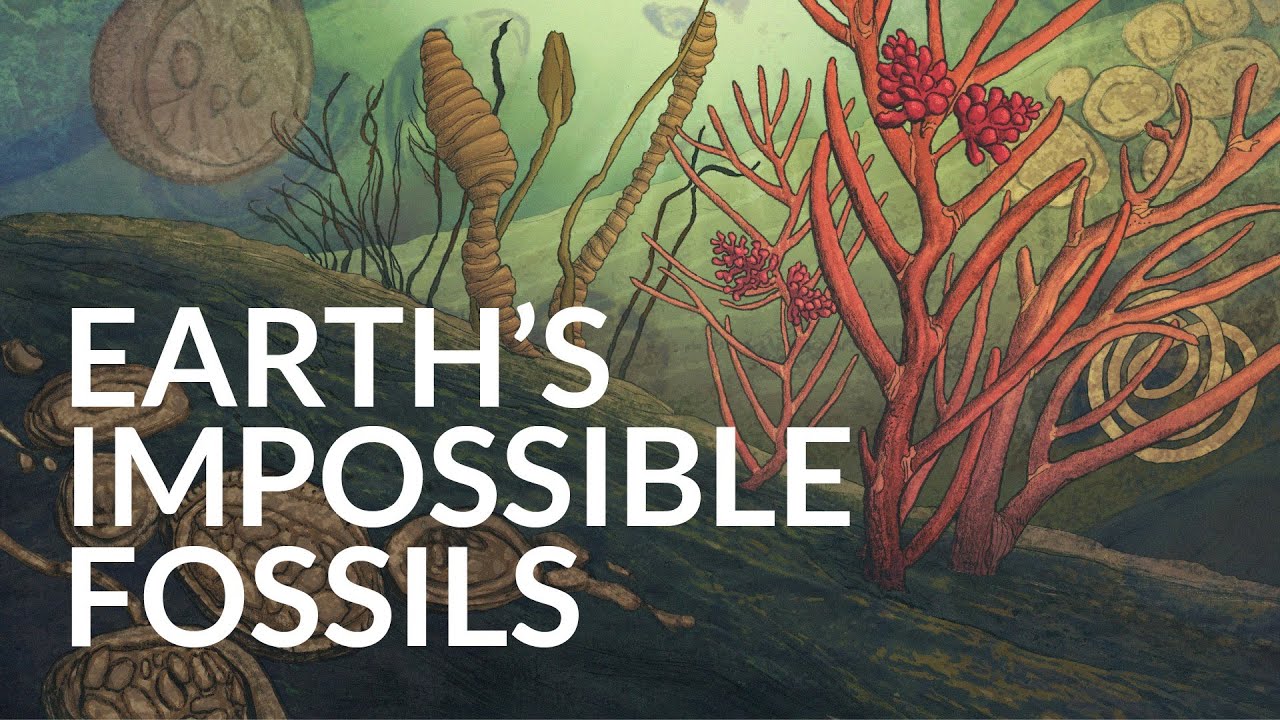
In the Cambrian Period, marine life flourished with significant evolutionary advancements, while terrestrial environments remained devoid of vegetation.
The Western Interior Seaway, which once stretched from the Caribbean Sea to the Canadian Arctic, is explored through scientific insights and historical context.
Around 75% of all species on Earth vanished after an asteroid impact near the Yucatán Peninsula 66 million years ago.
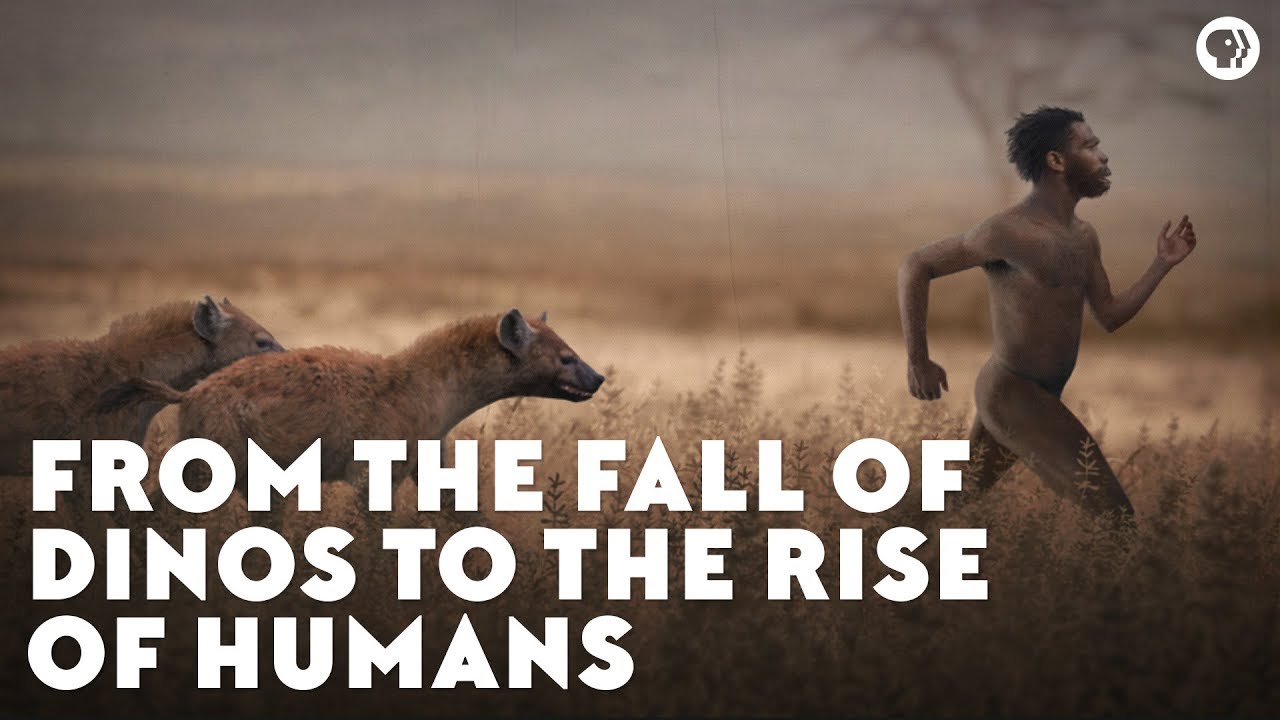
The Cenozoic Era marks a significant period in Earth's history characterized by the emergence of modern mammals and birds, leading to the rise of human-like organisms.
A crocodile can launch itself from the water at speeds of 20 meters per hour, using instincts shaped by a brain that has remained largely unchanged for 200 million years.
In the deep sea, unique creatures have evolved remarkable anatomical, physiological, and behavioral adaptations to survive in extreme conditions, including high pressure and darkness.
400,000 years ago, a new species, Homo sapiens, emerged in Africa, adapting to various climates and developing agriculture and monumental structures.
1677 marked a significant year for Reverend Robert Plot, who received a massive crate containing fossils that sparked debate about their origins.
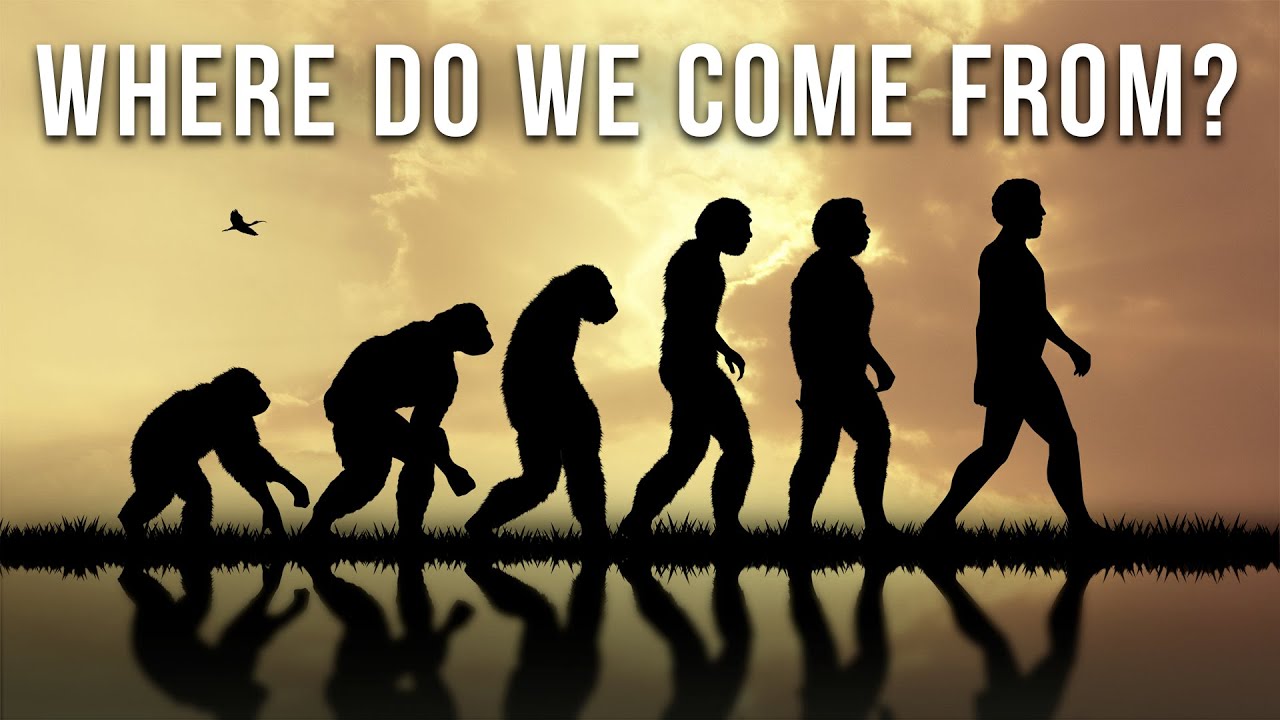
Homo sapiens emerged 200,000 years ago after a 3.3 billion year battle for survival, evolving from single-celled organisms to the most complex creatures on Earth.
Eight astronauts with over 1,000 days in space discuss the likelihood of finding simple life forms on other planets.
In July 1994, 21 fragments of the comet Shoemaker Levy 9 collided with Jupiter, releasing energy equivalent to 6 million megatons of TNT.
Rio, a ten-year-old scarlet macaw, attempts a string pull test to retrieve a peanut, demonstrating problem-solving skills previously underestimated in birds.
Therapsids, ancient ancestors of mammals, adapted and survived multiple extinction events, leading to the diverse mammalian lineage present today.
Neanderthals survived for about 300,000 years in harsh ice age conditions, adapting their physical traits to endure extreme cold and low sea levels.
Ötzi, found in 1991 on a 10,000-foot glacier near the Austria-Italy border, is the oldest and most complete human specimen ever discovered.
In northeast Brazil, archaeologists Paul Bahn and Jean-Loïc Le Quellec investigate 50,000-year-old rock art and hearths at Serra da Capivara, challenging the "Clovis First" theory.
A polar bear catches a seal underwater, obtaining 100,000 calories to sustain her for a week in a challenging Arctic environment.
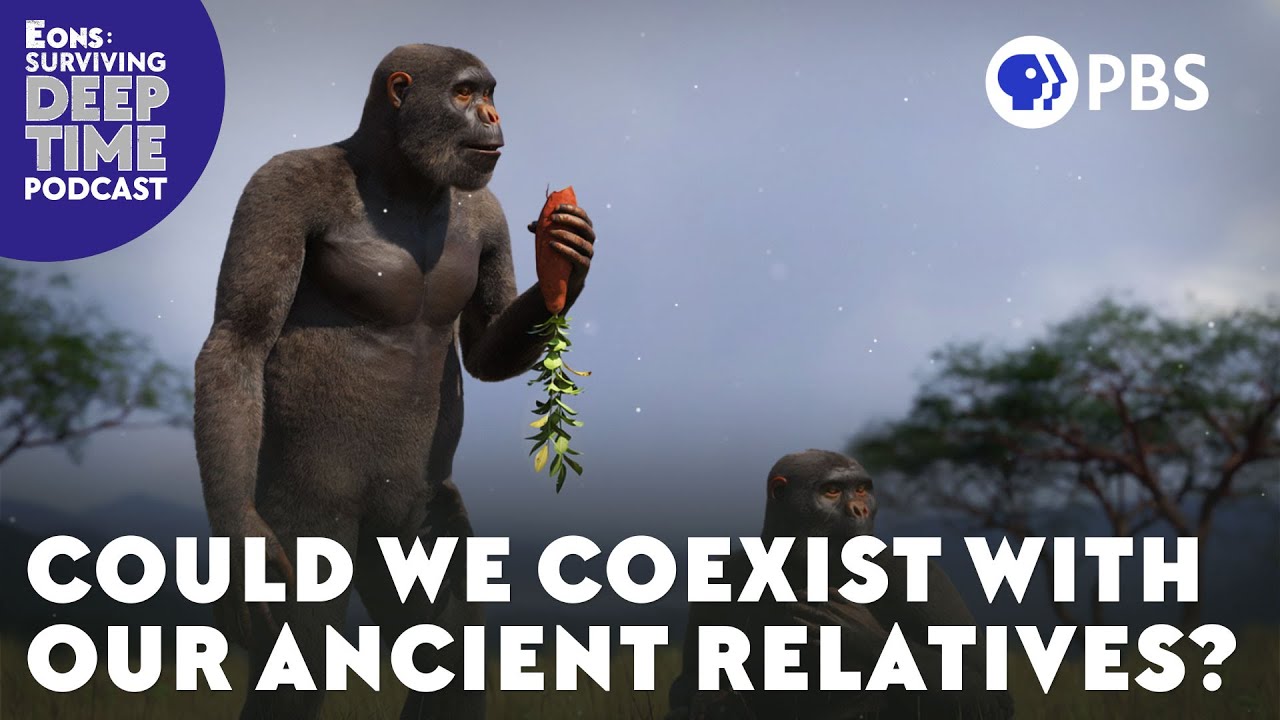
In the Early Pleistocene Epoch, various hominin species coexisted with Homo sapiens, raising questions about survival strategies and social interactions among them.
Ancient footprints in New Mexico's White Sands National Park provide evidence that Ice Age humans coexisted with giant ground sloths and mammoths much earlier than previously believed.
At two meters in size, the green iguana is the largest lizard in Central and South America, competing for survival against the carnivorous basilisk.
Dogs have been integral to human life for over 20,000 years, serving roles from hunters and protectors to companions and caregivers.
Only 2% of sunlight penetrates the forest floor, creating a fierce competition for survival among plants and animals in the jungle.
66 million years ago, dinosaurs roamed the Americas, and recent fossil discoveries are reshaping our understanding of their behavior and intelligence.
In the Late Carboniferous Period, the emergence of amniotes marked a significant evolutionary step as they adapted to life on land amidst giant insects.
Over a billion dogs live on the planet, with more than 75 million in the United States alone, reflecting their deep bond with humans.
Fossil evidence reveals how birds, the only surviving dinosaurs, adapted and evolved after the asteroid impact that caused the mass extinction 66 million years ago.
Sir David Attenborough leads a team investigating a significant archaeological site in southern England, revealing mammoth bones and Neanderthal artifacts from over 200,000 years ago.
100-inch Hooker Telescope on Mt. Wilson revealed in the 1920s that distant nebulae were actually galaxies moving away from Earth, supporting the Big Bang theory.
A Spinosaurus vertebra recovered in 2008 showed signs of having been bitten in half, suggesting fierce competition among large predators.
In the Late Cretaceous Period, Hateg Island served as a hunting ground for a giant pterosaur, presenting unique survival challenges for its inhabitants.
70 to 80 pregnant lemon sharks gather each spring in the Grand Bahama Bank, a phenomenon first documented by researcher Professor Sam Gruber.
Fossils of Reponomimus, a mammal the size of a wolf, were found in volcanic ash in Liaoning, China, dating back 130 million years.
Around 253 million years ago, a massive volcanic event began in what is now Siberia, leading to the Great Dying and the largest mass extinction in Earth's history.
At the end of the Triassic Period, the earliest dinosaurs faced a catastrophic extinction event following the Great Dying and rapid evolutionary changes.
In the Three Gorges region of China, ancient human remains dating back over two million years provide insights into the possible origins of the Chinese people.
National Fossil Day features a competition between the Eons team and SciShow, hosted by Gabriel-Philip Santos from the Alf Museum of Paleontology.
Orson Welles quotes H.G. Wells, stating that in the early 20th century, Earth was being watched by intelligences greater than man's.
In July 2001, a Franco-Chadian expedition led by paleoanthropologist Michel Brunet discovered a seven-million-year-old fossil skull in the Djurab Desert, pushing back the timeline of hominid evolution.
Two sets of remains, one belonging to a human and the other to a Paranthropus, were found at Kromdraai, dating back 2.5 million years.
Life on Earth is shaped by cosmic forces, with the positioning of planets influencing the presence of air at high altitudes in the Swiss Alps.