From over 100,000 films, discover the handful you'll love.
Free or premium access to the world's largest documentary library.
405 films(Page 5 of 9)
The anthropic principle raises questions about whether the universe is uniquely suited for life, alongside theories of a multiverse that could explain our existence.
Mercury, the closest planet to Earth, has long eluded astronomers, but missions like Mariner and Messenger have revealed significant new findings about its surface and atmosphere.
Northern lights reveal insights about Earth's composition, the sun's behavior, and potential extraterrestrial life, supported by advanced computer simulations.
Survivors of tsunamis in Japan, Thailand, Indonesia, and California recount their experiences while researchers explain the science and technology behind these oceanic disasters.
Stars are complex celestial bodies whose colors, temperatures, and processes reveal insights into their composition and the creation of matter in the universe.
Worsening wildfires in California and Hawaii are causing unprecedented devastation, prompting communities to seek innovative solutions and adapt to the escalating threat.
After a critical repair mission, the Hubble Space Telescope resumes its role in expanding our understanding of the universe and capturing stunning cosmic images.
Climate change is increasing the frequency of catastrophic flooding worldwide, prompting scientists and meteorologists to develop advanced technologies for disaster mitigation.
Lake Superior, the largest of the Great Lakes, is explored for its vast freshwater resources and the unique wildlife of the surrounding Canadian Shield.
Anak Krakatoa, known as "The Child of Fire," enters a violent phase, raising concerns about a potential repeat of its ancestor Krakatoa's catastrophic eruption.
Cosmic rays, originating from distant astrophysical events, provide critical insights into the fundamental processes shaping the universe.
An advanced planetary explorer, funded by a $900 million investment, is designed to analyze cosmic phenomena across multiple wavelengths.
Constellations reveal intricate star clusters, beautiful nebulas, and ancient galaxies, offering insights into the cosmos beyond their mythological representations.
Mars has been extensively studied through various missions, including NASA's Perseverance rover and the Mars Reconnaissance Orbiter, revealing critical insights about its geology and potential for life.
The Rosetta Mission, including the Philae Probe's landing on Comet 67P in 2015, revealed vital information about the origins of water and organic molecules in the cosmos.
NASA's Space Shuttle program, spanning over 25 years, provided critical insights into space exploration and laid the groundwork for future missions to Mars.
Scientists work to detect gravitational waves and map the moon's gravity patterns for the first time, enhancing understanding of cosmic forces.
Solar and lunar eclipses provide insights into Earth's atmosphere and orbital dynamics, illustrating the complex interactions between the sun, moon, and planet.
In the geologically-active Danakil Depression of Ethiopia, a group explores one of the world's few accessible lava lakes and the summit of an active volcano.
The Bahamas' protected parks provide critical habitats for migratory birds, green turtles, and rock iguanas amidst unique geological features like sandstone cliffs and pink-sand beaches.
Mount Etna in Italy is a prime location for observing volcanic activity, featuring eruptions that can launch lava fountains up to one kilometre high.
For over 25 years, NASA's Space Shuttle program served as a vital platform for scientific research and technological advancements in low Earth orbit.
Dr. Kathryn Sullivan, the first American woman to walk in space, discusses the challenges of human survival on Mars and the future of life beyond Earth.
Prof. Dr. Ulrich Walter outlines the rigorous training and challenges faced by astronaut candidates, sharing insights from his own experiences and those of legendary astronauts.
In 2015, NASA telescopes identified a promising exoplanet with Earth-like temperatures and potential liquid water, prompting astrophysicists to explore similar solar systems.
Astronaut Prof. Dr. Ulrich Walter explores the daily life, challenges, and relationships of astronauts living on the International Space Station and beyond.
Gaia's latest data set includes information on 1.8 billion stars, providing the most detailed map of the Milky Way to date.
In 2015, Nepal's devastating earthquake prompted the use of radar satellites for precise geological mapping, highlighting the critical role of satellite technology in modern communication and disaster response.
In 2007, Lisa Nowak became the first active duty astronaut charged with a felony after a bizarre love triangle led to her arrest.
Many products like the Jeep and Memory Foam have origins in war and space exploration.
Shuttle Atlantis completed its final flight on July 8, 2011, marking the end of a program that conducted 135 missions over three decades.
In the new lunar exploration era, nations like China, Japan, India, and the United States aim to return to the moon, exploring possibilities and challenges.
The International Space Station faces constant threats from space debris, prompting NASA and Russian engineers to develop advanced shielding and life support systems.
Mousetrap cars are explored through mechanical principles and construction techniques, featuring insights from the Science Olympiad to enhance design and performance.
2020 sees no less than three major rocket launches for Mars exploration.
The Hubble Space Telescope, launched in 1990, has revolutionized astronomy with its stunning images and significant discoveries over 35 years.
On December 15, 2011, NASA's Solar Dynamics Observatory captured the close encounter of Comet Lovejoy with the sun, enhancing understanding of solar dynamics.
NASA Astrophysics shows a supercomputer simulating the Milky Way's formation from small galaxies.
NASA presents a vivid look at the Milky Way's future and galaxy collisions for the James Webb Telescope.
Elon Musk and Jeff Bezos lead a new space race for commercial space travel and tourism.
Astronaut Bruce McCandless floated 100 meters from the spacecraft during the first test of NASA's Manned Maneuvering Unit in 1984, remaining untethered for nearly six hours.
Researchers believe NASA hides evidence of dome-shaped bases on the moon in this episode.
NASA simulates how alien astronomers might view our solar system's formation and dust dynamics.
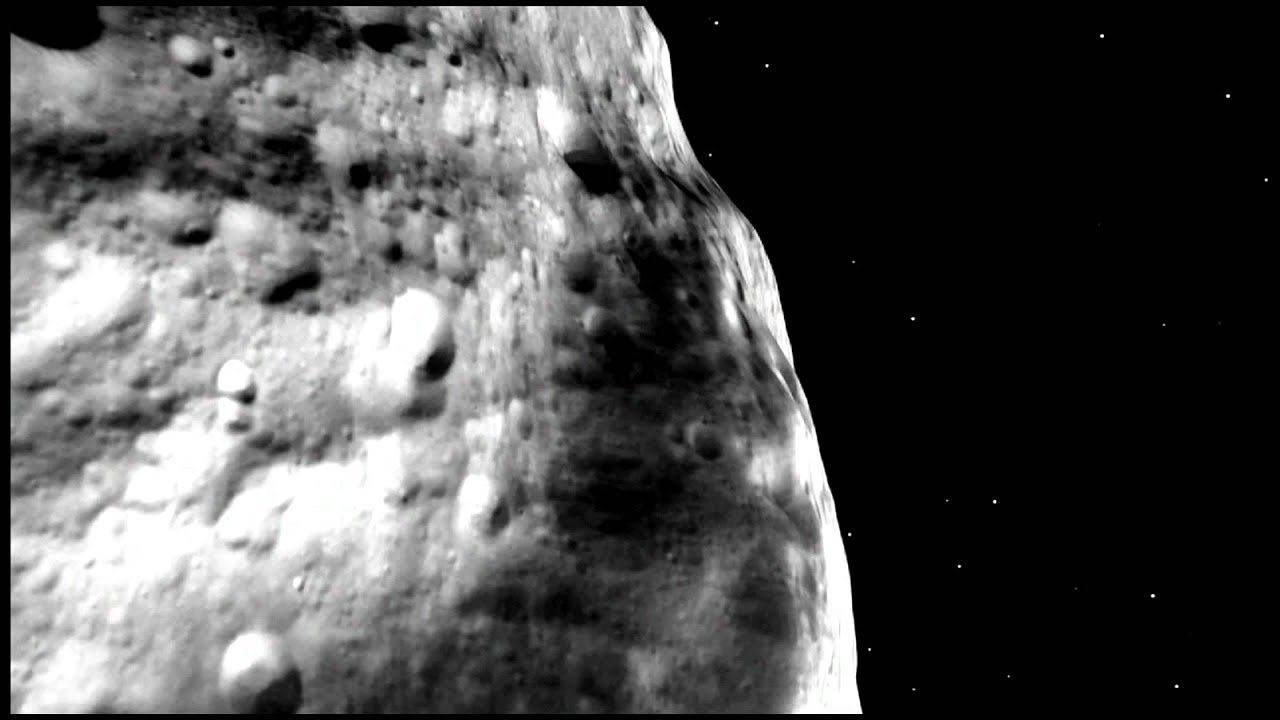
NASA's Dawn spacecraft provides a detailed flyover visualization of the giant asteroid Vesta, highlighting its unique features and formation processes.
Joe Edwards discusses the challenges of living aboard a spacecraft in zero gravity.
Apollo 12 features ultra high-resolution photos of the lunar surface from NASA.
Apollo 8 astronauts read from Genesis while orbiting the moon before Christmas in 1968.
More than a million people gathered along the beaches of Central Florida on July 16, 1969, to watch the launch of Apollo 11.